Bell aircraft used to safeguard food and agriculture amid historic locust infestation

In the last 12 months, food security has been under serious threat from devastating swarms of locusts, destroying crops from East Africa to the Arabian Gulf. With experts warning of a “rolling emergency1 that could endanger harvests across the regions for the rest of the year, governments and international organizations face a herculean challenge in controlling the infestations. Aircrafts from Bell, the U.S.-based helicopter manufacturer, have been playing a key role in the joint efforts to fight this ancient plague.

According to the UN Food and Agriculture Organization (FAO), desert locusts – whose destructive infestations cause major crop damage – are a species of grasshopper that live largely solitary lives until a combination of conditions promotes breeding and leads them to form massive swarms.

The region’s current crisis began in October 2019 as swarms formed along the Red Sea coastal plains in Yemen Saudi Arabi, Eritrea and Sudan, spreading eastwards across the Arabian peninsula and further south in Africa in the following months2.

By January, Kenya, one of the countries hardest hit by the crisis, was already experiencing its worst outbreak of desert locusts in 70 years. To target this problem, authorities contracted South African helicopter operator BAC Helicopters, who had recently purchased three Bell 206L-4 helicopters, to carry out the Emergency Desert Locust Survey and Control operation in an effected part of Kenya.

The helicopters were tasked with surveying vast areas throughout the Marsabit and Turkana counties in Northern Kenya, locating and mapping the locust swarms which were threatening food security through the region. The 206L-4’s were each equipped with specialized Agricultural Survey Equipment, an FDC Barrier Filter and Satellite Tracking System. Essential data gathered by the survey helicopters was then transferred to both fixed wing and helicopter spraying aircraft, allowing them to accurately target specific areas where the locust swarms were present.

Sameer Rehman, Managing Director of Africa and the Middle East, Bell, commented: “With a number of countries in eastern Africa and some parts of the Middle East at ongoing risk, the FAO has estimated that a locust control plan would cost $76 million to secure agriculture in the affected region. Bell understands the need to protect the food source of these regions and we’re pleased our products can be essential tools in the collective mission to eradicate the problem.

“When it comes to food security, the stakes are very high so the reliability and capability of every tool used in the fight against locust swarms is paramount. The Bell 206, and newer light aircraft like the Bell 505 have shown time and again that they can be trusted to operate in high temperatures and with heavy payloads, providing a capable defense wherever the swarms may be present.”

In most years, desert locust swarms tend to die out during dry season. However, with unusually high rainfall in 2020 in certain regions, the exponential growth in the populations has not abated, creating the specter of further swarms over the coming months.

The FAO states that countries most affected by the locust situation are Ethiopia, Kenya, Somalia in Africa as well as Yemen, Saudi Arabia and parts of the UAE and Oman in the Middle East.


Boeing, Etihad Airways and World Energy lift sustainable aviation fuel to the next level on ecoDemonstrator programme

Boeing [NYSE:BA] and Etihad Airways concluded testing on the aerospace company’s 2020 ecoDemonstrator programme last week with a cross-country flight using a 50/50 blend of sustainable and traditional jet fuel.

Flying from Seattle to Boeing’s manufacturing site in South Carolina, Etihad’s newest 787-10 Dreamliner used the maximum sustainable fuel blend permitted for commercial aviation. The transcontinental flight also demonstrated a new way for pilots, air traffic controllers and airline operations centers to communicate simultaneously and optimize routing.

Mohammad Al Bulooki, Etihad Aviation Group Chief Operating Officer, said: “Together with Boeing and the national airline’s sustainable aviation fuel partners World Energy and EPIC, Etihad used 50,000 gallons of a 50/50 blend of sustainable aviation fuel on the final flight of our ecoDemonstrator 787-10 flight tests. This is a monumental step forward for the sector to prove the viability of producing a 50/50 blend of sustainable aviation fuel [SAF] at a high volume, an important moment for the industry.”

Al Bulooki added: “This is a prime example of industry collaboration towards sustainable aviation and innovation. Etihad’s collaboration with Boeing in the ecoDemonstrator programme has been a unique opportunity to lead the aviation industry’s drive for a sustainable future.”

Boeing’s ecoDemonstrator programme takes promising technologies out of the lab and tests them in the air to accelerate innovation. This year’s program evaluated four projects to reduce emissions and noise and enhance the safety and health of passengers and crew. All of the 787-10 test flights used a blend of traditional jet fuel and sustainable fuel produced from inedible agricultural wastes to minimize emissions, with the final flight operating at the maximum 50/50 commercial blend.

“Sustainable aviation fuels are proven and work in airplanes flying today and those that will fly tomorrow, but there’s a very limited supply,” said Sheila Remes, vice president of strategy at Boeing Commercial Airplanes. “World Energy is making commercial-scale volumes of sustainable fuel at competitive prices, leveraging government low-carbon incentives to accelerate production and use in an industry that relies on liquid fuels.”

The fuel from World Energy and supplied to Boeing by EPIC Fuels has been certified by the Roundtable on Sustainable Biomaterials to reduce carbon emissions by more than 75% over the fuel’s life cycle.

“We congratulate Boeing and Etihad for their industry leadership in helping push the technical and sustainability boundaries of SAF,” said Bryan Sherbacow, chief commercial officer at World Energy. “This 50/50 blend demonstrates the maximum achievable greenhouse gas reduction commercially available today for aviation fuel.”

The partnership between Boeing and Etihad Airways represents a longstanding collaboration to make flying more sustainable. The two companies were among the founding partners that created the Sustainable Bioenergy Research Consortium in 2010. Based at Khalifa University near Abu Dhabi, the pilot project for a unique desert ecosystem produces sustainable fuel from plants that grow in the desert, irrigated by coastal seawater. Etihad used the initial batch of fuel from the pilot project in January 2019 on a passenger flight from Abu Dhabi to Amsterdam.

In January 2020, Etihad took delivery of its signature green 787-10 using a fuel mix comprising 30% SAF produced by World Energy.

Boeing has been a leader in industry efforts to develop sustainable aviation fuel since before the first test flight on a commercial airliner in 2008. Along with others in the industry, the company worked to gain certification of sustainable fuel for commercial use in 2011 and collaborates around the world to create regional production roadmaps.

For more than a decade, World Energy and EPIC Fuels have produced and supplied SAF to Boeing for flight testing. Boeing offers airlines the option of using sustainable fuel for their airplane delivery flights. The first of these occurred in 2012 with an Etihad 777-300ER delivery flight from Everett, Washington, to Abu Dhabi.

Boeing is the world’s largest aerospace company and leading provider of commercial airplanes, defense, space and security systems, and global services. As a top U.S. exporter, the company supports commercial and government customers in more than 150 countries. Boeing employs more than 160,000 people worldwide and leverages the talents of a global supplier base. Building on a legacy of aerospace leadership, Boeing continues to lead in technology and innovation, deliver for its customers and invest in its people and future growth.

IATA Launches Platform to Improve Visibility on Air Cargo Infrastructure and Capabilities

The International Air Transport Association (IATA) has launched IATA ONE Source, an online platform which helps the air cargo industry match shipping needs with the availability of infrastructure capabilities and certifications of service providers across the value chain.

This is particularly timely amid the COVID-19 crisis when shippers of medical supplies and pharmaceuticals need accurate information for time- and temperature-sensitive shipments. ONE Source lists the latest operational information on airlines, airports, cargo handling facilities, freight forwarders, ground handlers, shippers, and trucking companies. All critical information contained on ONE Source has been verified by IATA to help ensure its accuracy. IATA ONE Source is free for all service providers across the air cargo supply chain.

“Air cargo has been essential in the global fight against COVID-19, transporting vital equipment and medicines to those who need them most. However, with over 3,500 differently sized cargo handling facilities worldwide, the industry until now has lacked visibility on the capacities and services these facilities can offer. The need for greater transparency is even more critical in the current context. ONE Source addresses this by providing a single reference point for up-to-date infrastructure and certification data, helping save time and keep air cargo moving,” said Glyn Hughes, IATA’s Global Head of Cargo.  

The ONE Source platform offers:

ONE Source is part of the IATA Smart Facility program, an initiative to create transparency in cargo handling services and enhance essential cargo operational capabilities to a consistently higher baseline level across the industry.

For more information or to register, visit http://onesource.iata.org/

Fly safe with Keyvan Aviation’s Antibacterial Uniform for Airlines Crew

As borders slowly open and airlines start to fly and take to the skies once again, it is important that crew members feel reassured and confident about their health when flying and performing their duty onboard an aircraft.

By using Hazmat suits or medical gowns on top of the uniforms, Airlines will hide their culture and the colors; and they will spend plenty of money which will be wasted and thrown out at the end of the day. Thinking about sustainability and keeping cost under control as well as having a nice and elegant look for flight crew is a big advantage of the Keyvan design and final product.

Keyvan Aviation offers Airlines Crew Antibacterial Uniform to all Flight and Ground crew which will bring higher level of the safety against bacteria and viruses and keep the Airlines beauty and cultures together while saving the operational cost for Airlines.

Having skin friendly, comfort advantages, and using natural material and recyscable as well as using antibacterial and antiviral finishing on the product made it a useful costume to keep crew member safer. Ability to wash and use during a reasonable life cycle of a normal uniform is a big cost effective benefit for airlines.

Using a silver ion technology enables Keyvan Aviation offers a better protection for body against electromagnetic shielding effect during their duty, as well. They use a new technology and combine them with fashion ideas to keep Airlines crew safe and offer a pleasant flight to passengers by maintaining the highest levels of safety in their product.

Russian Helicopters to present upgraded Mi-171Sh at ARMY-2020 for the first time

The Russian Helicopters holding company (part of Rostec) will for the first time present upgraded Mi-171SH “Storm” military transport helicopter at the International Military-Technical Forum ARMY-2020. The helicopter, featuring enhanced protection and unique strike capabilities, was manufactured at the Ulan-Ude Aviation Plant.

The first flying prototype of the helicopter will be demonstrated at the forum. The presentation will also include the IBKV-17VP “glass cockpit” avionics suite and model of the new target sight system.

“Upgraded Mi-171Sh provides superior level of protection for both the crew and transported troops, thanks to titanium and kevlar armor protection, and the vehicle’s strike capabilities have been expanded to include guided missile weapons, noted the Director General of the Russian Helicopters, Andrey Boginsky.Mi-171SH is prepared for the most demanding combat and climatic conditions, which is why we named it “Storm” for our foreign customers. The name symbolizes its readiness to fight the elements, and on the other hand speaks of the helicopter’s flexible assault capabilities.” 

Mi-171Sh “Storm” is equipped with upgraded engines, new rotor system with an improved profile composite main rotor and X-shaped tail rotor, as well as latest version of the President-S on-board aircraft defense system. The armoring effectively protects the crew and the most parts of the helicopter, as well as the troop compartment. Two sliding doors on the sides and a ramp enable ultra-fast troop deployment.

In addition, the helicopter comes with improved armament, including 12.7 mm caliber machine guns and mdoern guided missile weapons with the OPS-24N-1L target sight system, which allows to engage against various ground and air targets.

JSC “Russian Helicopters”, a part of Rostec State Corporation, is a leading player in the global helicopter industry, the sole Russian designer and manufacturer of helicopters. The Holding Company was established in 2007 and is headquartered in Moscow. We operate five helicopter assembly plants, two design bureaus, component production and maintenance enterprises, aircraft repair plants and one helicopter service company providing after-sales support in Russia and abroad. The customers of the Holding Company are the Ministry of Defense, the Ministry of Home Affairs, EMERCOM of Russia, and other state customers, Gazpromavia, UTair Aviation company, large Russian and foreign companies.

State Corporation Rostec is one of the largest industrial companies in Russia. It unites more than 800 scientific and industrial organizations in 60 regions of the country. Its key areas of activity are transport engineering, electronics, medical technology, chemistry and innovative materials. Rostec holdings form three clusters: electronics, weapons and aviation. The corporation’s portfolio includes such well-known brands as AvtoVAZ, KAMAZ, Kalashnikov, Russian Helicopters, Uralvagonzavod and others. Rostec is active in the implementation of all 12 national projects. The company is a key provider of Smart City technology, it is engaged in the digitalization of public administration, industry and social sectors, and it is developing plans for the development of 5G wireless technologies, an Industrial Internet of Things, big data and blockchain systems. Rostec partners with leading world manufacturers such as Boeing, Airbus, Daimler, Pirelli and Renault. The corporation’s products are delivered to more than 100 countries worldwide. Almost a third of the company’s revenue comes from the export of high-tech products.

Rostec made the first civilian Mi-8AMT Arctic helicopter

Russian Helicopters holding company (part of Rostec State Corporation) started serial production of Mi-8AMT Arctic helicopters for civilian customers. Ulan-Ude Aviation Plant made the first rotorcraft which is ready to start operation. 

Mi-8AMT helicopter in its Arctic version completed the flight-test program and the procedure of acceptance by an independent commission of the Federal Air Transport Agency (Rosaviatsiya). The rotorcraft’s main features include a unique system for heating transmission parts, designed by JSC «National helicopter center Мil&Kamov». The system provides for quick start of engines in extremely low temperatures, even if the helicopter is deployed without a hangar for a long time.
The system for heating transmission parts is complemented by an improved system for thermal protection of the cargo cabin and special thermal insulation shutters in sliding doors and cockpit doors. Special cover protects the helicopter from low temperatures, high humidity and strong wind, if it is deployed without a hangar for a long time. The helicopter systems have teflon hose, which is resistant to freezing temperatures, instead of rubber hose.

“New Mi-8AMT helicopter will be sought after by many Russian companies and government agencies implementing projects and tasks in the Arctic. The first rotorcraft is ready to start operation, and negotiations with several potential Russian customers are underway,” stated Director General of Russian Helicopters Andrey Boginsky. “The holding company is making every effort to provide operators with reliable and modern helicopters, which is irreplaceable when many important tasks related to work in the region are carried out.”

The helicopter is equipped with two additional fuel tanks, which allow it to fly long distances. This in very important for northern districts with low population density. The Arctic version of Mi-8AMT can fly up to 1,400 km. An emergency floatation system can also be installed on the helicopter to fly over a vast area of waters in the Arctic.

“This helicopter is necessary for air medical services, maintenance of facilities of the fuel and energy complex, and for meeting the needs of polar expeditions. It may also help organize transportation in northern regions,” emphasized Managing Director of Ulan-Ude Aviation Plant Leonid Belykh.

When the helicopter was designed, great attention was given to ensuring that it is capable of flying over the Arctic terrain with few features, in the conditions of polar night, harsh weather, and when satellite and radio signals are lost. For that purpose the rotorcraft is equipped with a special navigation complex.
The complex includes several navigation systems for locating the helicopter, a radar with horizontal and vertical sweep of information on the weather, a digital autopilot, and radio stations with a wide range of frequencies. The helicopter is capable of automated hovering, flying a planned hovering route, and landing. The navigation system considerably reduces the load on the crew, and ensures greater safety of the flight.

SC “Russian Helicopters”, a part of Rostec State Corporation, is a leading player in the global helicopter industry, the sole Russian designer and manufacturer of helicopters. The Holding Company was established in 2007 and is headquartered in Moscow. We operate five helicopter assembly plants, two design bureaus, component production and maintenance enterprises, aircraft repair plants and one helicopter service company providing after-sales support in Russia and abroad. The customers of the Holding Company are the Ministry of Defense, the Ministry of Home Affairs, EMERCOM of Russia, and other state customers, Gazpromavia, UTair Aviation company, large Russian and foreign companies.


State Corporation Rostec is one of the largest industrial companies in Russia. It unites more than 800 scientific and industrial organizations in 60 regions of the country. Its key areas of activity are transport engineering, electronics, medical technology, chemistry and innovative materials. Rostec holdings form three clusters: electronics, weapons and aviation. The corporation’s portfolio includes such well-known brands as AvtoVAZ, KAMAZ, Kalashnikov, Russian Helicopters, Uralvagonzavod and others. Rostec is active in the implementation of all 12 national projects. The company is a key provider of Smart City technology, it is engaged in the digitalization of public administration, industry and social sectors, and it is developing plans for the development of 5G wireless technologies, an Industrial Internet of Things, big data and blockchain systems. Rostec partners with leading world manufacturers such as Boeing, Airbus, Daimler, Pirelli and Renault. The corporation’s products are delivered to more than 100 countries worldwide. Almost a third of the company’s revenue comes from the export of high-tech products.

SMART TECHNOLOGY WILL BE FUNDAMENTAL FOR AIRLINES TO SAFELY RETURN TO THE SKIES IN THE COMING WEEKS

SITA, the technology provider for the air transport industry, today sheds new light on how technology is helping airports and airlines safely resume operations and help implement new hygiene measures to restore passenger confidence after a lengthy shutdown due to the COVID-19 pandemic.

Speaking after the Aviation Week webinar event Sebastien Fabre, Vice-President Airline & Airport, SITA said: “The past few weeks have seen airlines across the globe tentatively take to the skies. This is reflected in a resumption in activity across our network and improved baggage volumes, up 55% month-on-month in May where volumes were at a record low.”

However, Fabre noted that recovery would be slow. “Our industry must transform the passenger experience to increase traveler safety while balancing economic pressures from slow customer demand. To successfully walk this tightrope and navigate a return to the skies for viable volumes of passengers, airports and airlines need to assimilate new information from governments and health officials, adapt operations immediately and automate processes permanently.”

SITA has introduced solutions that allow passengers to use their mobile device as a remote control for touchpoints such as self-bag drop and check-in kiosks, removing the need to touch any airport equipment. “For example, at San Francisco Airport, we have SITA Flex which enables a full mobile and touchless passenger journey. This means travelers can print bag tags from their mobile phone on self-service bag points.” Added Fabre.

He noted that technology would be fundamental helping airlines and airports to be compliant with new and fast-changing regulations to restore passenger’s confidence in flying. New preventive measures aimed at limiting risk in the airport and onboard will require a new approach to passenger management.

Fabre stated that SITA was rapidly rolling out new solutions that addressed the above challenges, complementing short term hygiene measures such as the use of masks and gloves. These solutions centered on three key areas:

Distancing: Using real-time monitoring technologies along with predictive analytics, SITA can ensure appropriate distancing between passengers at key points across the airport. Predictive analytics will also support more proactive planning. There is also an opportunity to extend the boundaries of the airport where key steps such as check-in and bag drop are managed before arriving at the terminal through a passenger’s mobile.

Hygiene and Sanitation: SITA is helping reduce the risk of infection by avoiding contact at key touchpoints. Using a combination of biometric and mobile solutions, passengers no longer have to touch a kiosk or surface, managing their journey from their phone.

Health checks: In addition to integrating health or thermal checks into key touchpoints such as check-in kiosks, governments will – by leveraging SITA’s risk management solutions – be able to use pre-boarding check (Advance Passenger Processing) and perform analytics on passenger journey data to identify and mitigate potential health risks.

He noted for the airports that are not equipped with the native mobile platform, SITA uses technology to remotely control self-service devices such as kiosks with a mobile phone, removing the need to touch any airport equipment.

Speaking at the webinar, Jeremy Springall, Vice-President Border Management, SITA said: “We are seeing specific regions wishing to allow limited movement within zones first, for example, the trans-Tasman bubble. For governments, this requires an information-driven approach based on real-time data and responsiveness to handle rapidly changing situations.

“A critical element will be for governments to harmonize the approach to checking the validity of health status and sharing this information effectively. Many governments are taking a layered approach to border management, starting well in advance of travel, to identify high-risk passengers before arrival in the destination country, in turn easing the restrictions for low-risk travelers. It’s crucial that health checks in terms of a health ETA or declaration are performed, perhaps up to 72 hours before departure. We’re already starting to see this happen around the world in countries like Thailand and Singapore.”

Springall noted that SITA has been supporting governments around the world to adapt their Advance Passenger Processing pre-clearance checks in support of COVID-19, for example with a South American airport during the early part of the pandemic SITA was able to support them stop passengers from high-risk countries check-in to their flights.

SITA believes a harmonized approach to data management between governments is crucial for mitigating the risk of resurgence.  

Springall highlighted how SITA has helped airports identify passengers arriving from high-risk areas who would then be asked to self-isolate at home for 14 days to prevent the spread of COVID-19. Later SITA adapted operations to identify travelers who were sitting in the rows around these passengers during a flight so adequate protocols could be applied to those passengers as well.

Also taking part in the webinar was Erick Barboza, Chief Commercial Officer at Aeris Holding, Costa Rica and Ivan Bassato, Executive Vice President Airport Management, Aeroporti di Roma. To listen to the full webinar, head to the Aviation Week event page.

New maintenance projects on Bombardier, Boeing and Airbus

Performing checks also at lofty heights – a Global Express at the AMAC Aerospace hangars in Basel, Switzerland

AMAC Aerospace is pleased to announce to have awarded several new maintenance projects. A Head of State Bombardier Challenger 605 has recently arrived in Basel, Switzerland, to undergo a 12-month inspection.

AMAC Aerospace are proud to announce that a Bombardier Challenger 605 arrived mid-May in Basel. The Head of State aircraft will undergo a 12-month inspection.

A Bombardier Global Express entered AMAC’s hangar mid-May as well. The privately-owned aircraft will undergo a 30-month check. AMAC has also been selected by a new private owner of a Bombardier Challenger 605 to carry out a Pre-Purchase Inspection (PPI) on short notice.

New maintenance projects on Boeing and Airbus aircraft

AMAC was awarded further maintenance projects on two Boeing aircraft. A privately-owned Boeing BBJ737 arrived by the end of May in Basel to undertake a 6a-check and a due maintenance. In conjunction with the maintenance checks, AMAC will also carry out Service Bulletins tasks (SBs) on the aircraft. On a second Boeing, a BBJ737, AMAC’s maintenance team will carry out a 1-, 6- and 48-month check on the privately-owned aircraft.

An Airbus ACJ320 recently arrived in Basel. AMAC will complete a base maintenance check and carry out a full galley heating system modification. Due to the extension of the project, the privately-owned aircraft has to stay in Basel six weeks longer than planned but equipped with a state-of-the-art heating system.

On a second Airbus ACJ318 AMAC will perform a maintenance check and an avionics upgrade on the privately-owned aircraft.

IATA Outlines Layered Approach for Industry Re-Start

The International Air Transport Association (IATA) revealed details of its proposed temporary layered approach to biosecurity for re-starting passenger flights amid the COVID-19 crisis.

IATA has published Biosecurity for Air Transport: A Roadmap for Restarting Aviation which outlines IATA’s proposal for a layering of temporary biosecurity measures. The Roadmap aims to provide the confidence that governments will need to enable the re-opening of borders to passenger travel; and the confidence that travelers will need to return to flying.

“There is no single measure that will reduce risk and enable a safe re-start of flying. But a layering measures that are globally implemented and mutually recognized by governments can achieve the needed outcome. This is the greatest crisis that aviation has ever faced. A layered approach has worked with safety and with security. It’s the way forward for biosecurity as well,” said Alexandre de Juniac, IATA’s Director General and CEO.

Highlights of the Roadmap include:


Pre-flight, IATA foresees the need for governments to collect passenger data in advance of travel, including health information, which should be accomplished using well-tested channels such as those used for eVisa or electronic travel authorization programs.

At the departure airport, IATA foresees several layers of protective measures:

• Access to the terminal building should be restricted to airport / airline workers and travelers (with exceptions being made for those accompanying passengers with disabilities or unaccompanied minors)

• Temperature screening by trained government staff at entry points to the terminal building

• Physical distancing through all passenger processes, including queue management

• Use of face coverings for passengers and masks for staff in line with local regulations.

• Self-service options for check-in used by passengers as much as possible to reduce contact points and queues. This includes remote check-in (electronic / home printed boarding passes), automated bag drops (with home printed bag tags) and self-boarding.

• Boarding should be made as efficient as possible with re-designed gate areas, congestion-reducing boarding priorities, and hand luggage limitations.

• Cleaning and sanitization of high touch areas in line with local regulations. This includes wide availability of hand sanitizers.


In-flight, IATA foresees several layers of protective measures:

• Face coverings required for all passengers and non-surgical masks for crew

• Simplified cabin service and pre-packaged catering to reduce interaction between passengers and crew

• Reduced congregation of passengers in the cabin, for example by prohibiting queues for washrooms.

• Enhanced and more frequent deep cleaning of the cabin


At the arrival airport, IATA foresees several layers of protective measures:

• Temperature screening by trained government staff if required by authorities

• Automated procedures for customs and border control including use of mobile applications and biometric technologies (which have already proven tack record by some governments)

• Accelerated processing and baggage reclaim to enable social distancing by reducing congestion and queuing

• Health declarations and robust contact tracing are expected to be undertaken by governments to reduce the risk of imported chains of transmission


IATA stressed that these measures should be temporary, regularly reviewed, replaced when more efficient options are identified or removed should they become unnecessary. Specifically, IATA expressed hope in two areas which could be ‘game-changers’ in facilitating efficient travel until a vaccine is found:


COVID-19 testing: IATA supports testing when scalable, accurate and fast results are available. Testing at the start of the travel process would create a ‘sterile’ travel environment that would reassure travelers and governments.

Immunity passports: IATA would support the development of immunity passports to segregate no-risk travelers, at a time when these are backed by medical science and recognized by governments.

IATA reiterated its opposition to social distancing on board aircraft and quarantine measures on arrival:


• Quarantine measures are obviated by the combination of temperature checks and contract tracing. Temperature screening reduces the risk of symptomatic passengers from traveling, while health declarations and contact tracing after arrival reduce the risk of imported cases developing into local chains of transmission.

• Social distancing on board (leaving the middle seat open) is obviated by the wearing of face coverings by all on board on top of transmission reducing characteristics of the cabin (everybody is front facing, air flow is from ceiling to floor, seats provide a barrier to forward/aft transmission, and air filtration systems that operate to hospital operating theatre standards).


The mutual recognition of globally agreed measures is critical for the resumption of international travel. IATA is reaching out to governments with the Roadmap. This engagement is in support of the COVID-19 Aviation Recovery Task Force (CART) of the International Civil Aviation Organization (ICAO) which is tasked with developing the global standards needed for the safe re-start of aviation.


“The Roadmap is the industry’s high-level thinking on safely re-starting aviation. Timing is critical. Governments understand the importance of aviation to the social and economic recovery of their countries and many are planning a phased re-opening of borders in the coming months. We have a short time to reach agreement on the initial standards to support safely reconnecting the world and to firmly establish that global standards are essential to success. This will change as technology and medical science advances. The vital element is coordination. If we don’t take these first steps in a harmonized way, we will spend many painful years recovering ground that should not have been lost,” said de Juniac.

Turkish Airlines draws the world’s biggest national flag in the sky to honor the founding of the Grand National Assembly of Turkey

A commercial film following flight TK1920 has been broadcasted across Turkish Airlines’ social media accounts

Turkey’s national flag carrier performed one of the most significant flights on April 23, the 100th anniversary of the founding of the Grand National Assembly, and National Sovereignty and Children’s Day.

The TC-JJF registered Boeing 777-300 (ER) type aircraft, which arrived in Ankara in the morning for this special flight, took off from Esenboğa Airport on April 23 at 09:40, local time. Representing the date 23 April 1920, flight TK1920 lasted approximately two hours and followed a route in which the crescent and star symbols in the Turkish flag were drawn. After the flight, which was followed by many through the live air traffic site Flightradar24 that provides flight tracking data, a crescent-star route emerged and passed into Turkish aviation history.

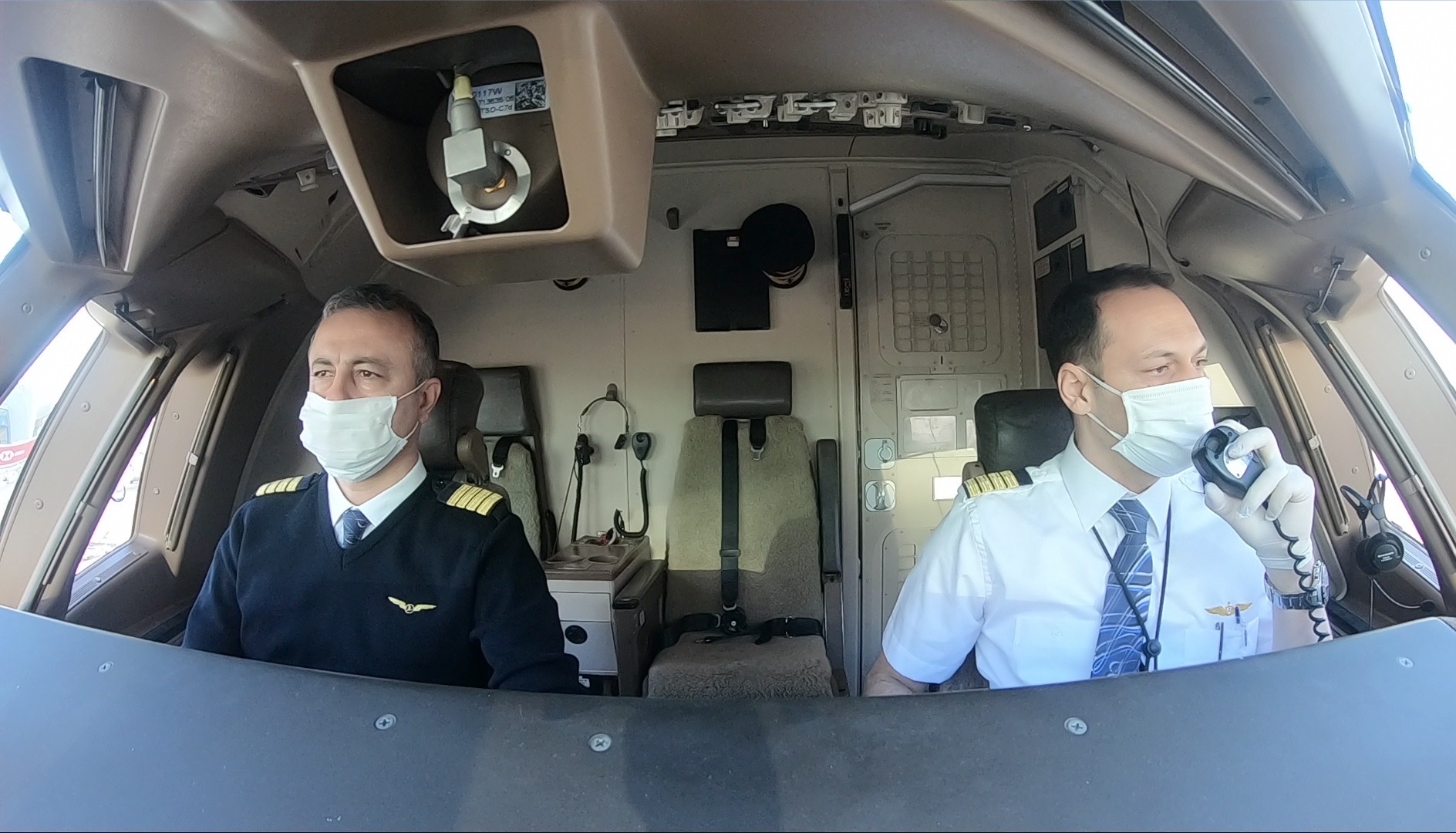
Cpt. Öner Samyel and Cpt. Murat Gülkanat, who made this meaningful flight that left its mark in the heavens, made a special announcement in the sky above the Assembly building itself, which was opened 100 years ago. In the announcement referring to the statement of Gazi Mustafa Kemal Atatürk, “Sovereignty unconditionally belongs to the nation”, it was emphasized that Turkish Airlines ensured that his legacy lived on in the skies.

Turkish Airlines Chairman of the Board and the Executive Committee, M. İlker Aycı said “The inauguration day of the Grand National Assembly of Turkey, founded a hundred years ago to represent the will of a nation which went great lengths to ensure its freedom and independence, was gifted to our children by its founder Ghazi Mustafa Kemal Atatürk as “April 23, National Sovereignty and Children’s Day”, reflecting the confidence in the next generation in the safekeeping of these sacred values. As our country’s national flag carrier, we dedicate today’s exclusive flight to our children, the guardians of our future.”

The commercial about Turkish Airlines’ flight TK1920 has been released on official social media accounts on 23 April at 19:20 (GMT+2).