IATA Outlines Layered Approach for Industry Re-Start

The International Air Transport Association (IATA) revealed details of its proposed temporary layered approach to biosecurity for re-starting passenger flights amid the COVID-19 crisis.

IATA has published Biosecurity for Air Transport: A Roadmap for Restarting Aviation which outlines IATA’s proposal for a layering of temporary biosecurity measures. The Roadmap aims to provide the confidence that governments will need to enable the re-opening of borders to passenger travel; and the confidence that travelers will need to return to flying.

“There is no single measure that will reduce risk and enable a safe re-start of flying. But a layering measures that are globally implemented and mutually recognized by governments can achieve the needed outcome. This is the greatest crisis that aviation has ever faced. A layered approach has worked with safety and with security. It’s the way forward for biosecurity as well,” said Alexandre de Juniac, IATA’s Director General and CEO.

Highlights of the Roadmap include:


Pre-flight, IATA foresees the need for governments to collect passenger data in advance of travel, including health information, which should be accomplished using well-tested channels such as those used for eVisa or electronic travel authorization programs.

At the departure airport, IATA foresees several layers of protective measures:

• Access to the terminal building should be restricted to airport / airline workers and travelers (with exceptions being made for those accompanying passengers with disabilities or unaccompanied minors)

• Temperature screening by trained government staff at entry points to the terminal building

• Physical distancing through all passenger processes, including queue management

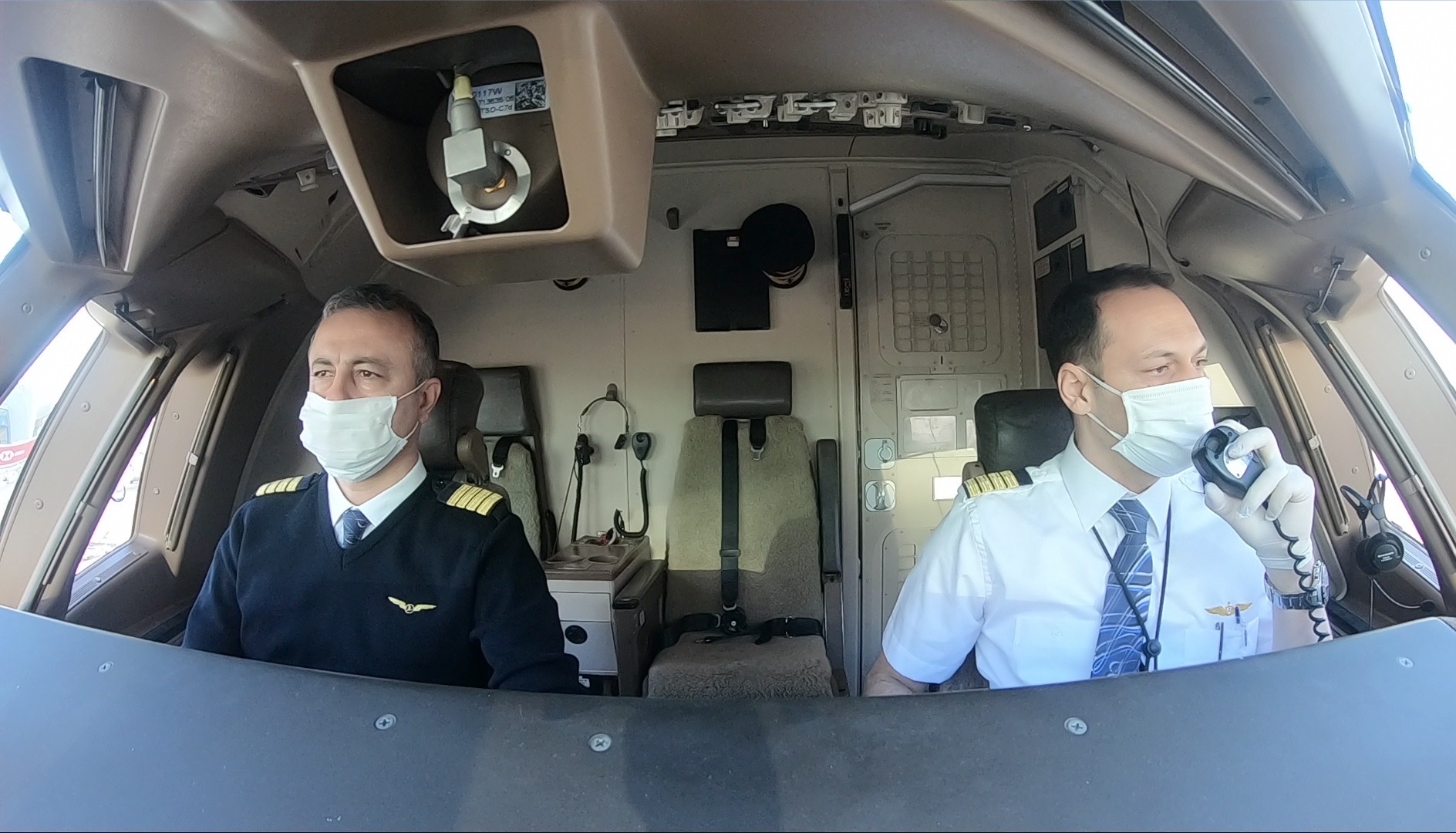
• Use of face coverings for passengers and masks for staff in line with local regulations.

• Self-service options for check-in used by passengers as much as possible to reduce contact points and queues. This includes remote check-in (electronic / home printed boarding passes), automated bag drops (with home printed bag tags) and self-boarding.

• Boarding should be made as efficient as possible with re-designed gate areas, congestion-reducing boarding priorities, and hand luggage limitations.

• Cleaning and sanitization of high touch areas in line with local regulations. This includes wide availability of hand sanitizers.


In-flight, IATA foresees several layers of protective measures:

• Face coverings required for all passengers and non-surgical masks for crew

• Simplified cabin service and pre-packaged catering to reduce interaction between passengers and crew

• Reduced congregation of passengers in the cabin, for example by prohibiting queues for washrooms.

• Enhanced and more frequent deep cleaning of the cabin


At the arrival airport, IATA foresees several layers of protective measures:

• Temperature screening by trained government staff if required by authorities

• Automated procedures for customs and border control including use of mobile applications and biometric technologies (which have already proven tack record by some governments)

• Accelerated processing and baggage reclaim to enable social distancing by reducing congestion and queuing

• Health declarations and robust contact tracing are expected to be undertaken by governments to reduce the risk of imported chains of transmission


IATA stressed that these measures should be temporary, regularly reviewed, replaced when more efficient options are identified or removed should they become unnecessary. Specifically, IATA expressed hope in two areas which could be ‘game-changers’ in facilitating efficient travel until a vaccine is found:


COVID-19 testing: IATA supports testing when scalable, accurate and fast results are available. Testing at the start of the travel process would create a ‘sterile’ travel environment that would reassure travelers and governments.

Immunity passports: IATA would support the development of immunity passports to segregate no-risk travelers, at a time when these are backed by medical science and recognized by governments.

IATA reiterated its opposition to social distancing on board aircraft and quarantine measures on arrival:


• Quarantine measures are obviated by the combination of temperature checks and contract tracing. Temperature screening reduces the risk of symptomatic passengers from traveling, while health declarations and contact tracing after arrival reduce the risk of imported cases developing into local chains of transmission.

• Social distancing on board (leaving the middle seat open) is obviated by the wearing of face coverings by all on board on top of transmission reducing characteristics of the cabin (everybody is front facing, air flow is from ceiling to floor, seats provide a barrier to forward/aft transmission, and air filtration systems that operate to hospital operating theatre standards).


The mutual recognition of globally agreed measures is critical for the resumption of international travel. IATA is reaching out to governments with the Roadmap. This engagement is in support of the COVID-19 Aviation Recovery Task Force (CART) of the International Civil Aviation Organization (ICAO) which is tasked with developing the global standards needed for the safe re-start of aviation.


“The Roadmap is the industry’s high-level thinking on safely re-starting aviation. Timing is critical. Governments understand the importance of aviation to the social and economic recovery of their countries and many are planning a phased re-opening of borders in the coming months. We have a short time to reach agreement on the initial standards to support safely reconnecting the world and to firmly establish that global standards are essential to success. This will change as technology and medical science advances. The vital element is coordination. If we don’t take these first steps in a harmonized way, we will spend many painful years recovering ground that should not have been lost,” said de Juniac.

Turkish Airlines draws the world’s biggest national flag in the sky to honor the founding of the Grand National Assembly of Turkey

A commercial film following flight TK1920 has been broadcasted across Turkish Airlines’ social media accounts

Turkey’s national flag carrier performed one of the most significant flights on April 23, the 100th anniversary of the founding of the Grand National Assembly, and National Sovereignty and Children’s Day.

The TC-JJF registered Boeing 777-300 (ER) type aircraft, which arrived in Ankara in the morning for this special flight, took off from Esenboğa Airport on April 23 at 09:40, local time. Representing the date 23 April 1920, flight TK1920 lasted approximately two hours and followed a route in which the crescent and star symbols in the Turkish flag were drawn. After the flight, which was followed by many through the live air traffic site Flightradar24 that provides flight tracking data, a crescent-star route emerged and passed into Turkish aviation history.

Cpt. Öner Samyel and Cpt. Murat Gülkanat, who made this meaningful flight that left its mark in the heavens, made a special announcement in the sky above the Assembly building itself, which was opened 100 years ago. In the announcement referring to the statement of Gazi Mustafa Kemal Atatürk, “Sovereignty unconditionally belongs to the nation”, it was emphasized that Turkish Airlines ensured that his legacy lived on in the skies.

Turkish Airlines Chairman of the Board and the Executive Committee, M. İlker Aycı said “The inauguration day of the Grand National Assembly of Turkey, founded a hundred years ago to represent the will of a nation which went great lengths to ensure its freedom and independence, was gifted to our children by its founder Ghazi Mustafa Kemal Atatürk as “April 23, National Sovereignty and Children’s Day”, reflecting the confidence in the next generation in the safekeeping of these sacred values. As our country’s national flag carrier, we dedicate today’s exclusive flight to our children, the guardians of our future.”

The commercial about Turkish Airlines’ flight TK1920 has been released on official social media accounts on 23 April at 19:20 (GMT+2).

Airport Show 2020 rescheduled to October

Dubai to play its important role in supporting global aviation recovery

October event will be a catalyst for faster industry resurgence

The world’s largest annual airport industry B2B platform has been rescheduled to take place from 26-28 October 2020 at the Dubai World Trade Centre (DWTC) where it was scheduled earlier for June.

The new dates reflect the aviation industry’s confidence of normalcy returning to global markets by then and the lifting of extensive travel restrictions around the world following the COVID-19 pandemic.

Organized by Reed Exhibitions Middle East under the patronage of His Highness Sheikh Ahmed bin Saeed Al Maktoum, President of Dubai Civil Aviation Authority, Chairman of Dubai Airports and Chairman and Chief Executive of Emirates Airline and Group, the event is supported by Dubai Civil Aviation Authority (DCAA), Dubai Airports, Dubai Aviation Engineering Projects (DAEP) and dnata, amongst a host of global and regional aviation bodies, suppliers’ associations and working groups.

His Excellency Mohammed Abdulla Ahli, Director General of Dubai Civil Aviation Authority and CEO of Dubai Air Navigation Services (dans) said: “Every industry has come to a standstill due to the unforeseen circumstances we are faced with. Our past experiences of handling crises will help us to bounce back into the aviation business, once the crisis is contained. We shall all play our part in the recovery.”

Airport Show is expected to attract 375 exhibiting companies and over 8,500 visitors coming from almost 100 countries. Now in its 20th edition, the event showcases the most advanced global aviation technologies and allows attendees to participate in a series of conferences, matchmaking programmes and workshops. The collocated Global Airport Leaders Forum (GALF) and Women in Aviation General Assembly will host over 1,500 delegates and 100 speakers, covering the latest industry developments across 4 key themes of Air Traffic Control, Airport Security, Airport Passenger Experience and Ground Handling. Last year’s Show hosted 351 exhibitors on 15,599 square metres exhibition space and attracted 7,100 attendees from 89 countries.

Daniyal Qureshi, Group Exhibitions Director, Reed Exhibitions Middle East, said: “Global air transport supports almost US$3 trillion in global economic activity, with the world’s airlines carrying more than 4 billion passengers and 60 million tonnes of freight every year. Aviation’s contribution during periods of global emergencies such as we are facing today is critical, delivering thousands of tonnes of food, medicines and essential supplies to the worst affected and enabling world leaders and experts to efficiently collaborate and support rehabilitation efforts. There is no doubt that COVID-19 has and will severely affect our industry. However, we are confident that once we are through these challenging times, aviation will once again play its important role in supporting economic recovery efforts around the world.”

Scandinavian aircraft manufacturer enters race to claim Air Race E title


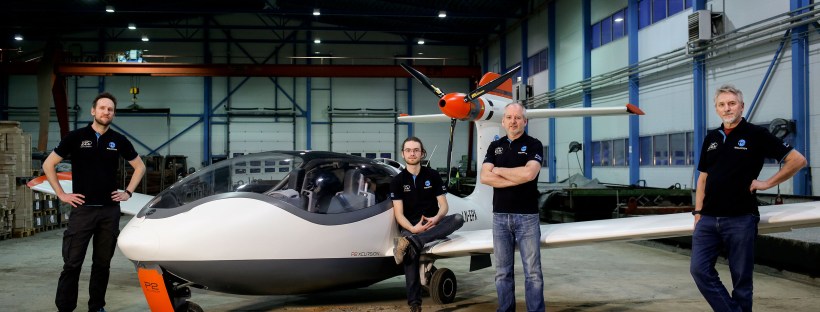
Norway’s acclaimed pioneers in electric aviation, Equator Aircraft, have joined the world’s first electric air race, Air Race E, with a team including the group’s founder and CEO Tomas Brødreskift.


The group, best known for developing the world’s first electric seaplane in 2018, is a founding partner of the all-Norwegian team established as a new company called Electric Aircraft Propulsion AS (EAP). The racing team is comprised of pilot Rein Inge Hoff, chief designer Brødreskift and team leader Øystein Solheim-Aune.


EAP enters Air Race E as the only Scandinavian team in what is now a field of 10 teams from around the globe preparing to compete in the inaugural race next year. The trio joins the contest with an impressive track record of developing innovative aircraft designs and carbon composite construction techniques, having already conducted the first sea trials of their electric sea plane just last year.


Air Race E founder and CEO Jeff Zaltman, said, “We welcome Equator Aircraft into the series with wide open arms. This is an exciting validation of our racing series as a platform to develop technology for ultimate use in the commercial world. Equator is an accomplished industry player and we expect them to be an accomplished race team as well.”


Tomas Brodreskift: “The Air Race E initiative is a great opportunity to continue our work in electric aviation. The race environment allows us to explore the extreme performance characteristics of our electric powertrain, as we push the components to their utmost limits in a safe environment. Lessons from the championship will be transferred to the factory to improve the performance and design of our electric consumer based sea planes.”


Jarlsberg Airport, 100km south-west of Oslo, will serve as the team’s base where EAP plans to modify an existing Cassutt IIIM, and retrofit it with a novel electric powertrain.


Air Race E will host its inaugural race next year as the first in a series of formula one style international air races. Air Race E events will see eight planes fly simultaneously around a tight 5km circuit at just 10m above the ground and at speeds of up to 450kph – faster than any land-based motorsport.


The series is widely considered a test-bed to trial electric aircraft technology to accelerate the development of sustainable aviation. Skilled pilots, airplane builders and engineers from around the world are taking part, with the opportunity still open for those wishing to register their interest in competing.


For more information go to https://airracee.com/

DC Aviation Group and Comlux Sign Cooperation Agreement

DC Aviation Group and Comlux have signed a cooperation agreement for line maintenance and warranty work. The Stuttgart maintenance center of DC Aviation will perform the line maintenance and warranty work for Comlux customers based in Europe and CIS.

DC Aviation Group and Comlux are pleased to announce that they have signed a cooperation agreement. DC Aviation has been selected to perform the line maintenance and warranty work for Comlux customers based in Europe and CIS. 

The line and base maintenance services for aircraft of the Airbus ACJ Family, Global Express 5000/6000 and Challenger 604/605 will be carried out at DC Aviation’s dedicated 5,700 square meter Stuttgart Airport (EDDS) hangar, which also contains a large and well-equipped parts inventory, a certified battery and tire shop and a maintenance logistics center.

Juergen Sehne, Vice President Maintenance & CAMO of DC Aviation said: “Last year we have successfully carried out two A-checks for Comlux’ customers. We are very happy that, with this agreement, we can continue and consolidate our excellent cooperation with Comlux.”

Arnaud Martin, Chief Operating Officer of Comlux said: “We are extremely pleased with this agreement with DC Aviation, which allows us to serve our worldwide customer base even better. While Comlux has strong expertise on VIP interior upgrades and heavy maintenance in our facilities in Indianapolis, DC Aviation offers our European and CIS customers a closer-to-home solution for their line maintenance and warranty needs.”

DC Aviation has been offering line and base maintenance services for various types of aircraft since 1999 and can carry out exceptionally complex work with the highest level of reliability and competence. Due to 24/365 availability, combined with intelligent planning and smooth workflows, DC Aviation is able to meet challenging ground-times.

Carbon Emissions Per Passenger Decrease

TheInternational Air Transport Association (IATA)published information confirming that carbon emissions per passenger have declined by more than 50% since 1990. Much of the improvement has occurred because the industry has achieved an annual fuel efficiency improvement of 2.3% over the period since 2009, some 0.8 percentage points ahead of target. 

This progress is a combination of investments in more efficient aircraft and operational efficiencies.

“Cutting per passenger emissions in half is an amazing achievement of the technical expertise and innovation in the aviation industry. But we have even bigger ambitions. From 2020 we will cap net emissions. And by 2050 we will cut emissions to half 2005 levels. Accomplishing these targets means continued investment in new technology, sustainable fuels, and operational improvements,” said Alexandre de Juniac, IATA’s Director General and CEO.

Airlines have invested some $1 trillion in new aircraft since 2009, and in addition have signed forward purchase agreements for sustainable aviation fuel (SAF) amounting to approximately $6 billion. In addition, the introduction of the Carbon Offsetting and Reduction Scheme for International Aviation (CORSIA) will ensure carbon-neutral growth on international flights from 2020 and raise around $40 billion in climate finance.  

Alternative measures are inefficient and fail to cut carbon

Analysis from IATA shows that efforts to deliberately suppress air travel through punitive passenger taxes are inefficient and largely ineffective at reducing carbon.

The CORSIA scheme’s effectiveness lies in its global scope. It is estimated it will reduce emissions by around 2.5 billion tonnes over the lifetime of the scheme. But global goodwill towards implementing CORSIA is being compromised by governments introducing a patchwork of carbon taxes. A series of decisions or proposals have been made in recent months to levy air passenger taxes, including in France, Germany, the Netherlands and Switzerland.

“Taxation aimed at stopping people from exercising their freedom to fly will make travel more expensive but do very little to reduce emissions. It is a politician’s feel-good solution, without taking responsibility for the negative impact it has on the economy or the mobility restrictions it imposes on people with lower incomes,” said de Juniac.

Long-term, aviation is aiming to reduce emissions with cleaner technology. This will require a financially sound airline sector capable of funding the significant investments that will be needed to make flying sustainable.

“Governments must focus their efforts correctly. Flying drives prosperity. It is not the enemy. Cutting carbon must at the forefront. And government leadership is needed to incentivize the commercialization of sustainable aviation fuels, drive efficiencies in air traffic management and support research into next generation low-carbon energy sources,” said de Juniac. 

2020: THE YEAR FOR BUSINESS AVIATION

MEBAA Show 2020 to Lead Regional Industry Promotion

2020 will be a good year for business aviation in the MENA region, according to Ali Alnaqbi, Founding & Executive Chairman of the Middle East and North Africa Business Aviation Association (MEBAA). With the MEBAA Show 2020 taking place in December, the event is perfectly timed to lead the industry in this year of opportunity.

Alnaqbi stated that the business aviation sector in the MENA region is achieving a positive growth rate of around eight to nine percent, higher than the global growth estimate of four to six percent, pointing out that the UAE has become the sector leader in the region.

“2020 will be a milestone in the history of business aviation and private aviation in the Middle East region in general, and in the UAE in particular, as a result of Expo 2020,” Alnaqbi said. He added, “The air traffic in Dubai is currently around 15,000 movements, and this is expected to double to at least 30,000 due to the event.”

There are two main driving factors for this growth, according to Alnaqbi: the official delegations travelling to the country for the expo, and the companies and business leaders attending the event.

The number of aircraft registered in the UAE market is almost 25% of the 600 aircraft registered in the Middle East. Investments in the sector are difficult to quantify as they are distributed among airlines, operators and buildings as well as airports. However Alnaqbi says the volume in the UAE is estimated at between $800 million and $900 million annually, with a contribution to GDP of around two to three percent.

In addition, the industry will benefit from government support for growth.The aviation sector is one of the main strategic sectors, targeted by government plans. It seeks to build a strong and sustainable economy, based on the diversification of sources of national income, and build a post-oil economy.

The MEBAA Show will take place 8-10 December 2020 at DWC, Dubai Airshow Site, and is expecting 500 exhibitors and 10000 trade attendees throughout the three days.

Among the companies already exhibiting at the MEBAA Show 2020 are Airbus Corporate Jets, Dassault Aviation, Gulfstream and Embraer, in addition to many other industry leaders. The event attracts key decision makers and VVIPs along with the whole supply chain of the business aviation industry.

“It’s very important to be close to our customers and to be part of the MEBAA Show,” Benoit Defforge, President of Airbus Corporate Jets, said at the last MEBAA Show. He added, “The Middle East is the number one market for ACJ and MEBAA Show is a very interesting venue because we have the proximity of the booths, the chalets and the aircaft.”

“2020 will be the year of business aviation in the Middle East and North Africa,” says Alnaqbi. He continues, “The MEBAA Show 2020 is the ideal platform for the entire industry to be part of it. I look forward to welcoming the key players in business aviation to Dubai in December 2020.”

ACJ and Sabena technics to co-operate in Self-Protection

Airbus Corporate Jets (ACJ) and Sabena technics are to co-operate in proposing self-protection systems (SPSs) for Airbus corporate jets.

Each SPS would combine an existing, state of the art, directional infra-red countermeasure (DIRCM) system with installation on an Airbus corporate jet.

SPSs will initially be offered for the ACJ320 Family.

An SPS offers protection against missiles fired from man-portable air defence systems (MANPADS), which are the most widespread missile-threat today.

Self-defence systems are already in service on some Airbus corporate jets.

The co-operation agreement was signed at the NBAA show, by Sabena technics Senior Vice president Sales and Business Development Daniel Soltani and ACJ President Benoit Defforge.

“This is a great new opportunity to work with ACJ on aircraft protection, which builds on an extensive portfolio of business-aviation services that includes cabin-outfitting and maintenance,” said Daniel Soltani. “We strongly believe that our ability to install and certificate these systems with airworthiness authorities, such as EASA and the FAA, is a key driver of success.”

“Offering self-protection is yet another way in which we care for our customers, and expands and consolidates the widespread range of modern aircraft and services that ACJ offers,” said ACJ President Benoit Defforge.

Around 200 Airbus corporate jets are in service worldwide, flying on every continent, including Antarctica.

ACJ to be at NBAA

Airbus Corporate Jets (ACJ) and Airbus Corporate Helicopters (ACH) are jointly exhibiting an ACJ319 and ACH145 at the NBAA show1, giving potential customers the chance to appreciate their benefits at first hand. 

ACJ and ACH are part of the only manufacturer to offer both corporate jets and helicopters, which are marketed as Business Aviation by Airbus in a partnership which began in 2017. 

The ACJ319 features lounge and conference/dining areas, plus two private rooms that can each be laid out as either a lounge or a bedroom, as well as an ensuite bathroom with shower. It is offered for VVIP charters by Comlux. 

“Our ability to offer the best comfort, space and freedom of movement is widely recognized in the marketplace, and customers are increasingly aware that we can offer similar operating costs to traditional business jets,” said ACJ President Benoit Defforge. 

The ACH145 at the show features a bespoke, locally made corporate interior. Additionally a full-scale model cabin of the ACH145 helicopter with a Mercedes Benz interior will be on display plus a 1:5 scale model of the new ACH145 with five blades. 

“We are very excited by the market momentum we are having especially with the ACH145 and ACH160 which have amazing traction. Our ability to offer fit for purpose and bespoke solutions to the private and business aviation market with special attention to customer service and detail is increasingly recognized. We are looking forward to telling our story of progress in North America as well as briefing customers on our current product range,” said Head of ACH Frederic Lemos. 

Also showcased at the event is Vahana Alpha Two, one of the two electric vertical take-off and landing technology demonstrators being developed inside the company. Vahana Alpha One recently completed its 114th test flight in Pendleton, Oregon, proving the viability of the concept of self-piloted air taxis. To see Vahana, visit the Innovation Area in Hall D. 

Airbus Corporate Jets (ACJ) and Airbus Corporate Helicopters (ACH) create the world’s most rewarding flying experiences for customers by providing them with unique expertise, the finest service, best technology and highest standards of care in corporate aviation. All Airbus corporate jets and helicopters come from the most modern aircraft family on the market, derived from Airbus’ successful market-leading jetliners and rotorcraft. 

Around 200 Airbus corporate jets are in service worldwide, flying on every continent, including Antarctica, and more than 1,800 private and business aviation Airbus helicopters. 

IATA AGM Endorses 5 Resolutions

The International Air Transport Association (IATA) announced that five resolutions have been passed by the 75thAnnual General Meeting. These are:

Environment:The overwhelmingly passed AGM resolution called on Governments to implement the Carbon Offsetting and Reduction Scheme for International Aviation (CORSIA) as agreed through the UN’s International Civil Aviation Organization (ICAO). CORSIA is the first global carbon pricing instrument for an industry sector. It will cap net CO2 emissions from international aviation at 2020 levels (carbon-neutral growth, or CNG). The AGM looked beyond CORSIA to the next climate action commitment—cutting net emissions to half 2005 levels by 2050. Airlines were urged to implement all available fuel efficiency measures and to participate fully in a long-term switchover to sustainable aviation fuels. These are key to achieving the industry’s 2050 commitment. A detailed releaseand full text of the resolution are available on the IATA website.

Slots:The AGM reaffirmed the importance of a harmonized global airport slot system, and called upon governments to urgently address capacity shortages. The resolution also reaffirmed that the Worldwide Slot Guidelines (WSG) is the global standard for the policies, principles, and procedures of airport slot allocation and management. In addition, it endorsed a Statement of Objectives focusing on delivering consumer benefit, proving convenient schedules, ensuring transparency and non-discrimination in the process and using existing capacity to its full potential. A detailed release and full textof the resolution are available on the IATA website.

RFID for Baggage Tracking:The AGM resolved to support the global deployment of Radio Frequency Identification (RFID) for baggage tracking. The AGM also called for the implementation of modern baggage messaging standards to more accurately track passengers’ baggage in real time across key points in the journey. The resolution commits airlines to: transition to bar-coded bag tags with RFID inlays and use RFID data alerts to enact processes with airports and ground handlers that prevent potential mishandlings. A detailed releaseand full text of the resolution are available on the IATA website.


One ID:The AGM resolved to accelerate the global implementation of the One ID initiative, which uses a single biometric identifier to move passengers through the airport, without the need for paper travel documents. The IATA One ID resolution calls for stakeholders—including airlines, airports and government authorities—to work together to promote and implement a paperless passenger process utilizing biometric recognition. A detailed releaseand full textof the resolution are available on the IATA website.

Disabled Passengers:The AGM resolution aims to improve the air travel experience for the estimated one billion people living with disabilities worldwide. Airlines committed to ensuring that passengers with disabilities have access to safe, reliable and dignified travel, and called upon governments to use IATA’s core principles for accommodating passengers with disabilities. These principles aim to change the focus from disability to accessibility and inclusion by bringing the travel sector together with governments to harmonize regulations and provide the clarity and global consistency that passengers expect. A detailed release and full textof the resolution are available on the IATA website.


#aviation #airplane #travel #hospitality #TravelJunkie #TravelTheWorld #wanderlust #globalista #wanderer #explore #discover #travel addict #destinations #adventure #GoingPlaces #aircraft #ShereenShabnam #Tourist #LuxuryTravel #Planespotters #TravellingIslander #TravelDiary #Fijian #AmazingPlaces #TravellingFijian #Globetrotter #SeeTheWorld #flight #Traveller#OffTheBeatenTrack #Shereen_Shabnam