The Rise of the Solo Journey

Why personalised itineraries and independent travel are redefining modern exploration

Shereen Shabnam

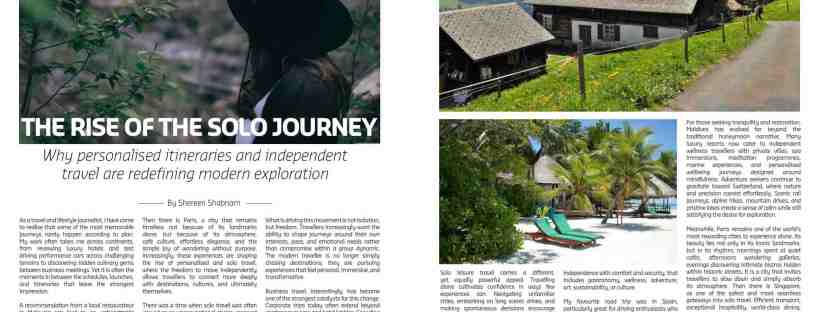
As a travel and lifestyle journalist, I have come to realise that some of the most memorable journeys rarely happen according to plan. My work often takes me across continents, from reviewing luxury hotels and test driving performance cars across challenging terrains to discovering hidden culinary gems between business meetings. Yet it is often the moments in between the schedules, launches, and itineraries that leave the strongest impression.

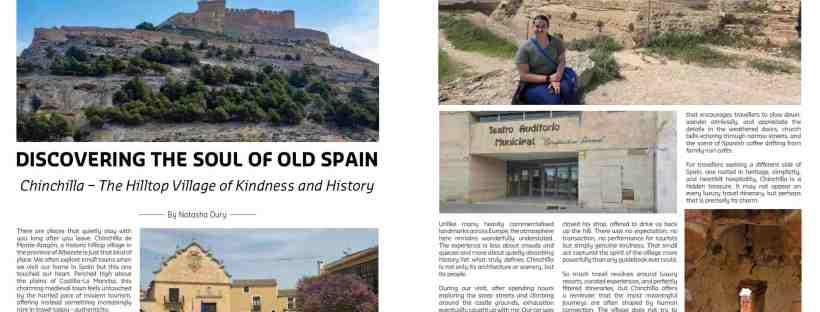
A recommendation from a local restaurateur in Malaysia can lead to an unforgettable street food experience in Penang, while a spontaneous detour through the winding coastal roads of Spain can transform a simple road trip into something cinematic. In Switzerland, driving through alpine passes and remote mountain villages offers a rare connection to nature and adventure, while the serenity of the Maldives provides the perfect counterbalance, a place where wellness, stillness, and reflection become part of the journey itself.

Then there is Paris, a city that remains timeless not because of its landmarks alone, but because of its atmosphere, café culture, effortless elegance, and the simple joy of wandering without purpose. Increasingly, these experiences are shaping the rise of personalised and solo travel, where the freedom to move independently allows travellers to connect more deeply with destinations, cultures, and ultimately themselves.

There was a time when solo travel was often viewed as an unconventional choice, reserved for gap-year students, or those simply unable to find company for a trip. Today, it has evolved into one of the most significant shifts in modern tourism. Across luxury travel, wellness escapes, and even corporate journeys, personalised itineraries and independent exploration are becoming deeply desirable experiences for travellers seeking something more meaningful than traditional sightseeing.

What is driving this movement is not isolation, but freedom. Travellers increasingly want the ability to shape journeys around their own interests, pace, and emotional needs rather than compromise within a group dynamic. The modern traveller is no longer simply chasing destinations; they are pursuing experiences that feel personal, immersive, and transformative.

Business travel, interestingly, has become one of the strongest catalysts for this change. Corporate trips today often extend beyond conference rooms and hotel lobbies. Spending time with local clients, colleagues, and industry professionals introduces travellers to a more authentic side of a destination. A recommendation from a local often becomes more memorable than anything in a guidebook. These interactions create a richer cultural connection and encourage travellers to explore independently during downtime, transforming work trips into deeply personal experiences.

Solo leisure travel carries a different, yet equally powerful appeal. Travelling alone cultivates confidence in ways few experiences can. Navigating unfamiliar cities, embarking on long scenic drives, and making spontaneous decisions encourage self-reliance and adaptability. Many travellers describe returning from solo journeys feeling more capable, focused, and emotionally recharged. In a world increasingly dominated by digital noise and rigid schedules, solo travel offers something increasingly rare: uninterrupted personal space.

The travel industry has recognised this shift. Luxury operators, boutique agencies, and wellness brands are now curating highly personalised solo itineraries that combine independence with comfort and security, that includes gastronomy, wellness, adventure, art, sustainability, or culture.

My favourite road trip was in Spain, particularly great for driving enthusiasts who view driving as part of the experience. From the dramatic mountain routes of Andalusia to the coastal highways stretching along the Mediterranean, Spain offers the perfect balance of scenery, culture, and spontaneity. Malaysia continues to attract independent travellers for its extraordinary culinary diversity and accessibility. I lived there for 9 years and love the refined dining in Kuala Lumpur to hawker stalls in Penang.

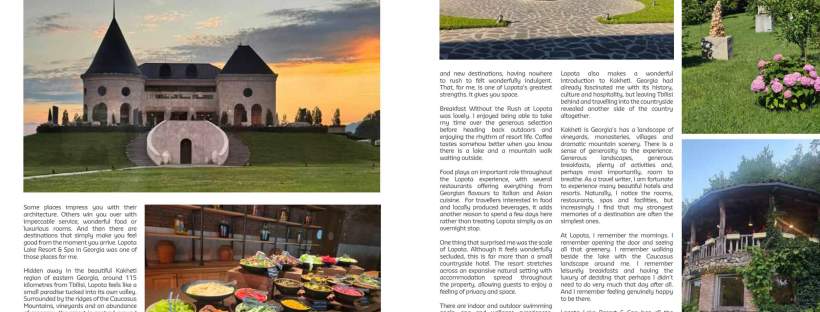
For those seeking tranquility and restoration, Maldives has evolved far beyond the traditional honeymoon narrative. Many luxury resorts now cater to independent wellness travellers with private villas, spa immersions, meditation programmes, marine experiences, and personalised wellbeing journeys designed around mindfulness. Adventure seekers continue to gravitate toward Switzerland, where nature and precision coexist effortlessly. Scenic rail journeys, alpine hikes, mountain drives, and pristine lakes create a sense of calm while still satisfying the desire for exploration.

Meanwhile, Paris remains one of the world’s most rewarding cities to experience alone. Its beauty lies not only in its iconic landmarks, but in its rhythm, mornings spent at quiet cafés, afternoons wandering galleries, evenings discovering intimate bistros hidden within historic streets. It is a city that invites travellers to slow down and simply absorb its atmosphere. Then there is Singapore, as one of the safest and most seamless gateways into solo travel. Efficient transport, exceptional hospitality, world-class dining, and a cosmopolitan energy allow travellers to move confidently while still experiencing cultural depth and diversity.

Ultimately, the rise of personalised solo travel reflects a broader evolution in how people define luxury and fulfilment. Modern travellers are placing greater value on authenticity, emotional wellbeing, flexibility, and meaningful experiences over rigid itineraries or crowded group tours and solo travel has become a powerful expression of curiosity and confidence.

Discovering the Soul of Old Spain

Chinchilla – The Hilltop Village of Kindness and History

Natasha Dury

There are places that quietly stay with you long after you leave. Chinchilla de Monte-Aragón, a historic hilltop village in the province of Albacete is just that kind of place. We often explore small towns when we visit our home in Spain but this one touched our heart. Perched high above the plains of Castilla–La Mancha, this charming medieval town feels untouched by the hurried pace of modern tourism, offering instead something increasingly rare in travel today – authenticity.

Arriving in Chinchilla feels like stepping into another era. Narrow stone streets wind gently through the village, opening onto hidden squares, rustic homes, and panoramic viewpoints that stretch endlessly across the Spanish landscape. Above it all rises the magnificent Castle of Chinchilla, its imposing stone walls watching over the town like a guardian from centuries past.

The castle itself is breathtaking. Built between the 15th and 16th centuries on the remains of earlier Moorish fortifications, it carries the layered history of Spain within its walls. Standing near the fortress, with the wind moving across the hilltops and golden light washing over the old stone, there is a stillness that feels deeply cinematic.

Unlike many heavily commercialised landmarks across Europe, the atmosphere here remains wonderfully understated. The experience is less about crowds and queues and more about quietly absorbing history.Yet what truly defines Chinchilla is not only its architecture or scenery, but its people.

During our visit, after spending hours exploring the steep streets and climbing around the castle grounds, exhaustion eventually caught up with me. Our car was parked further uphill, taxis were nowhere to be found, and the climb back felt far more daunting under the afternoon sun. In many destinations, this would simply become one of those inconvenient travel moments quickly forgotten. In Chinchilla, it became something unforgettable.

The local Mercado shopkeeper, noticing our situation, did something extraordinary in its simplicity. Without hesitation, he closed his shop, offered to drive us back up the hill. There was no expectation, no transaction, no performance for tourists but simply genuine kindness. That small act captured the spirit of the village more powerfully than any guidebook ever could.

So much travel revolves around luxury resorts, curated experiences, and perfectly filtered itineraries, but Chinchilla offers a reminder that the most meaningful journeys are often shaped by human connection. The village does not try to impress loudly. Instead, it reveals itself slowly through warm conversations, old-world hospitality, and moments that feel deeply personal.

The beauty of Chinchilla also lies in its rhythm. Life moves differently here. Locals gather casually in cafés, conversations linger in quiet squares, and evenings arrive with golden sunsets spilling across ancient rooftops. It is the kind of place that encourages travellers to slow down, wander aimlessly, and appreciate the details in the weathered doors, church bells echoing through narrow streets, and the scent of Spanish coffee drifting from family-run cafés.

For travellers seeking a different side of Spain, one rooted in heritage, simplicity, and heartfelt hospitality, Chinchilla is a hidden treasure. It may not appear on every luxury travel itinerary, but perhaps that is precisely its charm.

Bin Ham Travel Group Renews Partnership with Amadeus to Elevate Travel Experiences and Accelerate Growth

Bin Ham Travel Group, one of the UAE’s leading travel management companies, has renewed its long-standing partnership with Amadeus, a global leader in travel technology, to further enhance travel booking experiences and drive sustainable growth across the region.

Through this continued collaboration, Bin Ham Travel Group will leverage Amadeus’ state-of-the-art solutionsto deliver seamless, real-time booking services. This partnership will continue to provide access to rich travel content, enabling more personalized offers, greater choice, and a seamless booking experience across flights, hotels, car rentals, and other travel services.

In addition, Bin Ham Travel Group will benefit from Amadeus’ innovative portfolio of digital solutions, including Amadeus Online Suite Mobile App, which will enhance the mobile booking journey for customers. The Amadeus Value Hotels (AVH) will offer access to competitive hotel content worldwide while the NDC-X program will give access to next-generation airline retailing and personalized offers.

H.E. Ahmed Musallam Bin Ham, CEO of Bin Ham Travel Group, commented: “Our renewed partnership with Amadeus reinforces our commitment to delivering innovative travel solutions that meet the evolving needs of our customers. Together, we aim to elevate the travel experience by offering a wider range of choices, seamless booking, and greater convenience.”

Echoing this sentiment, Ernesto Sanchez Beaumont, Managing Director, Amadeus Gulf, said: “Bin Ham Travel Group has been a valued partner for many years. By renewing our collaboration, we are jointly advancing the travel ecosystem in the UAE with cutting-edge solutions that enhance efficiency and deliver exceptional value to travelers and partners alike.”

This renewed alliance underlines the shared vision of both companies to set new benchmarks in travel technology, strengthen the UAE’s position as a global travel hub, and deliver enriched experiences to both individual travelers and corporate clients.

Jamaica – the Heart of the Caribbean

Shereen Shabnam

Jamaica, a vibrant island nation, is a treasure trove of rich culture, spirited adventures, and serene landscapes. From the bustling streets of Kingston to the tranquil shores of Montego Bay, Jamaica offers a diverse tapestry of experiences that cater to the luxury traveler and cultural enthusiast alike and I was lucky to explore both cities during a recent visit, on my way to experience the local coffee festival.

My journey began in Montego Bay, a city synonymous with crystal-clear waters and lush landscapes. Here, the Martha Bray River offered an enchanting river rafting experience. Gliding down the gentle river on a bamboo raft, I immersed myself in the peaceful sounds of nature, stopping along the banks to savor fresh coconuts and sugarcane—an authentic taste of local life before venturing to Kingston.

In Kingston, the capital’s energetic pulse was palpable. A highlight was the Kingston Creative Artwalk, where the streets burst into a kaleidoscope of colors, showcasing vibrant murals and street art that narrate the city’s rich cultural heritage. 

The Jamaica Blue Mountain Coffee Festival was a vibrant fair that celebrated all aspects of coffee culture. This festive event featured live music and dance performances, creating a lively atmosphere that resonated through the area. Local artisans displayed their crafts, adding a unique cultural touch to the festival. 

Additionally, a food truck area offered a variety of culinary delights, while numerous coffee manufacturers provided free tastings and the opportunity to purchase their exquisite coffees. This combination of music, dance, art, and coffee created a dynamic and immersive experience for all attendees.

Not far from these colorful displays, the Emancipation Park, which was across the Pegasus hotel where I stayed, offered a serene escape, with its sprawling lawns and symbolic sculptures celebrating freedom and artistic expression.

As my visit coincided with Ramadan, I paid a visit to the Mahdi Mosque in Old Harbour which provided a profound insight into the local Muslim community’s life, adding a unique spiritual dimension to my visit. The warmth and hospitality of the residents there were truly heartwarming.

Café Blue was a morning delight with its scenic vistas. Sipping on locally sourced Blue Mountain coffee and indulging in exquisite chocolates, I felt the essence of Jamaica’s renowned coffee culture. The Jamaica Blue Mountain Coffee Festival further enriched this experience, uniting coffee lovers with farmers and baristas in a celebration of Jamaica’s famed brew.

The Craighton Coffee Estate tour was an educative journey into the world of coffee. Learning about the unique selling points of local coffee directly from the growers offered invaluable insights into what makes Jamaican coffee a global favorite.

A visit to Devon House was not complete without trying the iconic patties and homemade ice cream. Each bite offered a taste of local flavors and traditions, rounding off the culinary exploration.

My last destination in Kingston was a visit to the Bob Marley Museum, which was a profound journey through the life and legacy of the reggae legend. Housed in Marley’s original home, the museum encapsulates his musical career and his influence on the world. Highlights included personal memorabilia, his home recording studio, and the open garden area. 

The experience was deepened by an impromptu drum session by Bongo Herman, a renowned percussionist who played with Marley, echoing the vibrant spirit of Marley’s music and messages of peace and unity. I then returned to Montego Bay with a heavy heart and the feeling that my days in Kingston were not enough and the vibe in the city made me more determined to return to its fold.

Jamaica’s allure is undeniable – from its rhythmic cultural beats to its lush, verdant mountains and the deep blue of its waters. Each moment spent here promises a blend of relaxation, discovery, and indulgence, making Jamaica a must-visit destination on every coffee lover and every luxury traveller’s map.

#GTM #GlobalTrendMonitor #Magazine #Travel #Destination #ExperienceJamaica #IslandVibesOnly #BlueMountainCoffee #KingstonCulture #MontegoBayMagic #LuxuryInJamaica #CoffeeFestivalVibes #ReggaeAndRelaxation  #TasteOfJamaica #JamaicaThroughMyLens