Collina Luxury Relais

Where Alpine Serenity Meets Contemporary Italian Design

Shereen Shabnam

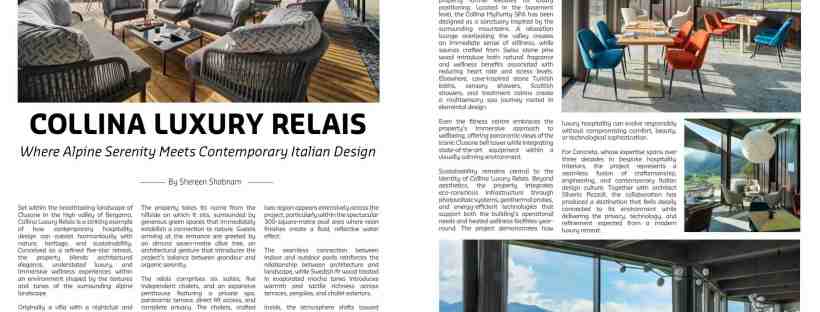
Set within the breathtaking landscape of Clusone in the high valley of Bergamo, Collina Luxury Relais is a striking example of how contemporary hospitality design can coexist harmoniously with nature, heritage, and sustainability. Conceived as a refined five-star retreat, the property blends architectural elegance, understated luxury, and immersive wellness experiences within an environment shaped by the textures and tones of the surrounding alpine landscape.

Originally a villa with a nightclub and outdoor swimming pool, the site has been completely reimagined through a low-impact redevelopment project led by architect Silverio Pezzoli of TecnoArreda Interior Design, with Concreta overseeing the execution of the interiors and common spaces. The result is not merely a hotel, but a carefully orchestrated sensory experience where materials, light, and craftsmanship work together to create a sense of calm sophistication.

The property takes its name from the hillside on which it sits, surrounded by generous green spaces that immediately establish a connection to nature. Guests arriving at the entrance are greeted by an almost seven-metre olive tree, an architectural gesture that introduces the project’s balance between grandeur and organic serenity.

The relais comprises six suites, five independent chalets, and an expansive penthouse featuring a private spa, panoramic terrace, direct lift access, and complete privacy. The chalets, crafted entirely from wood with corrugated aluminium roofs, mirror the earthy tones of the alpine environment while maintaining a contemporary architectural language.

What defines the interiors most profoundly is the material palette. Throughout the property, Concreta has created a dialogue between natural textures and precision craftsmanship. Locally sourced Gré stone from the Lake Iseo region appears extensively across the project, particularly within the spectacular 300-square-metre pool area where resin finishes create a fluid, reflective water effect. The seamless connection between indoor and outdoor pools reinforces the relationship between architecture and landscape, while Swedish fir wood treated in evaporated mocha tones introduces warmth and tactile richness across terraces, pergolas, and chalet exteriors.

Inside, the atmosphere shifts toward refined contemporary elegance. The Beides Restaurant forms the social heart of the property, where grey-stained timber, metal, and glass intersect in a dramatic yet restrained composition. Large glazed surfaces flood the interiors with natural light, while Canaletto walnut, moka-stained fir, aged oak flooring, and Fenix finishes introduce depth and softness to the space. The continuity between interior and exterior materials is particularly striking, with gré cobblestone surfaces extending the visual narrative throughout the property.

The private lounge, featuring a Canaletto walnut floor and visible wine cellar, reflects the project’s broader philosophy of understated exclusivity. Rather than relying on decorative excess, the design focuses on proportion, atmosphere, and the emotional quality of materials.

The wellness component of the property further elevates its luxury positioning. Located in the basement level, the Collina MyPurity SPA has been designed as a sanctuary inspired by the surrounding mountains. A relaxation lounge overlooking the valley creates an immediate sense of stillness, while saunas crafted from Swiss stone pine wood introduce both natural fragrance and wellness benefits associated with reducing heart rate and stress levels. Elsewhere, cave-inspired stone Turkish baths, sensory showers, Scottish showers, and treatment cabins create a multisensory spa journey rooted in elemental design.

Even the fitness centre embraces the property’s immersive approach to wellbeing, offering panoramic views of the iconic Clusone bell tower while integrating state-of-the-art equipment within a visually calming environment.

Sustainability remains central to the identity of Collina Luxury Relais. Beyond aesthetics, the property integrates eco-conscious infrastructure through photovoltaic systems, geothermal probes, and energy-efficient technologies that support both the building’s operational needs and heated wellness facilities year-round. The project demonstrates how luxury hospitality can evolve responsibly without compromising comfort, beauty, or technological sophistication.

For Concreta, whose expertise spans over three decades in bespoke hospitality interiors, the project represents a seamless fusion of craftsmanship, engineering, and contemporary Italian design culture. Together with architect Silverio Pezzoli, the collaboration has produced a destination that feels deeply connected to its environment while delivering the privacy, technology, and refinement expected from a modern luxury retreat.

The Rise of the Solo Journey

Why personalised itineraries and independent travel are redefining modern exploration

Shereen Shabnam

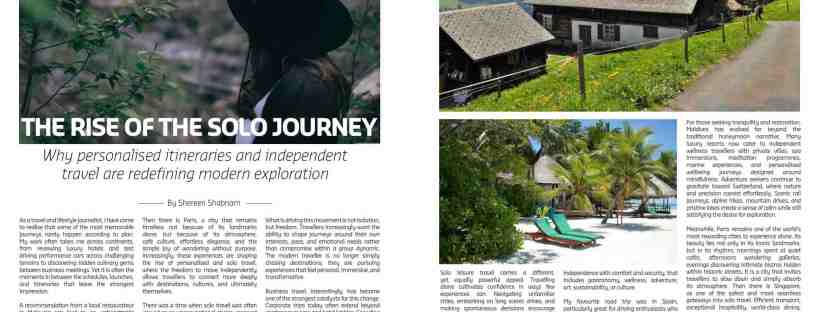
As a travel and lifestyle journalist, I have come to realise that some of the most memorable journeys rarely happen according to plan. My work often takes me across continents, from reviewing luxury hotels and test driving performance cars across challenging terrains to discovering hidden culinary gems between business meetings. Yet it is often the moments in between the schedules, launches, and itineraries that leave the strongest impression.

A recommendation from a local restaurateur in Malaysia can lead to an unforgettable street food experience in Penang, while a spontaneous detour through the winding coastal roads of Spain can transform a simple road trip into something cinematic. In Switzerland, driving through alpine passes and remote mountain villages offers a rare connection to nature and adventure, while the serenity of the Maldives provides the perfect counterbalance, a place where wellness, stillness, and reflection become part of the journey itself.

Then there is Paris, a city that remains timeless not because of its landmarks alone, but because of its atmosphere, café culture, effortless elegance, and the simple joy of wandering without purpose. Increasingly, these experiences are shaping the rise of personalised and solo travel, where the freedom to move independently allows travellers to connect more deeply with destinations, cultures, and ultimately themselves.

There was a time when solo travel was often viewed as an unconventional choice, reserved for gap-year students, or those simply unable to find company for a trip. Today, it has evolved into one of the most significant shifts in modern tourism. Across luxury travel, wellness escapes, and even corporate journeys, personalised itineraries and independent exploration are becoming deeply desirable experiences for travellers seeking something more meaningful than traditional sightseeing.

What is driving this movement is not isolation, but freedom. Travellers increasingly want the ability to shape journeys around their own interests, pace, and emotional needs rather than compromise within a group dynamic. The modern traveller is no longer simply chasing destinations; they are pursuing experiences that feel personal, immersive, and transformative.

Business travel, interestingly, has become one of the strongest catalysts for this change. Corporate trips today often extend beyond conference rooms and hotel lobbies. Spending time with local clients, colleagues, and industry professionals introduces travellers to a more authentic side of a destination. A recommendation from a local often becomes more memorable than anything in a guidebook. These interactions create a richer cultural connection and encourage travellers to explore independently during downtime, transforming work trips into deeply personal experiences.

Solo leisure travel carries a different, yet equally powerful appeal. Travelling alone cultivates confidence in ways few experiences can. Navigating unfamiliar cities, embarking on long scenic drives, and making spontaneous decisions encourage self-reliance and adaptability. Many travellers describe returning from solo journeys feeling more capable, focused, and emotionally recharged. In a world increasingly dominated by digital noise and rigid schedules, solo travel offers something increasingly rare: uninterrupted personal space.

The travel industry has recognised this shift. Luxury operators, boutique agencies, and wellness brands are now curating highly personalised solo itineraries that combine independence with comfort and security, that includes gastronomy, wellness, adventure, art, sustainability, or culture.

My favourite road trip was in Spain, particularly great for driving enthusiasts who view driving as part of the experience. From the dramatic mountain routes of Andalusia to the coastal highways stretching along the Mediterranean, Spain offers the perfect balance of scenery, culture, and spontaneity. Malaysia continues to attract independent travellers for its extraordinary culinary diversity and accessibility. I lived there for 9 years and love the refined dining in Kuala Lumpur to hawker stalls in Penang.

For those seeking tranquility and restoration, Maldives has evolved far beyond the traditional honeymoon narrative. Many luxury resorts now cater to independent wellness travellers with private villas, spa immersions, meditation programmes, marine experiences, and personalised wellbeing journeys designed around mindfulness. Adventure seekers continue to gravitate toward Switzerland, where nature and precision coexist effortlessly. Scenic rail journeys, alpine hikes, mountain drives, and pristine lakes create a sense of calm while still satisfying the desire for exploration.

Meanwhile, Paris remains one of the world’s most rewarding cities to experience alone. Its beauty lies not only in its iconic landmarks, but in its rhythm, mornings spent at quiet cafés, afternoons wandering galleries, evenings discovering intimate bistros hidden within historic streets. It is a city that invites travellers to slow down and simply absorb its atmosphere. Then there is Singapore, as one of the safest and most seamless gateways into solo travel. Efficient transport, exceptional hospitality, world-class dining, and a cosmopolitan energy allow travellers to move confidently while still experiencing cultural depth and diversity.

Ultimately, the rise of personalised solo travel reflects a broader evolution in how people define luxury and fulfilment. Modern travellers are placing greater value on authenticity, emotional wellbeing, flexibility, and meaningful experiences over rigid itineraries or crowded group tours and solo travel has become a powerful expression of curiosity and confidence.

Piaget Cocktail: Couture Creativity and Joyful Highlife

Natasha Dury

For decades, Piaget has embodied a glamorous world where high jewellery, artistic freedom, and celebration exist in perfect harmony. Drawing inspiration from the legendary spirit of the Piaget Society, an era defined by elegance, creativity, and jet-set sophistication, the Maison’s latest Piaget Cocktail collection captures that same sense of joyful extravagance in a contemporary and highly wearable form.

The new collection introduces nine vibrant rings and two ear cuffs that blend colourful gemstones with sculptural design and playful sophistication. Designed as an ode to celebration, the pieces channel the energy of cocktail culture through daring colour combinations, fluid lines, and precious stones arranged like luminous compositions of flavour and light.

Piaget’s connection to glamour dates back to the 1970s and 1980s, when Yves Piaget gathered artists, icons, and cultural figures from around the world into what became known as the Piaget Society.

From Capri and Saint-Tropez to Palm Beach and Monaco, the Maison became synonymous with a lifestyle built around creativity, elegance, and fearless self-expression. Legendary names including Elizabeth Taylor, Jacqueline Kennedy Onassis, Andy Warhol, Ursula Andress, and Roger Moore were all part of this vibrant universe.

That festive spirit continues within the Piaget Cocktail collection, originally introduced in 2010 and now reimagined with fresh energy and contemporary flair. Bright tourmalines, aquamarines, citrines, emeralds, amethysts, turquoise, and diamonds are paired in unexpected combinations that evoke the colours and freshness of exotic cocktails. Lemon-yellow sapphires, mint-green tourmalines, icy purple amethysts, and soft pink quartz create compositions that feel playful yet unmistakably luxurious.

The rings are sculpted with fluid curves inspired by the shape of a cocktail straw, while carefully cut stones introduce texture, movement, and lightness. Some pieces feature delicate figurative details, including sculpted leaves and crystal-like accents that echo ice cubes shimmering inside a glass.

Despite their bold colour palette, the designs remain refined and versatile. The pieces can be worn individually for understated elegance or layered together to create a more expressive statement. The result is jewellery that feels modern, spirited, and deeply connected to Piaget’s heritage of creativity and craftsmanship.

With Piaget Cocktail, the Maison once again transforms high jewellery into an experience, vibrant, celebratory, and full of personality. It is a collection that perfectly captures the Riviera-inspired glamour, artistic freedom, and joyful sophistication that continue to define the world of Piaget.

Big, Bold and Built for Everywhere

2026 Chevrolet Tahoe Z71

Shereen Shabnam

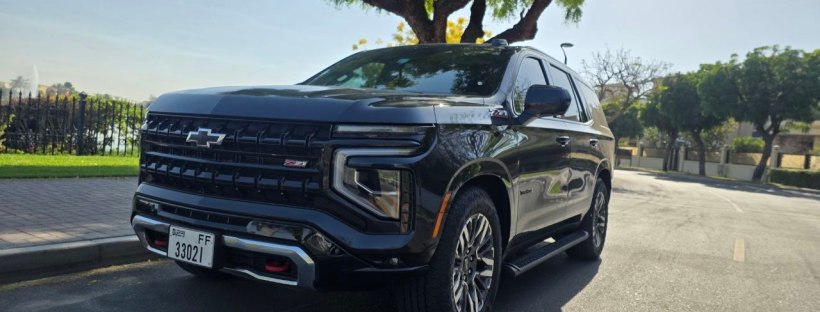
Some SUVs are designed for school runs, while others are designed to make every journey feel like an expedition. The 2026 Chevrolet Tahoe Z71 belongs firmly in the latter category. Massive in presence yet surprisingly refined behind the wheel, the latest Tahoe continues Chevrolet’s formula of blending full-size American muscle with modern technology and genuine off-road capability. Driving the Tahoe Z71 around Dubai immediately reminds you why large SUVs still command such loyalty in the region. From Sheikh Zayed Road to rougher desert-edge terrain outside the city, the Tahoe feels completely at home. It is commanding without feeling cumbersome, luxurious without losing its rugged edge, and powerful in a way that only a naturally aspirated V8 can deliver. The Z71 trim adds an extra layer of adventure-focused character to the Tahoe, giving it a tougher visual identity and enhanced off-road credentials.

Exterior

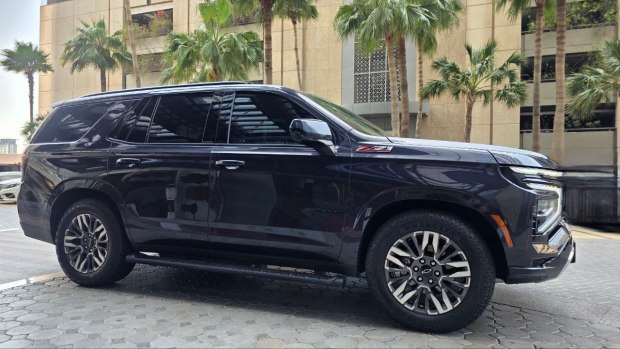
The Tahoe Z71 looks every bit the full-size American SUV. Its sheer scale alone gives it presence, but Chevrolet has added enough rugged detailing to ensure the Z71 stands apart from more urban-focused variants. The high-approach-angle front fascia, black tubular assist steps, red recovery hooks, and aluminium skid plate immediately signal its off-road intentions. Combined with the dark exterior detailing and large 20-inch machined wheels with technical grey accents, the Tahoe Z71 carries a muscular and purposeful stance that feels perfectly suited to the Middle East. The panoramic power sunroof adds a welcome sense of openness, as does the elevated driving position and extensive camera systems.

Interior

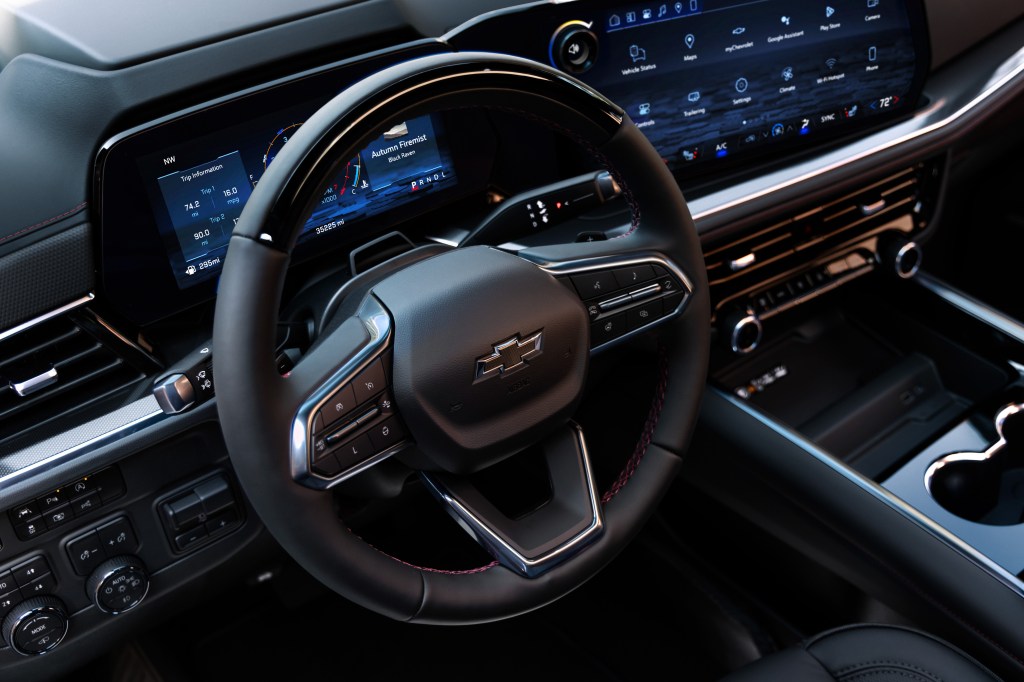
Inside, the Tahoe Z71 balances rugged practicality with genuine comfort remarkably well. The cabin feels spacious in every direction, with three rows capable of comfortably accommodating adults without compromise. The Gideon and Dark Atmosphere leather interior trim gives the cabin a premium feel, while heated front and second-row seats, tri-zone climate control, and extensive power seat adjustments make long-distance journeys effortlessly comfortable. We love that there are storage spaces everywhere and the large centre console with freezer mode feels especially useful in the UAE climate. The power-folding third-row seats also make cargo flexibility far easier when switching between passengers and luggage. Rear passengers are especially well catered for with the available Rear Seat Entertainment System, turning family road trips into genuinely relaxing experiences.

Technology

Chevrolet has significantly modernised the Tahoe’s technology experience, and the Z71 benefits from a comprehensive suite of connectivity and driver assistance systems. Wireless Apple CarPlay and Android Auto work seamlessly, while 5G connectivity capability keeps the Tahoe feeling constantly connected. The premium branded surround audio system delivers impressive sound quality, particularly when paired with the quiet cruising refinement of the SUV. The HD Surround Vision camera system is arguably essential, dramatically improving confidence while parking and manoeuvring in tighter spaces. Adaptive Cruise Control, Enhanced Automatic Emergency Braking, Lane Keep Assist, Rear Cross Traffic Alert with Braking, and Side Obstacle Detection all operate discreetly in the background to make daily driving feel less demanding.

Performance

The Tahoe Z71 is powered as standard by a 5.3-litre V8 paired with a 10-speed automatic transmission, but the available 6.2-litre EcoTec3 V8 transforms the experience entirely. It delivers effortless power with the kind of smooth, naturally aspirated response that has become increasingly rare in today’s turbocharged world. The dual exhaust system adds a subtle but satisfying V8 soundtrack without becoming overwhelming. What impresses most, however, is how the Air Ride Adaptive Suspension and Magnetic Ride Control dramatically improve ride comfort and body control. This allows it to glide over rough surfaces while still remaining stable at higher speeds. Off-road capability is equally strong. The two-speed Autotrac transfer case, electronic limited-slip differential, hill descent control, and off-road capability package give the Z71 genuine confidence away from paved roads.

Our Verdict

The 2026 Chevrolet Tahoe Z71 remains one of the most complete full-size SUVs on the market. It delivers exactly what buyers in this segment want: commanding presence, immense practicality, genuine V8 performance, serious off-road capability, and the ability to carry an entire family in complete comfort. The Z71 trim adds just the right amount of adventure-focused attitude to the formula. It looks tougher, feels more capable, and still manages to deliver the comfort expected from a premium family vehicle.

When Museums Become Bridges That Connect Cultures

International Museum Day Sparks Dialogue at Ajman University and Explores the Power of Cultural Connection

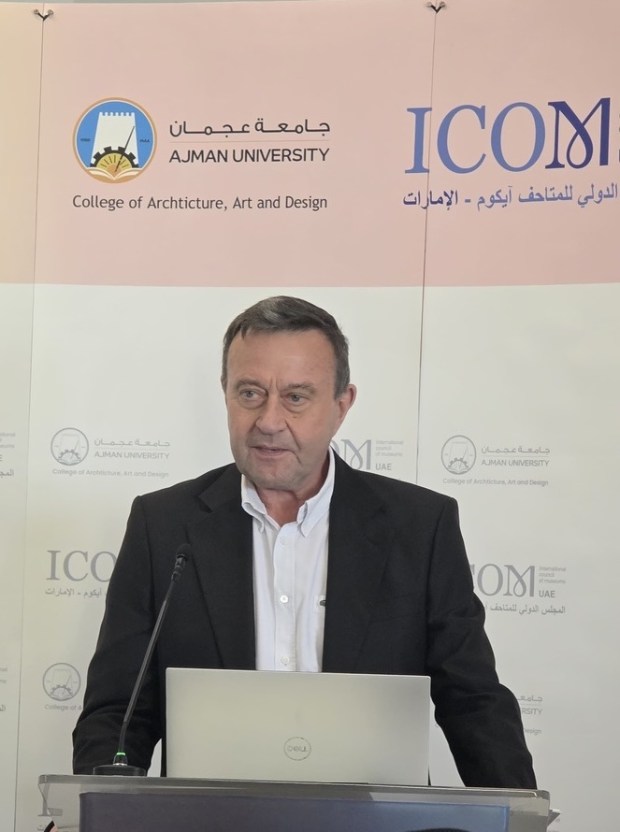
UAE-based immersive exhibition pioneers, MTE Studios brought global cultural dialogue into focus during a thought-provoking International Museum Day 2026 session at Ajman University, where founder Ludo Verheyen explored the timely theme of “Museums Uniting a Divided World.” Known internationally for creating large-scale educational and cultural experiences, MTE Studios continues to position the UAE as an emerging hub for globally relevant storytelling, immersive learning and cross-cultural engagement.

Through compelling global examples including the African Museum in Tervuren, the Apartheid Museum in South Africa, and MTE Studios’ own globally recognised Sultans of Science travelling exhibition, Ludo highlighted how museums are evolving beyond spaces that simply display objects. Instead, they are becoming places of dialogue, reflection, understanding and human connection.

One of the strongest messages from the session was how exhibitions can create bridges between cultures in ways politics often cannot. Drawing from the international success of Sultans of Science, Ludo spoke about reclaiming shared intellectual ancestry, challenging historical silence, and using storytelling to inspire curiosity instead of division.

Hosted in collaboration with ICOM UAE, the event brought together students, creatives and cultural thinkers for meaningful conversations around the role museums play in shaping empathy, preserving memory and building a more connected future.

With offices in Dubai and Cape Town, MTE Studios has delivered landmark projects across multiple continents. Its notable portfolio includes the award-winning Science Museum at King Abdullah University of Science and Technology (KAUST) in Saudi Arabia, Ajman Fort Museum, Masfoot Museum, Dubai Transport Museum and helped revitalize the Al-Fahidi Historical Neighbourhood, preserving its cultural heritage while integrating modern elements. among other acclaimed cultural and educational experiences.