Top 5G Core (5GC) and Mobile Network Predictions for 2021

Mobile Operators Transition Core Networks to 5G Core (5GC)

By: Amr Alashaal, Regional Vice President – Middle East at A10 Networks

Contain your excitement …..5G is coming (again)!

Wait….wasn’t 5G launched over two years ago?

Well, yes. For those not familiar with the nuances of 5G technology, 5GC (core or standalone) takes 5G deployment to the next level and replaces the 4G packet core with a new, cloud-native core using containers and following 3GPP specifications (release 15). This is somewhat separate from the market-by-market launch that most operators publicize, and the activity is less visible to the casual subscriber.

We recently sponsored a 5G security survey to understand the extent of mobile operator 5G core deployment. It was a global survey of 115 service providers that included mobile operators as well as fixed broadband providers. We asked several questions about the timing and extent of 5G core deployment and adoption and where the functions A10 Networks provides will fit in. 

So, given that research, what do I see for 2021?

2021 Prediction – Over Half of Mobile Operators will have Launched 5GC (standalone) by the End of 2021

Most mobile operators that have launched 5G have chosen what’s called a “non-standalone” implementation. That is a hybrid of 4G and 5G that allows mobile operators to offer much of the 5G capabilities to their subscribers while still leveraging existing investment in their 4G packet core. Operators are eager to take advantage of the benefits of 5GC (standalone) – greater service agility and lower costs. The survey revealed that operators are committed to 5GC (SA or standalone) implementation, with 93 percent of mobile operators implementing within a three-year window and investing in multiple 5G security options.

2021 Prediction – a Half a Billion Mobile Subscribers Globally will be Using 5G by EOY 2021

Mobile operators also see rapid adoption of 5G over the next three years by subscribers as 5G deployment accelerates. Most operators said that within five years, at least 25 percent of their traffic would be carried via 5G – with 40 percent of operators predicting that most of their traffic would be carried by 5G. This is consistent with the recent Ericsson Mobility Report that forecasts 56 percent of total mobile data traffic will be 5G by 2026.

That’s a significant leap from today where almost half of operators report they have no traffic on 5G core at all. For 2021, 9 percent of operators say that most of their traffic will be on 5Gwith 70 percent predicting less than 50 percent will be 5G.

2021 Prediction – Three-quarters of Mobile Operators will have Whittled Down their 3G Traffic to 25% or Less

It’s really hard for mobile operators to get rid of old technology. 3G still exists in most mobile networks despite rapid 5G deployment. This is a combination of subscribers that won’t give up their older handsets, specific geographic areas, such as rural areas, that have legacy equipment and regulatory and industry practices that require a lengthy process for “sunsetting” older technologies. In North America, AT&T shutdown of 3G is expected in 2022; Verizon in 2021.

For example, today, only 13 percent of mobile operators surveyed have managed to eliminate support of 3G. By 2025, most operators (60 percent) said that they will no longer support 3G.  That means that by 2025, 40 percent of operators will still carry 3G traffic. This also increases concerns around 5G security, since older technologies have multiple security vulnerabilities that will still be present in these multi-generational networks.

2021 Prediction – In North America, 2G will Finally be Gone – not so in Europe

By the end of 2021, all major mobile operators will have shut down their 2G networks. In Europe, however, the shutdown has been complicated by the use of 2G in smart meters and eCall modems in cars that initiate a call to send information, such as the location of the accident, to emergency services.

2021 Prediction – Mobile Operators will Build More Relationships with Cloud Providers for Mobile Edge Compute (MEC) Services

According to a BPI report commissioned by A10 Networks, nearly all mobile operators state that mobile edge compute (MEC) is a vital part of their 5G deployment plans and most are actively deploying or will deploy within the next year or so. IDC forecasts 50 percent of all new infrastructure deployments (enterprise as well as service provider) will be at the edge by 2023. I believe that mobile service providers will also jump on the advantages of mobile edge compute, but take a more measured, strategic approach to their use of MEC, at least in the near term.  By 2025, we see most mobile operators will have deployed 5G (standalone) combined with MEC and will direct up to 25 percent of their traffic through these nodes. Operators will also use strategic partners for their enterprise customers that want the lower latency that a mobile edge compute service provides. 

2021 Prediction – In 2021, DDoS Detection and Mitigation will Become the Top Security Investment Priority for MEC networks

It’s already going in that direction now. DDoS attacks are getting more frequent, intense and most are smaller in size, making them harder to detect. The average attack size is only 12 Gbps, with most attacks being under 5 Gbps. A10’s  The State of DDoS Weapons Report, Q2 2020 shows 10M available DDoS weapons.

The Heavy Reading 5G Security Report shows that small DDoS attacks are the primary reason for investment priority for MEC. And with MEC capacity as low as 600 Mbps, mobile service providers and their new 5G enterprise customers are at substantial risk for these common DDoS attacks.

Those are the predictions for 2021. Overall, in spite of the pandemic, we believe that demand for 5G services will be strong and that subscribers will continue to find more value and use cases from the growing 5G capability.


 

The Baltic Sea Region is looking forward to more cruises in 2021

Cruise Baltic looks forward to welcoming cruise guests again all around the Baltic Sea Region, such as in Stockholm, Sweden.

The cruise network, Cruise Baltic, has just published the annual Cruise Baltic Market Review, which not surprisingly shows disappointing figures in 2020 due to the pandemic. The network is now looking forward to more normal conditions in 2021 and to restart cruise tourism.
 
The newly published 2021 edition of the Cruise Baltic Market Review reveals not surprisingly that 2020 was a challenge. In the past year, the cruise industry all around the world experienced an extraordinary setback due to the outbreak of the COVID-19 virus, and the cruise industry in the Baltic Sea Region was no exception. What was expected to be a record number year with more than 6 million guests in the Baltic Sea Region turned out to be the complete opposite. The cruise network, Cruise Baltic, now looks forward to the world returning to more normal conditions in 2021 and to a restart of cruise tourism.
 
“The figures are of course disappointing and not at all as we predicted they would look at this time last year. No one could have foreseen what the year 2020 would really be like. We can now only hope for better cruise tourism times and prepare to welcome more cruises in a safe way in 2021,” says Claus Bødker, Director of Cruise Baltic.
 
Due to the COVID-19 pandemic, the number of cruise guests visiting the Baltic ports in 2020 declined by -99% compared to 2019. The number of calls also decreased -96% and resulted with a total of 109 calls. The number of turnarounds decreased by -98%, from a total of 481 to 11. Despite strict lockdowns and border restrictions, the Baltic ports still managed to welcome some cruise calls. 13 ports in total had cruise calls and guests in 2020.
 
With the unfortunate results in 2020, expectations are naturally higher for 2021.
 
“Estimates for 2021 are extremely positive, but we still expect the cruise season to be affected by the pandemic. Together with our destination partners, we work to offer all cruise guests an unforgettable – and not the least safe – experience in the Baltic. We will continue to attract cruise guests by ensuring that it is safe and secure to travel to our destinations,” says Claus Bødker.
 
Although the industry most likely still will be affected by the pandemic, the cruise network remains optimistic and expects guest numbers to increase with 3,380,936 guests in the Baltic Sea Region in 2021 compared to 2020.
 
In 2020:
–       The total number of cruise guests decreased by -99%
–       The total number of calls decreased by -96%
–       The total number of turnarounds decreased by -98%
In 2021, Cruise Baltic expects guest numbers to increase with 3,380,936 guests compared to 2020.

Luxury and Opulence: The All-New Pearl 62

Edited by Shereen Shabnam

Founded in 1998 with the aim of designing a range of luxury motor yachts offering voluminous interiors, combined with opulence and design excellence, Pearl Yachts is one of the UK’s most prominent shipyards. The new 18.6m PEARL 62 is the latest addition to Pearl Yachts growing fleet of ocean-going yachts designed in collaboration with Bill Dixon and Kelly Hoppen MBE.

The Pearl 62, with its sporty looks, top performance and four comfortable guest cabins (plus crew cabin or jet-ski garage) is unique in its size range and is sure to please owners who are looking for a yacht that is fun to use with friends and family, with or without crew. Industry leading Pearl’s comprehensive 5 years warranty completes this unique offer on the market.

Starting aft, the yacht can be fitted with an optional bathing platform that also glides outwards to become a terrace on the sea. The transom has a built-in bench that can be used as seating or as a passageway if a tender is stowed on the platform and it lifts to reveal a jet ski garage that can alternatively be fitted as a crew cabin. The bathing platform has runners so that launching a jet ski from the garage is a breeze. 

Starboard steps lead to the aft cockpit where there is a large table with banquette seating. The glass doors leading to the saloon slide all the way sideways and a window slides down so that the cockpit opens onto the saloon to become a large indoor/outdoor space. Kelly Hoppen proposes four interior style themes: Modern, Studio, Taupe and Luxury so that owners can personalise the yacht to suit their taste.

The saloon has large glazed areas that sweep upwards so that the interiors are bathed in natural light. Starting aft, there is a fully equipped galley with Miele appliances, a private stairway leading to the owners’ cabin, a dining area and a living area next to the indoor helm station. A second stairway leads down to the VIP and the twin cabins. 

Side decks lead to the foredeck where guests will find a large seating area complete with foldaway table that disappears into the seating and sun pads with adjustable backrests. There are plenty of drinks holders and lockers and the area can be fitted with an optional Bedouin style canopy. 

The full-length flybridge is accessed via a staircase on the starboard side of the aft cockpit. This large and versatile space has a helm station with joystick controls and Garmin touch screens with controls for everything from the yacht’s anchor to its Fusion entertainment system. Next to the helms there is comfortable seating that can convert to become sun pads.

A hardtop with an opening central section is optional but a wet bar with a cool box, sink and BBQ grill is standard. An icemaker and fridge can be added if owners desire. Across from the wet bar there is banquette seating and a dining table for eight.

The Pearl 62 has four guest cabins. The full beam owners’ cabin is accessed via a private stairway and features a large, centrally placed bed, a desk, a reading corner and his and hers closets. Long hull windows mean that owners can enjoy the view even lying down.

Two twin cabins can both convert to doubles. The port side twin has direct access to a bathroom that is shared with the starboard twin. The VIP cabin is fore and has a large, centrally placed bed, a dressing table, his and hers storage and an en-suite with a walk-in shower. All cabins and bathrooms enjoy excellent light and views through Pearl’s signature hull windows. 

Volvo IPS propulsion gives the Pearl 62 optimal performance and efficiency characteristics while joystick controls with dynamic positioning system and an integrated Garmin touch-screen display make helming and accessing all of the yacht’s systems easy and intuitive. 

The Lion City: Singapore

By Shereen Shabnam

Singapore was my favorite cosmopolitan city for weekend visits during my nine years in Kuala Lumpur.  As students took the overnight train and ventured the streets for culinary experiences trying hawker food, Indian food, seafood, scrumptious Chinese cuisine and strolled through the lovely hiking trails or enjoy the beaches in the South.

As a working adult, not much has changed when I visit Singapore except that the city now has more world class exhibitions and even more attractions than ever before. With a strong Malaysian, Indian, Chinese, Arab and Western cultures merged into one society, there is plenty of activities to suit every taste.

The strength of the city lies in the melting pot of cultures and the most efficient and widespread public transport systems that makes it easier to explore. I particularly enjoy staying on the Sentosa Island and then use it as a base to go on walking trails, Botanic Gardens and for retail therapy.

My Singaporean friends love Orchard Rd so we generally walk down the street but later head to local neighbourhoods for independent designers, quirky art galleries, Chinatown, vibrant night markets and of course no visit is complete without a visit to the museums and the science centre.

The MacRitchie Reservoir Park is a lush city park with an eight-kilometer treetop hike, bridges suspended high above the forest floor and has flying lemurs, monkeys, squirrels, monitor lizards and owls.

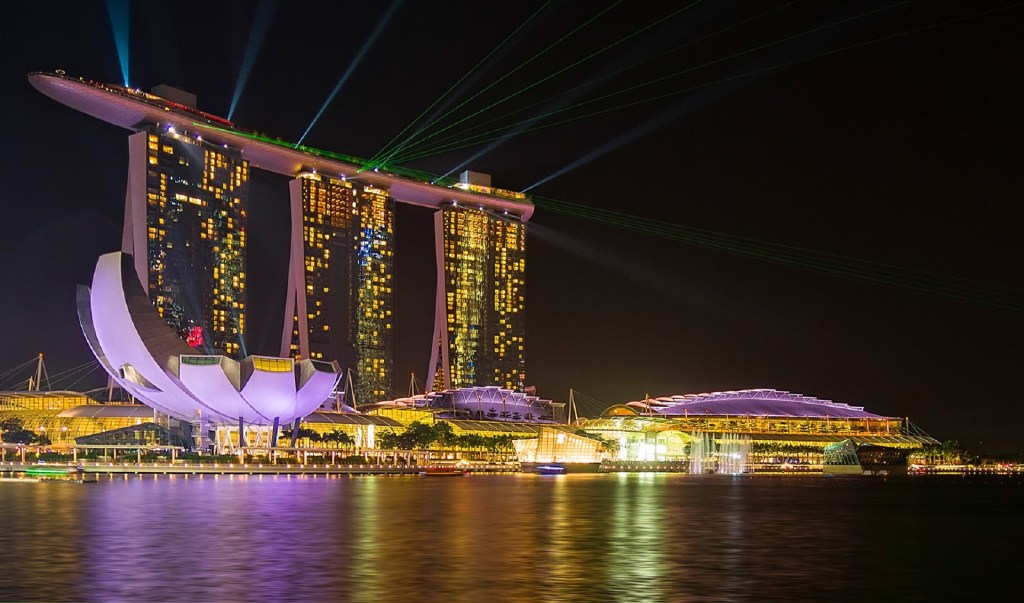
Top of my list is the Singaporean Zoo, the Tiger Balm and the Botanic Gardens, the Marina Bay Sands area, Bukit Timah Nature Reserve, Pulau Ubin Island, Little India and of course Chinatown to get a sense of Chinese culture within the city and enjoy the craft shops, restaurants and other bargains. If you like architecture, visit the Thian Hock Keng Temple. Enjoy music outdoors as well as the Singapore Symphony Orchestra hosts various free concerts at different venues around the country.

I flew to Singapore directly with Emirates Airlines. It is a great Asian city to visit and you need at least five days to a week to be able to explore all the attractions.

Fortinet Announces AI-powered XDR for Fully Automated Threat Detection, Investigation, and Response

Fortinet® (NASDAQ: FTNT), a global leader in broad, integrated and automated cybersecurity solutions, today announced a new Extended Detection and Response (XDR) solution, FortiXDR, designed to reduce complexity, speed detection, and coordinate response to cyberattacks across the organization. FortiXDR is the only solution of its kind to leverage artificial intelligence (AI) for the investigation effort critical to incident response. Expanding on the cloud-native endpoint platform of FortiEDR, it enhances an organization’s Security Fabric and the threat protection powered by FortiGuard Labs security services. Specifically, FortiXDR can fully automate security operations processes typically handled by experienced security analysts to mitigate threats faster across the broad attack surface.

John Maddison, EVP of Products and CMO at Fortinet said, “Cybercriminals are using sophisticated—and increasingly intelligent—tools to target vulnerable network edges resulting from digital innovation. As a result, organizations need smarter, faster security operations to combat sophisticated, organized cybercrime. FortiXDR is the only XDR solution that leverages artificial intelligence to replicate the hands-on investigation that otherwise leaves organizations playing catch up. Applied across the Security Fabric platform, it helps enterprises keep pace with today’s accelerating threat landscape, even for organizations limited by small teams and few tools.”

XDR Solutions Solve Critical Security Challenges

The large number of security products typically deployed by enterprises has resulted in an unmanageable volume of security information that can actually mask threats, leaving security teams struggling to detect and respondto cyberattacks. As a result, a majority of organizations are either currently or planning in the next two to three years to consolidate security vendors.

Many organizations are gravitating toward consolidation based on an XDR solution. Gartner defines XDR as “a security incident detection and response platform that automatically collects and correlates data from multiple security products.”1 XDR provides an intelligent and automated way to tie traditionally isolated solutions into a single system.

However, while XDR solutions can ease some of the challenges related to vendor complexity, most focus on cross-product alert correlation and still require significant manual intervention of teams already stretched thin due to the cyber skills gap. Security teams require an XDR solution that can automate the entire process, from detection to event investigationto remediating security incidents.

Fortinet Brings Artificial Intelligence to XDR

Unlike other solutions, FortiXDR is AI-powered by a patent-pending Dynamic Control Flow Engine and continually trained by the threat data and research of FortiGuard Labs as well as the frontline expertise of its incident responders. The solution starts by leveraging the diverse security information shared across the Fortinet Security Fabric for correlation and analysis, converting them into high fidelity security incidents. These are then investigated by the AI engine, just as a seasoned security analyst would, to come to a final threat classification and scope. Finally, the best possible contextual responses are defined and can be automatically implemented to quickly remediate confirmed incidents. 

Key benefits of FortiXDR include:

  • Dramatically reduces the number of alerts across products—by 77% or more on average.
  • Handles complex tasks in seconds that would take experts with specialized tools 30 minutes or more to accomplish. And without human error.
  • Enables the consolidation of independent security products and an automatic, coordinated response.
  • Fully automates intelligent incident investigation rather than relying on scarce human resources.

Reduce Time to Detection and Response

Additionally, FortiXDR can ingest telemetry from more aspects of an organization than any other solution, increasing the chance of detecting and properly classifying attacks. It also covers more of the cyberkill chain stages and supports more points of response to mitigate the impact of an attack more effectively than competitive solutions. All of this enables organizations to reduce mean time to detection (MTTD) and mean time to response (MTTR), while improving security operations efficiency and security posture. As a result, FortiXDR enables organizations to reduce the risk of missing potentially crippling cyber attacks like ransomware, phishing, and more, all while easing the burden on small security teams.

FortiXDR and the Fortinet Security Fabric

Fortinet’s platform approach, the Fortinet Security Fabric, leverages the top-rated, global security services of FortiGuard Labs to stop as many attacks as possible across the digital attack surface. It also provides the perfect foundation for XDR – with a common data structure, correlated telemetry, unified visibility, native integration and seamless interoperation. Now, FortiXDR layers on automated analytics, incident investigation and pre-defined responses out of the box.

The right-fit solution for any size organization

FortiXDR joins Fortinet’s industry-leading portfolio of AI-driven Security Operations offerings, including incident response components suitable for organization of any size or sophistication. FortiXDR’s “out of the box” operation makes it perfect for most midmarket and average enterprise organizations with limited teams, tools and processes. For organizations with more staff, solutions and systemic process, FortiSIEM adds multi-vendor visibility while FortiSOAR orchestrates response. This family of products deliver the right-fit solution to organizations of any size to help teams reduce the risk potential of security incidents by blocking more, detecting sooner, and responding faster.

Evolution of Hybrid Workplace, SD-WAN Going Mainstream and Criticality of Edge Networking are Top Three Trends for 2021

By: Morten Illum, EMEA Vice President at Aruba, a Hewlett Packard Enterprise company

We made it through 2020. But now it is time to turn off our out-of-(home)offices and roll up our sleeves once more. 

As our thoughts turn to what 2021 has in store, here are three key trends that are firmly on my radar this year.

The continued evolution of the hybrid workplace

It is perhaps no surprise that this is first up. It’s been top of the business agenda for the past year after most organizations found themselves converting almost overnight to a work from home operating model thanks to COVID-19 and only able to welcome back a skeleton in-person staff since.

 But as vaccination programmes roll out across EMEA and people are allowed to return to the office in far more significant numbers, I believe we will see the emergence of a new type of hybrid workplace. Or more accurately, a hybrid workspace. After all, the definition of a place is “a particular position, point, or area in space” and our future work environment is likely to be anything but fixed.

The more significant change, however, is that the new hybrid workspace will be a deliberate one. Of course the redesign of the office as a concept was in play well before COVID-19 turned the world upside down. But for the past year, the hybrid workspace been a reactive one – hybrid by necessity versus by design.

As businesses took the time they’ve had this year to plan their return in more detail, we can expect to see more fundamental changes starting to shape our office environments. In addition to the necessary health and safety measures, I predict we’ll continue to see less desk space and more meeting room space, for example, as day-to-day interactions are kept to video conference and the office is reserved for bigger group get-togethers.

SD-WAN goes mainstream

A quick Google search will show you countless articles proclaiming that this is the year of SD-WAN. Certainly, it was said about both 2019 and 2020, but we really mean it for 2021!

Again, one of the key drivers for this has been the pandemic – and the spotlight it has shone on the need to better connect home, branch and cloud environments to deliver a consistent application experience, whether an employee chooses to log on from the office, home or on the road (imagine!). As businesses look to the coming year, support for a distributed workforce will remain a top priority, making SD-WAN critical to successfully navigating the “new normal.” 

This acceleration of interest in SD-WAN is something that is coming through loud and clear in conversations with partners and customers. Case and point, on a recent call with a security company, they mentioned that every current customer discussion ends in them being told that the customer has an SD-WAN project underway and that this project needs to be defined before the customer can make any changes to their security policies or vendor of choice.

This is just one example, but it certainly points to the fact that SD-WAN is becoming a much broader customer need throughout 2021.

Taking the data centre to the Edge

The explosion of data has been a running theme throughout my posts for some time now – but as COVID-19 has accelerated the digital transformation of nearly every organization out there, the amount of data being generated at the Edge has never been higher – or indeed more vulnerable – and the need for businesses to quickly and efficiently collect, secure, process and act on that data has never been more pressing.

With the hybrid workplace set to make the situation even more complicated in 2021 with people constantly moving in and out of the office environment, the traditional model of a single data centre located at a company headquarters is no longer fit for purpose. Instead, we will see enterprises starting to transition to a “centres-of-data” networking model – with multiple micro data centres positioned at the Edge to help convert all that data into simplified IT operations, accelerated service delivery, and streamlined IT deployment.

In it together

The challenges of the past year are by no means over – and the above three trends will certainly keep things interesting in 2021.

AESG Acquires Springboard Middle East, Launches Data+ Digital Commissioning, Handover and Asset Management Platform

With its new Solution-as-a-Service (SaaS) offering, AESG will offer comprehensive commissioning, handover and asset management services, and integrated data solutions on a digital, cloud-based platform with enhanced data management capabilities.

Followingthe announcement of its ongoing global expansion, AESG, a specialist consultancy, engineering, and advisory firm, today strengthened its position as a leading provider of consultancy services for the built environment through the acquisition of Springboard Middle East. In addition to gaining ownership of Springboard Middle East’s regional contracts, staff, IP, and assets, the deal has enabled AESG to launch its new digital commissioning, handover and asset management platform, Data+.

As highlighted in the seminal ‘Building a Safer Future – Independent Review of Building Regulations and Fire Safety’ report[1], insufficient or inaccurate data can significantly impact the performance, efficiency, and safety of buildings. While over the last decade, the building industry has gradually moved away from traditional paper-based documentation to digital alternatives, issues around the accuracy, accessibility, and updatability of building data continue to linger due to the static nature of the pdfs, spreadsheets, and documents typically used in the process.

By offering one of the first comprehensive digital handover solutions in the Middle East, AESG hopes to introduce new practices for the industry, while strengthening the value proposition of its existing services. “Our acquisition of Springboard Middle East perfectly aligns with our strategy of pioneering new and more effective means of service delivery. Their revolutionary platform perfectly rounds out the digitalisation of our offerings and enhances both the immediate and long-term value of the projects we deliver. By adopting an integrated, digital approach across commissioning, handover and asset management, AESG is committed to leading the data revolution in the built environment,” said Saeed Al Abbar, CEO at AESG.

As a value add to its clients, the company will now offer full digital handovers on all commissioning and handover management projects, along with the option of hosting project data on Data+, its cloud-based platform – making it accessible from anywhere, easily searchable, and instantly updatable. When utilized as a subscription-based service, Data+ serves as a secure, collaborative environment that stands as a ‘single, central source of truth’ for all stakeholders and project teams.

Because Data+ has been built on industry standards and follows a COBie and BIM Level 2 compliant framework, it can be integrated with most Building Information Modelling (BIM) and Computer Aided Facility Management (CAFM) solutions. This allows for accurate and validated  asset data to be seamlessly exported to these platforms, greatly enhancing building owners modelling, performance optimisation, and maintenance capabilities.  The platform also features integration with IOT and AI systems to provide digital twins of assets that enables the use of advanced analytics to optimize the performance of systems  during the operational phase of a building’s lifecycle.

While AESG believes clients of all sizes can benefit from its new offering, Al Abbar noted that Data+ will prove to be especially valuable to mega-projects. “We are working on a number of such high-value projects across the region and the size and scale of these undertakings warrants a more streamlined approach to data management. With all teams having instant access to the up-to-date information they need, they can have a clear picture of the real-time project metrics which will greatly enhance their efficiency and effectiveness. We are excited to work together with our clients in familiarising them with this new approach to handover and ongoing project management,” he concluded.


[1] https://assets.publishing.service.gov.uk/government/uploads/system/uploads/attachment_data/file/707785/Building_a_Safer_Future_-_web.pdf

How to tap the 5G potential with Ericsson’s 5G RAN Slicing solution

Ajay Gautam, Strategic Product Manager 5G RAN

Why is 5G RAN slicing key to delivering on the promise of 5G? As a vital part of end-to-end network slicing technology, RAN slicing will help unlock the potential of a wide range of use cases for various industries, enterprise and enhanced mobile broadband segment. In our latest paper, we discuss what is Ericsson RAN slicing and how it can help realize the full potential of 5G.

From smartphones to smart factories, the promise of 5G is an open innovation platform that enables business and society to take the leap towards a smarter, safer and more sustainable future.

5G network slicing gives service providers the ability to serve a multitude of use cases with lightning-fast connectivity and enhanced performance. Service providers around the world are moving towards 5G network slicing, where slices of virtual networks are allocated to the meet connectivity demands of different use cases. Network slicing facilitates service differentiation and secures the necessary capacity and performance during high load to fulfill service-level agreements (SLA).

A case in point is online gaming. An Ericsson ConsumerLab survey of 7,000 consumers found that 90 percent of those who play video games at least weekly were negatively affected by lag when playing, with at least 1 in 3 sometimes quitting as a result.

Different game genres have different data rates, latency and reliability requirements on mobile networks. This is an area where service providers can offer customized slices for cloud gaming or any AR/VR application. The slicing framework can reserve dedicated resources by orchestrating these across the radio, transport and core networks.

Just like with this cloud gaming example , service providers can use network slicing as a way of differentiating their 5G offering. It helps tap the huge potential of a wide range of use cases for the enterprise and enhanced mobile broadband markets with guaranteed performance.

Ericsson RAN slicing solution enables service providers to offer differentiated handling of new services with respective quality of service and radio resource management for SLA fulfillment. What’s more, our solution is scalable and flexible enough to support a growing number of slicing use cases with faster time to market.

Elevate Your Style with the Latest Hijab Collection from Kashkha

There are many ways of wearing a Hijab (headscarf). Be inspired by Kashkha’s latest range of Hijabs that is available online (www.kashkha.com and in-stores) in an array of colours and fabrics to help you coordinate your headwrap with your outfit.

According to the Kashkha Management, “Distinguished by high quality tailoring, stunning designs and fabulous fabrics, each Kashkha Hijab is adorned with a signature rhinestone logo in the corner. Embodying the spirit of beauty and gracefulness, there is something for everyone in our collections, ranging from classics to best sellers.”

The Kashkha stylists have put together five great looks that require minimal effort and are ideal for any occasion.

  1. Classic: Those with long hair can tie their lengths into a no-fuss updo before draping the Hijab over the head. Wrap the Hijab around your face, keeping one side longer. Cross the longer end over the shorter end and secure at the top with a pin or magnet.
  • Voluminous: To achieve this chic look, wrap the Hijab around your face keeping one side longer and securing the shorter end under your chin. Roll the longer part over the head for a layered look and secure from the side with a pin or magnet.
  • Twisted Turban: To get the Twisted Turban look, place the hijab at the back of your neck with the ends in front. Cross the two ends over each other, then twist them one more time so the end you started with is in the same hand. Tug tightly and secure at the nape of your neck. You may even go for the pre-twisted Hijabs from Kashkha that are super easy to wear.
  • Over the Shoulder: For a glamorous vibe, fold the Hijab and wrap it over your head before letting the other longer end hang over the shoulder. Having the Hijab fall down the shoulder means you look stylish from all angles.
  • Tucked In: Embrace this sophisticated look which takes only a few minutes to do. Wrap the Hijab around your face, keeping one side slightly longer than the other before tucking at the nape.

Increased per passenger ancillary revenue offers hope for Wizz Air, says GlobalData

Following that Wizz Air’s Q3 2021 financial results showed a year-on-year revenue fall of 76.5% but increased ancillary revenue; 

Gus Gardner, Travel and Tourism Analyst at GlobalData, a leading data and analytics company, offers his view:

“Wizz Air has, once again, proven its ability to drive ancillary revenues: the lifeblood of the airline. The company has proved it is resilient and reactive in its recovery approach, managing to achieve increases in ancillary revenue per passenger despite traffic levels being at an all-time low. 

“Pandemic-concerned passengers are more likely to purchase packages that include baggage and seat selection to ensure a safer journey. Further, flexibility is now expected, and Wizz Air has benefitted from providing ‘flexible tickets’ to mitigate ever-changing travel restrictions. 

“People who are eager to travel during the pandemic are often doing so to visit friends and relatives – a clear shift away from the idea of travelling for a ‘short break’. These pandemic travelers are more likely to purchase extras because they tend to travel with additional baggage such as gifts and food to take home. This could be a key market for the airline in the coming months. Even though Wizz Air’s reported total ancillary revenues decreased by 72.9% year-on year, there was a bright spot in these uncertain times as ancillary revenue per passenger increased by 19.5%.

“The airline’s ambitious expansion plan remains very much in motion and could pay dividends. Since March 2020, the airline has opened a further 14 bases – in stark contrast to its competitors Ryanair and easyJet, who have both pulled out of some markets. This move could put the airline in a stronger position to rapidly expand post-COVID-19, and will help it become a more recognizable brand. The agile approach it has deployed is likely to benefit Wizz Air going forward.”