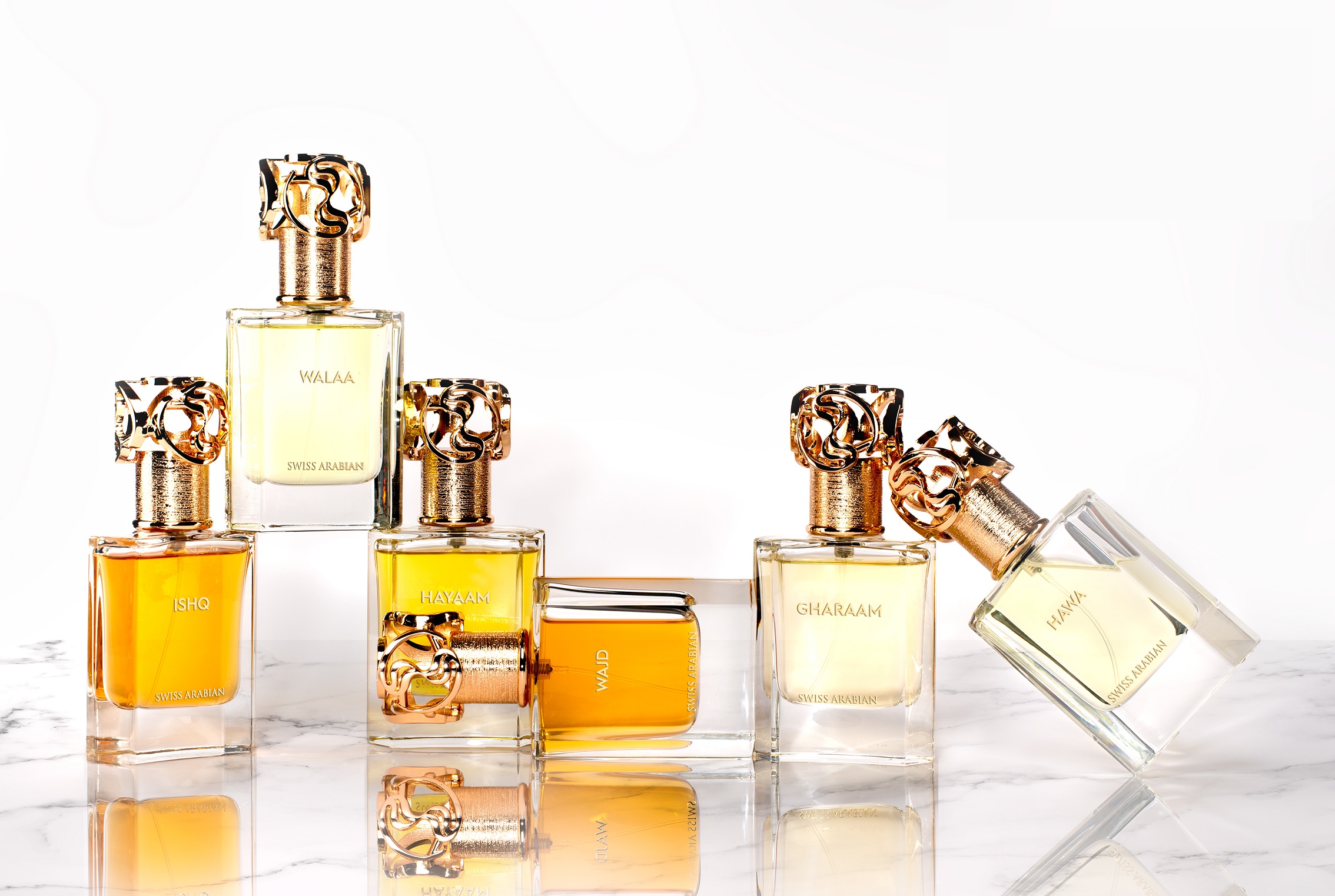
The WAAW Collection by Swiss Arabian includes six fragrances with the most thoughtful story to treat mothers on this special day and show them just how appreciated they are. The WAAW collection is inspired by the Arabic letter و (pronounced “waaw”) which is known as the letter of unity as it is used in Arabic to join words, and thus everything, together – and what is more unifying than the bond between a mother and child? This beautiful collection is based on the different forms of love and includes six fragrances that will surely express your appreciation for the mother in your life.
From luxurious amber notes to delicious floral scents, Swiss Arabian’s Waaw Collection is sure to get you into her good books this Mother’s Day.
Gharaam – meaning infatuation, is a premium fragrance that has soft notes of jasmine, saffron and amber.
Hawa – meaning desire, is a fragrance that brings forth a bright citrus scent combined with floral notes including mandarin, rose, orange flower and white jasmine.
Hayaam – meaning adoration, is a fragrance that combines dazzling citrus and warm earthy ingredients like warm Irish clove, leather, and woody amber.
Wajd – meaning passionate love, is a scent that was created to induce the feeling of deep passion with ingredients such as turkish rose, red apples, and patchouli.
Walaa – meaning deep love, is a citrus fragrance that encapsulates happiness with the bright and fresh notes of lavender, mandarin orange and white jasmine.
Ishq – meaning the powerful form of love, is a fragrance that represents timelessness of true love with a burst of warm black pepper and spicy saffron. The scent later depletes and diffuses notes of roses and smooth leather.
Founded in 1873, Benetti is the oldest Italian shipyard specialized in luxury yachts, icon of an Italian timeless style and of construction excellence. Every yacht is unique, developed around its owner. The company designs, builds and sells vessels in composite materials from 29 to 44 meters and boats in steel and aluminium from 37 to more than 100 meters.
Benetti launched recently in Viareggio M/Y “SUNRISE”, ninth unit of Mediterraneo 116, a fiberglass 35-meter yacht in the Class category characterised by a timeless elegance. Exterior lines by Giorgio M. Cassetta deliver huge lounge areas and bright interior spaces penned out by Benetti Interior Style Department who personalized the decòr according to the owner’s desires.
“SUNRISE” offers a variety of external spaces, not to mention an 80sqm Sun Deck: an invitation to explore and fully experience the beauty of a close connection with the surroundings at every time. Mediterraneo 116 “SUNRISE” has 3 decks and hosts 10 guests in 5 cabins and 7 crews in 4 cabins. Range at 10 knots is 3,200 nautical miles.
The owner was represented by MARINBASE Yacht Management for the launching ceremony. MARINBASE stated that M/Y ”SUNRISE” will be the third Benetti in their growing fleet in Turkey.
Benetti belongs to the Azimut|Benetti Group, the largest private-owned luxury yachting group in the world.
A perfect mix of function and form, materials and thrills, the Azimut 66 has rapidly established itself as an iconic model in the 60 – to 70 – foot flybridgecategory. Its sleek lines bearing the unmistakable Azimut style and its innovative multi-tier layout have seen it quickly embraced by the market, with over 100 units sold.
What is behind its resounding success? Could it be the smart use of interior and exterior spaces, designed to deliver fantastic onboard liveability for owners and guests?
Maybe it’s the many different entertainment zones strategically scattered across the boat, such as an American bar positioned forward of the galley or the flydeck with three separate areas including a lounge tantalisingly suspended between sea and sky.
Is it the fourth cabin or is it simply the Made in Italy flair of its design and décor featuring elegant wood, glass and polished surfaces?
The secret may even lie in its high-tech DNA, with features such as the use of carbon fibre in the highest parts, SeaStar electronic power steering and an integrated control and monitoring system by Raymarine.
It’s hard to identify just what it is, but the heady milestone of 100 makes it clear that the Azimut 66 Flybridge has that indefinable quality called the X factor.
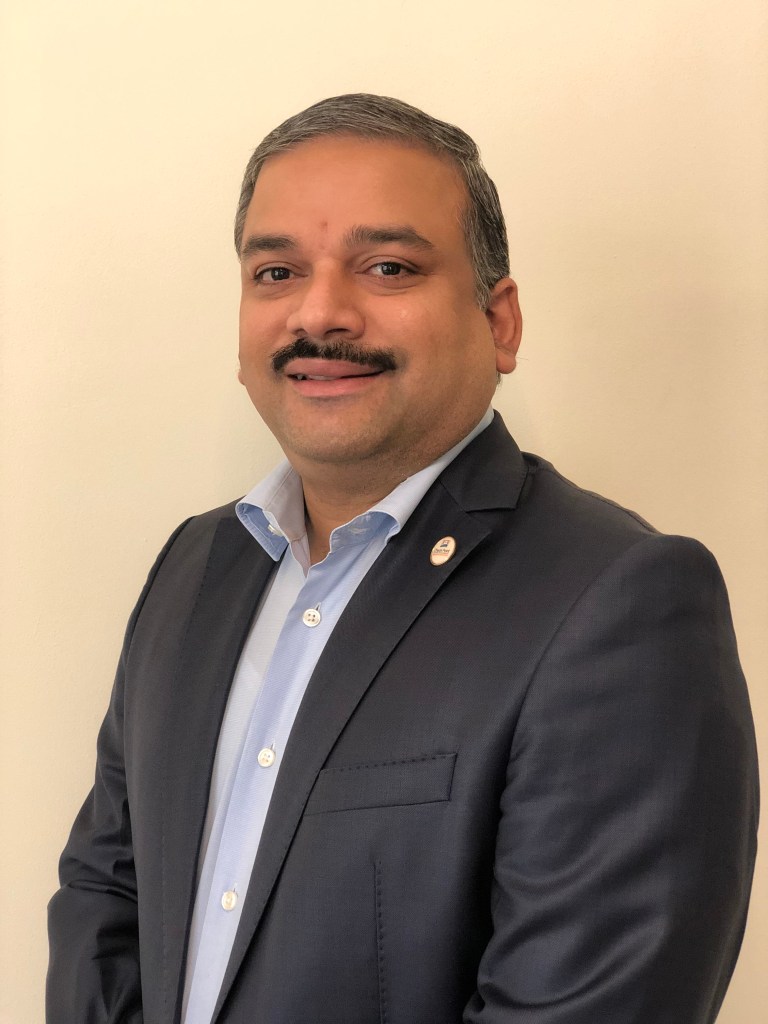
Aruba, a Hewlett Packard Enterprise company, today announced the appointment of Ahmed ElSayed as Regional Channel Manager for Middle East and South Africa (MESA). In this new role, Ahmed will drive the company’s growth and expansion in the region by assuming overall responsibility for the channel partner ecosystem, including distributors and managed service partners. He will spearhead strategic and tactical sales planning, partner recruitment and training and enablement.
Commenting on the appointment, Sherifa Hady, VP, Channel Sales, at HPE Aruba says, “Enterprises today are accelerating their digital transformation plans in the light of remote working which has become a business imperative brought on by the pandemic. Against this scenario, Aruba’s AI-powered cloud-native solutions that transform the network to support innovation and the future of work, is seeing a huge amount of interest from regional customers. With the high growth potential that we see in the market, we decided to appoint a result-oriented channel leader like Ahmed. We believe that through his inspiring vision and strategy, partners will be able to deliver Aruba’s value proposition in line with customer’s business priorities.”
Ahmed has worked at Aruba since 2012 and has a wealth of knowledge, skills and experience. He has successfully held a number of positions within the company, ranging from Channel SMB Account Manager in GCC, Pakistan and Iraq to Middle East Distribution Manager which expanded to the larger MEMA/ MESA region. Prior to joining Aruba, he was the Partner Account Manager for Saudi Enterprise and SMB market at Cisco.
Over the years at Aruba, Ahmed and his team have managed to drive consistent double-digit growth on Aruba Instant On (AIO) portfolio business, building Aruba’s Application Acceleration Service (AAS) foundation in multiple countries, accelerating SMB channel-led business by a double digit YoY growth, driving transactional revenue growth and developing and executing strategies for Aruba ESP (Edge Services Platform), a key solution in the company’s portfolio.
“I am excited to officially take over as channel manager for MESA. Our partners are a big part of our success as an organization and I look forward to deepening our engagement with them and taking our channel ecosystem to the next level,” concludes Ahmed.
The global leader in hands-free wearable computing for industry, RealWear, today announced that strong customer demand has accelerated its number one position, reporting triple (3X) year-over-year growth. The company also announced a broad global expansion to support customers, including opening a new Customer Experience Centre in Dubai Internet City to meet growing demand for its products and services in the Middle East, and new offices in other major markets. The company has also achieved a milestone of shipping wearable devices to more than 3,000 unique enterprise customers worldwide in a wide range of industries.
The pandemic meant engineers were no longer able to travel to factories and facilities to support onsite technicians in person, RealWear quickly became the wearable device of choice for virtual, remote collaboration for troubleshooting equipment and performing quality checks, audits, inspections, plant tours, and product and factory acceptance tests (FAT). Leading collaboration companies — including Microsoft, Cisco, and Zoom — have custom-tailored their software to fully leverage RealWear’s assisted reality wearable solution that is the choice of frontline workers at some of the world’s prominent industrial brands.
“RealWear’s momentum is real and accelerating, with encouraging feedback from our customers about the transformative nature of our remote collaboration offerings for industry,” said Andrew Chrostowski, RealWear Chairman and CEO. “As a result, we’ve seen 3X our 2019 sales in 2020, with that momentum carrying into 2021. Our customers view us as the ‘gold standard’ solution to meet the daily needs of frontline workers and their management teams in key industry sectors such as Energy, Manufacturing, Food and Beverage, Automotive and Telecommunications. RealWear’s unique, fully ruggedized form factor, full-shift battery life, and unmatched relationships with Microsoft, Cisco, Zoom and a host of other leading ISV partners is driving our market leadership.”
New Demonstration Centre in Dubai
RealWear has opened its initial physical presence in the Middle East including an onsite demonstration facility in Dubai’s Internet City, which will provide customers and partners in the region the opportunity to get ‘hands on’ with RealWear’s flagship head-mounted wearable, the HMT-1. This initial physical presence is timely, not only to meet increased customer demand, but also as Middle East businesses adapted to new ways of working to drive worker safety and productivity.
RealWear already has a thriving business in the Gulf Cooperation Council (GCC), with diverse customers spanning aerospace, insurance and oil and gas. Its growing list of clients in the region includes Marsh, and Saudi Arabian public petroleum and natural gas company, Saudi Aramco. When Saudi Aramco began using RealWear’s intrinsically safe product, HMT-1Z1, it recorded a 70% increase in safety compliance on top of a 10% improvement in workforce productivity.
According to ABI Research, from 2020-2025 smart glasses hardware unit shipments in the industrial and healthcare sectors is expected to grow globally by a factor of 12.8. Additionally, between 2020-2025, unit shipments to the top three verticals, representing key segments for RealWear – manufacturing, logistics, and energy & utilities – are projected to grow by a factor of 10.8.
Threat actors weaponizing cloud storage, advanced cloud-based tools to create record ransomware attack effectiveness, volume
The pandemic’s work-from-home reality resulted in an unprecedented change for organizations as they fought to defend exponentially greater attack surfaces from cybercriminals armed with powerful cloud-based tools, cloud storage and endless targets. As working environments evolved, so did the methods of threat actors and other motivated perpetrators, as detailed in the latest 2021 SonicWall Cyber Threat Report.
“2020 offered a perfect storm for cybercriminals and a critical tipping point for the cyber arms race,” said SonicWall President and CEO Bill Conner. “The pandemic — along with remote work, a charged political climate, record prices of cryptocurrency, and threat actors weaponizing cloud storage and tools — drove the effectiveness and volume of cyberattacks to new highs. This latest threat intelligence offers a look at how cybercriminals shifted and refined their tactics, painting a picture of what they are doing amid the uncertain future that lies ahead.”
The 2021 SonicWall Cyber Threat Report highlights how COVID-19 provided threat actors with ample opportunity for more powerful, aggressive and numerous attacks, thriving on the fear and uncertainty of remote and mobile workforces navigating corporate networks from home.
“There is no code of conduct when it comes to cybercriminals, their methods of attacks and the selection of their targets,” said Conner. “Technology is moving at an unprecedented rate. Threats that were once thought to be two or three years away are now a reality, with do-it-yourself, cloud-based tools creating an army of cybercriminals armed with the same devastating force and impact of a nation-state or larger criminal enterprise. Organizations must remain vigilant and proactive in hardening their cybersecurity posture.”
The 2021 SonicWall Cyber Threat Report goes inside the stories that headlined 2020, and takes a closer look at new and disruptive cyber threats to provide insight into the evolving cyber threat landscape. Major findings of the new in-depth SonicWall report include:
Ransomware reaches new heights with increasingly targeted attacks: A 62% increase in ransomware globally, and 158% spike in North America, points to cybercriminals using more sophisticated tactics and more dangerous variants, like Ryuk, to earn an easy payday.
Ryuk ransomware rises from obscurity, sees astronomical increase: First identified in August 2018, Ryuk did not appear outside of North America, Europe or Asia as late as January 2020. The following month, Ryuk began climbing the charts, eventually overtaking top-ranking Cerber ransomware. With 109.9 million cases detected worldwide, Ryuk was logged nearly every eight seconds in September alone.
More ‘never-before-seen’ malware variants identified: SonicWall’s newly patented Real-Time Deep Memory Inspection™ (RTDMI), a component of the company’s Capture Advanced Threat Protection (ATP) sandbox service, discovered 268,362 ‘never-before-seen’ malware variants in 2020, a 74% year-over-year increase. RTDMI™ is proven to proactively detect and block unknown mass-market malware, including malicious Office, and PDF file types.
Malicious Office files surpass last year’s preferred PDFs: SonicWall research shows the shift to employees working from home full-time could be directly linked to the increased utilization of Office files and PDFs as malicious vehicles armed with phishing URLs, embedded malicious files and other dangerous exploits.New SonicWall data indicates a 67% increase in malicious Office files in 2020, while malicious PDFs dropped 22%.
Cryptojacking returns as cryptocurrency breaks records: Once thought to be a dying attack vector after the industry’s major mining operation boarded its online service, cryptojacking is back thanks to rising cryptocurrency values and its appeal of concealed payouts. Total cryptojacking for 2020 set records with 81.9 million hits, a 28% increase from last year’s 64.1 million total.
IoT malware increases as pandemic creates potential network of disruption: In March 2020, masses of employees packed their personal office belongings and equipment to work from home for months on end, simultaneously creating an explosion of new attack vectors. In 2020, SonicWall Capture Labs threat researchers recorded 56.9 million IoT malware attempts, a 66% increase that showed shifting tactics for lurking cybercriminals.
Intrusion attempts up as attack patterns change: The distribution of intrusion attacks took on an entirely new character as a result of the changes brought on by the pandemic. In 2020, Directory Traversal tactics (34%) took over the top spot after a tie with remote code execution (21% for both) in 2019.
Retail, healthcare and government face mounting ransomware volume: Industry-specific ransomware data reflects the impact cybercriminals had on retail (365%), healthcare (123%) and government (21%) sectors over the course of the pandemic.
The annual 2021 SonicWall Cyber Threat Report arms enterprises, small- and medium-sized business, government agencies and other organizations with actionable threat intelligence collected by the SonicWall Capture Labs threat research team. In-house researchers work collectively with other industry experts, over 50 industry collaboration groups, research teams and freelance security researchers.
Data for the report is gathered from over 1.1 million sensors strategically placed in over 215 countries and territories around the world as well as cross-vector, threat related information shared among SonicWall security systems, including firewalls, email security devices, endpoint security solutions, honeypots, content filtering systems and the SonicWall Capture Advanced Threat Protection (ATP) multi-engine sandbox.
Trickbot is also the new top global threat used by cybercriminals while xHelper makes a leap to second spot in the UAE
Check Point Research, the Threat Intelligence arm of Check Point® Software Technologies Ltd. (NASDAQ: CHKP), a leading provider of cyber security solutions globally, has published its latest Global Threat Index for February 2021. Researchers reported that the Trickbot trojan
continues to reign as the top malware targeting 7 percent of UAE businesses for the second consecutive month. xHelper, a malicious application seen in the wild since March 2019, used for downloading other malicious apps and display advertisement, sees an increase in activity as it targets to close to 6 percent of users in the UAE.
During February, Trickbot was being distributed via a malicious spam campaign designed to trick users in the legal and insurance sectors into downloading a .zip archive with a malicious JavaScript file to their PCs. Once this file is opened, it attempts to download a further malicious payload from a remote server.
Trickbot was the 4th most prevalent malware globally during 2020, impacting 8% of organizations. It played a key role in one of the highest-profile and expensive cyberattacks of 2020, which hit Universal Health Services (UHS), a leading healthcare provider in the U.S. UHS was hit by Ryuk ransomware, and stated the attack cost it $67 million in lost revenues and costs. Trickbot was used by the attackers to detect and harvest data from UHS’ systems, and then to deliver the ransomware payload.
“Trickbot is gaining popularity for its versatility and its track record of success in previous attacks,” said Ram Narayanan, Country Manager, Check Point Software Technologies Middle East. “The fact that this trojan has almost replaced the intensity at which Emotet targeted UAE businesses is proof that cyber criminals are relentless in their actions. The threat actors behind Trickbot target financial institutions using a wide array of modules not only to steal credentials from the target PC, but also for lateral movement and reconnaissance on the targeted organization itself, prior to delivering a company-wide targeted ransomware attack. Businesses must focus on training and educating its employees in identifying malicious emails, so they can stop the trojan in its tracks and avoid exposing the entire networks.”
Check Point Research also warns that “Web Server Exposed Git Repository Information Disclosure” is the most common exploited vulnerability, impacting 48% of organizations globally, followed by “HTTP Headers Remote Code Execution (CVE-2020-13756)” which impact 46% of organizations worldwide. “MVPower DVR Remote Code Execution” is third place in the top exploited vulnerabilities list, with a global impact of 45%.
*The arrows relate to the change in rank compared to the previous month
Trickbot ranks as most popular malware impacting 7 percent of organizations in the UAE, closely followed by xHelper and Floxif which also impacted close to 6 per cent and 3 per cent of organizations in the UAE respectively.
Trickbot – Trickbot is a dominant botnet and banking Trojan constantly being updated with new capabilities, features and distribution vectors. This enables Trickbot to be a flexible and customizable malware that can be distributed as part of multi-purpose campaigns.
– A malicious application seen in the wild since March 2019, used for downloading other malicious apps and display advertisement. The application is capable of hiding itself from the user, and reinstall itself in case it was uninstalled.
Floxif is an info stealer and backdoor, designed for Windows OS. It was used in 2017 as part of a large scale campaign in which attackers inserted Floxif (and Nyetya) into the free version of CCleaner (a cleanup utility) thus infecting more than 2 million users, amongst them large tech companies such as Google, Microsoft, Cisco, and Intel.
Check Point’s Global Threat Impact Index and its ThreatCloud Map is powered by Check Point’s ThreatCloud intelligence, the largest collaborative network to fight cybercrime which delivers threat data and attack trends from a global network of threat sensors. The ThreatCloud database inspects over 3 billion websites and 600 million files daily, and identifies more than 250 million malware activities every day.
The complete list of the top 10 malware families in February can be found on the Check Point Blog.
Nishrat Nazeen, Founder and Curator of Aromas Fiji
The pandemic has inspired people all around the world to focus more on being clean, hygienic and healthy and this vision has led many around the world to invest in inspiring projects and products that focus on keeping everyone around cleaner and safer. Aromas Fiji was initiated by Nishrat Nazeen, a PR Professional based in Nadi, Fiji Islands during the pandemic to encourage people to use more soap and relax with fragrant candles and ultimately embrace a lifestyle that focuses on wellbeing.
In a candid interview, Nishrat tells us more about her new venture and the debut collection of soaps and candles from Aromas Fiji.
Tell us a bit about Aromas Fiji?
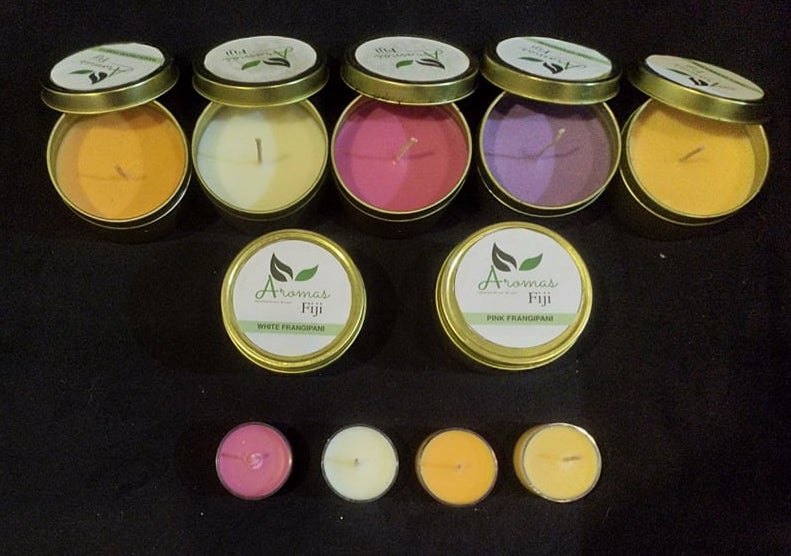
Aromas Fiji is a homegrown organic halal certified soaps and soy candle brand. Our aim is to bring colour and fragrance into your home with our collection of handcrafted natural and organic soaps and candles made with high quality plant and botanical oils.
What inspired you to take on this project?
Our industry depends on marketing and PR budgets, both affected by the pandemic as these are the first budgets to be slashed by companies. The down time prompted me to look into other sources of income.
Aromas Fiji was hence conceptualized based on my love for fragrant smells that elevate the stay at home experience, especially during the pandemic when I was mainly staying at home and working remotely. Realizing that there was a gap in the market for halal certified skin care and home deco products, I ventured into learning about aromas, their calming effect on the body, mind and soul and with the encouragement of family members, Aromas Fiji was born.
Are the soaps and candles made in Fiji and
Our products are all made naturally in Fiji and our soaps are hand mixed, hand poured, hand cut, and packaged individually. Our carefully curated product line includes luxury scented candles and soaps that are natural, environmentally friendly and made to elevate the spirits of users as well as enrich the homes they inhabit. The products are thoughtfully planned from the brand and product design to colours and scents and packaged exquisitely for home use or for gifting.
Apart from soaps, you also make candles. What do you use to make these?
Aromas Fiji candles are made of long-lasting soya wax and comes with high quality cotton wicks ensuring you have the best quality natural product made without comprising on the environment. We use essential oils and aromas in the candles that help to wind down and boost your well-being especially in the evenings when a peaceful sleep routine is welcomed by all members of the family.
And how are the soaps made?
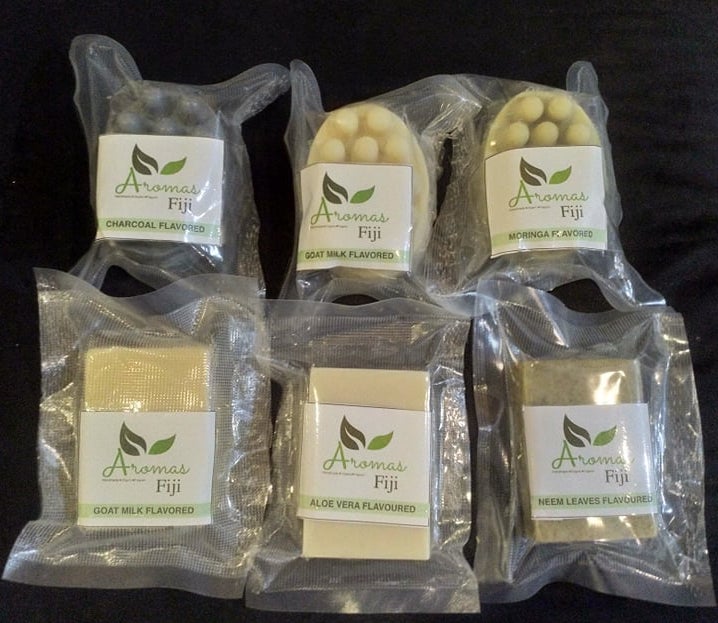
Aromas Fiji soaps are made of all-natural products that are long-lasting, paraben-free, sustainably made and environmentally friendly. Suitable for the whole family, the soap lather offers a luxurious cleansing experience that hydrates and nourishes the body, leaving the skin clean, soft, moisturized and fresh.
What is your favourite in the debut collection of Aromas Fiji?
From the debut range I love the traditionally crafted soaps with massaging nodules as I find it makes the at-home cleansing ritual worthy of a spa. Made with aromatic essential oil, the massage nodules pamper the body and elevates the senses with specially formulated ingredients known for nourishing properties.
Which ingredients do you love working with?
My favourite ingredients for the soaps and candles are Moringa, Goats Milk, Aloe Vera, Oranges, Charcoal, Sandalwood, Frangipani, Lemon Grass, Marygold, Citronella, Japanese Honeysuckle, Amber, Musk and Vanilla.
After a year of testing cars, the jury of the Women’s World Car of the Year are pleased to announce the winners in each of nine categories. These vehicles represent excellence in their segments based on safety, comfort, technology, and value for the money.
As a Motoring Jury based in the UAE, I was able to test the nominated cars easily as we were less affected with lockdowns during the year. This is the eleventh year for WWCOTY, a team of fifty motoring journalists from 38 countries spanning five continents. It is the only jury in the automotive world composed exclusively of women.
This year’s new voting methodology started with choosing the three best models in each category before narrowing those picks down to the individual winners. Eligible vehicles were launched between January and December 2020. As in previous years, votes were certified by the independent auditor Grant Thornton New Zealand.
This year, voting was more complicated due to the pandemic, which limited each juror’s ability to drive. Despite the challenges, jurors made an extra effort to get behind the wheel of these vehicles to evaluate them in time for voting.
One more round of voting remains. Jurors will now choose the Best Car of the Year from among the nine category winners. The results will be announced on March 8, International Women’s Day.
2021 Women’s World Car of the Year Category Winners
BEST URBAN CAR
BEST FAMILY CAR
BEST LUXURY CAR
Peugeot 208
Skoda Octavia
Lexus LC500 Cabrio
BEST SPORT CAR
BEST URBAN SUV
BEST MEDIUM SUV
Ferrari F8 Spider
Peugeot 2008
Land Rover Defender
BEST LARGE SUV
BEST 4X4 & PICK UP
BEST EV
Kia Sorento
Ford F-150
Honda e
Women’s World Car of the Year is the only car awards group in the world composed exclusively of women motoring journalists. It was created by New Zealand motoring journalist, Sandy Myhre, in 2009. She is currently Honorary President while Marta García serves as Executive President.
The objective of the awards is to choose the best cars of the year. These are not ‘women’s cars’ because there is no such thing. Instead, cars are chosen based on the principles that guide all consumers including safety, quality, price, design, driving dynamics, and environmental impact.
The new flagship hits the water in Cattolica, the first unit is for a French owner
Space for onboard comfort and wellbeing; space for timeless design and ‘Made in Italy’ craftsmanship. The first Ferretti Yachts 1000, the shipyard’s first 100% wide-body vessel, has been launched in Cattolica for a French owner.
The launch represents the culmination of a design process driven by the quest for perfection: extraordinary investments in Research and Development, thousands of hours of naval design, long-term mould prototyping at the Plug & Mould factory in Forlì, and the equally long and delicate construction phase at the Cattolica shipyard. The result is a remarkable new flagship made up of talent and technology, the ability to innovate and craftsmanship.
Majestic, versatile and suited to all markets, Ferretti Yachts 1000 reshapes space and changes the whole approach to life on board with unprecedented design solutions and an interior mood in Classic style, featuring soft, balanced colour tones and subtle contrasts. At the heart of the project is the idea of unparalleled comfort and wellbeing in both outdoor and indoor areas, where quintessential ‘Made in Italy’ taste prevails. The suavely understated design, featuring clean lines and sophisticated materials, conveys a sense of refined luxury and is the ideal interpretation of the values expressed by the “Just Like Home” claim: comfort, Italian style, timeless design and craftsmanship.
While only just unveiled, Ferretti Yachts 1000 looks set to be a huge success and the first three units have already been sold.
“The new flagship is an exciting choral work permeated by the flair, vision and passion of so many skilled and talented people who represent the winning factor for Ferretti Yachts. To them all I’d like to offer my heartfelt thanks for how they have completed an extraordinary project like Ferretti Yachts 1000 in such a complicated year,” commented Ferretti Group CEO Alberto Galassi. “This fantastic yacht really is a beautiful private island on which to imagine your future, in contact with the sea and the finest ‘Made in Italy’ marine expertise.”
Ferretti Yachts 1000 is the result of collaboration between the Product Strategy Committee led by Mr. Piero Ferrari, the Ferretti Group Engineering Department, architect Filippo Salvetti for the exteriors and Ideaeitalia for the new interior concept.