Alshaya Group transforms gifting experience with the launch of eGift cards

Alshaya’s new eGift cards make gift-giving simpler and faster than ever

As customers increasingly go digital when they shop, Alshaya Group, one of the world’s leading international franchise operators, has launched a seamless and convenient online gifting experience, perfect for treating family and friends whatever the occasion.

eGift cards work exactly like a physical gift card but are purchased online through participating eCommerce sites.  Customers can shop for branded eGift cards to the value of their choice, and valid in the country of issue, with a choice of card designs including birthdays and anniversaries.

The cards can be gifted by SMS or emailed to the lucky recipient who can spend the value in full or spread its use across multiple purchases. They can also use the eGift card as a digital wallet that they can top up anytime they want.  Available in a choice of denominations and valid for a year from the date of issue, eGift cards can be used online and in-store by using the card’s QR code at the till point for redemption.  Cards can be linked to the customer’s online account for quick and easy shopping.

Branded eGift cards for Bath & Body Works and Victoria’s Secret are available today in Kuwait, KSA and the UAE, with further brands going live shortly including American Eagle, Debenhams, COS, Boots, Foot Locker, H&M, Mothercare, Muji, Pottery Barn, Pottery Barn Kids and West Elm.  Customers can access their preferred brand site directly or visit the Customer Zone on Alshaya.com to discover availability.

eGift cards are the latest product emerging from Alshaya’s Digital Hub which is driving ongoing digital transformation in line with changing consumer shopping habits.  Complementing its portfolio of thousands of stores, cafes, restaurants and leisure destinations, Alshaya now has the largest digital footprint in MENA, with over 100 websites and apps and a growing range of new digital solutions including new payment tools and new loyalty programmes.  This latest launch of eGift cards reflects Alshaya’s commitment to providing personal, relevant and effortless shopping experiences.

Commenting Paul Morris, Chief Digital Officer at Alshaya Group said, “Our focus is on meeting the wants and needs of our customers to ensure effortless experiences and serve them in the way that is most natural to them. We want to delight our customers every day, whether they choose to shop in-store, on a mobile device or through a browser.

By extending our already popular Gift Cards into a digital format we give customers the option to instantly gift their loved ones and celebrate special occasions.”

#GlobalTrendMonitor #GTM #AlshayaGroup #eGiftCards #Holidays #mydubai #lifestyle #fashion

Keyston IT Distribution acquires Al Masa, announces global expansion

Keyston’s operations will go from the UAE to the wider GCC and Iraq

Mahdi Amjad: We contribute to advancing digital transformation and technological prosperity

Keyston IT Distribution has announced the full acquisition of Al Masa, a renowned regional and global provider of the latest technology products, solutions, and services. The acquisition includes Al Masa’s offices, its teams and its existing deals with local and international manufacturers. The deal confirms Dubai’s position as a magnet for innovation-based investments and a ground for those seeking to launch their ambitions, projects, and businesses across the global horizons.

As a result of the new deal, Keyston’s mandate seeks to contribute to the growth of technology companies, drive digital transformation, and technological prosperity, as well as help customers implement their strategies as per the needs of the digital economy.

The acquisition was announced at a ceremony attended by representatives of the top technology companies in the hardware and technology industry. Keyston’s operations will commence from Dubai and expand across the GCC region and Iraq with future plans to expand to most international markets.

Mahdi Amjad, Founder and CEO of Keyston, said, “We are launching from Dubai a new era in the distribution of various information technology products, and we are fully confident in the ability of our team to strive and innovate modern solutions to achieve an unprecedented qualitative leap in this growing sector, which we have pioneered and excelled at.”

“The IT sector has a lot of potential as a result of the growth and increasing demand from customers. The IT spending was reported to have reached $77.5 billion across the Middle East, Turkey, and Africa, before the pandemic, with a growth rate of 2.8 per cent. The current challenges that the sector faces are due to the increased competition between international manufacturers, the pressures imposed by the supply chains, and the high prices of raw materials, which Keyston is capable of dealing with to maximise the available opportunities. Product quality is not alone, whereas a professional distributor is required to enhance its presence and opens up prospects for local and international expansions,” added Mahdi.

Amjad also stressed that Keyston, with its expertise in international and local supply chains, specialised retail markets, and partnerships in the technology sector, is positioning itself strongly as a leading distribution company in the region to become the trusted partner and authorised distributor for traders who want to obtain the best information technology devices and network solutions for individual dealers, companies, departments, and institutions in the private and government sectors.

Keyston’s aim is to provide unparalleled distribution services for the best and latest information technology solutions to its customers, including retailers and integrated system providers. Moreover, the company will offer its expertise and technical services to ensure the prosperity of markets and meet needs through customised solutions and services.

It is worth noting that a number of reputable global names in the IT sector use Keyston as their authorised distributor, which include Avaya, Asus, Canon, and LG, as well as other strategic partners whose relationship with the company has strengthened over the past 25 years.

#Keyston #TrendingBusinessInsights #TBI #Technology #Innovation #IT #Distribution #MahdiAmjad #mydubai #CyberSecurity #InformationTechnology

Airbus delivered 3x more aircrafts than Boeing amid the pandemic

The recent challenges around safety concerns and the impact of the coronavirus pandemic have resulted in American aircraft manufacturer Boeing losing ground to Airbus. Although both companies control a significant market share, Airbus has extended its dominance over the last five years.

According to data compiled and calculated by Finbold, by the end of 2021, Airbus had delivered 1,376 aircrafts under all categories from the start of the pandemic in January 2020. The units almost tripled the cumulative 466 deliveries made by Boeing over the same period.

Over the last five years, Airbus has had an upper hand delivering 3,757 aircrafts, with Boeing trailing at 2,415. Interestingly, in 2017 and 2018, Boeing recorded a total of 1,569 deliveries which was higher than Airbus’ 1,518

For specific aircrafts, Boeing registered the highest deliveries for the controversial 737 MAX brand with 245 units despite the safety concerns. Elsewhere, A320neo was the leading brand for Airbus with 258 units.

Airbus capitalizes on Boeing’s misfortunes 

The report highlights some of the drivers behind Airbus’s extended dominance over Boeing in recent years. According to the research report:

“Although Boeing and Airbus are historical competitors, the European manufacturer gained the upper hand during the health crisis, capitalizing on the global grounding and delivery pause of Boeing’s 737 MAX. Despite the 737 MAX resuming circulation, Boeing was unable to catch up.”

In general, the two manufacturers took a hit from the pandemic and recorded suppressed orders as the airline industry was grounded globally. However, they still command a significant share of market orders thanks to their market position and they will likely explore means to expand their market position.

#Airbus #Aviation #PrivateJet #GlobalAviation #MyDubai #Aircraft #Travel #Destination

Hair and Skin Care during Ramadan

Tips from Dermatologist, Dr.Salwa Abu Rashid at Cosmesurge

A healthy skin is just as important a healthy diet during Ramadan and it is important to be aware of the beauty routines that work for you and your specific skin type to help you detox your skin during the holy month.

Fasting for long hours with less fluid intake can take a toll on your skin, particularly causing a dry, dull complexion. Dr.Salwa Abu Rashid, Dermatologist at Cosmesurge shares some effective beauty secrets and techniques for protecting your skin while fasting during Ramadan.

IV infusion of vitamins

With fasting, a slight disturbance of fluid and electrolytes occurs, so an IV infusion of vitamins can be performed intravenously after breakfast to bring the body back on track and give it the fluid intake it needs.

Vitamin Supplements

In addition to food, it is important to take vitamins orally. Recommended supplements for healthy skin contain vitamins C, A, as well as zinc and omega 3s during iftar and suhoor.

Lotions for moisturizing

During Ramadan, the skin dehydrates so there is a need for moisturizing with creams and special hydrating lotions. Drink at least eight glasses between iftar and suhoor. 

Hair care

For hair care, choose appropriate types of shampoo, and conduct therapeutic sessions such as mesotherapy and prp.

Face Care

With fasting, minor hormonal disturbances may occur and some pimples may appear, such as acne. It is recommended to take care of oily skin such as facials containing AHA [alpha hydroxy acids] as well as light superficial peeling.

Mesotherapy

It is recommended to perform mesotherapy for the skin and prp. PRP [platelet rich plasma] sessions can help a lot in skin tightening and fine line removal.

Hand Care

Due to fasting, dry hands occur so a skin booster can be done to take care of the hands.

Lip care

To avoid dry and cracked skin, use hyaluronic acid injections to moisturize so the lips stay hydrated.

Using Sunscreen

During the day, sun exposure can cause ageing skin. The use of sunscreens is very essential. For good protection, use SPF30 or higher

Skin Rejuvenation

For Eid preparations, touch-ups can be done with Botox, fillers, rejuvenation needles, and simple skin-tightening injections. Vitamin C is also essential for skin radiance and rejuvenation.

#SkinCare #Beauty #SmartWomenLifestyle #mydubai #dermatologists #Cosmesurge #HealthySkin

Cloud Application Delivery: It’s Still a Work in Progress for Many

By: Amr Alashaal, Regional Vice President – Middle East at A10 Networks

For digital business, transformation, and resiliency, success depends on application performance. Organizations must deliver the best possible experiences for employees and customers while driving innovation and ensuring security. To meet these interrelated objectives, many enterprises are migrating application delivery to hybrid/multi-cloud environments and related techniques to achieve the kind of agility and resiliency formerly only found in public cloud providers.

In a recent survey, The State of Cloud Application Delivery, A10 Networks and Gatepoint Research asked senior technology decision-makers about their experiences delivering applications in the cloud, and what today’s organizations need to achieve the digital resiliency on which their businesses depend.

Given the critical role of application delivery performance in digital business success, the fact that only 34 percent of companies are highly satisfied with their application delivery controller (ADC) solution should raise eyebrows.

Modern Business runs on Hybrid Cloud and Multi-cloud Application Delivery

It’s important to state the key role of application reliability and performance for today’s organizations. To compete effectively and grow in modern digital markets, businesses must meet high customer expectations for a great experience. Hybrid workplace strategies and work-from-home policies make it all the more critical to deliver a consistent high-quality experience wherever people work. Rising cyberthreats and an expanding attack surface call for a heightened focus on security. And agility is a must to support innovation and keep pace with fast-moving markets.

To address these needs, organizations increasingly host their applications in hybrid cloud and multi-cloud environments. According to the survey, while most respondents continue to host applications on-premises, 85 percent use public cloud platforms—usually more than one—and 43 percent use private clouds.

This approach offers several potential benefits. A more diverse application infrastructure allows greater flexibility to host each application on the optimal platform, in the optimal location, to ensure availability and responsiveness. By tapping into scalable resources on-demand, companies can adapt more quickly to changing business needs and IT strategies and shifting customer demand. Moving to more economical and flexible licensing and pay-as-you-go models can free up funds for innovation. And with the right tools, organizations can achieve better visibility into end-to-end application security and performance than they could in a traditional on-premises data center.

Nonetheless, as seen in the low rate of satisfaction reported in the survey, many organizations are hampered by application delivery technologies that fail to meet their requirements.

How Underperforming ADCs Undermine the Promise of the Cloud

Ensuring application delivery performance in a hybrid cloud and multi-cloud environment hinges on several key ADC functions. Global server load balancing (GSLB) is essential, as organizations need to go beyond traditional disaster recovery requirements to optimize traffic and ensure availability across multiple data centers and clouds. With the vast majority of internet traffic now encrypted, TLS/SSL offload makes it possible to perform TLS/SSL encryption and decryption without straining server resources or creating bottlenecks. Application acceleration and optimization capabilities, including application analytics, fast root-cause analysis, and performance feedback for developers, are invaluable for delivering an outstanding, and consistent, customer experience while keeping employees fully productive and engaged.

However, application delivery solutions currently in place often fall short of these requirements. Fully half of survey respondents reported ongoing struggles with legacy application delivery technology. Nearly a third face challenges addressing application security threats. Over one in four experience application downtime and slow performance, and more than 20 percent face visibility and reporting challenges. To overcome these challenges and realize the full business benefits of their hybrid and multi-cloud strategy, these organizations will need to modernize their application delivery infrastructure.

The Agenda for Hybrid Cloud and Multi-cloud App Delivery

The gap between outdated application delivery solutions and modern requirements only continues to grow. With hybrid cloud and multi-cloud complexity rising, organizations need to be able to deploy and deliver applications more flexibly and efficiently, avoid being bogged down in manual tasks, and gain greater insight to ensure that fast-changing environments maintain performance and availability. These needs are reflected in the key objectives for the coming year cited by survey respondents. Forty-eight percent reported plans to increase agility with software/scale-out solutions for a faster response to shifting needs, while 47 percent intend to drive operational efficiency through the deployment of hybrid cloud automation, management, and analytics capabilities.

Survey respondents understood that modernizing the ADC will be essential to achieving these goals. Asked about the most important capabilities to ensure successful business objectives, 69 percent named faster troubleshooting and root-cause analysis, which depend on centralized management, analytics, and reporting to better understand their environment and its performance. More than half cited automation as a need to overcome challenges in IT skills development in a fast-changing technology environment, and a similar number saw a need for data analytics and application insights to guide performance optimization, troubleshooting, security, and more.

Ensuring Digital Resiliency for Better Business Performance

As companies evaluate their existing ADCs and consider future investments, their priorities are closely tied to bottom-line performance. To maximize ROI, they will need to be able to both increase revenue and control expenses. On the revenue side, better application performance will help them deliver outstanding experiences to win and retain customers in competitive markets, as well as keep their workforce engaged, productive, and satisfied.

A modern application delivery approach is clearly needed to help organizations right-size investments by enabling more efficient management, reducing calls to customer support, averting costly and disruptive security breaches, providing agile software options, and leveraging new advanced observability.

La Senza Opens its 36th Store in the UAE in Dubai Hills Mall

Empowering the everyday woman to fall in love with herself

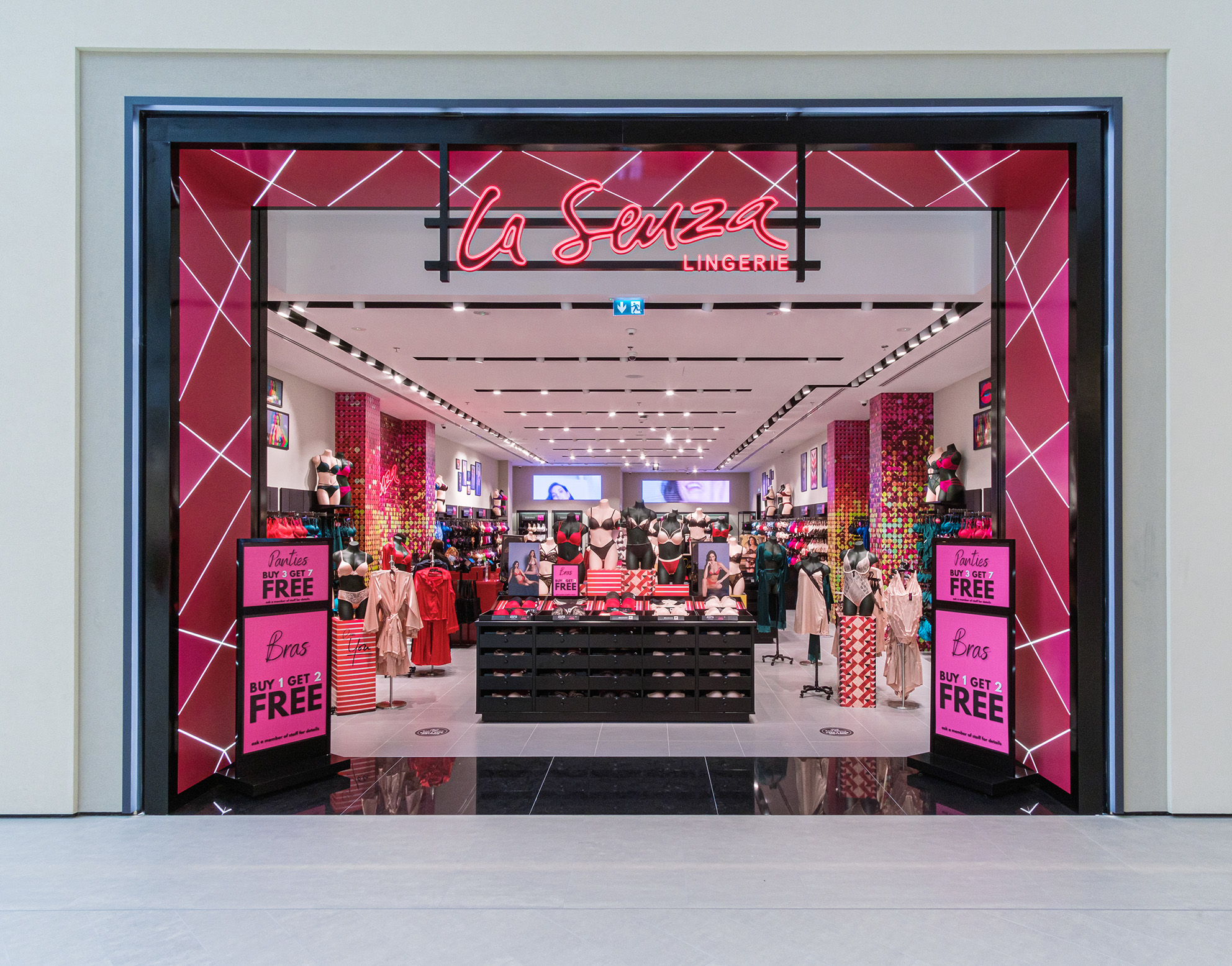
This month sees Canadian fashion retailer, La Senza, continue further expansion in the region with the launch of its new store in Dubai Hills Mall, the 36th store in the UAE. The sleek new retail concept is set to become a destination for the hottest trends in bras, panties, lingerie and sleepwear – think black and pink lacquered fixtures, neon lights and bold, edgy pop-art, resonant of the brand’s identity and ethos.

The 262 square metre store, located on the ground floor, will house the Tropical Dawn, Floral Extravaganza, G Friend and Nuit De Fleurs collections, as well as the best-selling Double Push-Up Bra collection, known to instantly take you up to two cups with its intense, high-level push, plunging neckline and lightweight padding.

Working with the industry’s finest to craft statement lingerie pieces, La Senza continues to stay true to the brand’s vision to create value-based and quality collections, catering to the modern-day woman, with its stylish bras, panties, playful lingerie and sleepwear, making her feel empowered from within.

Today, La Senza owns and operates 134 stores throughout Canada, and over 250 stores in more than 29 countries around the world including the UAE, Kuwait, Qatar, Oman, and Bahrain, solidifying its position as a leading retailer in the industry.

Prices from:  AED 99- AED399

For further information, please visit https://liwastores.com.

NetApp Announces Intent to Acquire Instaclustr, the Industry Leading Platform for Deploying and Managing Open-Source Data and Workflow Applications as a Service

Acquisition Will Bring Management, Monitoring and Optimization for Storage, Compute and Data Together with Fully Managed Application Services to Provide Customers a Platform for Cloud Applications from the Datacenter to the Public Cloud

NetApp® (NASDAQ: NTAP), a global, cloud-led, data-centric software company, today announced that it has signed a definitive agreement to acquire Instaclustr, a leading platform provider of fully managed open-source database, pipeline and workflow applications delivered as a service. The acquisition is subject to customary closing conditions.

Modern cloud applications rely on a growing set of foundational services including multiple open-source databases, data pipelines, and workflow solutions. Efficiently managing the growing complexity and operational requirements of these applications and services adds new challenges for already overstretched infrastructure, database and operations teams, increasing application integration and delivery costs, slowing application delivery and limiting application innovation.

“NetApp has long been a leader in solutions enabling customers to run applications,” said George Kurian, CEO at NetApp. “The acquisition of Instaclustr will combine NetApp’s established leadership in continuous storage and compute optimization with Instaclustr’s fully-managed database and data pipeline services to give customers a Cloud Operations platform that provides the best and most optimized foundation for their applications in the public clouds and on premises.”

The acquisition of Instaclustr builds on a series of strategic acquisitions made by NetApp to deliver a leading best-of-suite platform for CloudOps. NetApp’s strategic acquisitions including Spot, CloudCheckr, Data Mechanics, Fylamynt and now Instaclustr have made Spot by NetApp a compelling platform for applications on one cloud and across multiple clouds–continuous optimization, automation, monitoring, and security combined with expertise deploying and operating open-source applications, all delivered as a service, on public and private clouds to give customers more cloud with less cost and less time.

“Data management technology platforms are an increasingly essential priority for today’s modern enterprise as companies look for new ways to accelerate application development for competitive advantage. Instaclustr delivers fully managed open-source solutions that give companies increased productivity and reduced cost,” said Peter Lilley, CEO and Co-founder at Instaclustr. “Instaclustr’s growth has been driven by the fact that companies want to leverage open-source databases, pipelines, and workflow applications without overwhelming themselves with the complexity and cost of managing and operating them. We are excited for organizations building applications for their multi-cloud and hybrid cloud reality to benefit directly from Instaclustr’s data PaaS solutions along with NetApp and Spot by NetApp’s infrastructure solutions, while minimizing operations burdens.”

“As companies race to modernize and digitally transform in the cloud, they must implement solutions that enable them to focus more on building and releasing cutting-edge applications at speed, spending less on infrastructure management and operations,” said Anthony Lye, Executive Vice President and General Manager, Public Cloud Services at NetApp. “Instaclustr does just that and will be a significant addition to our Spot by NetApp portfolio, solving common challenges of cloud complexity, cost overruns, single vendor lock-in, and customers’ lack of internal technical resources. The acquisition marks a critical advancement in our strategy to run application driven platforms and infrastructures.”

“From a technology and product perspective, NetApp’s powerful infrastructure solutions pair perfectly with Instaclustr’s data-layer-as-a-service solutions and services,” said Ben Bromhead, CTO and Co-founder at Instaclustr. “For enterprise customers operating applications in the public cloud or on-prem, NetApp and Instaclustr’s combined platform will offer an unparalleled solution for overcoming cloud complexities while eliminating vendor lock-in risks and the high costs of building and maintaining that same expertise internally.”

The Next Phase of Kubernetes Education will Drive Simplification of Deployment

By: Claude Schuck, Regional Director, Middle East at Veeam Software

Kubernetes is still in its early educational phase as a technology. On Gartner’s Hype Cycle, container management currently sits on top of the peak of inflated expectations. If Kubernetes and other technologies within this category follow the expected trajectory, they will enter the Trough of Disillusionment in the next 12 months – before climbing the Slope of Enlightenment.

This aligns fairly well with where Kubernetes currently is in terms of business deployment. In the Middle East, organizations are waking up to its potential and developing an understanding of where it can deliver real competitive advantage, in the light of the increasing rate of adoption of containers. According to Veeam’s Data Protection Report 2022 69% of organizations in the UAE and 76% of organizations in Saudi are already running containers in production, while 29% and 22% respectively plan to do so in the next 12 months. However, there is a lot of education to be done before IT teams have fully got to grips with how best to deploy Kubernetes.

Over the next 12 months we will see two things happen that will shift perceptions around Kubernetes. The first is that those deploying the technology will start to understand it more, gain confidence in building the business case, and start to demonstrate real ROI. The second is that cloud providers will find simpler ways to serve Kubernetes to organizations, reducing the need for deep technical understanding to deploy it effectively.

Education and enlightenment

Much of the appetite for learning about how to successfully deploy Kubernetes and the benefits of doing so comes from within the Cloud Native Computing Foundation (CNCF) community. The technical barriers to entry are still relatively high, which is why one of the top challenges identified by organizations looking to deploy Kubernetes is that they lack the necessary in-house skills.

It is often the case that relatively new technologies which experience unprecedented spurts of adoption outpace the market in terms of the skills and infrastructure required to support growth. However, when it comes to Kubernetes, we’re talking about one of the fastest-growing open source technologies of all time in terms of early adoption. It’s important, therefore, that this process of educating the technical community gathers pace.

Over the next 12 months, we will see the number of learning opportunities increase as the industry looks to address the emerging skills gap. An example of such an initiative is Learning.kasten.io, a Kubernetes learning platform from Kasten by Veeam. The programme aims to equip technical professionals looking to upskill and the next generation of tech talent with at least a basic understanding of Kubernetes. This will shorten the learning curve for both experienced and entry-level technologists – burnishing enterprises with a pool of talent that understands Kubernetes and how to get the best out of it.

Making Kubernetes easy

As well as building a solid pipeline of people who understand and can capably consult businesses on Kubernetes, cloud providers are working on ways to make it easier for IT teams to consume and deploy them without in-house technical proficiency. This will ultimately be one of the major driving forces that takes Kubernetes from being an emerging technology in its experimental stages to established enterprise technology. The success of Anything-as-a-Service (XaaS) proves that organizations are demanding simpler ways to consume and deploy IT through the cloud. Kubernetes will be no exception to this rule.

Currently, Kubernetes is acting as a management platform for containers and among the earliest adopters are established and regulated industries such as banking and financial services. Businesses from other industries are currently evaluating the pros and cons of Kubernetes, looking at whether they can incorporate it into their networks. To accelerate the growing interest of the broader market, major cloud service providers are beginning to offer Kubernetes-as-a-Service (KaaS) – making it possible to operate Kubernetes as a managed service. KaaS is commonly provided via the public cloud, but as its penetration grows organizations will be able to consume similar services through local managed service providers (MSPs) or deploy them on-premises.

The move towards KaaS will significantly drive-up Kubernetes adoption, taking away some of the initial pain and investment required to deploy Kubernetes and enjoy the benefits of delivering applications faster, at a greater scale, and with greater accuracy. No matter how Kubernetes is consumed, organizations looking to take advantage of the opportunity it offers must be aware of the data protection requirements which accompany it. Kubernetes does not significantly change the threat landscape or bridge any cybersecurity gaps. It requires the same Modern Data Protection capabilities as any other type of data on any other type of platform.

Fundamentally, the infrastructure is now closer to the applications with the help of containers, and data backup must be carried out differently to align with this. The number of workloads using stateful data in container environments is increasing alongside data services being deployed within the Kubernetes cluster. Other public cloud tools can be connected to applications running within Kubernetes, which changes the way data is protected. Simply put, backup works differently for Kubernetes than virtualized environments. This is where specialized data protection solutions for backup and recovery of Kubernetes environments such as Kasten by Veeam come into play.

Over the next 12 months, more businesses will get to grips with the many benefits of deploying Kubernetes, while cloud providers find more consumable ways of serving up Kubernetes including KaaS. As well as investing in the skills required to maximize ROI, businesses must seek the advice of data protection experts when deploying Kubernetes to ensure that they are not becoming exposed to new risks. Organisations in the Middle East must be equipped with Modern Data Protection solutions to ensure their data is protected across physical, virtual, cloud, SaaS and Kubernetes environments at all times.

Ramadan Festivities and Eid promotions announced by Line Investments & Property (LIP) malls

Festival Promotions planned across Dubai, Sharjah Northern Emirates in RAK Mall, Lulu Mall Fujairah, Mall of Umm Al Quwain, Sharjah Central and Silicon Central, Dubai.

The shopping mall and management division of Lulu Group International, Line Investments & Property (LIP) announces mall deco, facade lighting, Ramadan and Eid promotions at RAK Mall, Lulu Mall Fujairah, Mall of Umm Al Quwain and Sharjah Central and Silicon Central with the mall tenants offering exciting products and Ramadan sales.

Ramadan deco and facade lighting features in all five malls throughout the holy month and will conclude with Eid entertainment featuring different world class shows. With eight international artists, there will be four different and unique entertainment shows daily over five days starting from the first day of Eid

The ‘Spend and Win Eidiyah’ promotion in Lulu Mall Fujairah, RAK mall and Mall of UAQ starts 22nd of April and will continue until May 8, 2022. Based on the Ramadan theme, visitors who spend AED 100 in any store in the mall and AED 200 in LULU hypermarket stand a chance to win daily Eidiya prizes and the grand prize. The daily Eidiya prizes of AED 1,000/-, is offered in Mall Gift Voucher (LAKA Gift vouchers) each and there will be a grand prize worth AED5,000 in Mall Gift Vouchers  LAKA Gift vouchers.

All Line Investments & Property Malls place great emphasis on safety measures regarding COVID-19, ensuring the public areas remain a safe place to shop and dine in.

Stay Radiant in Ramadan: Beauty Tips for Healthy Skin During Fasting

Whether you practice cultural beauty routines, traditional tips or simply just devour every product you come across, one thing remains certain: we are all striving for the healthiest skin we can. 
 
Keeping your skin healthy is as important as having a healthy diet during Ramadan. These tips will help you detox your skin during the holy month.
 
Skincare can be overwhelming with over thousands of “must have” products or your favourite influencers swearing by methods that may not work for your specific skin type. We are here to relieve you of the “trend” with current, universal and most importantly, effective beauty secrets directly from local dermatologists. 
 
“As the seasons change, so should your beauty and skincare routine.” says Dr. Roya Pourghorban, founder of Roya Medical Centre in Dubai. “Your products and techniques that transform your skin over the cooler months may not provide the same protection and effect during Ramadan or the warmer season.” she added. 
 
In the growing world of social media and “skinfluencers”, it is important to be aware of the beauty routines that work for you and your specific skin type. To help you this Ramadan, here are 7 beauty tips and secrets Dr. Roya and dermatologists swear by for healthy skin during fasting:
 

  1. Daily SPF! 
    Did you know that 90% of how your skin ages is in your control and is directly linked to sun exposure? You may not be able to avoid the sun but you can’t avoid wearing your SPF. Wearing sunscreen is simply the easiest and most effective universal beauty tip and is not just for Ramadan but for each day of the year, including cloudy ones. Pro tip: for good protection, use SPF30 or higher.

2. Stop over-exfoliating

Over-exfoliating is one of the biggest mistakes people make when it comes to their skin-care regimes. You will find exfoliation is an essential step in any good skin-care routine, however, over-exfoliating can dry and irritate your skin quickly. Breakouts can be due to a buildup of dead skin cells and clogged pores and exfoliating effectively removes these buildups and promotes skin regeneration.

3. Topical Vitamin C 

Vitamin C is a powerful antioxidant and is the supreme glow-getter that protects your skin from environmental stressors that can accelerate ageing, as well as working overtime to brighten your complexion. Pro tip: a few drops of Vitamin C Serum underneath your sunscreen increases sun-protection

4. Lymphatic Drainage Massage

This type of massage that can be achieved from anything from your hands to a jade roller or a gua sha stone has several health benefits. The form of massage helps maintain proper blood circulation in your face as well as balanced body fluid and supports your immune functions. Using a jade roller or simply massaging your face with your clean hands in upward circular motions can reduce puffiness, drain toxins from your skin and improve circulation amongst many other benefits.

5. Laser hair removal and resurfacing

Although there’s no scientific backup as to the myth that hair tends to grow much faster during warmer months, lasers are a highly recommended tool not just to prevent hair growth in certain body areas but also to improve various problems of the skin such as sun spots, acne scarring and more.

6. Jelly Mask Facial

It’s no secret that too much sun exposure can damage and make your skin breakout. To keep it under control, experts recommend a jelly mask facial to hydrate, moisturise and reduce redness and inflammation to your skin. They’re also incredibly fun because the masks feel exactly like Jell-O.

7. Hydration is key

Drinking enough water benefits your skin. Drink at least eight glasses between iftar and suhoor. Avoid drinking carbonated or sugary beverages such as soda and juices, as well as caffeine since it is dehydrating. If you do not like plain water, you can infuse it with fruits. It boosts your immune system, flushes out toxins, keeps you hydrated, and is calorie-free. Great combinations to infuse your water with are: lemon, cucumber, mint – orange, ginger, strawberries – blueberries, raspberries, mint, lime – lime, orange, lemon – pineapple, mint, orange.