IGIC 2026 to Put Ground Engineering at the Heart of MENA’s Mega and Giga-Project Ambitions

3rd Annual International Geotechnical Innovation Conference brings global experts, project owners and technology leaders together to address complex ground conditions, geohazards, tunnelling, mining and AI-driven engineering

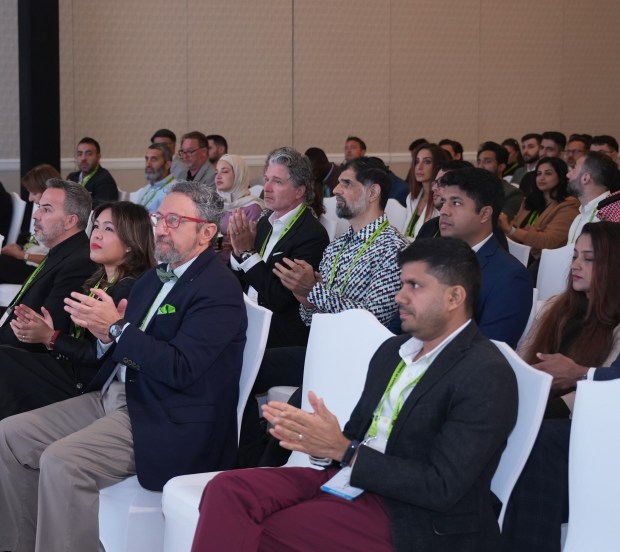
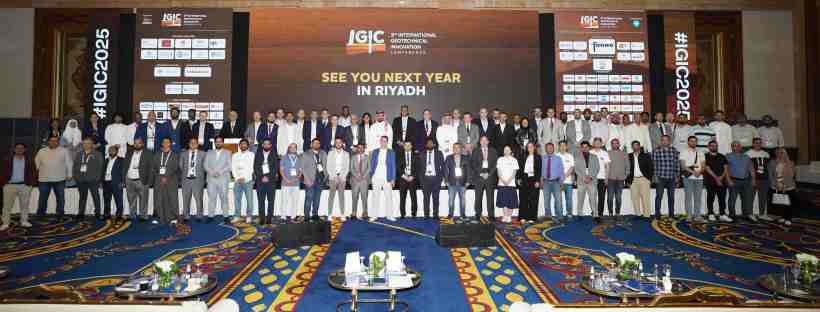
Riyadh, Saudi Arabia: The 3rd Annual International Geotechnical Innovation Conference (IGIC 2026) will take place on 14–15 October 2026 at Fairmont Riyadh, bringing together more than 700 delegates and leading geotechnical experts, project owners, contractors, consultants and technology providers to address the increasingly complex ground engineering requirements behind Saudi Arabia and MENA’s ambitious infrastructure, mining and giga-project developments.

As Saudi Arabia delivers major urban, transport, tourism, mining and infrastructure programmes across highly varied ground conditions, geotechnical engineering is becoming increasingly critical to safe, resilient and timely project delivery. Projects across the region must contend with hard and fractured rock, karst formations, sabkha and weak soils, groundwater pressures, geohazards and extreme climatic conditions.

IGIC 2026 is expected to attract 700-plus delegates, more than 45 speakers, 60-plus sponsors and over 15 institutional partners from more than 40 countries, with over 25 sessions focused on the technical and execution challenges shaping the future of ground engineering.

“With Saudi Arabia and the wider Middle East witnessing unprecedented investment in giga-projects, urban development and resilient infrastructure, innovation in areas such as ground improvement, automation, AI and sustainable geotechnics is more important than ever. Through continued collaboration and knowledge sharing, we can reduce project risks, strengthen industry best practices and help build safer, smarter and more sustainable foundations for the region’s future,” said Dr. Marwan Alzaylaie, Senior Manager, Geotechnical Engineering at Dubai Development Authority, UAE.
The conference will focus strongly on practical project delivery, examining how improved ground information, buildable design, specialist construction methods, verification and timely engineering decisions can reduce uncertainty while improving safety, schedule certainty and long-term asset performance.

Discussions will span the geotechnical requirements of skyscrapers and megacities, bridges and highways, road and rail infrastructure, deep excavations, tunnels, subways and underground utility networks. Key themes will include ground improvement at scale, tunnelling and trenchless technologies, rock mechanics, mining-related ground risk, groundwater management and proactive geohazard mitigation.

With Saudi Arabia continuing to develop its mining sector, sessions will examine tailings dam design and monitoring, slope stability for open pits and highwalls, underground excavation, seismicity, groundwater and extreme weather risks. Advanced subsurface mapping, rock mass characterisation and digital monitoring will also feature prominently.

Technology will be another major focus, with IGIC 2026 exploring the growing application of artificial intelligence, machine learning and digital twins in geotechnical engineering. Sessions will examine AI-enabled interpretation of site investigation and monitoring data, predictive modelling of ground behaviour and AI-based early-warning systems. LiDAR, InSAR, drones and remote sensing will also be explored for detecting ground movement and managing geohazards.

The keynote programme includes internationally recognised specialists Dr. Sebastien Burlon, Geotechnical Manager at Cerema; Prof. Pedro Simao Pinto, University of Coimbra; Dr. Alejo O. Sfriso, SRK Consulting; Prof. Ki-Bok Min, Seoul National University and Vice President for Asia, ISRM; and Prof. Hesham El Naggar, Distinguished University Professor and Director of the Thompson Centre for Engineering Leadership & Innovation at Western University.

Beyond technical innovation, the conference will address forensic geotechnical engineering and contractual risk management, including ground-model uncertainty, risk allocation, root-cause analysis and dispute avoidance.

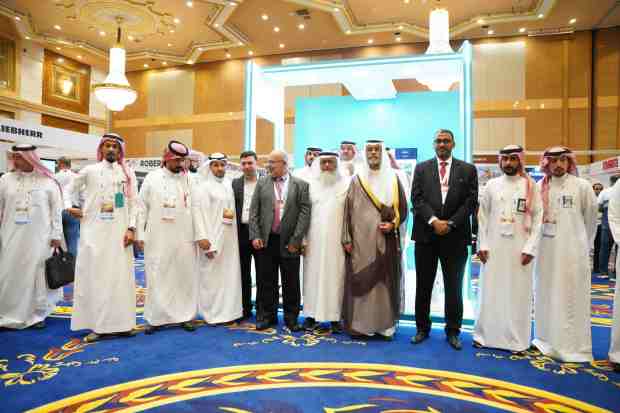
Fugro joins IGIC 2026 as Official Geotechnical Partner, alongside an international line-up of sponsors and specialist solution providers showcasing technologies, machinery and expertise supporting the next generation of ground engineering.

As Saudi Arabia and the wider region push the boundaries of infrastructure development, IGIC 2026 will highlight how innovation below ground can help enable the ambitious cities, transport networks and mega-projects taking shape above it.

2nd Desert Architecture – Saudi Arabia Forum to Bring Architecture, Innovation and Urban Transformation to the Forefront

Forum brings architects, developers, planners and government stakeholders together to explore how Saudi heritage, climate intelligence and innovation can shape the next generation of sustainable cities

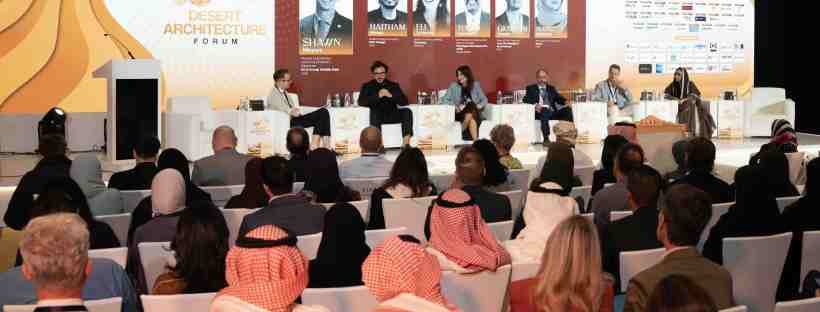
Riyadh, Saudi Arabia: As Saudi Arabia continues one of the most ambitious periods of urban development in its history, architects, planners, developers and industry leaders will gather in Riyadh for the 2nd Desert Architecture KSA Forum, taking place from 12–13 October 2026 at the Radisson Blu Hotel & Convention Center, Riyadh Minhal.

The two-day forum will focus on the convergence of heritage, sustainability, technology and contemporary design as the Kingdom looks to create cities and destinations that respond intelligently to the desert environment while retaining a distinctive Saudi architectural identity.

Aligned with Saudi Vision 2030, the forum will place particular emphasis on climate-responsive and culturally grounded architecture and the role of the Saudi Architectural Map, which encompasses 19 regional architectural styles reflecting the Kingdom’s different climates, landscapes, materials and cultural traditions.

The discussion comes against the backdrop of an extraordinary development pipeline. According to figures highlighted by the Desert Architecture Forum, Saudi Arabia has more than US$1.3 trillion in active projects spanning real estate, hospitality, cultural districts, government facilities and infrastructure, with 5,200-plus developments in the pipeline. The event website also points to more than 470 urban masterplans being revised in alignment with the Architectural Map’s directives, while 13 regional municipalities and 28 government entities are integrating the architectural identity framework into planning, approvals and design briefs.

Against this rapidly evolving landscape, the forum will examine how lessons embedded in traditional desert architecture can work alongside advanced engineering, materials and technology to deliver environments that are both resilient and comfortable.

Husain Buhwaid, Senior Development Director, Misk City, said: “Desert Architecture Forum 2026 edition will be a key platform for essential dialogue among architects, planners, and leaders in the Kingdom not only about iconic architecture but also creating even more sustainable and livable urban environments with traditional solutions and engineered systems.”

Husain Buhwaid will participate in the opening panel discussion, “Building the Architectural Identity of Saudi Arabia Through the Saudi Architectural Map,” which will examine how the Kingdom’s 19 regional architectural styles can inform its future built environment. Discussions will explore the integration of regional culture, climate-responsive design and heritage into modern architectural practice, as well as the alignment of national design frameworks with giga-projects, urban transformation and Vision 2030.

The wider programme reflects the growing recognition that designing successfully for desert environments involves considerably more than creating visually striking landmarks.

The Forum’s second day will broaden the conversation from individual buildings to the evolution of entire desert cities. Sessions will examine how climate intelligence, policy, infrastructure and long-term urban planning can help establish desert cities as models for sustainable development. The programme will also address regenerative tourism, exploring how architecture can work with landscapes, heritage and local communities to create destinations that strengthen rather than diminish their surrounding environments.

The speaker line-up brings together expertise from government, development, academia, architecture and urban planning, with representatives from organisations including Misk City, ROSHN Group, Red Sea Global, AlUla Development Company, Diriyah Company, King Salman Park Foundation, Aseer Development Authority, Madinah Region Development Authority, Saudi Building Code Centre, Prince Sultan University and the the Royal Commission for AlUla, alongside leading international architectural and design practices like Foster + Partners, ZHA Architects, Gmp, Herzog & de Meuron, RMJM, Snohetta.

Shaping the Future of Climate-Responsive Living

The Future of Desert Living to Take Centre Stage at the 2nd Desert Architecture MENA Forum

Dubai, UAE: Positioning desert architecture at the forefront of climate responsive design, the 2nd Desert Architecture MENA Forum returns on 30–31 March 2026 at the Habtoor Grand Resort, following the success of its inaugural edition last year. Under the theme “Integrating Heritage with Innovation: The Future of Desert Living”, the Forum will bring together global architects, policymakers, developers, sustainability leaders, and technology innovators.

As the region’s only platform dedicated to desert architecture, the Forum addresses one of the most pressing challenges facing the Middle East and arid regions worldwide: how to design cities, buildings, and communities that are resilient, climate-smart, and culturally rooted in desert environments.

The 2026 edition will expand its scope with deeper technical discussions, real-world case studies, and actionable strategies focused on climate-resilient urbanism, low-carbon materials, passive cooling systems, regenerative landscapes, and self-sufficient infrastructure. More than an event, the Forum serves as a marketplace of ideas and partnerships, providing direct access to project owners, regulators, architects, consultants, contractors, and technology providers shaping the next generation of desert cities.

Mark Powell Kyffin, Director of Architecture, Project Management and Engineering, with the Department of Culture and Tourism in Abu Dhabi highlighted the importance of such platforms in shaping future cities, stating: “Desert architecture is not a constraint. It is an opportunity. Rooted in heritage, culture, and innovation, the region is uniquely positioned to lead the world in climate-responsive design. Forums such as this are essential in fostering dialogue, knowledge exchange, and collaboration that translate vision into meaningful, lasting impact.”

Commenting on the Forum’s return, Leila Masinaei, Managing Partner at Great Minds Events, said: “The Desert Architecture MENA Forum was created to move beyond theory and deliver practical, scalable solutions for building in desert climates. The second edition reflects the urgency of the moment, where climate realities demand collaboration, innovation, and a renewed respect for traditional desert wisdom combined with cutting-edge design and technology.”

The Forum aligns closely with the UAE’s broader sustainability, urban development, and cultural preservation agendas. It also reinforces the region’s growing role as a global leader in climate-responsive architecture.

Across two days, the Forum will host 35+ international speakers from leading global and regional firms including Foster + Partners, BIG – Bjarke Ingels Group, Snohetta, Killa Design, Arup, AECOM, SOM, HKS, and DLR Group, alongside senior representatives from government authorities, municipalities, and academic institutions.

Key objectives of the Forum include strengthening cross-sector collaboration, showcasing smart materials and emerging technologies, blending traditional desert knowledge with contemporary design solutions, and positioning the MENA region as a global hub for climate-responsive architecture.

The event will welcome 300+ delegates from across the region and beyond, including government authorities, project owners, developers, architectural firms, consultancies, EPCs, and senior decision-makers spanning architecture, design, sustainability, engineering, R&D, and construction.

As part of the Forum, the Desert Architecture Recognition Awards 2026 will take place on 31 March, celebrating visionaries redefining excellence in arid-climate design. The Awards will recognise achievements across sustainable materials, façade innovation, regenerative landscapes, digital design, architectural lighting, and emerging talent, concluding with an exclusive reception dinner and networking evening.

With over 20 sessions, and case studies, and participation from over 15 countries, the 2nd Desert Architecture MENA Forum promises to be a defining platform for advancing sustainable, culturally grounded, and future-ready design across desert regions.

For more information, visit https://desertarchitectureforum.com/