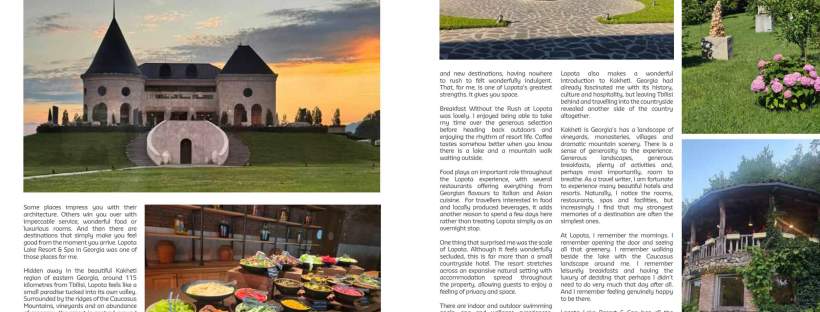
Lost in the Beauty of Kakheti: My Stay at Lopota Lake Resort & Spa

By Shereen Shabnam

Some places impress you with their architecture. Others win you over with impeccable service, wonderful food or luxurious rooms. And then there are destinations that simply make you feel good from the moment you arrive. Lopota Lake Resort & Spa in Georgia was one of those places for me.

Hidden away in the beautiful Kakheti region of eastern Georgia, around 115 kilometres from Tbilisi, Lopota feels like a small paradise tucked into its own valley. Surrounded by the ridges of the Caucasus Mountains, vineyards and an abundance of greenery, the resort is centred around a tranquil lake that very quickly became my favourite part of the entire experience.

I have travelled to many beautiful destinations over the years, but I am still happiest when a place allows me to connect with nature. At Lopota, that connection happens almost immediately.

My favourite time of day was early morning. There was something quite magical about waking up surrounded by nature, stepping outside into the fresh air and going for a walk around the lake. No traffic, no city rush and no pressure to be anywhere. Just the water, the trees, birds and mountains in the distance.

I found myself slowing down naturally. Walking around the lake became one of those simple travel pleasures that stays with you long after you return home. For someone who spends much of the year moving between airports, hotels, events and new destinations, having nowhere to rush to felt wonderfully indulgent. That, for me, is one of Lopota’s greatest strengths. It gives you space.

Breakfast Without the Rush at Lopota was lovely. I enjoyed being able to take my time over the generous selection before heading back outdoors and enjoying the rhythm of resort life. Coffee tastes somehow better when you know there is a lake and a mountain walk waiting outside.

Food plays an important role throughout the Lopota experience, with several restaurants offering everything from Georgian flavours to Italian and Asian cuisine.  For travellers interested in food and locally produced beverages, it adds another reason to spend a few days here rather than treating Lopota simply as an overnight stop.

One thing that surprised me was the scale of Lopota. Although it feels wonderfully secluded, this is far more than a small countryside hotel. The resort stretches across an expansive natural setting with accommodation spread throughout the property, allowing guests to enjoy a feeling of privacy and space.

There are indoor and outdoor swimming pools, spa and wellness experiences, tennis, horseback riding, fishing and quad-bike adventures, alongside plenty of areas where doing absolutely nothing is equally acceptable.

The Forest Spa – Valmont adds another layer to the experience, particularly for guests who arrive wanting to switch off completely. Surrounded by nature, wellness feels very much at home here rather than something added to the resort as an afterthought.

Lopota also makes a wonderful introduction to Kakheti. Georgia had already fascinated me with its history, culture and hospitality, but leaving Tbilisi behind and travelling into the countryside revealed another side of the country altogether.

Kakheti is Georgia’s has a landscape of vineyards, monasteries, villages and dramatic mountain scenery. There is a sense of generosity to the experience. Generous landscapes, generous breakfasts, plenty of activities and, perhaps most importantly, room to breathe. As a travel writer, I am fortunate to experience many beautiful hotels and resorts. Naturally, I notice the rooms, restaurants, spas and facilities, but increasingly I find that my strongest memories of a destination are often the simplest ones.

At Lopota, I remember the mornings. I remember opening the door and seeing all that greenery. I remember walking beside the lake with the Caucasus landscape around me. I remember leisurely breakfasts and having the luxury of deciding that perhaps I didn’t need to do very much that day after all. And I remember feeling genuinely happy to be there.

Lopota Lake Resort & Spa has all the ingredients we associate with a holiday. Beautiful accommodation, restaurants, wellness and activities and a great setting. It felt deeply restorative being surrounded by water, mountains and nature. All I needed was fresh mountain air, a lovely breakfast, comfortable shoes and a beautiful lake to walk around to rejuvenate my senses. I left the resort with a need to return to Georgia just to experience this resort again.

#LopotaLakeResort #Kakheti #Georgia #GeorgiaTravel #LuxuryTravel #LuxuryHospitality #WellnessTravel #TravelMagazine #TravelWriting #SlowTravel #LuxuryLifestyle #NatureEscape #Caucasus #TravelInspiration #ShereenShabnam
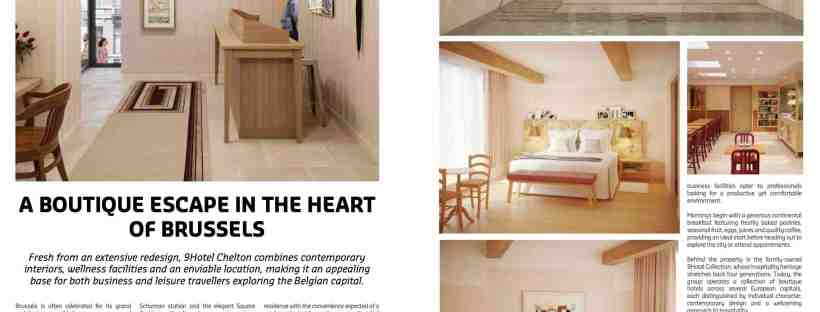
A Boutique Escape in the Heart of Brussels

Fresh from an extensive redesign, 9Hotel Chelton combines contemporary interiors, wellness facilities and an enviable location, making it an appealing base for both business and leisure travellers exploring the Belgian capital.

Brussels is often celebrated for its grand architecture, world-class museums and thriving European business district, yet tucked away just moments from the city’s political heart is a boutique hotel that offers a quieter, more relaxed way to experience the Belgian capital.

Reopened following an extensive redesign, 9Hotel Chelton presents a contemporary retreat where thoughtful design meets everyday comfort. Located near Brussels-Schuman station and the elegant Square Ambiorix, the four-star property enjoys easy access to both the city’s European institutions and many of its cultural attractions, making it equally suited to business travellers and weekend explorers.

The interiors, reimagined by renowned designer Bruno Borrione, embrace clean lines, warm textures and understated elegance. The hotel’s 49 guestrooms blend the welcoming atmosphere of a country residence with the convenience expected of a modern city hotel, creating spaces that feel both comfortable and refined.

One of the property’s standout features is its wellness offering. Guests can unwind in the indoor swimming pool, recharge in the fitness area or enjoy the sensory showers after a day spent discovering Brussels or attending meetings nearby. A 24-hour honesty bar adds to the relaxed atmosphere, while dedicated coworking spaces and business facilities cater to professionals looking for a productive yet comfortable environment.

Mornings begin with a generous continental breakfast featuring freshly baked pastries, seasonal fruit, eggs, juices and quality coffee, providing an ideal start before heading out to explore the city or attend appointments.

Behind the property is the family-owned 9Hotel Collection, whose hospitality heritage stretches back four generations. Today, the group operates a collection of boutique hotels across several European capitals, each distinguished by individual character, contemporary design and a welcoming approach to hospitality.

For travellers seeking a stylish boutique address that balances convenience with comfort, 9Hotel Chelton is one of those understated discoveries worth adding to the Brussels shortlist. Whether visiting for business, a cultural city break or simply passing through one of Europe’s most vibrant capitals, it offers a contemporary base from which to experience the city at a more relaxed pace.

The Art of Individuality


CRN’s Project Thunderball is a masterclass in bespoke yacht building, where timeless design meets engineering excellence.

Shereen Shabnam

There are yachts that impress with their size, others with extravagant amenities, and then there are those that quietly redefine what bespoke yacht building can achieve. Project Thunderball belongs firmly in the latter category.

Recently launched at CRN’s renowned superyacht shipyard in Ancona, Italy, the 70-metre full-custom superyacht represents far more than another addition to the water. It is the latest expression of CRN’s philosophy that every yacht should be conceived as a singular work of art, shaped entirely around its owner’s vision while showcasing the finest traditions of Italian craftsmanship and naval engineering.

Constructed in steel and aluminium, Project Thunderball reflects years of collaboration between CRN’s in-house specialists, Dutch design studio Vripack Yacht Design and the acclaimed Italian firm Nauta. Together, they have created a yacht where architecture, engineering and design exist in complete harmony.

From the first glance at the design, Thunderball projects quiet confidence. Her elongated bow, graceful profile and uninterrupted surfaces evoke the timeless elegance of classic yachts, while subtle contemporary detailing ensures she feels thoroughly modern rather than nostalgic. The flowing lines draw inspiration from sailing yachts, giving the vessel a sense of movement even when perfectly still.

What makes Thunderball particularly appealing is the seamless dialogue between interior and exterior spaces. Rather than treating them as separate environments, the designers have carried proportions, materials and visual rhythms throughout the yacht, creating an experience that feels remarkably cohesive. Outdoor lounges naturally transition into sophisticated living spaces, while carefully selected materials reinforce an atmosphere of understated luxury instead of excess.

Inside, the design embraces longevity over fashion. Nauta’s interiors celebrate maritime heritage through a contemporary lens, balancing refined detailing with inviting comfort. Every material, finish and technical solution was selected in close consultation with the owner, ensuring the yacht remains deeply personal rather than simply luxurious.

Accommodation has been designed for both privacy and hospitality, with an owner’s suite complemented by five spacious VIP guest cabins for up to twelve guests. A dedicated crew of fifteen is accommodated across nine cabins, ensuring impeccable service while maintaining the discretion expected aboard a yacht of this calibre.

Beyond aesthetics, Thunderball reflects the growing importance of intelligent engineering in modern yacht construction. Beneath her elegant profile lies a sophisticated Energy Storage System capable of optimising onboard power management, reducing fuel consumption and enabling silent operation while at anchor. These innovations not only improve efficiency but also enhance the onboard experience by delivering quieter, more environmentally conscious cruising without compromising comfort.

Throughout the build, Y.CO acted as the owner’s representative and project management team, overseeing every stage of construction and ensuring the owner’s vision remained central from concept to completion.

At 70 metres with a beam of 11 metres and a gross tonnage of 1,100 GT, Thunderball possesses impressive scale, yet her greatest achievement lies not in her dimensions but in the restraint with which they have been executed. Rather than relying on dramatic styling or extravagant features to capture attention, the yacht celebrates balance, proportion and craftsmanship.

I have followed the work of CRN closely for over 19 years when writing for the Millionaire Group and find their dedication to bespoke yachts exquisite. Their heritage of building fully bespoke superyachts spans more than six decades, and Project Thunderball continues a tradition of creating yachts that are impossible to replicate. Every line, every space and every engineering decision has been developed exclusively for one owner, resulting in a vessel that reflects not only exceptional design, but an individual personality.

The Soul of Gulf Craft

How Mohammed Hussein Alshaali built a world-class yacht brand with a culture of passion, purpose and people.

Words By Shereen Shabnam

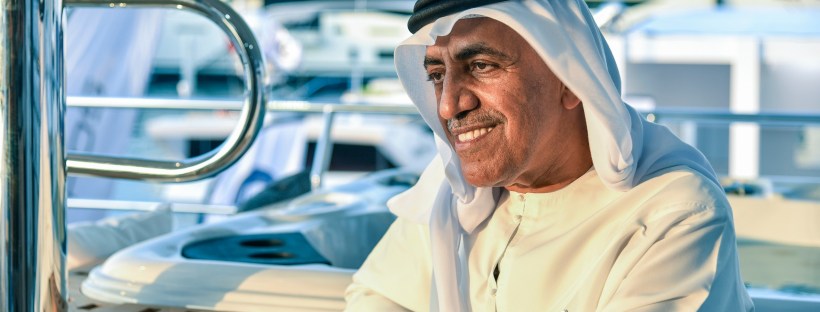
There are people you interview because of their title, and there are people you genuinely look forward to meeting because, regardless of how successful they become, they never seem to change.

For more than two decades, I have had the privilege of sitting down with Mohammed Hussein Alshaali at the many Dubai International Boat Shows. During that time, I have watched Gulf Craft evolve from an ambitious Emirati yacht builder into one of the world’s most respected names in luxury yachting.

Every year the yachts become larger, the technology more advanced and the international audience more impressive. Yet one thing has remained remarkably consistent. Mohammed welcomes everyone with the same warm smile, the same quiet confidence and the same humility that first struck me all those years ago.

This year’s conversation felt particularly fitting. It came after walking through the spectacular new Majesty 145, a yacht that perfectly illustrates how far Gulf Craft has come. Every detail reflects decades of refinement, craftsmanship and innovation. Yet as impressive as the yacht is, spending time with the man behind it reminds me that Gulf Craft’s greatest achievement has never simply been the yachts themselves. It has been the philosophy that created them.

Few people have successfully navigated two careers as different as international diplomacy and luxury yacht building. Before dedicating himself fully to Gulf Craft, Mohammed spent more than three decades representing the UAE on the global stage, serving as Ambassador to the United States, Permanent Representative to the United Nations, Minister of State for Foreign Affairs and, remarkably, becoming the youngest President of the UN Security Council during his diplomatic career.  

One might assume that diplomacy and yacht building have little in common. Mohammed sees it differently. He says, “In life, communication is important. In diplomacy, communication is everything. In business, it is exactly the same.”

It is a deceptively simple observation, but perhaps it explains why Gulf Craft has always been as much about relationships as it has been about engineering. The company’s success has never been built solely on beautiful yachts, but on the trust it has cultivated with owners, designers, suppliers and partners around the world.

Listening to Mohammed speak about Gulf Craft, it quickly becomes apparent that he rarely talks about himself. Instead, he talks about learning. “When we started, we were learning how to build. We were learning about the market. We were learning about everything. Those early years were not driven by vast financial resources or decades of experience. They were fuelled by something far more powerful. The biggest capital we had was enthusiasm and passion.”

More than forty years later, he believes that very little has changed. “Everybody comes here because of their passion. If you don’t love what you do, you simply won’t stay.”

It is a philosophy that resonates throughout Gulf Craft today. Walking through its facilities, there is a sense that every yacht represents thousands of hours of craftsmanship by people who genuinely care about what they are creating. It is an attitude that cannot be manufactured and certainly cannot be copied.

That passion is perhaps most evident in Gulf Craft’s unique approach to building. Rather than relying heavily on external suppliers, the company has invested in creating much of its production capability in-house. “We build everything ourselves,” Mohammed explains. “Steel, electronics, composite work and more.”

Today, Gulf Craft operates five specialised companies supporting different aspects of production, allowing it to control quality, delivery schedules and costs while ensuring owners ultimately benefit from that integration. The strategy was born not from convenience, but from necessity.

“When you start an industry like this in a country that had no such industry, every challenge becomes an opportunity.” Those challenges taught Gulf Craft to innovate, adapt and continuously improve. Looking back, Mohammed views those difficult early years not as obstacles but as the very foundation upon which the company was built.

That willingness to invest for the long term continues today. Alongside its expanding yacht portfolio, Gulf Craft has recently opened new service and  manufacturing facility, capable of maintaining yachts of up to 80 metres, while also expanding its presence in the Maldives with a dedicated marina and service operation. Despite global economic uncertainty and geopolitical challenges affecting international deliveries, Mohammed remains characteristically optimistic.

Walking through the Majesty 145 before our conversation, it became clear that this optimism is well placed. Every space onboard reflects decades of accumulated experience, not only in engineering, but in understanding how owners want to live, entertain and relax on the water.

“So many experiences have come together in this yacht,” Mohammed says. “Our experience, our designers’ experience, our people’s experience and the market’s experience.”

Perhaps the strongest endorsement came before the yacht had even entered the water. Gulf Craft had already secured three sales based solely on the design drawings, a remarkable achievement in today’s highly competitive superyacht market.  

While innovation and craftsmanship have undoubtedly propelled Gulf Craft onto the global stage, Mohammed returns repeatedly to one subject that matters more than anything else: people.

“Our team is the soul of the company.” It is a statement that feels entirely genuine.

He believes owners return not simply because they appreciate the yachts, but because they trust the people behind them. Beautiful designs attract attention, but lasting relationships build loyalty. “People come back because they have a relationship with the team.”

In an industry where luxury is often measured in materials, finishes and technology, Mohammed measures success differently. For him, culture has become Gulf Craft’s greatest competitive advantage.

That perspective may well explain why, after more than four decades, Gulf Craft continues to evolve while remaining unmistakably true to its roots. It has become one of the few yacht builders capable of competing confidently on the world stage while proudly retaining its Emirati identity.

Recognition has naturally followed. From building one of the world’s largest composite superyachts to receiving international accolades, including the prestigious Lifetime Achievement Award at the 2024 Boat Builder Awards, Gulf Craft’s journey mirrors the remarkable growth of the UAE itself.  

When I ask Mohammed what legacy he hopes to leave behind, his answer is telling. “I want this company to always be considered one of the best yacht builders in the world.”

Noticeably absent is any mention of being the biggest. Instead, he speaks about reputation, excellence and earning the respect of customers, designers, suppliers and classification societies alike. It is an ambition rooted not in scale but in quality.

As our conversation comes to an end, I reflect on something I have observed over more than twenty years of meeting Mohammed at boat shows around the world. The yachts have grown larger. The company has expanded globally. The awards have accumulated. Yet the man himself has remained remarkably unchanged. He is still approachable. Still gracious. Still genuinely interested in people.

The Majesty 145 may represent the latest chapter in Gulf Craft’s remarkable journey, but perhaps the company’s greatest achievement is measured in the culture Mohammed Hussein Alshaali has quietly built over four decades. A culture where passion matters more than prestige, relationships matter more than transactions, and success is never claimed by one individual but shared with an entire team.

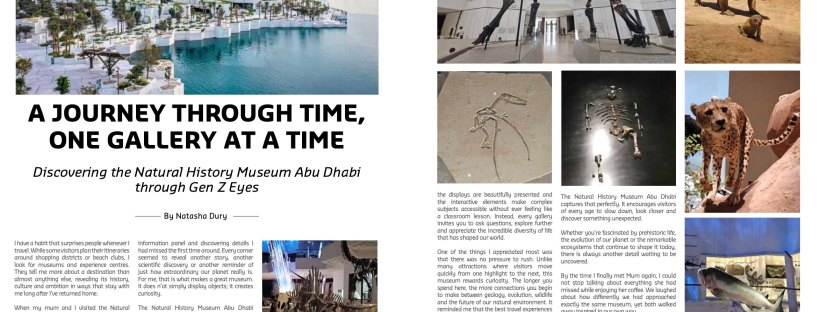
A Journey Through Time, One Gallery at a Time

Discovering the Natural History Museum Abu Dhabi through Gen Z Eyes

By Natasha Dury

I have a habit that surprises people whenever I travel. While some visitors plan their itineraries around shopping districts or beach clubs, I look for museums and experience centres. They tell me more about a destination than almost anything else, revealing its history, culture and ambition in ways that stay with me long after I’ve returned home.

When my mum and I visited the Natural History Museum Abu Dhabi with our best friends, we both expected to enjoy it. What we didn’t expect was to experience it so differently. After about two hours of exploring, mum was ready to relax with a coffee, convinced she had seen the highlights. I was only just getting started and went along with my friends to see more.

Five hours later, I was still moving through the galleries, revisiting exhibits, reading every information panel and discovering details I had missed the first time around. Every corner seemed to reveal another story, another scientific discovery or another reminder of just how extraordinary our planet really is. For me, that is what makes a great museum. It does n’ot simply display objects; it creates curiosity.

The Natural History Museum Abu Dhabi has been designed as an immersive journey rather than a collection of exhibits. From the moment you step inside, you are encouraged to explore at your own pace. The spaces flow naturally from one discovery to the next, making it easy to lose track of time as millions of years of Earth’s history unfold around you.

As someone who genuinely enjoys learning, I loved that the museum never felt overwhelming. The storytelling is engaging, the displays are beautifully presented and the interactive elements make complex subjects accessible without ever feeling like a classroom lesson. Instead, every gallery invites you to ask questions, explore further and appreciate the incredible diversity of life that has shaped our world.

One of the things I appreciated most was that there was no pressure to rush. Unlike many attractions where visitors move quickly from one highlight to the next, this museum rewards curiosity. The longer you spend here, the more connections you begin to make between geology, evolution, wildlife and the future of our natural environment.

It reminded me that the best travel experiences aren’t always about seeing more—they’re about understanding more.

I think that’s something many people in my generation value. We don’t just want photographs of the places we visit; we want experiences that leave us with new perspectives. Museums have become destinations in their own right because they combine education, technology, storytelling and design in ways that feel engaging rather than traditional.

The Natural History Museum Abu Dhabi captures that perfectly. It encourages visitors of every age to slow down, look closer and discover something unexpected. Whether you’re fascinated by prehistoric life, the evolution of our planet or the remarkable ecosystems that continue to shape it today, there is always another detail waiting to be uncovered.

By the time I finally met Mum again, I could not stop talking about everything she had missed while enjoying her coffee. We laughed about how differently we had approached exactly the same museum, yet both walked away inspired in our own way.

Perhaps that is the museum’s greatest achievement. It doesn’t ask visitors to experience it in a particular way. Whether you spend two hours exploring the highlights or five hours immersing yourself in every gallery, it rewards your curiosity.

As for me, I already know I will be back. Because somehow, I still don’t think I have seen everything.

Rediscovering the Soul of Georgia

Shereen Shabnam

Returning to Georgia is a little like meeting an old friend. The familiar warmth is still there, but every conversation reveals something new. On my first visit, the dramatic journey to Kazbegi, with its soaring mountain landscapes and the iconic Gergeti Trinity Church framed by snow-capped peaks, left an unforgettable impression. This time, however, I deliberately stepped beyond the country’s best-known highlights to discover new regions, hidden experiences and a slower, more authentic side of one of the Caucasus’ most captivating destinations.  

There is something wonderfully effortless about travelling through Georgia. Distances are manageable, the scenery changes dramatically within a few hours, and every stop introduces another chapter in the country’s rich history.

My journey began in Tbilisi, a city I never tire of returning to. Even after previous visits, the Georgian capital always feels fresh. The old town, with its colourful timber balconies, cobbled streets and eclectic architecture, blends centuries of history with an unmistakably youthful energy. Every corner seems to reveal another hidden courtyard, artisan gallery or café filled with locals lingering over coffee.

Dinner on my arrival at Oilibuli Restaurant was the perfect start to Georgian hospitality. Like every meal throughout the journey, it reinforced why Georgian cuisine deserves far more global recognition. From traditional family recipes to contemporary interpretations, every meal became an experience rather than simply another stop on the itinerary.

Leaving Tbilisi behind, we headed east into Kakheti, Georgia’s celebrated wine region. Rolling vineyards stretched towards the Caucasus Mountains while sleepy villages appeared almost untouched by time. Our destination was Sighnaghi, affectionately known as the City of Love.

Small enough to explore on foot, Sighnaghi possesses a romantic charm that few European towns can rival. Its beautifully restored pastel houses, ancient defensive walls and sweeping valley views make it easy to understand why visitors linger here far longer than planned. Walking along the old fortifications, I found myself pausing repeatedly to absorb the endless landscape unfolding below.

Nearby, the remarkable Kvareli tunnel offered one of the most unusual grape curation experiences I have encountered. Originally constructed as a military tunnel during the Soviet era, it has since been transformed into an immense underground drinks cellar where thousands of bottles mature naturally beneath the earth.

The evening concluded at Lopota Lake Resort & Spa, nestled in the peaceful Lopota Valley. Surrounded by vineyards, forests and mountain ridges, the expansive resort feels less like a hotel and more like its own destination. As daylight faded across the lake, it became one of those rare places where silence itself becomes part of the luxury.

The following morning, curiosity led us to the Caucasus’ first outlet village for retail therapy before another afternoon immersed in Georgian hospitality followed by one of the journey’s greatest surprises, Dashbashi Canyon. While Georgia’s mountain scenery often dominates travel brochures, this spectacular volcanic gorge offers an entirely different perspective on the country’s natural diversity. Lush greenery cascades down dramatic cliffs towards waterfalls hidden below, while the now-famous glass sky bridge provides an unforgettable viewpoint suspended high above the canyon floor.

After a night in Tblisi, our adventure then shifted west towards Kutaisi, one of Georgia’s oldest continuously inhabited cities. Along the way, Prometheus Cave revealed a hidden underground world sculpted over millions of years. Towering stalactites, shimmering stalagmites and softly illuminated chambers create an almost surreal landscape that feels closer to fantasy than geology. Walking through the vast caverns is a reminder that some of nature’s greatest masterpieces remain hidden beneath our feet.  

Kutaisi itself quickly became one of my favourite discoveries. We experienced Gemo Fest, the Georgian National Tourism Administration’s travelling gastronomic festival celebrating regional food traditions and local producers. Although I will save the country’s remarkable cuisine for another story, the festival offered a fascinating glimpse into how proudly Georgians preserve their culinary heritage.  

Our boutique hotel, immediately charmed me with its intimate atmosphere, but it was an unexpected resident parked outside that truly caught my attention in form of a beautifully preserved powder-blue 1963 Volga. As someone who has spent decades writing about automobiles, stumbling across this elegant piece of Soviet motoring history was a delightful surprise. It felt entirely at home against Kutaisi’s timeless backdrop.

Returning to Tbilisi, I embraced one of the city’s oldest traditions at Gulo’s Thermal Spa in the historic Abanotubani district. Georgia’s famous sulfur baths have welcomed travellers for centuries, and soaking in the naturally heated mineral waters provided the perfect opportunity to slow down after several days of exploring. The experience felt authentic, restorative and deeply connected to the city’s identity.  

The same day we had lunch at Kneina, a beautifully restored traditional Georgian home where lunch is prepared by an inspiring mother-and-son team. Rather than simply serving guests, they welcome visitors into their family story.

My final full day was spent wandering through the underground market, a treasure trove of antiques, vintage cameras, memorabilia, artwork and handcrafted souvenirs. Every stall seemed to tell another story about Georgia’s complex past, and browsing became an unexpected history lesson as much as a shopping experience.

Later, I wandered once again through Old Tbilisi, where ancient churches stand comfortably alongside synagogues, mosques and colourful wooden balconies overlooking winding streets. It remains one of Europe’s most visually distinctive historic quarters, constantly inviting visitors to slow down and simply observe everyday life unfolding around them.  

My final evening ended at the wonderful Georgia House, where traditional music filled the dining room long into the night. Surrounded by locals and visitors alike, the live performances captured something difficult to describe but impossible to forget. It was the perfect farewell to a country where hospitality simply comes naturally and I hope to return for a road trip experience next, hopefully in a vintage car to add to the experience.

For More Information on Travelling in Georgia Visit – https://georgia.travel

Jamaica – the Heart of the Caribbean

Shereen Shabnam

Jamaica, a vibrant island nation, is a treasure trove of rich culture, spirited adventures, and serene landscapes. From the bustling streets of Kingston to the tranquil shores of Montego Bay, Jamaica offers a diverse tapestry of experiences that cater to the luxury traveler and cultural enthusiast alike and I was lucky to explore both cities during a recent visit, on my way to experience the local coffee festival.

My journey began in Montego Bay, a city synonymous with crystal-clear waters and lush landscapes. Here, the Martha Bray River offered an enchanting river rafting experience. Gliding down the gentle river on a bamboo raft, I immersed myself in the peaceful sounds of nature, stopping along the banks to savor fresh coconuts and sugarcane—an authentic taste of local life before venturing to Kingston.

In Kingston, the capital’s energetic pulse was palpable. A highlight was the Kingston Creative Artwalk, where the streets burst into a kaleidoscope of colors, showcasing vibrant murals and street art that narrate the city’s rich cultural heritage. 

The Jamaica Blue Mountain Coffee Festival was a vibrant fair that celebrated all aspects of coffee culture. This festive event featured live music and dance performances, creating a lively atmosphere that resonated through the area. Local artisans displayed their crafts, adding a unique cultural touch to the festival. 

Additionally, a food truck area offered a variety of culinary delights, while numerous coffee manufacturers provided free tastings and the opportunity to purchase their exquisite coffees. This combination of music, dance, art, and coffee created a dynamic and immersive experience for all attendees.

Not far from these colorful displays, the Emancipation Park, which was across the Pegasus hotel where I stayed, offered a serene escape, with its sprawling lawns and symbolic sculptures celebrating freedom and artistic expression.

As my visit coincided with Ramadan, I paid a visit to the Mahdi Mosque in Old Harbour which provided a profound insight into the local Muslim community’s life, adding a unique spiritual dimension to my visit. The warmth and hospitality of the residents there were truly heartwarming.

Café Blue was a morning delight with its scenic vistas. Sipping on locally sourced Blue Mountain coffee and indulging in exquisite chocolates, I felt the essence of Jamaica’s renowned coffee culture. The Jamaica Blue Mountain Coffee Festival further enriched this experience, uniting coffee lovers with farmers and baristas in a celebration of Jamaica’s famed brew.

The Craighton Coffee Estate tour was an educative journey into the world of coffee. Learning about the unique selling points of local coffee directly from the growers offered invaluable insights into what makes Jamaican coffee a global favorite.

A visit to Devon House was not complete without trying the iconic patties and homemade ice cream. Each bite offered a taste of local flavors and traditions, rounding off the culinary exploration.

My last destination in Kingston was a visit to the Bob Marley Museum, which was a profound journey through the life and legacy of the reggae legend. Housed in Marley’s original home, the museum encapsulates his musical career and his influence on the world. Highlights included personal memorabilia, his home recording studio, and the open garden area. 

The experience was deepened by an impromptu drum session by Bongo Herman, a renowned percussionist who played with Marley, echoing the vibrant spirit of Marley’s music and messages of peace and unity. I then returned to Montego Bay with a heavy heart and the feeling that my days in Kingston were not enough and the vibe in the city made me more determined to return to its fold.

Jamaica’s allure is undeniable – from its rhythmic cultural beats to its lush, verdant mountains and the deep blue of its waters. Each moment spent here promises a blend of relaxation, discovery, and indulgence, making Jamaica a must-visit destination on every coffee lover and every luxury traveller’s map.

#GTM #GlobalTrendMonitor #Magazine #Travel #Destination #ExperienceJamaica #IslandVibesOnly #BlueMountainCoffee #KingstonCulture #MontegoBayMagic #LuxuryInJamaica #CoffeeFestivalVibes #ReggaeAndRelaxation  #TasteOfJamaica #JamaicaThroughMyLens

Dynamic and diverse Taipei: A Vibrant Blend of Tradition and Modernity

Shereen Shabnam

Taipei, the capital of Taiwan, is a dynamic city that seamlessly blends ancient traditions with cutting-edge modernity. From towering skyscrapers to serene temples, bustling night markets to tranquil parks, Taipei offers a rich tapestry of experiences for every traveller. I had ventured into Taiwan for the famous lantern festival, but my journey started with exploring the vibrant parts of Taipei.

My hotel was close to Taipei 101 so naturally this was my first stop. Once the tallest building in the world, Taipei 101 is an architectural marvel. Visitors can take the high-speed elevator to the observation deck on the 89th floor for breath-taking views of the city. The skyscraper also houses a shopping mall with luxury brands and gourmet restaurants.

Next was the Chiang Kai-Shek Memorial Hall. This iconic landmark is dedicated to the former President of the Republic of China, Chiang Kai-Shek. The grand hall, surrounded by beautiful gardens, features a large statue of Chiang and a museum detailing his life and Taiwan’s history.

The National Palace Museum is another information filled attraction. Home to one of the largest collections of Chinese art and artifacts in the world, the National Palace Museum is a must-visit. The extensive collection includes ancient jade, ceramics, calligraphy, and paintings. Taipei also has The Museum of Contemporary Art (MOCA) and the Taipei Fine Arts Museum to showcase a wide range of contemporary and modern art from Taiwan and around the world.

If you like temples, the Longshan Temple is one of Taipei’s oldest and most famous one and it is a stunning example of traditional Taiwanese architecture. It serves as a spiritual centre for locals and a fascinating cultural site for visitors.

For shopping, there are many options but my guide highly recommends Ximending. Often referred to as the “Harajuku of Taipei,” Ximending is a lively shopping district known for its trendy fashion boutiques, street food, and entertainment options. It’s a popular spot for young people and tourists alike.

The  Taipei 101 Mall is also ideal for luxury shopping, as an upscale shopping center that features high-end international brands, designer boutiques, and fine dining establishments. The Shilin Night Market is also a must as it offers a wide array of goods, from clothing and accessories to electronics and souvenirs. The market is also a foodie paradise with numerous stalls selling delicious street food.

Taipei is a cultural hub with numerous theatres and performance venues. The National Theatre and Concert Hall host a variety of performances, including traditional Chinese opera, modern theatre, and international concerts.

Taipei’s cultural calendar is filled with festivals that celebrate traditional and contemporary culture. The Lantern Festival, Dragon Boat Festival, and the Taipei Film Festival are just a few examples of the city’s vibrant cultural scene.

For dining, a visit to Taipei is incomplete without trying Din Tai Fung’s famous xiaolongbao (soup dumplings). This Michelin-starred restaurant is renowned for its delicate dumplings and other Taiwanese delicacies. Taipei is a haven for street food lovers. Raohe Night Market and Ningxia Night Market are great places to start your culinary adventure. For a taste of traditional Taiwanese cuisine, visit local eateries and restaurants that serve the three-cup chicken and Taiwanese hot pot. These dishes offer a rich and flavourful experience of the island’s culinary heritage.

Taipei is surrounded by natural hot springs. Beitou Hot Spring is the most famous, offering a range of hot spring resorts and public baths to relax and soak in the therapeutic waters. For nature enthusiasts, Taipei offers numerous hiking trails with stunning views like the Elephant Mountain (Xiangshan and Yangmingshan National Park, offering beautiful landscapes and diverse flora and fauna.

Taipei has a rich tea culture, and a visit to a traditional tea house is a must. Maokong, located on the outskirts of the city, is famous for its tea plantations and offers scenic views along with a serene tea-drinking experience.

I left Taipei for the Lantern Festival, a journey into a world of mesmerizing light and cultural wonder. Held annually during the first full moon of the Lunar New Year, the festival transforms the night sky into a tapestry of glowing lanterns, each meticulously crafted and often adorned with intricate designs, carrying wishes and prayers for the coming year. Attending this festival was an unforgettable experience and I returned to Taipei with great memories.

Taipei is a city that captivates with its vibrant blend of old and new. Whether you’re exploring its historic temples, indulging in its diverse culinary scene, shopping in its bustling markets, or enjoying its natural beauty, Taipei promises a memorable and enriching travel experience.

A Blend of Elegance and Oceanic Charm: Discovering Biarritz

Shereen Shabnam

Visiting Biarritz, a picturesque seaside town located on the southwestern coast of France has been a highlight in my career as a travel journalist. Known for its luxurious atmosphere, stunning beaches, and rich history, Biarritz has long been a favourite destination for travellers seeking a mix of relaxation and sophistication.

Biarritz is renowned for its breath-taking coastline and world-class surf spots as this was what I noticed first as I ventured to me hotel on the coast.  During my visit to Biarritz, I had the privilege of staying at the magnificent Hotel Du Palais. This iconic hotel, once a summer residence of Napoleon III and Empress Eugénie, epitomizes luxury and elegance.

The Hotel Du Palais exudes historical grandeur with its Second Empire architectural style. Built in 1855, the hotel has retained its regal charm while offering modern amenities. Walking through its halls, one can feel the opulence of the bygone era, enhanced by antique furnishings and exquisite decor.

The rooms and suites at the Hotel Du Palais are a blend of classic elegance and contemporary comfort. My suite offered breath-taking views of the Atlantic Ocean, a spacious living area, and a luxurious bathroom. The attention to detail in the room’s design made my stay truly memorable.

The hotel’s dining options are nothing short of spectacular. The Michelin-starred restaurant, La Rotonde, serves gourmet French cuisine with a focus on local ingredients. Breakfast at La Rotonde, with its panoramic ocean views, was a daily highlight. For a more casual dining experience, the hotel’s terrace restaurant offers a delightful selection of dishes in a relaxed setting.

In addition to that, Biarritz boasts a vibrant culinary scene. From traditional Basque cuisine to Michelin-starred restaurants, the town offers a variety of dining experiences. Don’t miss out on local specialties and fresh seafood. 

The Hotel Du Palais boasts a world-class spa, offering a range of treatments inspired by the healing properties of the ocean. I indulged in a rejuvenating thalassotherapy session, which left me feeling refreshed and revitalized. The hotel’s wellness facilities also include a fitness centre, indoor pool, and sauna.

Biarritz is indeed famous for many thalassotherapy centres, where visitors can indulge in therapeutic treatments using seawater and marine products. These treatments are perfect for relaxation and rejuvenation.

The Grande Plage, the town’s main beach, is perfect for sunbathing and enjoying the Atlantic waves. For surfing enthusiasts, the Côte des Basques offers some of the best waves in Europe, attracting surfers from all over the world.

The town is dotted with historic landmarks. The Biarritz Lighthouse, standing tall since 1834, offers panoramic views of the Bay of Biscay. Another must-visit is the Rock of the Virgin (Rocher de la Vierge), a stunning rock formation with a statue of the Virgin Mary, accessible via a footbridge.

My hotel’s prime location made it easy to explore Biarritz. Whether it’s a leisurely stroll along the beach, a visit to nearby attractions, or a shopping spree in the town centre, everything is within easy reach. 

Biarritz, with its stunning beaches, rich history, and luxurious accommodations, is a destination that promises an unforgettable experience. Staying at the Hotel Du Palais added a touch of royal elegance to my journey, making it a perfect retreat for both relaxation and refinement. Whether you’re a history buff, a foodie, or a beach lover, Biarritz has something to offer everyone.