HID Global Unveils Signature Line of Readers, HID Signo; Unlocks A New World of Open, Connected and Adaptable Access Control

HID Global, a worldwide leader in trusted identity solutions, today announced the launch of HID®SignoTM, its signature line of readers that creates a new industry benchmark for the most highly adaptable, interoperable and secure approach to access control.  The new readers dramatically simplify system deployment and management, meet the advanced security requirements of today’s dynamic environments and set organizations up for smarter, more connected access control.

“With the industry now seeking to use access control systems as a backbone for creating intelligent environments, consultants, integrators and end users are increasingly demanding more versatile, high performance solutions,” said Harm Radstaak, Vice President and Managing Director of Physical Access Control Solutions, HID Global.“HID Signo is built on an open platform and delivers on our commitment to innovation with its unprecedented flexibility and robust set of forward-looking features that optimize workplace experiences. Our goal is to put more choices in the hands of our customers and give them peace of mind in knowing they can continually adapt their systems as requirements change.”

For ultimate versatility, the readers are interoperable with over a dozen physical and mobile credential technologies so organizations can use their technology of choice and easily migrate to the latest solutions at their own pace. Additionally, with support for Apple’s Enhanced Contactless Polling (ECP) to enable Student IDs in Apple Wallet, HID Signo is driving the next wave of flexibility and convenience with mobile access.  

HID’s new readers are packed with smart features, such as automatic surface detection that recalibrates and optimizes read performance based on the mounting location.  For rugged, outdoor performance, the readers are also IP65 rated with no additional gasket needed, and feature a capacitive touch keypad resistant to harsh weather conditions.

Transcending traditional access control

HID Signo’s connectivity-by-design model empowers administrators to remotely configure and diagnose readers as well as monitor status through a centrally managed and connected reader ecosystem. Additionally, configuration can be further streamlined through the controller via the Open Supervised Device Protocol (OSDP).  

“HID’s novel approach to access control also lays the foundation for a future of cloud-connected systems that will enable new applications and innovative capabilities, such the ability to proactively anticipate and address system issues before they occur,” Radstaak added.

Delivering multi-layered security with built-in support for OSDP Secure Channel and HID’s proven Security Identity Object technology, the readers store cryptographic keys on certified EAL6+ secure element hardware and custom authentication keys can be used to further enhance security. HID’s patented velocity-checking feature also protects against brute force rapid electronic attacks. 

Availability

The new line of HID Signo Readers is available through Advantage Partners in major markets worldwide, with a phased roll out in select regions. 
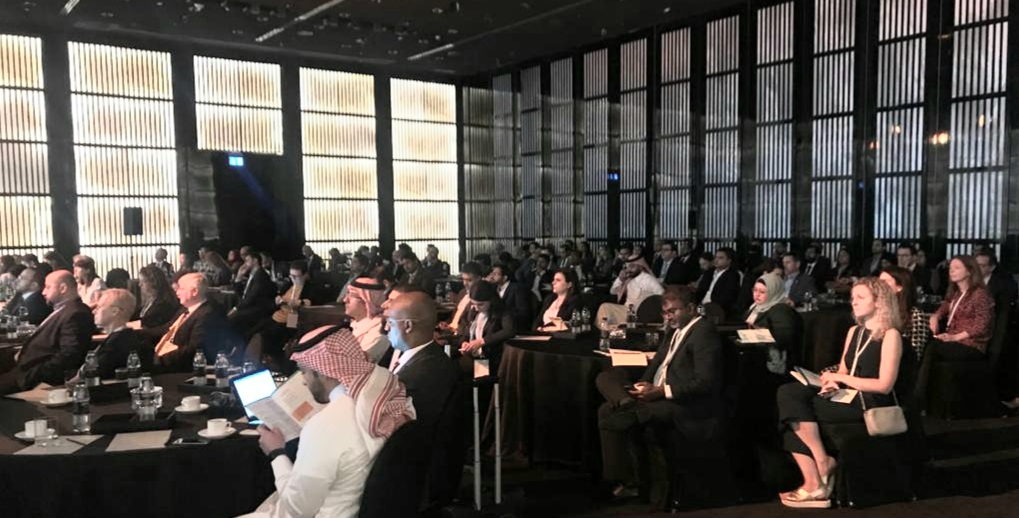
5th IoT Middle East 2020 audience get insights on Smart Home and security products with Anker Innovations

Technology enthusiasts to get insights into Smart Home and security products at Industry event

Dubai, UAE: Anker Innovations DMCC, through its brand eufy Securityshared insights on the latest home and security solutions at the 5th Internet of Things 2020 in Armani Hotel Dubai.

The cross-industry C-level conference brings together forward-thinking experts sharing insights on business, technology and organizational transformation to leverage new business and develop new eco-systems.

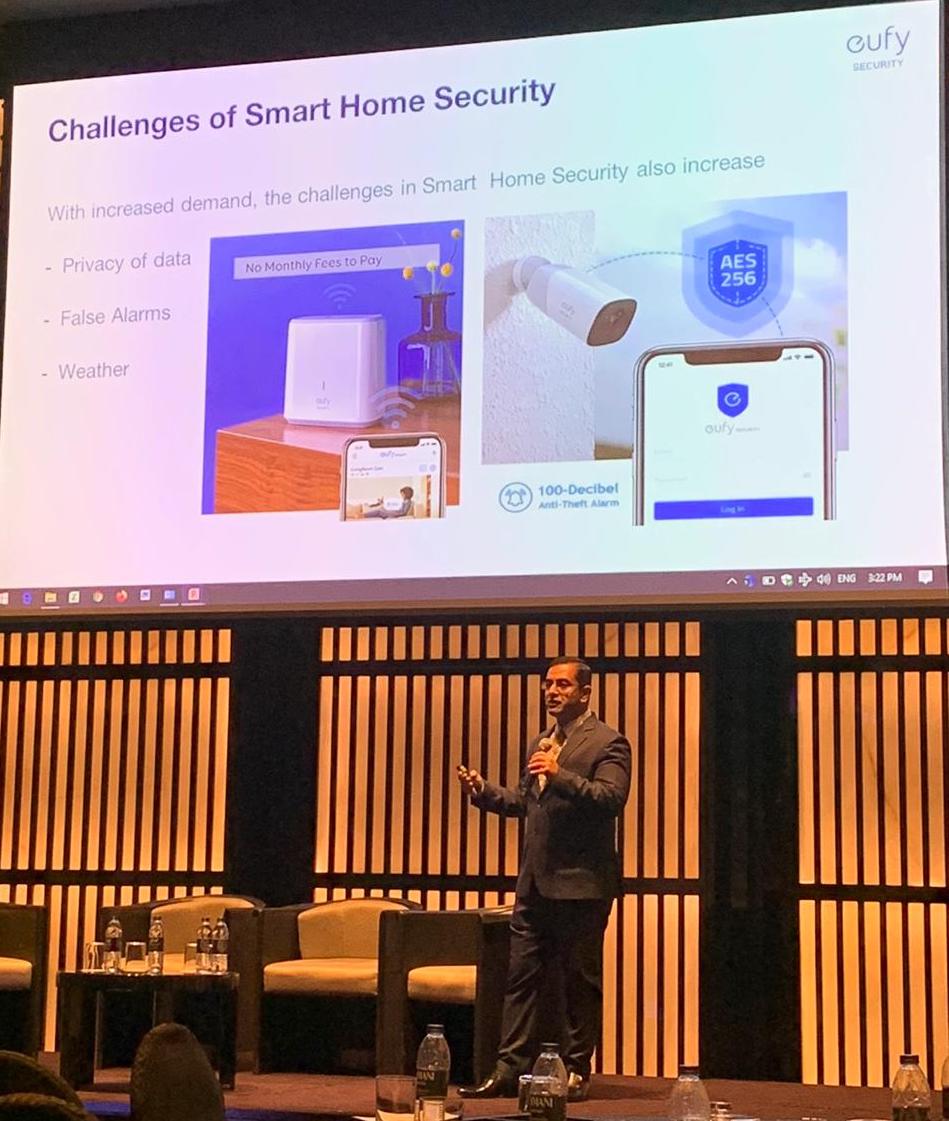
Faraz Mehdi, Regional Sales Head at Anker Innovations MEA addressed the audience on how connected devices today are functional for everyday use and why security, privacy and safety can be attained with reliable devices giving peace of mind to businesses and individuals. He highlighted innovations that help the area of security and how this can be enhanced with new technology safely in the region.

Anker Innovations hada presence at the exhibition area to showcase eufy smart home Security and addressed questions from the audience on new age connected and functional devices as well as unique and innovative consumer products in smart home appliances.

Anker Innovations, through its brand eufy Security shares insights on the latest home and security solutions

Technology enthusiasts to get insights into Smart Home and security products at Industry event

PHOTO-2020-03-04-06-52-59

Anker Innovations DMCC, through its brand eufy Securityshared insights on the latest home and security solutions at the 5th Internet of Things 2020 in Armani Hotel Dubai.

The cross-industry C-level conference brings together forward-thinking experts sharing insights on business, technology and organizational transformation to leverage new business and develop new eco-systems.

Faraz Mehdi, Regional Sales Head at Anker Innovations MEA addressed the audience on how connected devices today are functional for everyday use and why security, privacy and safety can be attained with reliable devices giving peace of mind to businesses and individuals. He highlighted innovations that help the area of security and how this can be enhanced with new technology safely in the region.

Anker Innovations hada presence at the exhibition area to showcase eufy smart home Security and addressed questions from the audience on new age connected and functional devices as well as unique and innovative consumer products in smart home appliances.


Evolution of Mobile Networks in the Era of 5G

Author: Mohammed Al-Moneer, Regional Vice President, MENA at A10 Networks

Fifth generation networks, just like the preceding 4G LTE and WiMAX networks, are expected to greatly increase available bandwidth, with improved end-to-end performance providing a better end-user experience. In the most basic of terms, 4G LTE was the long-term evolution of Radio Access Networks (RAN); 5G is the next iteration.

Wireless carriers have invested billions into their networks to support the ongoing demand for faster network speeds. They must look for ways to increase revenue while delivering more value to the end user. This continues to drive new devices into the hands of the consumer. The demand for increased efficiencies, bandwidth, and coverage has pushed carriers towards a decentralised deployment model.

Network Virtualisation Remains in The Early Stages
Service providers monitor and review technology for advancements that will help deliver faster and less expensive networks. Recently, they have looked into areas of Network Function Virtualisation (NFV) and automation to support their advancements. Mobile network operators are investing heavily in reducing delays and errors through repetitive processes as they build and add capacity to existing 4G networks.

Virtualisation and Software Defined Networks (SDN) improvements are driving a shift from hardware to software. SDN is promising, but it’s not an instant solution, as purpose-built hardware still remains the preferred choice. NFV and SDN have offered service providers an alternative to existing methods, including dedicated appliances sitting idle. However, it’s safe to say that the age of virtualisation remains in the early stages.

Hardware manufacturers and service providers are now betting on the acceptance and success of virtualised functions. Software development continues at breakneck speed to meet timelines and demands for more integrated solutions, which easily scale and reduce operational overheads at the same time.

The 5G Revenue Opportunity
5G’s impact is expected to extend beyond the typical mobile network carriers/operators. It promises to enable increased connectivity and flexibility, that will drive additional functions throughout all supportive components of a mobile carrier’s network.

RAN access providers face the question of how to support the ever-increasing appetite for cutting the cord. How can we use our mobile devices in more ways than previously thought, as the end user goes about their daily tasks? This mobility, whether it’s tied to a carrier’s technology or even a simple Wi-Fi home network, reaches all corners of our day-to-day life.

This reach extends from the cloud to the data centre environments and continues to drive capacity needs, supported by both legacy appliances and the ever-increasing virtual environments. This continued appetite for consumption has opened up opportunities for all facets of technology and associated vendors.

5G Mobile Network Evolution
The continued expansion of 5G networks will have a revolutionary impact upon every mobile subscriber and business in the world.

The fundamental market forces of network evolution are not based on wired or wireless infrastructure. Companies are currently focused on upgrading existing mobile networks. Whereas at the exact same time, NFV, SDN and the global IoT industry are all preparing to utilise the next generation of mobile networks.

Software solutions are easier to move from concept to production and frequently offer a lower up-front investment cost. This all adds up to help drive increased functionality for all service providers, including the wired infrastructure.

5G and IoT will be demand-driven. As a result, the more the infrastructure expands to meet that demand, the more opportunities will be uncovered. It’s a positive feedback loop that will revolutionise how we think of the internet.

Get ready for a world that will be changed forever with the next generation mobile networks on the horizon.

With Security and Flexibility Top of Mind, Financial Companies Embrace Hybrid Cloud

Second Annual Nutanix Report Finds 71% of Financial Services Firms Migrating Workloads Back On-Premises

Nutanix, a leader in enterprise cloud computing, today announced the financial services industry findingsof its second Enterprise Cloud Index Report, measuringfinancial firms’ plans for adopting private, public and hybrid clouds.The report found the financial sector outpaces all other industries in hybrid cloud deployments – hosting workloads in both private and public cloud – but trail others in their use of multiple public cloud services.

Most financial services companies must adhere to strict regulatory requirements and government mandates. Not surprisingly, 60% of respondents called out security as the single biggest influence on future cloud strategies. Additionally, because so many organizations struggle to migrate workloads between environments, financial services companies have the highest percentage of traditional data centers (59%) delivering key applications. Yet, in the face of digital transformation, the sector faces mounting pressure to modernize IT and to make services more convenient for end-users. Together, this explains why nearly 18% of financial companies have deployed hybrid cloud today, while 51% plan to shift investment to hybrid cloud in just three to five years.

Additional findings of this year’s report include:

  • Flexibility to move applications as needed is critical. Nearly three-quarters of financial companies surveyed (71%) shared their plans to move one or more applications running in a public cloud back on-premises. In the financial services industry, regulatory requirements are constantly evolving, meaning companies must keep pace with changing regulations that govern where these companies can store and manage their data. Respondents also ranked hybrid cloud as the most secure IT operating model (27% of the time) signaling the importance of flexibility, alongside security, in this ever changing environment.
  • The future of work and digital transformation plays a role in the financial sectors’ infrastructure decisions. Financial services selected “support for remote/branch office users” as a motivator for cloud decisions nearly 30% of the time, a significantly higher percentage than cross-industry averages, pointing to the increasingly remote workplace landscape and the role of digital transformation in customer experience.In the short term, respondents listed lack of adoption stemming from concerns around nascent tools for managing hybrid environments (66%), a lack of hybrid cloud skills (30%) and a lack of cloud-native development skills (23%).  
  • Security is paramount for compliance and regulation. Data showed that financial companies are running the highest percentage of data centers today, with just over 59% of financial companies. Accounting in part for this trend is dissatisfaction with public cloud, with only 39% of financial services companies reporting public cloud services were completely meeting their expectations.

“The financial sector’s digital transformation is aggressively driving datacenter modernization and cloud adoption,” said Greg Smith, VP of Product Marketing at Nutanix. “Ambitious, but necessary, plans to shift investment to hybrid clouds clearly demonstrate that financial companies recognize the obvious benefits. With hybrid cloud infrastructure, financial companies can enjoy application mobility across clouds and gain greater control of their IT spend, while remaining confident in the security of their data.”

The 2019 respondent base spanned multiple industries, business sizes, and the following geographies: the Americas; Europe, the Middle East, and Africa (EMEA); and the Asia-Pacific (APJ) region.

To learn more about the global report and findings, please download the “Nutanix Enterprise Cloud Index 2019or register to access the financial services industry findings.”

This years edition of Talentology 2020 Grand Finale winners revealed at Mushrif Mall

Grand Finale attended by VIP’s, Media and Kris fade 

The fourth edition of Talentology 2020 Grand Finale at Mushrif Mall Abu Dhabi attracted local residents and visitors to witness the action-packed recorded performances by the twelve entrants competing to win in the adult and kids’ categories. 

The winner of the kid’s category is Peter Anthony Villegas Rosalita, a Singer from Philippines, and Suriya Badrinath a singer from India is winner in the adult category. Both winners thanked the voters and the mall for providing them a platform to show their musical abilities and their friends and families who supported them with online votes.

The event was attended by Director of Line Investments and Property LLC, Wajeb AlKhoury, Biju George, Commercial Manager as well as Chief Guest, Kris Fade, media and the local community.

Aravind Ravi Palode, Mall Manager of Mushrif Mall, said, “As an annual event, Talentology brings a creative audience to Mushrif Mall from our local communities as well as the country. We encourage young talents to positively to launch their career in the entertainment industry by helping finalists with their portfolios so they get a jump start to nurture their talent further.”  

Selected contestants were judged for appropriate artistic attire and stage presence over the weekend as they performed live on stage at Mushrif mall to get more votes online.

Talentology attracts over 10,000 registrations from mixed nationalities but only 12 finalists are selected with two winners. The grand finale winners receive AED 5,000/- worth of mall vouchers and all finalists get AED 1,000/- mall vouchers.

Talentology is an energy packed competition organised by Mushrif Mall for talented youth with a passion for success. The Mall recognizes the role the young play in society and Talentology helps promote unity in the community, assists in gaining self-confidence and provides an unforgettable experience of being part of a memorable event.

KAUST Partners with Riverbed to Elevate Digital Learning and Collaboration Experiences for Students and Faculty

Riverbed® today announcedthat King Abdullah University of Science and Technology (KAUST), one of Saudi Arabia’s premier research universities, is collaborating with Riverbed on a transformation project that will enhance its ability to deliver cutting-edge digital services to faculty, researchers and students, both within the Kingdom and beyond. Riverbed® Network Performance Management (NPM) solution, AppResponse, will give KAUST comprehensive visibility across its entire network, enabling rapid troubleshooting for better network performance and visibility while significantly reducing IT complexity and management overheads. 

As a leading destination for scientific and technological education and research, KAUST leverages the latest technologies to facilitate corporate interactions, innovation, knowledge transfer and thus support the economic development of the country in line with Saudi Vision 2030. As a result, the University has successfully attracted over 2,500 talented graduates, student alumni and former postdoctoral fellows from over 80 countries.

“KAUST aspires to be a destination for scientific and technological education and research. By inspiring discoveries to address global challenges, we strive to serve as a beacon of knowledge that bridges people and cultures for the betterment of humanity,” said Abdulmajeed Serajuddin, Director of IT Operations at KAUST. “Our partnership with Riverbed will help us achieve two key objectives – giving our staff and students seamless access to the services, information and applications they need in this digitally-driven era and enabling seamless real-time collaboration with research institutes across the globe. In this way, the deployment will support our mission of establishing KAUST as an incubator for technological innovation and progress in the Middle East.”

Riverbed was selected for its established market-leadership, strong presence in the Middle East and its ability to provide the University with a clear long-term solution roadmap. “Several members of our IT team were already aware of and have used Riverbed’s solutions. This gives us added confidence, as we have first-hand experience of the rich features and capabilities of Riverbed’s portfolio,” explained Abdulmajeed Serajuddin.

Riverbed’s solutions will serve to replace the complex mix of siloed technologies that were limiting the University’s ability to gain full visibility across its entire network – a shortcoming that introduced complexity, increased licensing costs and translated to difficulties in identifying the root cause of network performance issues. The deployment is on track for completion in the first quarter of 2020.

“Saudi Arabia is an important market for Riverbed in the Middle East, and our objectives are fully in line with the Kingdom’s vision in all its dimensions. Riverbed will continue to work hard and invest with enterprise customers across higher education and other verticals to help enable economic transformation under the Saudi Vision 2030, and to enable organizations to maximize performance and visibility across networks and applications. We are proud to support KAUST in their digital transformation strategy and the addition of this reputable University to our customer-base stands as a testament to the great strides we have been making in establishing ourselves as a leading technology provider to the largest and most prestigious organizations in the Kingdom,” said Moueen Zahreddine, Regional Sales Director MENA, at Riverbed.

KAUST is also looking to advance its hybrid cloud strategy to take advantage of the scalability, flexibility, and cost-effectiveness that this paradigm offers. “Our partnership with Riverbed strongly aligns with this vision as their solutions address the potential complexity of the hybrid cloud and provide a clear path to cloud success,” concludes Serajuddin.

Digital Health Middle East highlights new approaches to healthcare with the lowest costs

Experts at Digital Health Middle East 2020 highlighted new approaches to healthcare that is set to reform the industry with preventive information and new care solutions using technologies to deliver the highest levels of safety and patient experience with the lowest cost in the future.

Dr Ramadan AlBlooshi, Chief Regulatory Officer, Dubai Health City Authority, said “In the past five years, the UAE Government has launched several strategies including the National Innovation Strategy, The Artificial Intelligence (AI) Strategy and Block Chain Strategy to empower change across industries. Disruptive technologies are offering effective tools to revolutionize the health sector by enabling innovative, cost-effective and patient-centred systems. Collaborations among health authorities across block chain are allowing us to have unified health systems and laying the foundation for new healthcare services such as telehealth.

Lina H Shadid,Healthcare Practice Leadat PwC, spoke on the New Health Economy focussing on digital transformation and the role of data and AI in the age of Trust.

Lina Shadid, Digital Health Lead at PwC Middle East noted:“The promise thatdata science and artificial intelligence (AI) hold forrevolutionising healthcare is undeniable – from the way healthcare is delivered all the way through to how data is collected, assessed and used to benefit the greater good. But for AI to truly benefit the healthcare system, we need to see a concerted effort on the part of the entire ecosystem, an effort to cut through the hype and prepare for the changes and potential that emerging technology bring to the industry. This transformation requires a collective effort — from providers, payers, patients and all the way through to regulators, data scientists and academics. The promise of big data and AI in healthcare is huge.”

Amit Sadana, General Manager & SVPAMESAat IQVIA spoke on how genetics will take digital health to a new level and decoding a genomic revolution. He highlighted on using genome sequence and big data to manage one’s health and how genetics will take digital health to the next level.

Atif Albraiki, CEO at Malaffiaddressed the audience how besides the many breakthroughs in medicine, healthcare data vastly remains in silos and how this affects the provision of care. He highlighted how Health Information Exchanges connect healthcare and provides value to stakeholders. 

Mr Albraiki added, “I am glad that HIEs are now an integral part of all conversations around improving healthcare through technology. We are happy to carry the flag for connecting healthcare, by also sharing our experience with Malaffi, which has already started to provide value for both providers and patients.”

Nadine de Clercqand Natasha Faizan of Amana Healthcare presented the case of using eye gaze technology to communicate with children of special needs.

Haytham El Sahat, surgical oncologist and Medical director at Mediclinic spoke on the role of AI in medicine and how digitization will change the distribution of personnel and leadership roles. 

Blending Nordic experience with local excellence, experts at the conference hailed from Finland, Sweden, Denmark, Norway and GCC. Dr. Sven Korner, NLP/AI/Deep Learning Researcher from Germany, 

Anni Iso-Mustajarvi, Head of Business Development at Mehilainen from Finlandspoke on the digitalization of patient journey and developing high quality services beyond traditional boundaries while Claus Nielsen of Data for Good Foundation from Denmark highlighted prevention and early intervention as a goal for improved population health.

Magnus Clarin, Dean – School of Information Science at Halmstad University in Swedenpresented a case study on AI driven care in response to healthcare challenges with insights and results from the region of Halland.

Ben Furneaux, Global Head of Affordability at Cigna spoke on cost care and the need for affordable healthcare solutions while Dr. Sven Korner delivered a keynote on using AI for profitability and using semantic processing to interpret data to deliver real knowledge.

Guests also had access to exhibitors in the foyer that included PwC, du, Evoteq, Anker Innovations, Thuraya, Prestidge Group and IQVIA.

The event gathered 250+ peers from across the ecosystem, and 20+ speakers for a dialogue, vital insights and networking as this C-level hub facilitates knowledge exchange and game-changing strategies. Digital Health Middle East brings C-level attendees including executives and CXO’s, governmental department heads, hospital leaders, nurse leaders, regulators, technologists, futurists and entrepreneurs.

Impressive line-up of partners and speakers at IoT Middle East

An impressive line-up of partners and speakers addressed industry peers and stakeholders on utilising the IoT landscape to drive innovation at the 5th Internet of Things 2020, held at Armani Hotel Dubai.


The keynote addressed how AI has made business more profitable with Dr. Sven Korner and using semantic processing to interpret data to deliver real knowledge.

Marwan bin Dalmook, SVP, ICT Commercial and Business Development and Smart City Operations, du got in conversation with Dr. Muneer Zuhdi, Partner at Bell Labs by Nokia on digitization, redefining business models and 5G.

Jihad Tayara, CEO at Evoteq spoke about Smart homes, Office of the Future and smarter cities followed by Karl Feilder, Founder and Chairman of Neural Fuels presented AIoT cases on sustainable business models and mitigating climate change through technology.

Jassem Nasser, Chief Strategy Officer, Thuraya talked about the growing role of innovative applications before the panel discussions on monetizing IoT within ecosystems followed by Christophe Vloebergh presenting Daimler AG’s vision on the Future of Mobility.

Faraz Mehdi, Regional Sales head, eufy Security by ANKER spoke about the current challenges of home security, privacy of data, Ai in home security and ease of use with Smart Home Eco System followed by Fadi Hindi delivering a key note on the Future of the Workforce.

Markku Willenius, Dean of Dubai Future Academy concluded the conference with a keynote on how to harness new technologies for human good and progress and how UAE will play a significant role as a testbed for resource efficient and adaptive economies.


Other notable speakers included Brian deFrancesca, Ahmed Kawakbi, Danish Farhan, Janne Kilpelainen, Dr. Mohammed Al Awadhi, Richard Estephan, Balaji Nambi and Fadi Hindi.

The cross-industry C-level conference brought together forward-thinking experts sharing insights on business, technology and organizational transformation to leverage new business and new eco-systems with a focus on how to generate business out of IoT, AI, ML and Intelligent automation.

New tech like AI and ML needs the data of IoT to deliver accurate analyses and output. IoT adoption is hence expected to grow by two-digit numbers and reach $18 billion in MEA related IoT investments by 2023, as both governmental and private sector companies ramp up their digital transformation capabilities.

The 5th Internet of Things 2020 is a game-changing platform, attracting over 400 attendees yearly, addressing the business relevance of technology across multiple verticals. 

Digital Health Middle East 2020 addresses premium patient experience with the lowest cost in the future.

PHOTO-2020-02-24-14-07-56

Experts at Digital Health Middle East 2020 highlighted new approaches to healthcare that is set to reform the industry with preventive information and new care solutions using technologies to deliver the highest levels of safety and patient experience with the lowest cost in the future.


Dr Ramadan AlBlooshi, Chief Regulatory Officer, Dubai Health City Authority, said “In the past five years, the UAE Government has launched several strategies including the National Innovation Strategy, The Artificial Intelligence (AI) Strategy and Block Chain Strategy to empower change across industries. Disruptive technologies are offering effective tools to revolutionize the health sector by enabling innovative, cost-effective and patient-centred systems. Collaborations among health authorities across block chain are allowing us to have unified health systems and laying the foundation for new healthcare services such as telehealth.


Lina H Shadid,Healthcare Practice Leadat PwC, spoke on the New Health Economy focussing on digital transformation and the role of data and AI in the age of Trust.


Lina Shadid, Digital Health Lead at PwC Middle East noted: “The promise thatdata science and artificial intelligence (AI) hold forrevolutionising healthcare is undeniable – from the way healthcare is delivered all the way through to how data is collected, assessed and used to benefit the greater good. But for AI to truly benefit the healthcare system, we need to see a concerted effort on the part of the entire ecosystem, an effort to cut through the hype and prepare for the changes and potential that emerging technology bring to the industry. This transformation requires a collective effort — from providers, payers, patients and all the way through to regulators, data scientists and academics. The promise of big data and AI in healthcare is huge.”


Amit Sadana, General Manager & SVPAMESAat IQVIA spoke on how genetics will take digital health to a new level and decoding a genomic revolution. He highlighted on using genome sequence and big data to manage one’s health and how genetics will take digital health to the next level.


Atif Albraiki, CEO at Malaffiaddressed the audience how besides the many breakthroughs in medicine, healthcare data vastly remains in silos and how this affects the provision of care. He highlighted how Health Information Exchanges connect healthcare and provides value to stakeholders.


Mr Albraiki added, “I am glad that HIEs are now an integral part of all conversations around improving healthcare through technology. We are happy to carry the flag for connecting healthcare, by also sharing our experience with Malaffi, which has already started to provide value for both providers and patients.”


Nadine de Clercqand Natasha Faizan of Amana Healthcare presented the case of using eye gaze technology to communicate with children of special needs.


Haytham El Sahat, surgical oncologist and Medical director at Mediclinic spoke on the role of AI in medicine and how digitization will change the distribution of personnel and leadership roles.


Blending Nordic experience with local excellence, experts at the conference hailed from Finland, Sweden, Denmark, Norway and GCC. Dr. Sven Korner, NLP/AI/Deep Learning Researcher from Germany,


Anni Iso-Mustajarvi, Head of Business Development at Mehilainen from Finlandspoke on the digitalization of patient journey and developing high quality services beyond traditional boundaries while Claus Nielsen of Data for Good Foundation from Denmark highlighted prevention and early intervention as a goal for improved population health.


Magnus Clarin, Dean – School of Information Science at Halmstad University in Swedenpresented a case study on AI driven care in response to healthcare challenges with insights and results from the region of Halland.


Ben Furneaux, Global Head of Affordability at Cigna spoke on cost care and the need for affordable healthcare solutions while Dr. Sven Korner delivered a keynote on using AI for profitability and using semantic processing to interpret data to deliver real knowledge.


Guests also had access to exhibitors in the foyer that included PwC, du, Evoteq, Anker Innovations, Thuraya, Prestidge Group and IQVIA.


The event gathered 250+ peers from across the ecosystem, and 20+ speakers for a dialogue, vital insights and networking as this C-level hub facilitates knowledge exchange and game-changing strategies. Digital Health Middle East brings C-level attendees including executives and CXO’s, governmental department heads, hospital leaders, nurse leaders, regulators, technologists, futurists and entrepreneurs.