An Edge Computing Breakup: Out with the Old, and In with the New

Co-authors: Dave Russell, Vice President of Enterprise Strategy at Veeam and Rick Vanover, Senior Director of product Strategy at Veeam

When COVID-19 arrived in early 2020, enterprises’ first priority was to patch together a communications and information-sharing infrastructure that could sustain operations until work could return to normal. More than a year later, returns are on hold, and enterprises are rethinking their visions of “normal.” They’re reimagining their workplaces and their business practices – embracing more flexible models that take advantage of the benefits of edge technologies.

Edge computing is defined loosely as a model that brings computational, data storage and connectivity resources closer to the locations where they’re needed, saving bandwidth and accelerating response times. Edge technologies power millions of IoT applications in industrial, retail, healthcare and smart cities environments, and, prior to 2020, analysts expected an additional bump from virtual reality and 5G in the coming years.

Then the pandemic hit, and the need for edge technologies suddenly accelerated. As millions of workers shifted out of enterprise hubs into more remote locations, they put a strain on networks, creating increased latency and a greater need for computer power, capacity, and storage closer to the new network edge.

It’s not just workers connecting on Zoom occupying this new edge. Video editors working from home are transmitting huge files, schools are engaging thousands of students in online classes, and physicians are conducting remote health visits where high-res images are posted and circulated. Investing in edge solutions that process data locally and enable more seamless connections avoids having to slog through increasingly overburdened public networks.

The result: a boom in edge-related hardware, software and applications. Analysts are predicting a major growth spurt at the edge, rocketing up 30 percent a year to $44.0 billion by 2030.

As enterprises accelerate investments in digital transformation projects, edge technologies will open up new opportunities to succeed in the marketplace. Here are a few areas where they’ll play prominent roles.

Customer service

Customers, of course, can be demanding. They want choices, information, intuitive purchasing options, respect for their privacy and, at times, a little coddling. Businesses can respond better in transactional situations if they can have information and insights available in the moment. This plays right to the strengths of edge applications.

Retailers, for instance, can use edge devices with web caching functions to replicate online customer experiences in the physical world. They can capture customer information, apply insights from shopping patterns, process connections in real time and be ready to serve the customer better at key points of the buying journey.

Outside the store, changeable digital displays can broadcast pop-up sales to attract customers inside. As customers enter, the network connects to their personal devices and access their purchase history. Customers then can request customized coupons or connect to personalized shopper assistance. Inside the store, strategically positioned kiosks and screens display customized promotional offers based on each shopper’s buying patterns.

Sales associates can use digital assistant devices to check updated inventory levels or gather insider product information. Easy-to-use product finder displays can steer customers to the right products based on individual, self-selected preferences.

Security

The proliferation of edge computing applications has significant – and seemingly contradictory – ramifications for security.

On one hand, adding more nodes opens up more places vulnerable to attack. This will force IT security leaders to bolster their defenses to ensure that information and applications stored at the edge match the strength their applying inside the data center itself.

At the same time, edge computing’s decentralized nature brings some security benefits. If an edge device is breached, security teams can easily wall off the endpoint so the attack doesn’t spread to the whole network. They can also configure their edge models to keep more data at the endpoints and limit the amount of information that gets sent back to home office. That adds an extra layer of security, keeping threats away from the data center, where more mission-critical resources are stored.

To optimize the security of an edge-enabled system, organizations will need to establish strong governance programs to control the data that’s being generated, processed and transferred from individual sites.

Plus, since IoT devices are tough to secure, it’s important that the edge computing deployment emphasizes proper management of the devices themselves. They’ll need to establish policy-driven configuration enforcement and security for computing and storage, paying special attention to encryption of data at rest and in flight.

While edge security isn’t a new concept, the scale of the challenge has grown with the expansion of remote work and on-site IoT-related applications. Solving these edge security issues will be a top priority in 2021 and beyond.

Democratizing technology

Gartner identified democratization as one of its top ten strategic technology trends for the enterprise in 2020. While the projection focuses mainly on a broader sharing of technical and business domain expertise, it can be extended to include an increase in democratization of commerce itself – enabled by the growth of edge technologies.

The edge’s ability to aggregate, process and analyze data locally opens up new opportunities for entrepreneurial ventures outside major hubs of commerce. Data will be cheaper to manage, and it will be available to larger pools of talent. Startup and operational costs will be lower, creating a budding market for new ventures in new and existing industries.

The democratization will be driven, in part, by society’s move to remote work. Home-based businesses will create their own individual edge outlets, and organizations will establish regional edge hubs to serve growing numbers of remote employees and contractors. And, telecommunications providers will shore up edge hubs and leverage faster 5G to lighten the traffic loads that are bogging down today’s suddenly overburdened networks.

Gartner’s trend prediction projects four key elements of democratization to accelerate through 2023. These include the democratization of data and analytics (tools targeting data scientists expanding to target the professional developer community), development (AI tools to leverage in custom-developed applications), design (expanding on the low-code, no-code phenomena with automation of additional application development functions to empower the citizen-developer) and knowledge (non-IT professionals gaining access to tools and expert systems that empower them to exploit and apply specialized skills beyond their own expertise and training).

We will see edge technologies pushing commerce into the mix starting this year.

#GlobalTrendMonitor  #Veeam #Technology #Security #AI #IT #magazineUAE #magazine #mediaUAE #UAEbusiness #myDubai 

FLY NOW, PAY IF OK is Now Available in the UAE

Innovative flight compensation company, Colibra, is now live for users in the United Arab Emirates to use. For the first time the ‘Fly Now, Pay if Okay’ service allows passengers with a valid UAE residency to book flights that they only pay for if their flight arrives on time. They now have the privilege to be the first in the world to use the pilot version of the product and test this disruptive travel technology.

The Colibra app guarantees UAE residents that if the flight is cancelled or delayed for more than three hours, passengers do not have to pay for their plane tickets at all. This service is entirely free for users of the app, allowing them to book tickets within 30 days before departure (and arrival) and then pay the regular ticket fare if their flight arrives on time or within three hours of its scheduled departure. 

The Colibra app is now available to download on the Apple Store for IOS users, as well as on the Google Play Store for Android users.

How the app works:

1. The passenger chooses a flight – it must depart and arrive within 30 days from the booking date

2. Adds his/her personal data – Colibra doesn’t charge at the time of booking

3. Colibra charges the passenger upon arrival if everything goes smoothly and the service is delivered (ticket’s price is at no extra cost). In all other cases, the user travels for FREE.

Fuel Cell & Battery Electric Vehicles: The Inevitable Future of Clean Mobility

By Bang Sun Jeong, Vice President, Head of Middle East & Africa Operation, Hyundai Motor Group

With climate change continuing to be an important topic around the world, more questions are being asked of how automobile manufacturers can help reduce the emissions that are being produced by vehicles on a daily basis. 

According to statistics from the International Energy Agency, road transportation accounts for three-quarters of transport emissions while transportation alone makes up one-fifth of global carbon dioxide emissions. It is a significant problem and one that simply cannot be ignored. 

In recent years, several vehicle makers including Hyundai Motor Company, have committed to play their part in addressing this issue by providing clean mobility. We are already seeing the beginning of this with many clean and energy-efficient vehicles being driven on the roads today. 

Most of them are battery electric vehicles (BEVs) which are becoming an increasingly popular choice for consumers today. It is easy to see why. Many governments around the globe have rolled out financial incentives to encourage the adoption as part of its long-term strategy to go green. 

For instance, the United Kingdom is set to ban the sales of new cars and vans that are powered by diesel or petrol from 2030 while the American government has pledged to invest heavily in clean energy including electric vehicles with plans to install 500,000 new charging outlets by the end of 2030. This would be a huge jump given there are currently less than 29,000 public EV chargers across the U.S.

Although these plans would help accelerate the sales of BEVs, trying to change the majority of people’s behaviours to switch to ‘greener’ and sustainable vehicles will not be easy.

How long would it take to charge? Is it affordable? How far would consumers be able to travel and how long would the batteries last before it needs replacing? These are just some of the questions being raised by potential new buyers before making the final decision and doing their part in protecting the environment. 

Many of these answers are largely down to the use of advanced technologies and how practical they are. Today, more organisations within the industry are collaborating to leverage different forms of technologies to develop vehicles and infrastructure that will make BEVs a climate-friendly way to get around. 

While these are big steps forward, BEVs are not the only transport solution that will help make our cities and towns cleaner. 

Hydrogen power has been on the market for many years but in a very limited capacity. Yet, it has been identified as a key green transportation technology and in recent years, Hydrogen, the most abundant element on Earth, has become a vital resource in the automotive industry.

Hydrogen cars or fuel-cell electric vehicles (FCEV) as they are widely known today are unlike BEVs. 

Firstly, FCEVs are installed with a hydrogen tank that enters the fuel cell using a combination of hydrogen and oxygen which generates electricity to power the motors. This means that hydrogen cars have characteristics of both electric cars due to the use of electric energy and conventional petrol cars which have tanks.

As well as reducing carbon footprints and greenhouse gases, another difference is that FCEVs do not require consumers to plug in the vehicle to an outlet for refuelling which can be done between five and 10 minutes. 

For example, the Hyundai NEXO Fuel Cell only needs less than five minutes to refuel for a driving range of up to 380 miles. To put that into perspective, that is almost the distance of a full-round trip between Washington DC and New York compared to BEVs which can range between 100 and 200 miles. 

Furthermore, FCEVs can store more energy at a lower density while hydrogen is a more sustainable and long-term fuelling option that can be used for long periods without even harming the environment.

Despite these positives, one of the biggest challenges is costs. Although a variety of FCEVs have been rolled out in the last two decades including Hyundai’s Santa Fe FCEV –the Company’s first fuel cell EV and the world’s first mass-produced FCEV Hyundai ix35, the demand is relatively low. 

There are many reasons for this but one of the main problems is that they are expensive to buy. This is largely down to manufacturing and technology costs which will only drop when production numbers rise. 

Even if consumers can afford a new FCEV, there needs to be a substantial number of Hydrogen fueling stations across all countries and these facilities will only be built by fuel companies if there is enough business. 

However, the Kingdom of Saudi Arabia is among the countries that already have installed at least a fueling station which shows that some nations are more than ready to welcome hydrogen-powered vehicles to their roads.

It is clear that BEVs and FCEVs have the advantage of producing zero local emissions and at Hyundai Motor, we see a bright future for both types of vehicles. It is part of our vision to produce automobiles that are sustainable and eco-friendly.

Yet, we realise that a huge amount of work needs to be done to provide a clean mobility landscape. As part of our long-term strategy, Hyundai plans to roll out at least 12 BEV models with the objective to sell 560,000 EVs per year by 2025. During this same period, Hyundai Motor Group, plans to expand its BEV lineup to 23 models by 2025 with the goal to sell 1 million units annually in global markets.

At the same time, Hyundai Motor Group has set out its ‘FCEV Vision 2030’ roadmap, reaffirming its commitment to accelerate the development of a hydrogen society by leveraging its global leadership in fuel cell technologies. 

During the next nine years, Hyundai Motor Group aims to secure a 700,000-units-a-year production capacity of fuel cell systems for automobiles as well as for non-automotive sectors, such as vessels, rail cars, drones and power generators.

As for fuel cell vehicles, Hyundai Motor has already started exporting its XCIENT Fuel Cell, the world’s first mass-produced fuel cell heavy-duty truck with 2,000 units being developed per year by 2021 to support expansion in Europe, the U.S. and China as demand for clean transport solutions grows. 

Overall, it is inevitable that we will be seeing more BEVs and FCEVs being driven in the future as they are part of the solution that will make our cities cleaner. If members of society are to shift to these vehicles, it would require policy-makers, governments and industry experts to work together and overcome any challenges.

It is simply not enough to develop these vehicles for the roads in mass production unless there is sufficient infrastructure in place and are affordable to buy and operate. Therefore, resourcefulness will be key to clean and sustainable mobility. 

#GlobalTrendMonitor #Hyundai #Mobility #Technology #FuelCell #Vehicles  #magazineUAE #magazine #mediaUAE #UAEbusiness #myDubai 

Digital Marketplace for Car Services

Interview with Ahmed Nasser Co-Founder of Odiggo

Shereen Shabnam

We recently had coffee at the Shangri La Dubai with Ahmed Nasser, Co-Founder and President of Odiggo, a one-stop-shop for everything you need for your vehicle. He tells us how the business started and how e-commerce is empowering the younger generation to come up with new ways to do business.

Odiggo is an app that connects all car owners with the best quality car parts at the lowest prices possible. It is perfect for those who wouldn’t know where to start when it comes to buying parts for their cars and need to know who has the capability to do the job and at what price.

The global market for the auto parts and accessories manufacturing industry is currently valued at US$2 Trillion and is one of the top 10 industries in the world. It is a $61 billion (AED224 billion) industry in the Middle East and Africa alone which is a brilliant opportunity for Odiggo to use its E-commerce expertise to transcend the market and become the leading company in the industry.

How did Odiggo start?

It started with Ahmed Omar who was keen on e-commerce after he sold his dad’s bike online and received part of the sales. His career and journey to Germany and the USA exposed him to the potential of e-commerce and on return to Cairo, he started  new ventures with friends. In 2017, Omar launched an online with friends for used and new cars and called it Kasr-Zero with a supporting online marketplace that offers car spare parts.

It was in 2019 that we set up Odiggo which means ‘drive’ and now has revenues that have increased from 6 million to 100 million.

How big are you?

We operate in Egypt and have just launched in the UAE. Our team and investors are all over the world but the core team is about 35 people strong.

What do you offer via the App and how does the back-end technology work?

We offer a one-stop-shop for everything you need for your vehicle and the app connects all car owners with the best quality car parts at the lowest prices possible with best service provider at your doorstep including offering customers free car washes.

Describe your target audience?

There are two apps – one for customer and one for supplier. We target individual car owners and look after any type of car. We are also getting requests for our services from businesses now as well.

Are there any expansion plans?

We intend to expand to Saudi and then to other parts of the world but we also intend to expand our services and look after not just cars but also bikes and trucks in the future.

How do you select suppliers?

There is a criteria as we initially focus on the top 20 who hold the highest market share because of their track record reputation and size. Once they get a taste of the reach we have, they stay and this encourages the rest of the market to come on board. Currently we are a market leader in Egypt because of the due diligence done on our suppliers.

What’s next for Odiggo?

We will be connecting the car directly with the app using our deep-tech dashboard. By doing this we will know the accurate diagnosis of the car at the right time. This offers the best customer experience as we hope to use AI technology for OBD (On-Board Diagnostics), and enhance vehicle’s self- diagnostic and reporting capability allowing us to get data to identify between 2-3K errors in a car. This is a gamechanger for us and will see us grow tenfold in the future.

#GlobalTrendMonitor #technology #App #Software #Odiggo #Business #interview #magazineUAE #magazine #mediaUAE #UAEbusiness #myDubai 
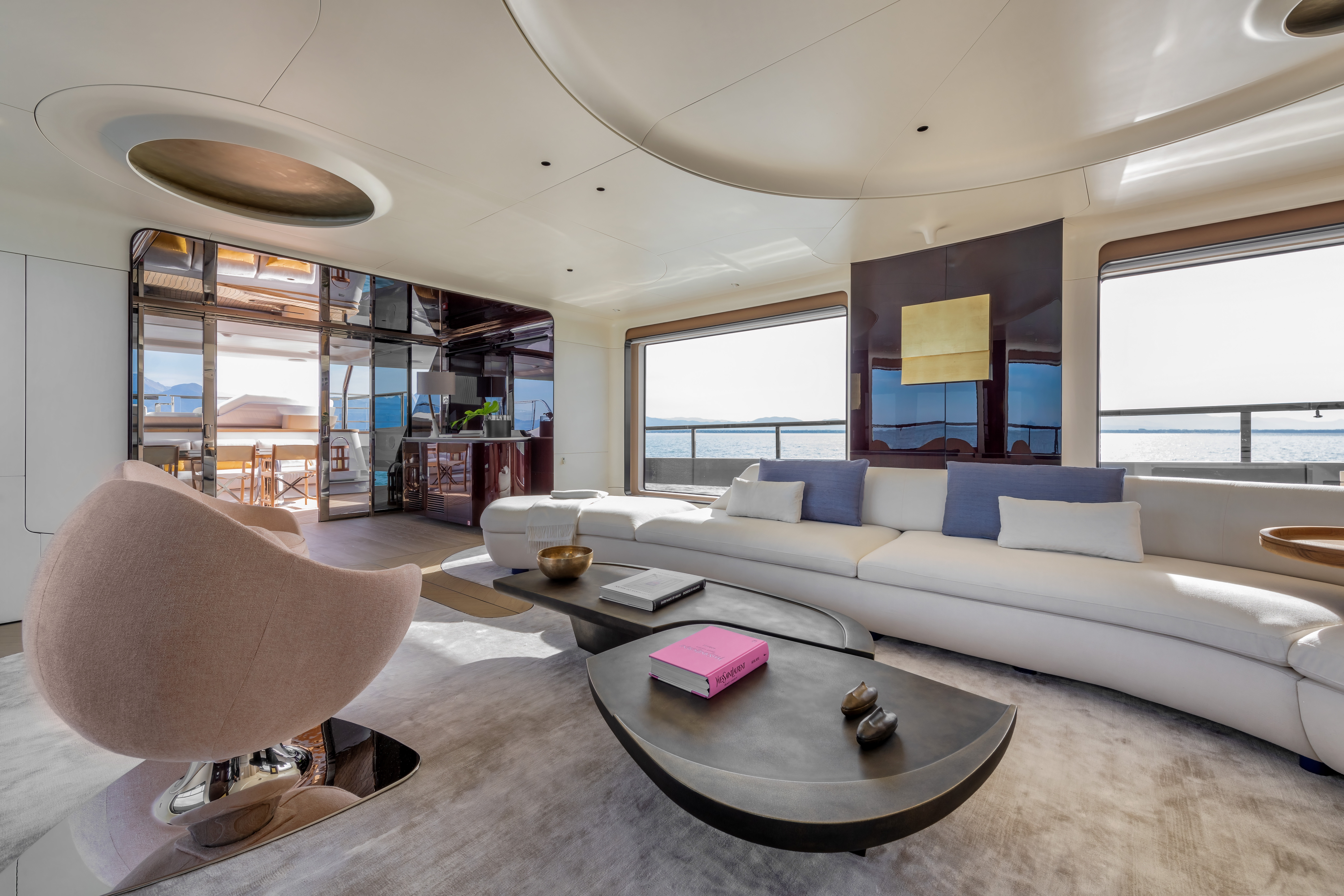
SUPERB SEAKEEPING: AZIMUT GRANDE TRIDECK

By Shereen Shabnam

Every week I select one eye candy image that inspires me and this week it was Azimut Yachts second unit of the 38-meter Azimut Grande Trideck. This revolutionary model offers an extra deck in addition to the three traditional ones, completing a visual effect of cascading terraces from the top of the Sundeck down to the sea. After writing about yachts for 17 years, very little impresses me but this unit ticked all the boxes as I studied the specs and the detailed imagery that we received in our mail recently.

The dynamic exterior lines are designed by Alberto Mancini while Achille Salvagni took care of the interiors.  We came across the first unit of the new flagship of the Grande Collection at the Monaco Grand Prix. The Azimut Grande Trideck are the first triple-deckers ever built by Azimut Yachts and is a new symbol of the brand’s innovative DNA, from the Viareggio shipyard.

In a volume of less than 300 GT, the Trideck proposes a revolutionary layout, a less formal lifestyle, and an unusually close relationship with the sea for a superyacht. The Azimut Trideck is composed of three decks + One, because the shipyard, together with Exterior Designer Alberto Mancini, added an extra aft deck to the three traditional ones, which completes the stern social area while creating a stunning visual effect of cascading terraces from the Sundeck down to the sea.

This all-new feature brings with it a full height beach area and transforms the cockpit into a private patio, which invites the environment in through cut-outs in the fashion plates. The design allows for numerous relaxation areas that would be perfect for our evenings sailing across the coastline of Dubai as well.

The extensive interior spaces owe their elegant design to Achille Salvagni, who brought his world-famous air of wellbeing onboard the Trideck – with a less formal twist. The designer fully embraces the cause of the shipyard: to offer the market a redefinition of the role of space, giving new functionality to the onboard environments that are now more integrated with the external areas, to become extensions of one another, a harmonious continuum.

Beyond eye catching design and comfortable living areas, the Azimut Grande Trideck is built on a state-of-the-art naval architecture, the new second generation of the D2P (Displacement to Planing) hull, which was developed for smooth sailing and class-leading fuel economy by Pierluigi Ausonio of Studio Plana in collaboration with the Azimut|Benetti R&D Department.

Other factors which contribute to her superb seakeeping include the extensive use of carbon fiber to laminate the upper parts of the yacht, as well as stabilizer fins from CMC Marine, which are integrated efficiently thanks to their proprietary Argo software.

Grande Trideck has a dual-motor option, with a pair of MTUs of 2400 or 2600 hp each. The first model under test, with an engine of 2600 hp, recorded a maximum speed of 24 knots, a range of 700 miles at 19 knots and, at a cruising speed of 12 knots, an autonomy of over 1700 miles.

#GlobalTrendMonitor #Azimut #marine #yachts #superyachts #boats #megayachts #LifeOnWater #ShereenShabnam #EditorInChief #vipmarinelife #LuxuryLifestylewriter #JournalistUAE #onboard #travel #explorer #wanderlust #traveller #Shereen_Shabnam #globalista #adventure

Contemporary Design & Performance:GULF CRAFT MAJESTY 100

BY Shereen Shabnam

It is always a delight to see our home grown brand, Gulf Craft, reveal one of its most popular yachts – the Majesty 100.  Over the last two decades, we have seen the friendly team reveal one model better than the last and spend quality time with us each year exploring the yachts and showing us their new innovations. We are hence proud to witness them becoming one of the world’s leading shipbuilders.

The brand has now delivered another Majesty 100, one of the best-selling models of its flagship superyacht brand that has gained acclaim globally for its innovative design, powerful performance, and massive interior volume.

Manufactured at the in-house design and production facility of Gulf Craft, the Majesty 100 will set off for the Turquoise Coast in Turkey and will cruise further on to the Mediterranean Sea. Designed to the specifications of the owner, it stands out for her exquisite exterior and interior design offering ample onboard space as well as a sky lounge on the upper deck which provides spectacular views of the sea.

Made of fibre-reinforced polymer (FRP), making her lightweight at 199 Gross Tons, the 31.7 metre (104 ft) Majesty 100 is powered by twin MAN 1,900 horsepower engines reaching a top speed of 20 knots. With a displacement of about 132 tonnes, the draft of just 1.65 metres (5 ft 5 in), enables easy cruising in shallow waters and giving effortless access to the pristine beaches along her journey.

With folding balconies on both sides of the cockpit, the Majesty 100’s interior features include floor-to-ceiling glazing in the main deck saloon and five spacious staterooms that can accommodate 10 guests and five crew members. Her raised wheelhouse has 270-degree vertical glass panels, a design-first by Gulf Craft, which offers the captain unobstructed views of the seascapes.

The Majesty 100 is compliant with the Maritime Coastguard Agency’s (MCA) LY3, the large commercial yacht code, which outlines specifications for structural strength, weathertight integrity, machinery and installation, safety management, and clean sea requirements, among others. She has an environmentally friendly water treatment solution supporting extended trips out to sea.

Majesty is one of the five brands of boats and yachts manufactured by Gulf Craft and includes its flagship Majesty 175, the world’s largest composite production superyacht, which marked its international premiere recently in Dubai.

#GlobalTrendMonitor  #GulfCraft #marine #yachts #superyachts #boats #megayachts #LifeOnWater #ShereenShabnam #EditorInChief #vipmarinelife #LuxuryLifestylewriter #JournalistUAE #onboard #travel #explorer #wanderlust #traveller #Shereen_Shabnam #globalista #adventure

Rapid Digital Transformation in the Region Highlights Need for Virsec’s Application-Aware Workload Protection

Virsec, the industry leader in application-aware workload protection, announced that regional companies emerging out of the pandemic are accelerating their investments into digital transformation. They are increasingly concerned about the everyday announcements of cybersecurity compromises at large and medium enterprises, global and regional.

As organizations face growing sophistication of cyberattacks, the demand for effective solutions is skyrocketing. Advanced attack techniques, that execute at runtime in the memory layer, have become mainstream and companies are struggling to combat them.

Virsec Security Platform delivers a powerful solution for container workload protection with runtime visibility and zero-dwell-time defense throughout running container images, including binaries, libraries, interpreted code, and memory.

“It is imperative we change the way we think about the protection of our assets and infrastructure. Conventional security tools, like blacklisting models, were designed to address yesterday’s challenges, and we can’t continue to accept these offerings as the ideal option to mitigate advanced threat scenarios,” said Bobby Gupta, Senior Vice President and Managing Director International, Virsec.

With more than 50 patents, Virsec provides the first and only application-aware workload protection platform that incorporates System Integrity Assurance, Application Control and Memory Protection into a single solution. Virsec delivers in-depth visibility across the entire workload and detects and blocks known and unknown threats that remain concealed by heuristic and endpoint security solutions.

“Security has entered a third wave, driven by the skyrocketing success of more damaging and sophisticated attacks across cloud workloads and virtual server infrastructure,” says Jim Routh, Chief Security Advisor and Board Participant at Virsec. “It is time for security to be re-evaluated at its deepest levels and approached holistically by integrating security into IT and application infrastructure in runtime across a broad range of IT environments and application languages. Virsec has pioneered this approach with its breakthrough platform.”

The Virsec solution maps the expected performance of each application on a workload and protects the memory those applications use to execute. Virsec ensures that the components of those applications are correct and unmodified before they are allowed to execute, and any deviation from the norm is treated as a threat.

Virsec also reported significant momentum in the first half of 2021 with strong revenue growth, strategic customer validation and testing, and industry acceptance of its non-traditional approach to reducing cyber threats.

Virsec’s growth correlates with increasing board-level concerns about the financial, safety, and intellectual property impacts of evolving threat scenarios and the subsequent need to have deeper visibility into application workloads at runtime.

Network Identity in a Cloud-native World

By: PG Menon, Director of Marketing at Infoblox

Cloud-native technologies transform businesses at a global scale

Companies like Amazon and Netflix leveraged cloud technologies to go from being mail order companies to some of the world’s largest consumer on-demand businesses. Cloud-native technologies empowered them to make this transition by providing increased agility and productivity, improved scalability and reliability, and lower costs.

In a borderless enterprise identity is the new perimeter

DNS, DHCP and IP address management collectively automates network connectivity and provides visibility into network connected devices. They enable a foundational layer of visibility and security for your network. Network identity has long been used as a means for authentication and authorization because it ensures you are who you say you are, and, only allows you to do what you are permitted to do no matter where you are located and or your access method.

Identity now includes human users, devices and applications

In transitioning to cloud, the different types of cloud-native applications developed and deployed by organizations such as microservices, web applications or bots are inherently different than human identities and require additional oversight. For example, in operation, Kubernetes requires access to registries on the internet to download various containerized micro-services. There may be hundreds or even thousands of identities accessing resources across an enterprise network on a regular basis, each with its own unique set of circumstances.

Volume and variety of corporate identities are plaguing enterprise IT

Per IDC, it is not uncommon for applications to use their own LDAP directories. Managing those directories and controlling risk is a problem. Enterprise IT simply doesn’t have the level of visibility required to truly understand which identities are performing what actions on their critical resources across multiple and vastly different cloud operating models. Moreover, the identity teams don’t have the time or expertise to keep up with the proliferation of privileges, roles, resources and services across multiple cloud platforms.

ML and AI has transformed identity management

Identity lies in the core of security. Traditional identity mechanisms don’t apply to modern and often hybrid workloads. Runtime authorization decisions are now made within, applications. One integrated platform instead of several discrete Identity and Access Management solutions consumed in a SaaS-delivered manner is the answer. In addition, an ML/AI-driven approach that automates the identity management processes can improve operational efficiencies. AI and ML technologies continuously monitor access relationships and patterns for every cloud resource and aligns with zero trust network access (ZTNA) model for the enterprise.

The City of Music: Nashville

By Shereen Shabnam

The first thing I fell in love with in Nashville, the music city was Nashville’s premier hotel, the Gaylord Opryland Resort & convention center and the beautiful guitar exhibits. I went there to attend an IT conference with Epicor and expected a simple resort but the ambience, excitement and energy of the place made me feel I could live there for years and not get bored.

The beautiful gardens beneath climate-controlled signature glass atriums, the meandering Cumberland River plus an extraordinary selection of dining, shopping and recreation options made me feel like this was more of a getaway and I thoroughly enjoyed the atmosphere in between the conference.

I walked through various indoor gardens, cascading waterfalls and took a boat ride in the indoor river and still had time for the spa and fitness center. Most times, the lush greenery reminding me of my own country Fiji Islands and made me feel right at home.

Inspired by elements of music everywhere in the resort, I set out to see more of what the rest of Nashvile had to offer. Music is in the DNA of people from Nashville and the award-winning Station Inn is considered to be one of Nashville’s premier venues for bluegrass music. Notable artists have performed at this venue, which is perfect for concerts and jam sessions by up-and-coming artists.  

Then there is the Tennessee State Museum that tells the story of the state’s rich history over three floors of the building. Creative visitors will love the Frist Center that hosts Visual Arts displays by local, state and regional artists along with national and international exhibitions.

Music lovers will find the ‘Two Old Hippies’ a haven as a retail store offering a large selection of guitars, music, clothing and other novelty merchandise. The shop has a stage with an organ, several guitars and a drum set as well as lighting and a mixing board in a deco where walls are full of music artefacts and memorabilia.

Alternatively, head to Curb Records, an independent music label founded by Mike Curb. The label’s top recordings include hits by legendary artists. A philanthropist, Curb has been instrumental in restoring historic buildings, including Columbia’s Historic Quonset Hut, a recording studio originally established by Owen Bradley, and the Johnny Cash Museum.

Then there is the music Row, home to several businesses and attractions related to the city’s musical heritage. Considered the heart of Nashville’s entertainment industry, the area has the historic RCA Studio B, Columbia’s Historic Quonset Hut, Owen Bradley Park and numerous shops and restaurants. “Musica,” a large bronze statue designed by Alan LeQuire, is the centerpiece of the Music Row Roundabout.

It is all about Music in Nashville. The Musicians Hall of Fame at Historic Nashville Auditorium honors the artists and session musicians who have accompanied legendary performers in a broad range of musical genres, including country, rock, jazz and soul.

I naturally stopped at the Marathon Motors Factory in the heart of downtown Nashville. This area has an array of music recording studios, numerous shops, studios etc. If you like walking, head to ‘The Gulch’, a historic walkable neighborhood with hip restaurants, eclectic boutiques and vibrant nightlife venues.

In Nashville’s Centennial Park, the Parthenon stands as an exact replica of the Parthenon in Athens, Greece. You can see the 42-foot gilded sculpture of Athena, and temporary shows and exhibitions.

There is so much to se and do in Nashville but Music is really what makes this city stand apart. I enjoyed Nashville and look forward to going back again.

#GlobalTrendMonitor #Nashville #Travel #destination #holiday #lifestyle #magazineUAE #magazine #mediaUAE #UAEbusiness #myDubai