Cybersecurity Threats to Remote Workers In the Pharmaceutical Industry

By Jonathan Nguyen-Duy, Vice President, Global Field CISO at Fortinet

Industry Perspectives

Of all the changes brought on by the pandemic, remote working as a standard business model is probably the most transformative. The result for some was improved work-life balance, as 90-minute commutes were replaced by more exercise and breakfast with the kids. But this massive shift, including the shift from trusted computing to untrusted networks, also introduced new cybersecurity threats. With many employees no longer protected by company firewalls and security protocols, new risks were introduced, especially around cloud migration and endpoint proliferation. 

Protection encompasses the entire cyber-physical environment of your data, data centers, carriers, users, critical infrastructure, and ecosystem, including partners, manufacturing plants, research and development centers, offices, and, most recently, remote workers. The pharmaceutical industry is not immune to these new challenges, with both large and small pharmaceutical companies being targeted by threat actors. Pharma also faces significant cybersecurity challenges brought on by the increased enablement of remote and distributed work within the pharmaceutical industry.

What’s Valuable is a Target within the Pharmaceutical Industry

Cybercriminals are capitalizing on the expanded attack surface and “reversed” networks, caused, in part, by the increased number of remote workers within the pharmaceutical industry. With everyone distracted by remote work, cybercriminals see opportunities to attack and steal valuable research and intellectual property. One of their most well-known tactics involves distributing ransomware designed to freeze organizations and interrupt or steal research and developments. 

The Pharmaceutical Industry Faces the Challenges of Maintaining Security for Remote Working

Recent data breaches within the pharmaceutical industry have resulted in hundreds of millions of dollars in lost proprietary information and pharmaceutical research. The increasing array of endpoints that come with remote working opens doors to potential security breaches especially with increased cloud migration and device proliferation. Additionally, expanding partnerships, including R&D partners, represent a potential critical point of entry to malicious actors as they target bigger pharmaceutical businesses through weaker access points within their wider ecosystem. Without a holistic, end-to-end security solution, it is likely only a matter of time before becoming a target. 

Despite the reality of this risk-filled environment, there are many challenges for pharmaceuticals looking to implement advanced security measures. Perhaps the greatest challenge and threat is the enablement of distributed remote working, globally and at speed, as it adds risk and makes huge demands on security systems. Mass remote working may have become obligatory for many pharmaceutical workforces, but the need to integrate vulnerable legacy operational technology and the rising value of pharmaceutical intellectual property has seen the industry identified as a vulnerable and lucrative target. 

Last, but not least, of the operational challenges are the inconsistent attitudes and perceptions of risk and how those two factors can influence leadership’s appetite to protect vulnerable legacy operational technology. An increasingly digital pharmaceutical value chain demands a broader security framework to protect valuable data as it moves between a complex network of remote workforces and partners using disparate network, cloud, application, and mobile environments.

“Workforce mobilization has expanded the threat landscape dramatically, requiring organizations to evaluate and implement Zero Trust to protect all users and devices across the entire healthcare life science cyber edge.”  Troy Ament, Fortinet Field CISO Healthcare Life Science

Solutions for Remote Security in the Pharmaceutical Industry

Digital transformation and the rise of software-defined enterprises has created a persistent and growing cyber risk across a widening cyber-physical landscape. Pharmaceutical companies are focused on maintaining integrity across increasingly remote-based working environments. The key to integrity for remote workers is securing endpoints and access to distributed computing resources. Protecting this increasingly virtual and collaborative ecosystem, regardless of device or network, through the visibility of data and control of credentials is critical. Multi-Factor Authentication alongside actionable intelligence is a necessity for remote work security. Next-generation endpoint security provides real-time automated endpoint protection, detection, and response, while platform and firewall capacity enable safe throughput and processing of IP publicly identifiable information.

Beyond offering encryption of data in transit, via a VPN, a number of other features can help pharmaceuticals secure their cloud migrated remote workforce. Utilizing Data Loss Prevention (DLP) is essential for teleworking executives with frequent access to important and sensitive customer and operational data.1 Additional advanced threat protection involves analyzing malware and other suspicious content within a sandboxed environment before it reaches its destination to help prevent breaches.2 It’s critical for pharmaceuticals to provide secure wireless connectivity and access at remote work locations with full integration and configuration management.3

Convergence

“The pandemic has created higher demand for additional internet-based connectivity into the sensitive supply chain, R&D, and OT networks, creating a need for IT and OT infrastructures to collaborate. OT cybersecurity has started to depend on more traditional IT facilities like patching, cloud-based threat intelligence, protection mechanisms, VPN and remote access; a clear sign that organizations need to start integrating OT cybersecurity into everyday cybersecurity considerations.” Zhanwei Chan, Global Head of OT/IoT Practice, NTT Ltd.

Looking Back and Ahead in Pharmaceuticals

Pharmaceutical industries can only succeed and grow through the secure flow of data across connected IT and OT environments within complex, evolving ecosystems. Cybercriminals are targeting pharmaceuticals due to the increased focus on cloud migration and a recent increase in remote workers. These knowledge workers are indeed lucrative targets, often handling intellectual property worth billions of dollars. With global brand reputations and groundbreaking R&D on the line, speed and the pressures of non-disruption cannot come at the expense of security. These are challenges that should not sit solely on the shoulders of IT. 
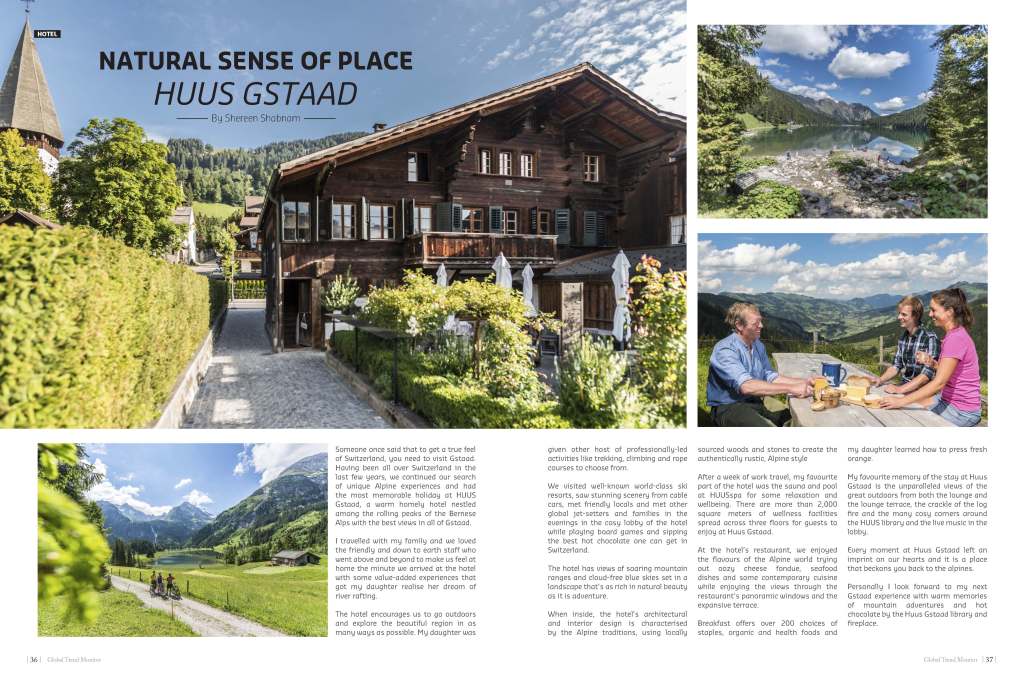
Natural Sense of Place: Huus Gstaad

By Shereen Shabnam

Someone once said that to get a true feel of Switzerland, you need to visit Gstaad. Having been all over Switzerland in the last few years, we continued our search of unique Alpine experiences and had the most memorable holiday at HUUS Gstaad, a warm homely hotel nestled among the rolling peaks of the Bernese Alps with the best views in all of Gstaad.

I travelled with my family and we loved the friendly and down to earth staff who went above and beyond to make us feel at home the minute we arrived at the hotel with some value-added experiences that got my daughter realise her dream of river rafting.  

The hotel encourages us to go outdoors and explore the beautiful region in as many ways as possible. My daughter was given other host of professionally-led activities like trekking, climbing and rope courses to choose from.

We visited well-known world-class ski resorts, saw stunning scenery from cable cars, met friendly locals and met other global jet-setters and families in the evenings in the cosy lobby of the hotel while playing board games and sipping the best hot chocolate one can get in Switzerland.

The hotel has views of soaring mountain ranges and cloud-free blue skies set in a landscape that’s as rich in natural beauty as it is adventure. When inside, the hotel’s architectural and interior design is characterised by the Alpine traditions, using locally sourced woods and stones to create the authentically rustic, Alpine style

After a week of work travel, my favourite part of the hotel was the sauna and pool at HUUSspa for some relaxation and wellbeing.  There are more than 2,000 square meters of wellness facilities spread across three floors for guests to enjoy at Huus Gstaad.

At the hotel’s restaurant, we enjoyed the flavours of the Alpine world trying out oozy cheese fondue, seafood dishes and some contemporary cuisine while enjoying the views through the restaurant’s panoramic windows and the expansive terrace. Breakfast offers over 200 choices of staples, organic and health foods and my daughter learned how to press fresh orange.

My favourite memory of the stay at Huus Gstaad is the unparalleled views of the great outdoors from both the lounge and the lounge terrace, the crackle of the log fire and the many cosy corners around the HUUS library and the live music in the lobby.

Every moment at Huus Gstaad left an imprint on our hearts and it is a place that beckons you back to the alpines. Personally I look forward to my next Gstaad experience with warm memories of mountain adventures and hot chocolate by the Huus Gstaad library and fireplace.

#GlobalTrendMonitor  #Huus #Gstaad #Switzerland #Swiss #Hotel #Staycation #Holiday #magazineUAE #magazine #mediaUAE #UAEbusiness #myDubai 

Sanctuary for the Senses: Corinthia Hotel London

By Shereen Shabnam

Going back to London and stopping in the city before seeing family is always a good idea … and the place you stay in makes the London experience that much better. In my case, there are three hotels that I select each time, one of which is the Corinthia Hotel London, rated amongst London’s finest 5-star luxury hotels.

The palatial property combines traditional grandeur with modern freshness and the luxuriously redesigned Victorian destination is ideally located in the heart of London, a short walk from many of the city’s major attractions.

The primary reason I selected this property was to experience a day at ESPA Life at the Corinthia, which is a new generation of spa designed for those seeking an exclusive haven dedicated to relaxation, health and fitness.

Spread over four floors and covering 3,300 square metres in the heart of London, ESPA Life at Corinthia offers revolutionary lifestyle programmes, incorporating complementary and alternative medicine and targeted fitness and rehabilitation services that focus on sports training, detox, sleep, weight loss and general vitality.

After a rejuvenating facial and massage, I rested in a tranquil lounge.

Trying out one of ESPA Life’s 17 oval treatment pods was the highlight. Each treatment uses the highly efficacious and natural ESPA product range and combines both new and indigenous techniques of the world’s most renowned therapies to deliver a unique treatment offering.

An extensive thermal floor area provides a dedicated space in which guests can completely relax and unwind. Alongside a swimming pool, there is a vitality pool, glass amphitheatre sauna, steam room and heated marble loungers. ESPA Life at Corinthia is also a destination for grooming and fitness needs with a salon and a state-of-the-art gym.

The enormity and grandeur of the spa is simply breathtaking and after a relaxed time there, the best place to head for a meal is the Massimo Restaurant & Oyster, offering modern Italian cuisine, and the musically inspired Bassoon Bar.

The Northall restaurant, serves the best in British produce throughout the day and having breakfast there in the mornings every day was a delight. The new Garden Lounge offers all-day dining options in an al fresco David Collins Studio designed garden landscape.

Housed within a Victorian building, Corinthia Hotel London features 294 rooms, including 40 suites and 7 penthouses, offering sweeping views across London’s most popular landmarks.

Cutting-edge technology in rooms was handy considering the beautiful ambience motivated me to write a few creative articles while staying there. The meeting rooms allow for recording, mixing and broadcasting from dedicated media rooms.

Corinthia London is a great place to stay in the heart of London and I particularly took advantage of its location to walk and watch popular theatre productions and spend quality time in the bookshops in between sampling lovely tea offerings at Fortnum & Masons.

It is a great point from where every part of London with attractions is within easy reach and the staff are helpful in terms of directing you to places that interest you most. It is definitely a spa destination I would go back to as well for rest and relaxation.

#GlobalTrendMonitor  #Corinthia #London #Hotel #Staycation #Holiday #magazineUAE #magazine #mediaUAE #UAEbusiness #myDubai 

Five Key Trends Driving A10 Networks’ Channel Growth in 2021

By: Chris Martin, Channel Leader for EMEA and APAC, A10 Networks

2020 was an extraordinary year and, if nothing else, the last 18 months have certainly accentuated the importance of digital resiliency. Now, as we move into a recovery phase post pandemic, our own research, undertaken earlier this year, highlighted that the workforce won’t return to pre-COVID working practices, and that we should expect a hybrid approach to the office environment. The research analysed how senior IT professionals in communication service provider organisations will adapt to a post-COVID-19 world, and the challenges they face with a more distributed workplace. It found that 67% believe their customers will continue to operate with employees working from home even post-pandemic.

Certainly, the consumer shift online is here to stay, whether that be for public services, retail, entertainment, or healthcare. Again, while some will return to shopping on the high street or going into the civic centre to pay their council tax, others will continue to enjoy the convenience that online delivers.

Technology Trends Fuelling Demand

Despite the disruption of the last year and a half, business has continued to evolve, and our channel has continued to grow as a result of five key trends.

The first is the acceleration and proliferation of IoT. In 2020, there was a noticeable shift in the types of businesses adopting IoT, which is now becoming mainstream as enterprises move from experimentation to deployment across global operations.

The second and probably most notable trend is the shift to the cloud as organisations continue their digital transformation journeys. In fact, cloud services spend was already growing much faster than on-premises IT spend at the beginning of 2020, and this momentum has only increased during the pandemic.

Thirdly, 5G deployment and the associated security issues is very much front-of-mind, which was also reflected in our research. When it comes to 5G, just under one-third of respondents (31%) we surveyed stated that maintaining a quality service and avoiding service outages were top security challenges. While 21% said unpredictable subscriber usage with changing patterns on the network was a top challenge. And certainly, we see channel partners helping customers with cloud migration and the adoption of 5G as they address concerns around network security and the current lack of agility and visibility throughout the IT infrastructure.

Overcoming Operational Complexity

 This brings me to the fourth trend which is around operational complexity. As organisations, regions and countries go in and out of lockdown and need to scale up or scale back certain initiatives, it has created significant IT challenges. In today’s digital business environment, you’ve got to stay agile and innovative to compete, grow, and thrive. In fact, even facing an uncertain economic outlook over the past year, 70% of businesses planned to maintain or increase digital transformation spending during the pandemic. As a result, we have seen high demand for solutions like A10 Thunder ADC and Harmony Controller, which empowers businesses to deliver secure application services across traditional data centres, and private, public and hybrid cloud environments. This solution underpins our vision to help businesses become more secure, responsive and agile as they bridge traditional and cloud-based application environments.

Finally, as ransomware attacks, DDoS, and other threats grow in sophistication, and enterprise environments become more distributed and dynamic, cyber security and compliance become critical challenges. Again, our research showed how important it is for organisations to protect against such threats. Forty-three percent stated that DDoS protection service for enterprise customers was a top security priority in 2021, while 39% of respondents said ransomware protection services for enterprise customers was their highest priority.

Focused Programmes that Support the Channel

All these trends have created demand for our products and services and have remained focus areas for both A10 Networks and our channel partners. To address these trends, we introduced five key channel initiatives at the start of 2021 in order to focus support and resources in these key areas:

  • Deal registration is paramount; we have had deal registration incentives running since the beginning of the year to ensure partners register leads in line with our areas of focus and business growth.
  • Distribution underpins our channel strategy and we have continued to recruit new partners across the region to ensure that we are well represented in all territories.
  • Building our ecosystem and partner network is key to our ongoing success. Our focus here is on partnering with players who are strong in key verticals and can bring talent and expertise to our customers.
  • Partner enablement: we launched a new technical ambassador programme, through which our technical team are mentoring our partner’s technical teams.
  • Finally, the Lead the Way initiative, which utilises our partner network to develop leads and marketing initiatives via our partner portal.

With channel front and centre to all our programme activities, we renamed our partner tiering model to: Member, Advanced and Elite, and we launched our Elevate to Elite programme designed to help accelerate our partners’ growth and enable them to fast track through the various partner levels.

Building a Bigger Footprint

Our channel strategy encompasses APAC, EMEA and South Asia and provides us a unique perspective across a large segment. This allows us to consolidate and coordinate our channel strategy to an ever-greater degree while also allowing for flexibility to manage customer and channel needs across individual countries and regions. But, above all, we appreciate that some countries will be emerging at a different pace to others, as lockdowns and restrictions are enforced and relaxed. Therefore, our overriding priority is the security and safety of our partners and customers around the world; we’re committed to working with them to achieve this.

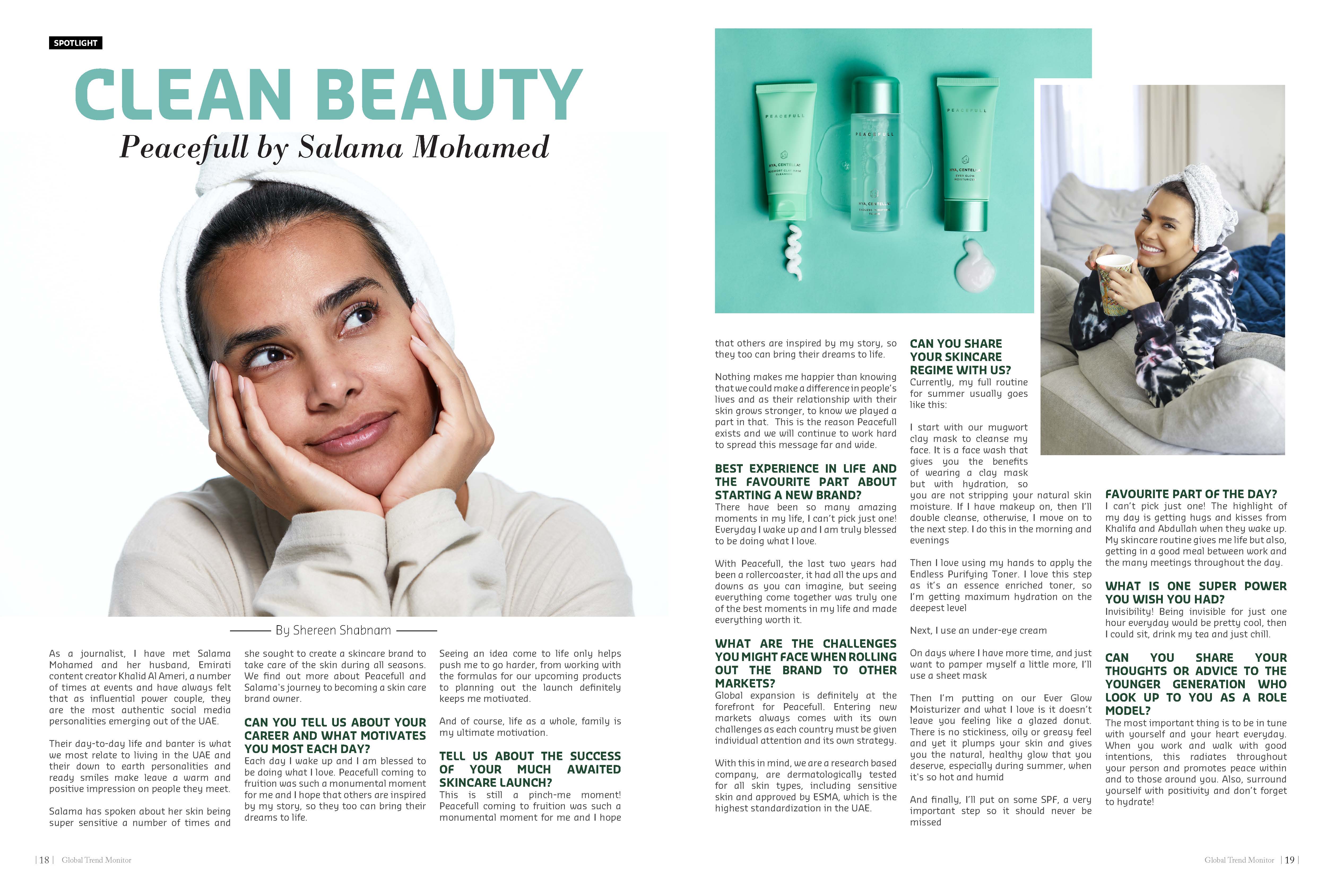
Clean Beauty: Peacefull by Salama Mohamed

By Shereen Shabnam

As a journalist, I have met Salama Mohamed and her husband, Emirati content creator Khalid Al Ameri, a number of times at events and have always felt that as influential power couple, they are the most authentic social media personalities emerging out of the UAE.

Their day-to-day life and banter is what we most relate to living in the UAE and their down to earth personalities and ready smiles make leave a warm and positive impression on people they meet.

Salama has spoken about her skin being super sensitive a number of times and she sought to create a skincare brand to take care of the skin during all seasons. We find out more about Peacefull and Salama’s journey to becoming a skin care brand owner.

  1. Can you tell us about your career and what motivates you most each day?

Each day I wake up and I am blessed to be doing what I love. Peacefull coming to fruition was such a monumental moment for me and I hope that others are inspired by my story, so they too can bring their dreams to life.

Seeing an idea come to life only helps push me to go harder, from working with the formulas for our upcoming products to planning out the launch definitely keeps me motivated.

And of course, life as a whole, family is my ultimate motivation.

  1. How is the success of your much awaited skincare launch?

This is still a pinch-me moment! Peacefull coming to fruition was such a monumental moment for me and I hope that others are inspired by my story, so they too can bring their dreams to life.

Nothing makes me happier than knowing that we could make a difference in people’s lives and as their relationship with their skin grows stronger, to know we played a part in that.  This is the reason Peacefull exists and we will continue to work hard to spread this message far and wide.

  1. Best experience in life and the favourite part about starting a new brand?

There have been so many amazing moments in my life, I can’t pick just one! Everyday I wake up and I am truly blessed to be doing what I love.

With Peacefull, the last two years had been a rollercoaster, it had all the ups and downs as you can imagine, but seeing everything come together was truly one of the best moments in my life and made everything worth it.

  1. What are the challenges you might face when rolling out the brand to other markets?

Global expansion is definitely at the forefront for Peacefull. Entering new markets always comes with its own challenges as each country must be given individual attention and its own strategy. With this in mind, we are a research based company, are dermatologically tested for all skin types, including sensitive skin and approved by ESMA, which is the highest standardization in the UAE.

  1. Can you share your skincare regime with us?

Currently, my full routine for summer usually goes like this:

  • I start with our mugwort clay mask to cleanse my face. It is a face wash that gives you the benefits of wearing a clay mask but with hydration, so you are not stripping your natural skin moisture. If I have makeup on, then I’ll double cleanse, otherwise, I move on to the next step. I do this in the morning and evenings
  • Then I love using my hands to apply the Endless Purifying Toner. I love this step as it’s an essence enriched toner, so I’m getting maximum hydration on the deepest level
  • Next, I use an under-eye cream
  • On days where I have more time, and just want to pamper myself a little more, I’ll use a sheet mask
  • Then I’m putting on our Ever Glow Moisturizer and what I love is it doesn’t leave you feeling like a glazed donut. There is no stickiness, oily or greasy feel and yet it plumps your skin and gives you the natural, healthy glow that you deserve, especially during summer, when it’s so hot and humid
  • And finally, I’ll put on some SPF, a very important step so it should never be missed
  1. Favourite part of the day?

I can’t pick just one! The highlight of my day is getting hugs and kisses from Khalifa and Abdullah when they wake up. My skincare routine gives me life but also, getting in a good meal between work and the many meetings throughout the day.

  1. What is one super power you wish you had?

Invisibility! Being invisible for just one hour everyday would be pretty cool, then I could sit, drink my tea and just chill.

  1. Can you share your thoughts or advice to the younger generation who look up to you as a role model?

The most important thing is to be in tune with yourself and your heart everyday. When you work and walk with good intentions, this radiates throughout your person and promotes peace within and to those around you. Also, surround yourself with positivity and don’t forget to hydrate!

#GlobalTrendMonitor  #SalamaMohamed #Peacefull #Skincare #Beauty #Lifestyle #Emirati #magazineUAE #magazine #mediaUAE #UAEbusiness #myDubai 

Liht Organics Dusk to Dawn Liquid Liner – 𝗢𝗿𝗴𝗮𝗻𝗶𝗰, 𝟭𝟬𝟬% 𝘀𝗺𝘂𝗱𝗴𝗲-𝗽𝗿𝗼𝗼𝗳 & 𝘄𝗮𝘁𝗲𝗿𝗽𝗿𝗼𝗼𝗳

Ever wanted an eyeliner that was not only safe for the delicate eye area, but also nourishes and protects the skin around the eye AND checks all the boxes for an efficient eyeliner that will take you from dusk to dawn?

Wing it like never before Liht Organics Dusk to Dawn Liquid Liner glides on & is 100% smudge-proof and waterproof so you never have to worry about smudging or fading.

As eye makeup products are prone to contamination, it is worthwhile to choose organic, vegan makeup that uses natural ingredients with antibacterial properties to limit the product from spreading bacteria when applied to the eye.

Liht Organics liquid liner contains Rosemary extract – an antioxidant with natural antiseptic properties and can help protect skin from damage due to free radicals. Other skin-loving ingredients that are gentle on the eye and help to nourish and protect the delicate eyelid skin include Chamomile Extract to soothe sensitivity, Aloe Barbadensis to hydrate and repair, and Cellulose Gum, a naturally occurring component found in the cell walls of plants that is the magic ingredient in making our eyeliner waterproof.
Shop Liht Organics Infinity Lash Mascara across Debenhams stores in Dubai and Abu Dhabi. You can also shop online on  https://lihtorganics.ae/.

Simplifying Multi-Cloud Connectivity through SD-WAN at the Edge

By: Jacob Chacko, Regional Director – Middle East, Saudi & South Africa at Aruba, a Hewlett Packard Enterprise company

The pandemic’s acceleration of cloud migration within enterprises has, at this point, been well documented. Last year’s Flexera 2020 State of the Cloud Report suggested that more than 90 per cent of enterprises now have a multi-cloud strategy.

Even in times of great urgency as we have experienced over the last 18 months, enterprise-wide cloud transformations don’t simply happen overnight. In the rush to get their multi-cloud environments off the ground and enable remote connectivity for their workforces, many enterprises will not have suitably adapted their IT and network infrastructure to support applications in a multi-cloud connected environment. Because of this, they will likely now be facing numerous challenges around the performance of mission-critical SaaS applications, automation of cloud security services, and integration of WAN applications in public cloud, to name just a few.

When it comes to meeting and addressing these challenges, enterprises could consider the benefits of an SD-WAN platform which, through a mixture of optimization, orchestration centralization and automation can provide a firm foundation for enabling a successful, performant and secure multi-cloud environment.

Ensuring user experience through SaaS optimization

In a time when applications were hosted in corporate data centres, routing all application traffic from the branch to the data centre made total sense. Today, however, with most applications in modern enterprises delivered through SaaS, backhauling cloud-destined traffic to the data centre only serves to increase latency and impact application performance.

Recognizing this, enterprises could reduce said latency by looking towards a modern, best-of-breed Edge-based SD-WAN platform, which should offer SaaS optimization features to seamlessly and securely connect users from branch sites to SaaS applications, while simultaneously monitoring the SaaS Quality of Experience (QoE).

Key functionalities that any SD-WAN purchaser should look out for include first-packet identification, wherein applications are identified and classified on the first packet, which enables traffic to be routed dynamically to its intended destination (be that the data centre, cloud provider or cloud security). This, in turn, reduces latency and ensures security policies are adhered to. Similarly, Microsoft Office 365 API integration enables secure internet breakout to the closest Office 365 entry point, thus ensuring the best Office 365 performance available.  

Intelligent local internet breakout

Different classes of application require different kinds of treatment to adhere to security policies and controls. As mentioned above, first-packet identification has a part to play here, but there are other functionalities within leading SD-WAN platforms that can bolster security without impacting application performance.

Different applications can be mapped to virtual WAN overlays, each supporting various QoS, transport and failover characteristics. For instance, trusted business SaaS such as Office 365 can be mapped to an overlay that traffics straight to the closest SaaS instance over the internet, whilst untrusted or unknown traffic is sent to the headquarters-based firewall for closer inspection.  

Speaking of firewalls, having a unified zone-based stateful firewall at the WAN Edge is essential to ensure complete, secure local internet breakout. A WAN Edge firewall can connect directly to trusted SaaS applications and IaaS from branch offices, whilst also blocking any unauthorized traffic attempting to enter the branch network from the enterprise LAN.

Network simplification through SD-WAN integration and automation with public cloud

Complexity is the enemy when it comes to network management, and this is most true for particularly large, global networks with many AWS Virtual Private Clouds or Microsoft Virtual Networks (VNets). However, an Edge-based SD-WAN platform can greatly simplify management of such large networks.

By connecting directly to public cloud providers’ global backbone networks, reducing the number of point-to-point connections, and connecting branch locations directly to regional points of presence (POPs) the complexity of the SD-WAN overlay is reduced. An SD-WAN overlay should also support branch-to-branch communication without virtual gateways at each Virtual Private Cloud.

The emergence of SASE

The emergence of SASE has had a profound impact on SD-WAN. Just as SD-WAN is transforming the network infrastructure with uninterrupted connectivity and simplified workflows, SASE takes the logical next step by placing cloud-native security controls closer to the end users where the data is being generated (at the network Edge) and is therefore most at risk.

Although SASE is not a technology on its own, as an architectural framework it offers organizations the capability to bring together security and networking functions into a single, cloud-based service model. In 2021, SD-WAN should form the foundation of a SASE solution: a cloud-programmable networking platform for orchestrating and centrally managing network, security and SASE components.

As part of this, any quality Edge-based SD-WAN must integrate with third-party cloud security services from best-of-breed cloud security firms. Advanced API integration within the SD-WAN platform can enable network managers to fully realize enterprise-wide automation of consistent, network-wide security policies. In this way, they can combine the advantages of an advanced Zero Trust WAN Edge on-premises, whilst also enjoying the flexibility and freedom of choice to enjoy the benefits of cloud-delivered security services from their preferred security vendor.

Final word

Multi-cloud environments can be incredibly complex, and managing their connectivity across an enterprise’s WAN can quickly become an unruly, laborious affair. Not only are IT teams tasked with deployment and management of these environments, but simultaneously they must ensure the highest performance levels and security are achieved for their businesses’ end users, alongside delivering the full transformational promise of the cloud through lifecycle management and orchestration.  

IT teams rely on automation and orchestration to manage the complexity of multi-cloud, and businesses must look to further simplify these processes for their teams, particularly as network complexity grows. An important first step is selecting the right SD-WAN platform to simplify the integration of private cloud, SaaS and IaaS hosted applications.

The pandemic has shifted how, when and where employees work, and it is still unclear as to whether these changes will become permanent fixtures after the pandemic has ended. Even if they do not, much of the investment and groundwork has already been laid. The impetus is now on businesses to follow through on their cloud transformation journeys and create a network infrastructure that is resilient and manageable to deliver consistent and secure application performance over any WAN infrastructure to all users, anywhere, and from any device.

Mindware and EC-Council Sign Agreement in MENA Region to Develop Cyber Security Awareness and Skills

With digital threats on the rise, Mindware, one of the leading Value-Added Distributors (VADs) in the Middle East and Africa, announced that it had signed a partnership with the International Council of E-Commerce Consultants (EC-Council). EC-Council is the owner and developer of the world-renowned Certified Ethical Hacker (CEH) program as well as multiple other cybersecurity programs. The institution has trained and certified over 200,000 information security professionals globally, that have influenced the cyber security mindset of countless organizations worldwide.

As per the agreement, Mindware will leverage the presence of EC-Council to offer cybersecurity certification, education, training, and services in various cybersecurity skills to partners and customers across the Middle East and North Africa (MENA) region. The courses are intended to prepare employees, contractors, temporary workers, and any additional representatives who perform authorized functions online, by offering the necessary information to defend themselves and secure their organization’s assets from damage or loss.

“The post-pandemic world has seen the adoption of new technologies for businesses. Adoption of technologies like Cloud, Artificial Intelligence, and Machine Learning is ever-growing. Businesses today need cybersecurity leaders that can make decisions and set industry benchmarks,” says Jay Bavisi, CEO and President of EC-Council Group. “We are delighted to partner with Mindware to encourage innovation and implement robust cybersecurity training strategies. With this partnership, EC-Council would share its cyber security training expertise and help cater to the growing demand for a skilled workforce.”

Speaking about the partnership, Philippe Jarre, CEO at Mindware says, “Most organizations today are embracing digital transformation and leveraging new-age technologies. With every new technology comes new and sophisticated cyber threats. Organizations are finding it difficult to combat these risks, especially with the shortage of security analysts and professionals in the market. The ongoing pandemic has further exacerbated the problem with the ‘work from home’ trend. A home working environment does not have enterprise cyber security prevention and detection technologies and policies in place. Additionally, home Wi-Fi networks are much easier to attack. Cyber criminals see the pandemic as an opportunity to step up their criminal activities.”

“As part of Mindware’s growing security practice, we decided to join hands with EC-Council to help partners and customers overcome cyber security challenges through high-quality training and certification. We believe that this initiative will go a long way in developing overall skills in the region and reducing the number of cyber breaches and incidents,” he continues.

The latest partnership further strengthens Mindware’s security portfolio and enables the VAD to position itself as a one-stop-shop for security solutions and services. With the specific needs for the region in mind, Mindware and EC-Council will focus on the following training courses:

  • Certified Ethical Hacker (CEH)
  • Certified Network Defender (CND)
  • Computer Hacking Forensic Investigator (CHFI)
  • EC-Council’s Certified Incident Handler (ECIH)
  • Certified SOC Analyst (CSA)

Security is Fueling the Connected and Autonomous Vehicle Experience

By Joe Robertson , Director of Information Security and EMEA CISO at Fortinet

The digital automotive experience is revving up for some big changes, from online vehicle shopping, to configuring auto systems, to maintenance, manufacturing, and shipping. The advent and availability of 5G can help assure the required high-speed digital links for autonomous and semi-autonomous vehicles. But that’s not all. 5G is also creating a revolution in industrial automotive systems, as today’s vehicles can be manufactured and shipped faster and more easily than ever. However, the growing number of sensors, actuators, probes, machine connectivity, and the high density of connections (including robots)—all connected through 5G—opens new attack surfaces that need to be addressed. 

These new attack vectors are partially a result of the complex ecosystem of vendors and partners that supply the software and systems that build connected smart cars. At the same time, the real-time nature of driving also means that the computing required to manage on-board systems and interoperate with GPS, smart transportation systems, or other cars on the road, will happen both at the edge (meaning, in the car itself) and in the cloud. This simply widens the scope of the risk of interference and intrusion that needs to be accounted for.

Autonomous and connected vehicles are the perfect example of the compute edge in action. And given the safety issues for passengers in the connected vehicle as well as in the vehicles around it, the need for connected car security at the edge—that can function at 5G speeds—should be the first and foremost consideration. Securing the smart car and all its data, while also providing reliable and secure connectivity from the car to the cloud, is critical. Without security and connectivity working together as an integrated system, automotive companies are open to significant brand reputational risk. And worse, customers could even be putting their lives on the line.

First Gear: Connectivity with an Autonomous Vehicle

To start, the production and manufacturing of vehicles needs to be protected, especially as operational technology (OT) and information technology (IT) convergence becomes the norm. The challenge is that many legacy OT systems cannot afford any downtime and are highly sensitive to any sort of disruption; many systems are irregularly and infrequently patched. As a result, OT systems often lack consistent protection or single-lens visibility. Inconsistent corporate security policy implementation and governance only adds to the problem. In this environment, being able to protect every integration point across IT and OT to boost connected car security, even as interconnectedness increases, is a challenge.

Fortunately, the way auto manufacturers deal with their original equipment manufacturers (OEMs) is evolving. Traditionally, the manufacturer would turn to suppliers to design whole systems: brakes by one, the transmission by another, satellite nav systems by yet another. All these systems were farmed out to subcontractors, and the manufacturer took responsibility for assembling the pieces. However, with this piecemeal approach, the systems that operate the vehicle, engine, transmission, system gauges, fuel and safety systems, cameras, radar and more, might all run on different operating systems. This resulted in disparate and disconnected systems that were not able to efficiently collaborate or communicate with one another and are more challenging to secure. 

Over the last decade we have seen a change. Auto manufacturers see value for the customer when all of these solutions work together, creating a truly integrated experience. Software is the critical component and requires building connectivity and security directly into the system from the start, in the development, testing, and production phases, rather than a bolt-on solution applied at the end of the process. 

Second Gear: Data with an Autonomous Vehicle

Once these connected and autonomous vehicles are on the road, manufacturers need to continuously gather information from these “rolling data centers.” Vehicle data is collected and poured into a giant data lake, which the manufacturer uses to identify issues before they become critical. Since these autonomous vehicles run on compute power, they bring with them all the challenges of enterprise data systems— such as bandwidth, reliability, visibility, and, of course, cyberthreats, whether from malicious criminals or industrial espionage. Today, given current security trends, holding a vehicle for ransom is not out of the question.

Reliable, secure connectivity back to the cloud is critical to protecting customers, delivering the best user experiences, and protecting revenue streams. These cloud connections are crucial. This data is the only way to truly understand how vehicles are used, which leads to new insights and the development of premium customer experiences. Automotive manufacturers need to establish their own cloud platforms for data collection, processing, and provisioning. By keeping the in-car experience within their control, while protecting connected cars and their data, they can leverage car telemetry data to monetize and provide a differentiated, premium in-car experience.

But none of this will work without security. So, what is the best approach to ensure effective connected car security? The first step is integrating systems and software. This requires steering disparate vendors and solutions into a unified and broadly deployed platform that weaves security, connectivity, and networking into a single solution. 

Third Gear: Unification with an Autonomous Vehicle

In the connected-car industry, as elsewhere, software systems are now core to the business. Reliable connectivity and security of vehicles is important. It is possible to achieve powerful connectivity and integration between the vehicles that create the data, the cloud that processes it, and the applications that leverage it, resulting in continuous improvement and optimum user experience. In this scenario, automation, visibility, and an open integration platform are essential for providing the required agility and flexibility across all major public and private cloud providers and technologies. Without vendor lock-in, auto manufacturers can get what they need from proprietary technology while leveraging third-party tools, allowing their technology strategy to continually evolve as their business needs change. 

To unlock the true potential of the connected car, automotive manufacturers need to not only own the in-car experience but all the software and systems as well – from the backend to the front bumper. And because nearly every component of these autonomous vehicles will be connected to an in-car network as well as the cloud, the entire system is at risk if a vehicle is compromised. Thus, securing the car and its data while providing secure connections from the car to the cloud is critical to drive the connected car experience.