Nutanix is Named a Leader in 2021 Gartner® Magic Quadrant for Hyperconverged Infrastructure Software for the Fifth Year Running

As HCI Lays the Foundation for Hybrid Multicloud Success, Nutanix is Recognized for its Completeness of Vision and Execution in HCI Solutions

Nutanix (NASDAQ: NTNX) a leader in hybrid multicloud computing, announced today it has been named as a Leader in Gartner, Inc.’s November 2021 Magic Quadrant for Hyperconverged Infrastructure (HCI) Software[1]. This is the fifth year in a row that Nutanix has been named as a Leader in this report. Nutanix believes its continued recognition as a Leader can be attributed to its expanded and enhanced HCI software capabilities and its customer support that has earned an average 90 Net Promoter Score (NPS) for the past seven years.

“Nutanix is no stranger to driving new innovation to ensure that our HCI solutions are meeting our customers where they are on their cloud journeys,” said Rajiv Mirani, Chief Technology Officer at Nutanix. “Businesses are increasingly embracing hybrid multicloud strategies and we’ve seen customers rapidly adopt HCI solutions to simplify datacenter modernization efforts while capitalizing on the added automation, ease of use, agility and full software stack capabilities that HCI enables. We believe that our continued recognition in the Gartner Magic Quadrant for Hyperconverged Infrastructure Software demonstrates Nutanix’s commitment to providing expanded solution capabilities and support that results in the success of our customers.”

As organizations plan for the future, businesses are continuing to adopt cloud operating models and modernize on-premises infrastructure. This enables organizations to respond in real time to the ever-changing IT landscape, with hybrid multicloud solutions offering the benefits of both public and private clouds. HCI solutions have emerged as an effective tool to deliver datacenter modernization as well as cut down on the cost and complexity that accompany hybrid multicloud deployments. According to Gartner, “HCI stacks can be turnkey hybrid clouds, providing infrastructure management and cloud services both on-premises and in hyperscale public clouds. They have effectively replaced build-it-yourself hybrid cloud technologies such as OpenStack[2].” Gartner also notes that, “the most advanced HCI stacks provide the full stack of software-defined infrastructure — compute, storage and networking. SDI is a key enabling technology for automation, hybrid clouds and edge infrastructure².”

“In terms of maturity, Nutanix was far ahead of all of the other HCI players,” said Dan Lewis, Associate Director of Operations and Infrastructure Services at the USC Marshall School of Business. “We were really impressed with Nutanix, and how quickly we could get everything set up in a compact environment without sacrificing any performance. That was the gating factor for us, because if we were going to switch to an all-in-one system, it had to be powerful and resilient. The solution had to be able to survive node failures, but also block failures and network failures. Nutanix Cloud Platform was the only platform that met all of our requirements.”

With HCI at its core, the Nutanix Cloud Platform offers unified management, with application, data and license portability between multiple clouds, whether private or public. Nutanix has recently added enhancements to its HCI software capabilities to break down silos in multicloud operations, including built-in enterprise-grade virtualization, virtual networking, security, business continuity and disaster recovery. Nutanix also added new capabilities in the Nutanix Cloud Platform to simplify data management and optimize database and big data workload performance for the most critical applications. This includes expanded unified storage capabilities with a focus on performance, scale, mobility and governance for objects, files and databases. Additionally, Nutanix database service Era delivers one-click storage scaling and rich role-based access control for database management across hybrid multicloud environments.

Additionally, Nutanix continues to strengthen its platform for cloud native applications and recently announced a strategic partnership with Red Hat to deliver open hybrid multicloud solutions. This partnership enables customers to run Red Hat OpenShift on Nutanix’s AHV hypervisor and utilize the storage, networking, management, and security capabilities built into Nutanix’s HCI solution for a best-in-class Kubernetes environment. Nutanix Cloud Platform and AHV are also certified for Red Hat Enterprise Linux allowing customers to deploy virtualized and containerized workloads on a hyperconverged infrastructure, building on the combined benefits of Red Hat’s open hybrid cloud technologies and Nutanix’s hyperconverged offerings.

For more information on Nutanix and to view a complimentary copy of the report are available at, please visit: http://nutanix.com/go/gartner-2021-magic-quadrant-for-hyperconverged-infrastructure-software


[1] Gartner, Magic Quadrant for Hyperconverged Infrastructure Software, Jeffrey Hewitt, Philip Dawson, Julia Palmer, Tony Harvey, November 17, 2021.

[2] Gartner, Inc, Solution Criteria for Hyperconverged Infrastructure, January 27, 2021, Paul Delory, Simon Richard

Fortinet Announces the First Next-Generation Firewall and Secure SD-WAN Integration in Microsoft Azure Virtual WAN

FortiGate-VM Integration Enables the Convergence of Security and Networking in the Cloud

News Summary

Fortinet® (NASDAQ: FTNT), a global leader in broad, integrated and automated cybersecurity solutions, today announced the expansion of its collaboration with Microsoft to deliver the industry’s first next-generation firewall (NGFW) and Secure SD-WAN integration with Microsoft Azure Virtual WAN. Customers can now – for the first time ever from any vendor – apply advanced security policies to virtual WAN traffic and extend Secure SD-WAN into the Azure virtual WAN hub. The result is the convergence of advanced security and networking capabilities in the cloud for an even more simplified, automated, and secure cloud on-ramp and SD-WAN experience. The integration also allows enterprises to more effectively interconnect with applications and workloads running Azure with the rest of their hybrid and multi-cloud deployments.  

John Maddison, EVP of Products and CMO at Fortinet said, “Partnering with Microsoft Azure gives our joint customers the best of both worlds combining Azure’s secure infrastructure with Fortinet’s industry-leading next-generation firewall capabilities and best-in-class Secure SD-WAN solution. The integration of FortiGate-VM extends the Fortinet Security Fabric into Azure Virtual WAN and enhances our ability to secure any application on any cloud and to secure the cloud on-ramp into, between, and within the cloud.”

Secure Traffic Into, Out of and Through Azure Virtual WAN with Fortinet

Companies are increasingly looking to utilize Azure Virtual WAN as a global transit network architecture, providing seamless connectivity between endpoints. While Microsoft has long provided secure access to the Virtual WAN Hub, until now, it has been difficult to provide the same security policies with the same security tools within Azure Virtual WAN and across clouds and data centers. The integration of FortiGate-VM and Fortinet Secure SD-WAN into Azure Virtual WAN empowers organizations to achieve their desired digital innovation outcomes in the cloud while reducing complexity.  Specifically, this integration enables IT and security professionals to easily configure networking and security in Microsoft Azure and delivers the following benefits:

  • Advanced Security for Virtual WAN Traffic: FortiGate-VM allows security policies to extend to traffic within the Azure Virtual WAN hub to enable better, more secure application experiences for users and branch offices by supporting encrypted data transports, granular segmentation and application-layer protection against advanced threats, and seamless overlay network with uniform policies across multi-clouds.
  • One-Click Deployment: Azure Virtual WAN integration provides one-click deployment and easy scalability for FortiGate-VM in Azure. With this integration, customers can select, configure and deploy FortiGate virtual machines directly from the Azure Marketplace or from within the Azure Virtual WAN interface, allowing security to be part of the workflow for setting up a Virtual WAN in Azure.
  • Securely Interconnect Applications and Workloads Across Clouds: Azure Virtual WAN provides a global network transit backbone for branch-to-branch connectivity readily interconnecting regions together. Customers looking to deploy hybrid and multi-cloud networks that include Azure can now easily and securely interconnect applications and workloads, further extending the benefits of the Fortinet Security Fabric and Fortinet Secure SD-WAN across their entire infrastructure to enable consistent policies and centralized visibility. This simplifies security management, enables global visibility into security events and policies, and improves quality of experience (QoE) for users and customers.

Earlier this month, Fortinet and Microsoft also announced the availability of FortiGate-VM integration with Azure gateway load-balancer, which enables customers to deliver superior experiences for applications and workloads running in Azure.

Secure Any Application on Any Cloud

FortiGate-VM is one piece of the Fortinet Adaptive Cloud Security portfolio of products, services, and industry-leading threat intelligence built to empower customers to secure any application on any cloud. With flexible deployment options, broad integration, and centralized management and visibility, Security and DevOps teams are able to close cloud security gaps while alleviating security management burdens and supporting the rapid release of innovation. Leveraging the broad, integrated, and automated nature of the Fortinet Security Fabric, organizations gain consistent security posture, visibility, and enforcement through uniform security management across multi-cloud and hybrid environments.

“We’re pleased to provide customers with new options for securing network traffic into, between and within cloud deployments thanks to the integration of Fortinet’s FortiGate-VM with Microsoft Azure Virtual WAN.”

– Erin Chapple, Corporate Vice President, Azure Core Products and Design, Microsoft

Fortinet Announces Commitment to Become Carbon Neutral by 2030 and Completes Net-Zero Sunnyvale Headquarter Campus

Fortinet Takes Concrete Action on Environmental Sustainability and Commits to Transparent Disclosure on its Contribution to Climate Change Mitigation

News Summary

Fortinet® (NASDAQ: FTNT), a global leader in broad, integrated, and automated cybersecurity solutions, today announced its environmental sustainability commitment to become carbon neutral by 2030, and the completion of its new net-zero Sunnyvale headquarter campus as part of its broader commitment to social responsibility.

Ken Xie, Founder, Chairman of the Board, and CEO at Fortinet

“Fortinet has led every evolution of cybersecurity innovation over the past two decades. Innovation that drives environmental sustainability is also core to our efforts to making the world a safe and sustainable place to live and work. We believe it is our corporate responsibility to continue to reduce the environmental footprint of our products and continue to adopt responsible approaches in our daily operations. The announcement of our 2030 net-zero target and our new net-zero corporate headquarters are concrete proof points of our commitment.” 

In alignment with the Science-Based Target Initiative (SBTi) methodology and global efforts to reduce carbon emissions, Fortinet will become carbon-neutral by 2030 through the use of renewable energy, energy and carbon efficiency methodologies, and emissions offset programs across its owned operations globally, including offices, warehouses, and data centers.  Currently, Fortinet has measured its Scope 1 and 2 emissions and will capture the inventory of its Scope 3 emissions in 2022. This information will be disclosed in Fortinet’s first sustainability report to be published by mid 2022.

Fortinet’s Corporate Social Responsibility (CSR) includes delivering on our company vision – a digital world you can always trust – by innovating sustainable security technologies, diversifying cybersecurity talent, and promoting responsible business across our value chain. Through its CSR approach, Fortinet remains committed to respecting the environment and complying with evolving guidelines and regulations related to environmental sustainability, as overseen by its Social Responsibility Committee—a board-level committee created to oversee the company’s objectives, strategy and risks relating to sustainability and corporate social responsibility, including Environmental, Social and Governance matters.

A proof point of Fortinet’s dedication to environmental sustainability is the development and completion of Fortinet’s new corporate headquarters building, which is on-track to become LEED-Gold Certified. The Sunnyvale campus is an honoree in the “Office/R&D Build” category of the 2021 Silicon Valley Business Journal Structures Awards and uses 30% less energy than a standard building. Key features in the building that help reduce environmental impact include photovoltaic panels and a radiant cooling system that conserves energy and will save 76,600 gallons of water per year. These environmental-minded features, such as the use of solar panels and purchased renewable energy in the company’s owned facilities across North America and Europe, align with Fortinet leadership’s long engagement in the concept of sustainability.  

Climate change continues to pose a significant threat, and all business and public organizations around the globe must do their part to address it. Further to efforts in its own operations, Fortinet is focused on reducing the environmental footprint of its customers by innovating highly efficient, integrated appliances and cloud-based security solutions.

Years of dedicated innovation and the development of the industry’s only security-focused processors built for unparalleled power and efficiency, have allowed Fortinet to integrate multiple security and networking functions into a single appliance,

saving on energy, space and cooling. As a result, Fortinet’s FortiGate security appliances provide its customers with power consumption that is 3 to 16 times lower than its competitors’ solutions and unequalled product environmental sustainability impact.

Kodak Alaris Wins Award for Innovative Property Management Solution from Ephesoft

Ephesoft, Inc., a leader in intelligent document processing (IDP), automation and data enrichment solutions, presented Kodak Alaris with an award for the Most Innovative Property Management Solution. The accolade was bestowed during Ephesoft’s Hackathon event, where partners were invited to come up with a creative use case for Ephesoft Transact IDP platform. After six weeks, they presented their solution to the Ephesoft Decision Committee, which includes Ephesoft’s CEO, CTO and VP of Product Marketing.

The integrated offering is a result of a global alliance between Kodak Alaris and Ephesoft. Together, we are helping organizations all over the world to simplify and automate their digitization processes through a combination of intelligent document processing software, best-in-class scanners, and professional services. The combination of technologies enables instant data capture from a variety of document types, with automatic separation, classification, extraction, and validation of all data, for seamless delivery into business processes and systems.

The award recognizes an innovative technology collaboration between the two companies, which helps real estate agents to quickly transform physical documents into usable digital data, making it faster and easier to process their clients’ property-related bills.

Real estate agents are required to manage large amounts of paper-based bills linked to rental properties on behalf of their clients. This can be a time-consuming and labor-intensive process. Each billing company has its own document templates, and the inconsistency and varying document quality often presents a data processing challenge.

To streamline this process, Kodak Alaris leveraged the INfuse Smart Connected Scanning Solution to create an automated solution that extracts payment data from property bills and exports it into a desired format. Once captured, documents are transferred to a central point where the information is processed by Ephesoft Transact, enabling payments to be made through the real estate agency’s preferred financial institution. The ability to automatically extract critical data from documents, combined with machine-learning technology for indexing and classification, significantly reduces the time required to process bills.

“We are thrilled to receive this award, which is a tangible endorsement of the value this partnership brings to our customers,” said Vanilda Grando, Global Business Development Director at Kodak Alaris. “This global alliance provides organizations with access to best-in-class solutions to help them drive digital business. The integration of our intelligent capture technologieswith Ephesoft is helping companies across many industries to automate paper-based manual processes, improve data accuracy, and significantly increase operational efficiency.”

Stephen Lee, Vice President of Sales, APAC, Ephesoft added: “The fully integrated KodakINfuse Smart Connected Scanning Solution and Ephesoft Transact offering, provides organizations with a best-in-class solution for image enhancement, capture, classification of varying document types and extraction. The joint solution can be used across many areas to help businesses automate their document-centric processing and provide true ROI, scalability and efficiency improvements. Our combined offering is a perfect fit for organizations looking to modernize their existing legacy applications as well and implement something that is lightweight, easy to use and will drive productivity with minimum maintenance.”

For more information, please visit the Kodak Alaris website.

Data Analytics and sustainability

By Jadd Elliot Dib, Founder and CEO of Pangaea X

Climate change affects every country, disrupts economies and natural habitats, and puts the future of the planet at grave risk. Even though some damage is irreversible, it is still possible, with the use of a wide variety of technological measures, to control the increase in temperature globally.  Addressing environmental concerns and operating in a sustainable manner are becoming increasingly important to businesses as they adapt and contribute to the growing governmental and societal drive for sustainable development.

Big Data can generate useful insights towards fostering environment sustainability.  . Mining Big Data is essential to predict, plan, manage, and control environmental processes. Artificial Intelligence (AI), Geographic Information Systems (GIS), modelling, simulation, and user interfaces, are key tools for environmental sustainability that can also be used to improve green infrastructure and to optimise energy use, water consumption, and reduce waste and pollution, For example, big data can provide new and powerful ways of studying and improving environmental, social, and economic systems to enhance urban sustainability by allowing scientists to discover, analyse, and better understand environmental changes from a micro to global scale. 

Data science can also help the corporate world to optimise resource consumption.   . Governments can now adopt insights from real-time environmental quality data. The data output can then be used monitor the emissions of large utility facilities, and adjust if the data shows detrimental effects to the environment.

Big data can also illustrate how sustainability and cost saving go hand in hand. Sophisticated technology, including AI, can monitor and organisation’s energy expenditures, and highlight energy wastage, which, in turns saves money on energy costs.

There are infinite ways in which big data can enhance our ability to live sustainably. The first step, however, is for organisations to adopt data capture and analysis as a regular practice. 

According to a recent Gartner report, business leaders must explore a combination of big data analytics and advanced AI to provide a richer context for accurate business decision-making. This will also help with the predictive analytics aspects that are increasingly becoming the front and centre of any sustainable business initiative.

NetApp Simplifies and Speeds Digital Transformation for Customers Through Deep, Industry-Leading Public Cloud Relationships

 
NetApp ONTAP is the only storage and data management software now available natively in the top three public clouds, enabling organizations to build a hybrid multicloud data fabric  

NetApp (NASDAQ: NTAP) a global, cloud-led, data-centric software company, today announced continued growth and momentum helping organizations unlock the best of cloud at less cost, through its collaboration with the world’s three largest public clouds.

NetApp’s expansion in the cloud has been driven by customers and supported by these partnerships, accelerating NetApp’s public cloud services’ customer and financial growth by bringing its leading CloudOps and ITOps solutions to existing and new addressable customers. Furthering its investment in the cloud, NetApp acquired Data Mechanics in early fiscal year (FY)’22, and this month announced the intent to acquire CloudCheckr to bolster the Spot by NetApp portfolio’s existing continuous cloud optimization capabilities.

This growth, driven by NetApp’s ONTAP data management software, which provides high-performance shared storage for file and block workloads, has propelled the native integration of NetApp’s cloud file services into each of the major public clouds.

“The three largest public clouds in the world are choosing NetApp, because customers are choosing ONTAP,” said Anthony Lye, Executive Vice President & General Manager, Public Cloud Services at NetApp. “Our strategy has positioned ONTAP as the native shared storage solution with rich data services inside the three public clouds. Now, our public cloud partners provide customers with the simplest path to the cloud and allow them to derive the most value from their data and applications.”

“The completeness of NetApp’s offering, combined with the ability to address a very broad set of storage use cases beyond cloud file storage, and the availability as a Tier 1 offering both on AWS and Azure, makes it a compelling choice,” said Enrico Signoretti, Senior Data Storage Analyst at GigaOm.[1]

Microsoft Azure
NetApp has partnered with Microsoft for nearly 30 years. In 2021 Microsoft recognized NetApp as the global Customer Experience Partner of the Year, and the U.S. SAP on Azure Partner of the Year. In the last 12 months, NetApp has more than tripled the number of co-sells offered on the Azure Marketplace, making it easy for Azure customers to consume NetApp’s leading cloud services.

Since it’s general availability in 2019, Azure NetApp Files (ANF), a fully managed, first-party service sold, billed, and supported by Microsoft in 35+ regions globally and is the first and only shared file service certified for use with SAP HANA. Recent innovations with Azure include the general availability of Azure Cross Region Replication, public preview of Azure NetApp Files Backup to preserve storage efficiencies, and of Spot PC for secure, optimized Azure Virtual Desktop-based Cloud PC environments.

“Alongside NetApp, we have worked with ANF customers to successfully migrate and run some of their largest and most important ONTAP production workloads, enabling the most demanding applications with performance and scale that meets or beats what they get on-premises” said Jurgen Willis, Vice President, Product Management at Microsoft Azure Storage.

“With ANF we get scalability and flexibility, which is important for businesses to run and have a

faster time-to-market for their products,” said Lalit Patel, Chief Technology Officer, Enterprise Cloud Services at SAP. “We are able to deploy environments almost 30 to 40 percent faster and reduce the number of outages by 80 percent because of the stability that ANF provides.”

Google Cloud

NetApp and Google Cloud began collaborating in 2018, introduced NetApp Cloud Volumes Service (CVS) for Google Cloud in 2019, and launched NetApp Astra with support for Google Cloud in 2020. Earlier this month Google announced that NetApp would serve as the primary data and storage vendor for its new Google Distributed Cloud Hosted offering and introduced the integration of Google Cloud VMware Engine with NetApp Cloud Volumes Service support for VM datastores – a fully managed service that helps organizations meet their need for virtual workload storage and disaster recovery.

“Our partnership with NetApp continues to grow, rolling out new capabilities that will make it easier and more cost-effective to deliver enterprise workloads on Google Cloud and bringing customers even more flexibility across hybrid and cloud deployments,” said Bronwyn Hastings, Vice President Global Technology Partnerships at Google Cloud.

“With NetApp’s deep integrations with Google Cloud, we’re reaping all of the benefits of the cloud as a service, with configurations preset, elasticity built-in and disaster recovery capabilities in place within five minutes,” said Tom Gentry, Technologist at Gunpowder. “By making the technology challenges disappear for these studios, we’re able to deliver the high performance our customers need anywhere in the world.”

Additionally, Spot by NetApp and Google Cloud have partnered to help companies take full advantage of the recently announced Google Spot VMs. With this, Google Cloud customers can continuously optimize performance, availability and cost with Spot by NetApp for cloud cost savings without the risk of service interruption.


[1] Source: GigaOm, Radar for Cloud File Systems, September 22, 2021

2022 Cybersecurity Predictions – Saket Modi, CEO and Co-Founder, Safe Security

Predictions Overviews:

  • The First Phygital Catastrophe is Coming: A central mission-critical application will go down and create a ripple impact across businesses and for consumers around the world. For example, a hack on a major central system like an internet gateway, public cloud provider or a healthcare system like Epic will impact millions of people and we will see the physical ramifications in our everyday lives. Healthcare could be upended, businesses unable to provide digital services, flights cancelled, food and supplies not delivered and more. 
  • The Consumerization of Cyberattacks Will Rise for Easier Wins: The attack perimeter is becoming more personal, and the consumerization of attacks will rapidly increase. For example, the last iOS update alone had 11 zero-day attacks. Hackers will amplify attacks on mobile apps and people. This issue will proliferate because as zero-day attacks are rising, consumer cyber awareness and the steps people need to take to protect themselves have not increased in tandem.
  • Cybersecurity and Data Science Fields Will Unite: Cybersecurity and data science have been disconnected fields that served two distinct purposes, but they will come together to help organizations better understand and proactively protect against increasing threats. The fields will collide and continue to grow together out of necessity, as application creation and enterprise data continue to explode and dramatically expand the attack surface.
  • Cyber Insurance Will be Mandated: In the next 12 months, the quantum of cyber insurance needed to protect against ransomware and other attacks will be mandated, at least in some geographic regions and industries. In a similar manner to requiring everyone to have auto liability insurance, high at-risk industries will be mandated to have a minimum level of cyber insurance. For example, companies may be required to have insurance to cover at least two percent of their annual turnover. In the next five years, almost all industries and geographic regions will mandate cyber insurance.
  • A Healthcare Cyber Regulator Will be Established: Healthcare continues to be the most targeted and attacked vertical, putting consumers at risk while not effectively protecting itself. A healthcare regulator or governing body will be put in place soon, like the SEC for the highly regulated financial services industry, to help strengthen the healthcare industry’s security and consumer protection.
  • More Cybersecurity Services will be Sold by Non-Cyber Companies in the Next Five Years: Cell Phone service providers and device manufacturers will embed cybersecurity as a service into their plans to help consumers manage their security. Businesses will purchase cybersecurity offerings within their IT plans to protect employees and infrastructure. A large chunk of cybersecurity, both personal and enterprise, will be sold by large technology companies rather than solely through cyber vendors.

Fortinet Becomes Official Cybersecurity Partner of the European Tour

Fortinet, a global leader in broad, integrated and automated cybersecurity solutions today announced a multi-year partnership with the European Tour.  As an Official Tour Partner and Official Cybersecurity Partner, Fortinet will provide its expertise and innovative security solutions to support the Tour’s digital innovation journey.

The European Tour hosts one of the largest and most complex “Bring Your Own Device” environments in the sports industry, with up to 25,000 fans, media and key stakeholders attending tournaments each day on its flagship European Tour – which becomes the DP World Tour next season – spread across a 47-tournament season in 27 countries. The Fortinet Security Fabric – which offers a broad set of automated, integrated solutions supported by advanced threat intelligence and AI-enabled security services – will enable the European Tour to enhance its security analytics, reporting and response capabilities at tournaments, as well as implement a zero-trust security approach.

The European Tour also operates a hybrid cloud environment for its office and tournament-based services around the globe. By partnering with Fortinet, the Tour will benefit from Fortinet’s adaptive cloud security solutions to bring advanced security, broad visibility and control across the Tour’s cloud infrastructures and increase the speed of its operations.

Speaking about the new partnership Michael Cole, Chief Technology Officer at The European Tour said; “In recent years we have pioneered the Tournament-As-A-Service concept, which packages intelligent and connected golf course systems into a cloud-based “smart city” solution that can be rolled out at any tournament. As we continue to bring this concept to life, Fortinet’s platform approach, through its Security Fabric offering, will further enhance the management, monitoring and agility of this complex operation and make sure we give our various stakeholders – whether that be fans, media, partners or players – an exceptional and secure experience.”  

John Maddison, EVP of Products and CMO at Fortinet said; “The European Tour delivers an amazing experience – in equal measure for their fans and world class golfers. As the European Tour’s Official Cybersecurity Partner, our company will bring its deep expertise in cybersecurity innovation to the world of golf.  We are thrilled to be working together with the European Tour, to accelerate its digital innovation journey thanks to the Fortinet Security Fabric, enabling broad visibility, seamless integration and granular control and automation.”

Max Hamilton, Commercial Director at the European Tour, added; “Following the ongoing and extensive transformation of the European Tour’s technological landscape, we have been keen to find a new partner that will help protect our investments and keep us at the forefront of technology in sport. Technology plays such an integral role in modern golf and Fortinet’s innovation and expertise will enhance our ability to successfully deliver a secure experience. It’s a true partnership in every sense of the word and further demonstrates our excellent commercial momentum.”

UAE to host Cybertech Global Conference

Renowned international exhibition and conference is the largest networking event for the cyber industry in this region


The renowned in-person largest networking event for the cyber industry, the Cybertech Global Conference 2022 returns to Dubai for the second time in full scale after Covid and is being held on the 13 to 14th of June 2022. This event will highlight the latest technological innovations, challenges and solutions to combat threats within the global cyber arena.

With a grand exhibition hall and a cutting-edge conference, Cybertech Global gathers thousands of C level decision makers and brings new market opportunities for multinational corporations, startups, private and corporate investors, venture capital firms, government entities and academia. The first edition held in 2021 was attended by His Highness, Sheikh Hamdan bin Mohammed bin Rashid Al Maktoum, the Crown Prince of Dubai.

As more organisations become aware of high risks and incidents, investments in cybersecurity is increasing and an average of 65% of organisations expect a rise in cyber spending this year. A recent PwC survey showed that more than half the CISOs and CIOs have not fully mitigated the risks associated with remote work (50%), digitization (53%) or cloud adoption (54%). 

Hence, the Cybertech Global Conference is the perfect platform to foster expert collaborations, create new business opportunities with a wide range of sectors with conference sessions and special events highlighting AI, Advanced IoT, Big Data, Cloud, Blockchain, and focuses on a wide spectrum of different sectors ranging from Finance and Insurance, SCADA/ICS, Mobile and Communications, Health Industry, Smart Mobility, and many more.

Cybertech Global Conference provides attendees and companies alike with a unique opportunity to network, strengthen existing alliances and form new ones, all while becoming acquainted with the latest innovations and solutions from the international cyber community.

The UAE as an international hub for technology and innovation will use the event to break boundaries of global innovation. The conference is also a platform to present new cybersecurity programs, while innovative young startups present their cutting-edge developments and obtain global exposure.

A press conference was held on November 15, 2021 to announce the latest edition of Cybertech Global at Jumeirah Emirates Towers, Dubai. The key speakers were H.E. Dr. Mohamed Al Kuwaiti, Head of Cybersecurity, UAE Government, Amir Rapaport, Founder and Chief Editor of Cybertech and co-author of ‘Cybermania’, and Ankit Shukla, Managing Director, QNA Marcom.

QNA Marcom is the local marketing partner for Cybertech Global. QNA is the leading provider of market intelligence and events for the information technology sector in the EMEA region. Having created its niche as a marketing consultant and researcher, QNA offers global, regional, and local expertise on technology and industry opportunities.

Amir highlighted the experience of bringing Cybertech Global to Dubai in 2022, the vision for this event, the significance of innovation in the cyber domain and the uniqueness of this event as compared to Cybertech in Tel Aviv, New York, Singapore, Rome, Tokyo, Kigali or Miami.

Dr. Al Kuwaiti and Ankit Shukla joined Amir to talk about the biggest cyber threats and opportunities in 2022 for UAE, the region and globally as well as the latest trends in the cyber security sector.

Cybertech Global Conference attracts C-Level executives, investors, professionals, and government officials, from over 80 countries worldwide. Attendees will engage with the best and the brightest from the cyber industry and beyond.

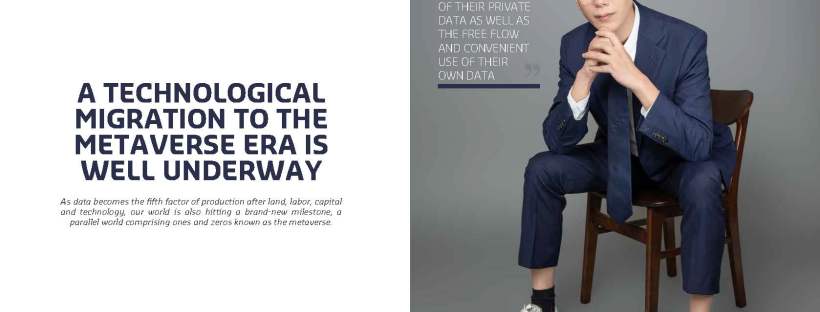
A technological migration to the metaverse era is well underway

As data becomes the fifth factor of production after land, labor, capital and technology, our world is also hitting a brand-new milestone, a parallel world comprising ones and zeros known as the metaverse. The biggest difference between the metaverse and previous virtual products built on digital technology is that the purpose of the metaverse is to create a systematic and complex digital world based on multiple digital technologies, in which data validation, pricing, trading, and empowerment are all fully realized.

Assessing the development of the Internet at this present moment, we have brought together digital technologies such as VR, AR, 5G, cloud computing, Internet of Things, artificial intelligence, etc. These technological innovations have created a sense of the immersion, participation, interaction, openness and other experiences that characterize the metaverse. The advent of the metaverse will drive the Internet of Information and the Internet of Value towards a new evolutionary direction. In the metaverse, people will discover a new way of living, one that distinguishes them from the physical world and offers an opportunity to reinvent their lives.

The vitality of the digital ecology that pours from uncertainty

While many people will bear witness to the metaverse’s arrival, Roger Wu, who has 25 years of IT industry experience and has been deeply involved in the digital industry for the past six years, is one of the few participants promoting the future of digital construction.

He has long been at the forefront of the wave of technological change leading to the metaverse, focusing on the construction of infrastructure for the coming era. In his view, a massive technological migration is underway. For the creation of the digital world, Roger Wu argues that the industrial logic of the metaverse, or Web3.0, is distinct from the linear development of the current Internet era, exhibiting emergent features that imply an unclear process but a definitive ultimate goal.

Amid this uncertainty, new digital technology has a high level of tolerance and can be seamlessly integrated with all links of the industrial chain, thereby unleashing new vitality. The ultimate goal is to optimize resource allocation, reduce excessive resource waste in the physical world, and meet the needs of the spiritual world with minimal energy consumption in the virtual world.

From a specific analysis perspective, distributed networks can firstly in terms of economics optimize the allocation of resources, allowing resources that were originally centralized on a large scale to be provided in a more decentralized form. Decentralizing resources also makes redeployment more flexible, as idle resources can be allocated to different demand scenarios, achieving refined management of on-demand allocation. The achievement of such a paradigm relies less on human factors and more on technical governance.

Within technological evolution, data governance is an indispensable part of the development of the metaverse. In terms of data security, the decentralized organizational model of data will continue to strip away the problems caused by platformization and centralization, and architecturally gives everyone the right to realize the value of data and achieve freer data flow.

Roger Wu points out that existing network technology does not solve the problem of the production relationship between data producers (individuals or legal entities) and users. For example, customers need to provide their consumption data generated on the Taobao platform to the Tencent platform. At this time, users find that the current form and technology of Internet products fall short of requirements, and there is no cross-platform data flow between producers and users. The immediate needs of users are the protection of their private data as well as the free flow and convenient use of their own data.

The contradiction between the pursuit of commercial interests of large platforms and the personal needs of users has shackled the development of the Internet industry, but infrastructure for the flow of data elements is being built as part of the development of Web3.0 technology powered by the metaverse – a more efficient way to allocate resources that will open up a new market.

Take ESG as the criterion to gain a foothold of the key ecological juncture

In this new market, Roger Wu believes it is critical to first deploy at the core nodes of the ecosystem. Taking mobile Internet as an example, most people think moving the Internet to mobile phones marked the start of this era, but in fact, the reason why Apple succeeded in creating its ecosystem was that it deployed smartphone hardware, application stores, and applications in tandem. The same is true for the ecological establishment of the metaverse.

Firstly it is necessary to identify the core position in the metaverse and then deploy rapidly. At present, Roger Wu is following this ecology structure and investing in different industrial chain links in the hopes that the establishment of the underlying system ecology will promote the ecological market of the entire metaverse, laying the most core foundation for achieving the goal of the metaverse.

In 2019, Roger Wu founded Anmai Cloud, which emerged with the expectation of opening up a new blue ocean market, creating digital infrastructure with ESG standards under the ecology of the metaverse, establishing a green digital and intelligent industrial supply chain, and conducting environmental assessments at all stages from the selection of raw materials, technology development, product design, energy consumption methods, and cooperation partners, so as to achieve a sustainable industrial ecology.

With the resource optimization brought about by distributed architecture, lower usage costs can be achieved. By altering the resource invocation mechanism, the new infrastructure will drastically cut deployment costs. According to Roger Wu, ESG is the cornerstone for ensuring the industry’s continued health, and the only responsible construction is the one that actually produces value.

From his founding of Anmai Cloud to the investment in the broader industrial ecosystem, Roger Wu has persistently sought to advance industrial growth and innovation. In his view, researching the nature of innovation is more intriguing than the return on investment. As the “1” in “1+N”, Anmai Cloud is promoting construction of the entire metaverse’s ecology. It is providing technical support for more industries and empowering the higher-level supply chain, building the core technical infrastructure surrounding Web3.0 in preparation for welcoming the metaverse.

#TrendingBusinessInsights #GlobalTrendMonitor #Technology #AnmaiCloud #metaverse #IoT #Innovation #UAE #mydubai #magazine #media