Pulse Secure Delivers New Cloud-based, Zero Trust Service for Multi-Cloud and Hybrid IT Secure Access

Rohini Kasturi, chief product officer at Pulse Secure (1)

New Pulse Zero Trust Access (PZTA) service enhances productivity, simplifies management and mitigates cyber risks as enterprises embrace increased workforce mobility and utility computing

Pulse Secure, the leading provider of software-defined Secure Access solutions, today announced the launch of Pulse Zero Trust Access (PZTA), a cloud-based, multi-tenant secure access service that enables organizations to provide users easy, anywhere access to multi-cloud and data center applications with Zero Trust assurance.

PZTA simplifies access management with single-pane-of-glass visibility, end-to-end analytics, granular policies, automated provisioning, and advanced threat mitigation that empowers organizations to further optimize their increasingly mobile workforce and hybrid IT resources.

As enterprises advance workforce mobility and business digitization, users require access to on-premises and cloud applications from any device, from any location, and at any time. Meanwhile, cyberattacks, data breaches and compliance obligations have grown significantly, making trust and adaptive control critical. PZTA offers users streamlined application access while allowing organizations to govern every request by automatically verifying identity, device and security posture before granting a direct, encrypted connection between that user’s device and applications residing in public clouds, private clouds or data centers.

“IT leaders are driving business transformation in the hybrid digital era while also defending assets during the ‘age of hyper-converged access’ – for any user, from any device, anywhere to any application, at any time. Pulse Zero Trust Access is designed for the elastic digital workplace, providing a unified, cloud-based service that enables greater accessibility, efficiency and risk reduction,” said Rohini Kasturi, chief product officer at Pulse Secure. “From inception, Pulse Secure has focused on providing secure access solutions that enhance productivity, visibility and compliance as companies migrate to the cloud and take advantage of utility computing. PZTA exemplifies our on-going commitment to innovate while maximizing deployment flexibility, scale, interoperability and investment protection for companies of all sizes.”

PZTA is based on Pulse Secure’s new cloud-native, microservices-based, multi-tenant platform deployed globally in Microsoft Azure Cloud. The PZTA service consists of the Pulse ZTA Controller, which is hosted and managed by Pulse Secure, the virtual Pulse ZTA Gateway that customers deploy on-premises or in the cloud, and the unified Pulse ZTA Client which runs natively on each user’s Microsoft Windows, Apple macOS and iOS, and Google Android device.

Architecture, Performance, Data Privacy and Adaptive Control Advantages

According to the Gartner Zero Trust Network Access (ZTNA) market guide:* “ZTNA improves the flexibility, agility and scalability of application access, enabling digital businesses to thrive without exposing internal applications directly to the internet, reducing risk of attack.” Further, “ZTNA augments traditional VPN technologies for application access, and removes the excessive trust once required to allow employees and partners to connect and collaborate. Security and risk management leaders should pilot ZTNA projects as part of a SASE [Secure Access Service Edge] strategy or to rapidly expand remote access.”

Pulse Zero Trust Access aligns with the Software Defined Perimeter (SDP) architecture of the Cloud Security Alliance, incorporating extensive identity and device authentication, separate control and data planes, centralized granular policy management, and micro-segmentation to thwart unauthorized access and attack propagation.

While every user device access requires explicit authentication and authorization by the Pulse Zero Trust Access service, the Pulse ZTA Gateways are deployed in the customer’s on-premise and cloud environment closest to the application or resource. This proximity optimizes user experience, reduces latency, and enables hybrid IT deployment at scale. Since encrypted application traffic only flows between the ZTA Clients and ZTA Gateways, customers gain full data privacy and data sovereignty.

PZTA governs each access request and session via a centrally deployed and managed policy. Building upon Gartner’s Continuous Adaptive Risk and Trust Assessment (CARTA) framework, PZTA augments contextual and identity-centric policies with built-in User and Entity Behavior Analytics (UEBA) whereby attributes for every session are monitored and assessed, applying proprietary risk scoring algorithms to identify non-compliant, malicious and anomalous activity, and take expedited threat mitigation actions.

“Our customers trust us to identify and deliver advanced solutions that enable their digital business and protect their valuable resources. Pulse Secure has been our key partner for many years as they offer one of the most versatile, integrated and scalable secure access solutions in the market. We jumped at the opportunity to test out their new Zero Trust Access cloud-based service and our teams have been impressed with its simplicity, manageability and overall feature-set, said Herve Rousseau, the chief executive officer at Openminded. “Pulse Zero Trust Access service does indeed offer users an easier means to access network and cloud applications while providing organizations greater hybrid IT access agility, oversight and management.”

Comprehensive Cloud-native, Secure Access Solution for Existing and New Customers

PZTA allows enterprises of any size to gain comprehensive Secure Access with a simple, scalable, cloud-native service that can be implemented in a matter of hours. The solution provides deployment flexibility and cohesive policy management for enterprises migrating applications from data center to cloud, while also offering comprehensive secure access capabilities to those organizations with pure multi-cloud environments. This allows broad support for legacy applications and popular cloud apps such as those from Amazon, Atlassian, Box, Google, Microsoft, Oracle, Salesforce, SAP and Zoom.

PZTA can co-exist with Pulse Secure’s remote, mobile and network access solution portfolio including the Pulse Access Suite. Leveraging the unified, multi-tunnel Pulse ZTA Client, users can enjoy transparent, uninterrupted, and simultaneous access to applications and resources from their device of choice regardless of access method – SDP, VPN or NAC. Organizations gain implementation and operational efficiencies, investment protection and tool consolidation to realize lower overall cost of ownership.

Additional features of PZTA include:

  • Extensive identity, endpoint and security posture authentication prior and during each access transaction to negate unauthorized user and vulnerable device access
  • Broad application support, including HTTP, TCP/UDP based applications, multi-factor authentication (MFA), single sign-on (SSO) and protected connectivity options
  • User and device resource shielding prior to PZTA Controller authorization, establishing a Dark Cloud defense to eliminate target visibility for attackers and malware propagation
  • End-to-end analytics to expedite alerting, reporting, auditing, issue triage, and investigation processes

“Zero Trust and Software Defined Network are gaining the interest of our partners and customers by the day. This new cloud-based service released by Pulse Secure will enable enterprises fully adopt zero-trust networking with visibility, compliance, and user experience enhancements. With demand of remote working and work-life balance increasing, we are focused on offering Pulse Secure’s ZTA solution to help customers shift to zero-trust to take advantage of it functionality and simplicity”, said Jun Ikeda, chief executive officer at Macnica Networks Corporation.

PZTA Service Is Available Today

According to a 2020 Zero Trust Progress Report, more than half of cybersecurity decision makers (53%) plan to adopt Zero Trust access capabilities with a hybrid IT deployment. PZTA service is available today at an annual subscription MSRP starting at $180 per user for up to 500 users with volume and multi-year discounts being offered. Managed Security Service Providers (MSSPs) can take advantage of flexible deployment options with plans to allow MSPs to host the ZTA Controller in their or their customers’ infrastructure, and the ZTA Gateways across any hybrid environment.

For more information on PZTA visit www.pulsesecure.net/pzta. Enterprises, service providers and resellers can request an evaluation at: www.pulsesecure.net/requestpzta/.

*Gartner, “Market Guide for Zero Trust Network Access”, Analysts Steve Riley, et al, 8 June 2020

Gartner does not endorse any vendor, product or service depicted in its research publications, and does not advise technology users to select only those vendors with the highest ratings or other designation. Gartner research publications consist of the opinions of Gartner’s Research & Advisory organization and should not be construed as statements of fact. Gartner disclaims all warranties, expressed or implied, with respect to this research, including any warranties of merchantability or fitness for a particular purpose.

Fortinet Recognized as Winner of Microsoft’s 2020 Commercial Marketplace Partner of the Year

Award Underscores Fortinet’s Commitment to Enable Easy and Secure Deployment of SaaS, VM or Container Security Solutions to Protect Azure Workloads and Applications

News Summary

Fortinet® (NASDAQ: FTNT), a global leader in broad, integrated and automated cybersecurity solutions, today announced it has won Microsoft’s 2020 Commercial Marketplace Partner of the Year award. Fortinet was honored among a global field of top Microsoft partners for demonstrating excellence in innovation and implementation of customer solutions based on Microsoft technology.

As organizations are strained with limited cloud security resources and expertise, there’s growing preference to consume certain security functionalities as Security-as-a-Service and through pay-as-you-go models. Recognizing this, Fortinet offers the broadest set of security solutions that are natively integrated with Azure and available on Azure Marketplace. Products available through Azure Marketplace include Fortinet’s award-winning FortiGate Next-Generation Firewall (NGFW) and FortiWeb Cloud as a Service.

“This award reflects the proven growth and success of Fortinet’s offerings on Azure Marketplace as we continue to see significant customer demand,” said John Maddison, EVP of Products and CMO at Fortinet. “We look forward to building on our shared commitment to ensuring customers can use the cloud with confidence by enabling fast and simple deployment of new security services.”

Microsoft’s 2020 Commercial Marketplace Partner of the Year award recognizes Fortinet for excelling in the marketplace journey. The Microsoft Partner of the Year Awards recognize Microsoft partners that have developed and delivered exceptional Microsoft-based solutions during the past year. Awards were classified in several categories, with honorees chosen from a set of more than 3,300 submitted nominations from more than 100 countries worldwide.

“It is an honor to recognize the winners and finalists of the 2020 Microsoft Partner of the Year Awards,” said Gavriella Schuster, corporate vice president, One Commercial Partner, Microsoft. “These partners go above and beyond, delivering timely solutions that solve the complex challenges that businesses around the world face – from communicating and collaborating virtually to helping customers realize their full potential with Azure cloud services, and beyond. I am proud to honor and congratulate each winner and finalist.”


No More Hard-Sell: IT Needs to be a Gentler Business

In the time of pandemic, vendors need to show their human side and empathise with customers

Andrew Brinded Vice President & Sales Chief Operating Officer EMEA

By: Andrew Brinded, Vice President and Sales Chief Operating Officer, Nutanix

For decades now, IT giants have got away with playing hardball with customers. They have had customers locked into their wares because it has been the devil’s job to untether business processes from suppliers’ closed systems. Some of the biggest names have survived (and yes, prospered) by pursuing tough, even combative relationships, safe in the knowledge that it’s hard for those companies to move away from the core platforms that underpin corporate operations. Today, as companies dust themselves off and prepare to blink into the light of the Brave New World of our post- COVID-19 future, we need far better buyer/seller relationships in order to survive and prosper.

Nobody is immune to change. For the past several months at Nutanix we have had to alter how we talk to customers, becoming even more of a listening company as CIOs and CFOs tell us about sudden declines in revenues, urgent support needs and a kaleidoscope of other factors that are miles away from Business As Usual. We’re no longer hopping on flights but on Zoom calls and we’re hearing alarming stories from valued customers telling us they are struggling.

The pandemic has created a business environment that makes the banking crisis of 2007-2008 look like a cakewalk. In Italy, world-famous car marques such as Ferrari and Fiat paused production. In Spain, Inditex, owner of ubiquitous apparel brands such as Zara and Massimo Dutti, shut stores and switched some production to medical supplies such as masks and scrubs. Super-brands such as Premier League football shuddered to a halt leaving us starved of action. Many of us couldn’t even have a relaxing drink or meal as restaurants put up closed signs.

Behind each of these stories lies a huge amount of headache and heartache. With revenues screeching to a halt, companies need to familiarise themselves with an utterly novel set of circumstances and work out what to do with their people, operating models and channels to market.

For a fortunate few companies that are cloud-centric, there has been an uptick: Amazon and other online retailers; meal delivery services such as Deliveroo, Uber Eats; Zoom and other videoconferencing services, of course. What these companies have in common is a heavy investment in cloud infrastructure, but the need to scale their systems suddenly to cope with spikes in demand has many significant challenges in its own right. But for many others, the result of COVID-19 will be closed businesses and a battle for survival. For most, the return to normality will be measured in years rather than months.

Any supplier needs to understand the individual challenges facing its customers and today they face the toughest over. IT suppliers have been spoiled over the years and companies that have had best-in-class products have been able to call the shots, often leading to dysfunctional buyer/seller relationships. Now, we need to band together with customers and build stronger links.

Communications

More than ever we need to listen as well as talk. A frequent complaint is that IT firms only want to sell and not to understand the specific needs of customers, their operations, their sector or their local culture. This is the time to invest in getting closer to customers.

Pricing

The crashing revenues that many companies are seeing mean that the industry needs to move to more creative pricing plans. The old enterprise software model of money upfront followed by an annual tax is no longer fit for purpose. Subscription-style tariffs mean customers only pay for what they use and means they can try new services and approaches at very low cost. Discounted and free services should also be applied where appropriate.

Support

Service level agreements are a necessary model to provide value, but they are often too rigorous. Companies need to be able to flex their terms in times such as these and go the extra mile to ensure customers have what they need, whether that’s by extending support hours or extending terms.

Cloud

The industry needs to press home the message that cloud platforms can be highly effective near-term and long-term responses to standing up services. The companies least able to manoeuvre today are those that have lots of on-premises legacy equipment. Today, we’re finding out the real advantages of having capacity on demand, in not being locked into suppliers or platforms, in being able to dial resources down as well as up, of trying new things fast — and even seeing them fail without high penalties.

All of the above are ways to start thinking about how we can help but our theme must be flexibility. That word is part of the lexicon of the industry: you hear it everywhere, together with ‘agility’ and ‘elasticity’. Attend any technology conference and you will be calling ‘house!’ on your buzzword bingo scorecard before the end of the opening keynote. But if IT vendors can lose their bad habits and show that willingness to change and flex in favour of customers, they will be in the best position to succeed when our economies bounce back. By being authentic, empathetic, human and gentle, we all win.

Smart Cities Study Sheds Light on Expectations of Citizens and Businesses in World’s Major Urban Centres

Nutanix (NASDAQ: NTNX), a leader in enterprise cloud computing, announced today a new report sponsored by Nutanix and compiled by The Economist Intelligence Unit entitled ‘Accelerating urban intelligence: People, business and the cities of tomorrow’, which explores expectations of citizens and businesses for smart-city development in some of the world’s major urban centres. While globally smart cities have the common goal of improving urban living, what this looks like in action varies from place to place.


The study analyzes survey data from over 7,700 residents and business executives in 19 large cities around the world, including Dubai, UAE to reveal how their priorities differ and align.


Responses differ from city to city, but overall the study finds that citizens want smart city initiatives to make public services more affordable while businesses want them to be more efficient and reliable. Nearly as important for both groups, however, is that smart initiatives produce greener, cleaner environments in which to live and work. Many individual demands of respondents—such as more renewable energy options, cleaner air and water, more efficient waste recovery and smarter energy tariffing—all contribute to more liveable environments for citizens and workers alike.


The key findings of the study are:


  • Priorities differ between developed and emerging-world cities. Developing smart-city solutions to ease the blights of unemployment, crime, poor sanitation and rubbish accumulation are especially high priorities in Johannesburg, Mumbai and São Paulo. Respondents from developed-world cities place stronger emphasis on improving transport efficiency, reducing road congestion and making services more affordable.
  • Big dreams for big tech. Wariness of large technology firms may be on the rise due to negative media coverage about privacy scandals, disruptions to jobs and other factors, but most respondents want their cities to be involved in smartcity initiatives. Citizens expect they will create job opportunities, and executives hope they will spur innovation and create new market opportunities.
  • Inevitable trade-offs to urban intelligence—particularly involving data—should not deter its development. Over two-thirds (70%) of business respondents say the ability to access open government data is vital to their business. Nearly as many executives (69%) say they are willing to share more data to secure the benefits of smart cities. Most citizens, too, are ready to share data with their governments if it means smarter public services. Some seem ready to compromise on privacy as well: two-thirds (66%) believe facial recognition technology will do more good than harm when used to fight crime.
  • Some smart-city expectations will be tough to meet. Citizens’ hopes for job creation and those of executives for new business opportunities will be difficult for smart-city programmes to fulfil, according to experts interviewed for the study. Transport and other services may be more efficient and cleaner, but not always cheaper. City officials must try to manage expectations for what smart initiatives can deliver.


It is interesting to note the Dubai findings of the study below:

  • Top ways cities can improve their development of smart initiatives – Citizens of Dubai emphasise keeping smart-city initiatives within budget while businesses want public authorities to plan for the long term and also ensure new smart city services are easy to use
  • Improving Affordability – Improving the ability of energy and water utilities to vary pricing according to usage is the top expectation of citizens when it comes to smart city programmes
  • The Green Imperative – One of the UN’s Sustainable Development Goals (SDGs) calls for all people to have “access to affordable, reliable, sustainable and modern energy”. This need is felt especially keenly in emerging-world cities such as Dubai
  • Most-desired benefits – When probed on the most-desired benefits from smart-city initiatives, residents of Dubai emphasize creation of employment opportunities.
  • Fighting crime – Asked how smart-city initiatives should create a healthier and safer environment, residents of Dubai are more accepting of facial recognition technology as a means of fighting crime than those in, say, San Francisco, Los Angeles or Copenhagen.
  • Attitudes towards big tech – Whether it’s smart-city projects that create employment opportunities, improve the innovation environment or create business opportunities for local firms, citizens and business executives in Dubai are more likely than those in more developed cities (especially San Francisco) to view the involvement of large technology companies as a high priority.


While the technologies that underpin many existing or planned urban projects are hardly exotic territory for most people, they need to address the fundamental problems of everyday urban life. When asked to choose from a menu of technologies most integral to their town’s smart-city initiatives, the vast majority select 5G mobile, artificial intelligence (AI) and IoT. The same is true of business respondents, many of whom also point to data analytics and cloud computing.


Aaron White, Regional Sales Director, Middle East at Nutanix says, “Adoption of technologies such as IoT and AI play a critical role in creating a ‘Smart City’. IoT based solutions enable innovative use cases to enlighten smart cities and seamlessly integrate various city management systems. We are proud to be at the technological forefront of making smart cities smarter through Nutanix Xi IoT – a software-based solution that delivers AI-driven processing at the edge, simplifies operations and powers real time business insights. Nutanix is committed to helping cities modernize their datacentres and edge infrastructure, so IT can shift its focus from maintenance and operations to driving innovation.”

Fortinet Acquires Cloud Security and Networking Innovator OPAQ Networks

Enhances Fortinet’s Existing SASE Offering to Deliver the Most Complete SASE Platform on the Market

News Summary

Fortinet® (NASDAQ: FTNT), a global leader in broad, integrated and automated cybersecurity solutions, today announced it has acquired OPAQ Networks, a Secure Access Service Edge (SASE) cloud provider based in Herndon, Virginia. OPAQ’s Zero Trust Network Access (ZTNA) cloud solution protects organizations’ distributed networks – from data centers, to branch offices, to remote users, and Internet of Things (IoT) devices.

Ken-Xie_

Ken Xie, Founder, Chairman of the Board, and CEO said, “The recent SASE market momentum further validates our Security-driven Networking approach and underscores what we’ve been saying for years. In this era of hyperconnectivity and expanding networks; with the network edge stretching across the entire digital infrastructure, networking and security must converge. In fact the acquisition of OPAQ actually further enhances our existing SASE offering enabling Fortinet to deliver the most complete SASE platform on the market. The Fortinet SASE platform delivers the broadest security and industry-leading SD-WAN and networking offerings that can all be delivered to customers and partners through a flexible, cost efficient and patented zero-trust cloud architecture.”

Fortinet’s Security Fabric combined with OPAQ’s patented ZTNA solution enhances Fortinet’s existing SASE offering to form the best-in-class SASE cloud security platform with the industry’s only true Zero Trust access and security by providing industry-leading next-generation firewall and SD-WAN capabilities, web security, sandboxing, advanced endpoint, identity / multi factor authentication, multi-cloud workload protection, cloud application security broker (CASB), browser isolation, and web application firewalling capabilities.

Moreover, OPAQ’s platform is purpose built to be partner friendly, empowering MSSPs, carriers and high value-add partners to easily integrate the SASE multi-tenant platform into their own offering and add value to business and government organization customers with their Network Operations Center and Security Operations Center expertise and advanced professional services.

Given remote workforce trends, with exponentially more users, devices, applications, services, and data outside of a traditional enterprise edge than inside, the integration of Fortinet’s broad Security Fabric with OPAQ’s cloud platform will offer customers and partners even more choices in how they can consume best-of-breed security and is yet another unique and differentiated way Fortinet is empowering customers with the best, integrated security and networking innovation in real-time.

With the OPAQ acquisition, unlike other cloud security providers, Fortinet will deliver:

  • The best of scalability, performance, and security compared to any cloud security vendor.
  • A broad integrated suite of cloud security solutions providing true Zero Trust security, unlike other ZTNA providers who leave many unprotected gaps in the attack surface.
  • One-of-a-kind ZTNA solution with continuous security innovation at scale, leveraging Fortinet’s top-notch R&D talent to deliver security substance “under the hood”.
  • Security and networking fully integrated, including Fortinet’s industry-leading SD-WAN, furthering the company’s Security-driven Networking approach.
  • The most partner-friendly ZTNA offering in the market that remains true to Fortinet’s ongoing commitment to its valued partners.

Financial terms of the deal were not disclosed.

Feel secure with Anker Innovations has newly introduced its Indoor Cam 2K and Indoor Cam 2K Pan & Tilt

Eufy Security’s Smart Wireless Security Cameras have gained popularity with their innovative, smart and easy to use security features. Adding on to their portfolio, eufy Security by Anker has newly introduced its Indoor Cam 2K and Indoor Cam 2K Pan & Tilt.

Its unique Artificial Intelligence easily detects Pets & Human and gives instant motion activity alerts to show movements in your home and helps detect unusual activity. The indoor security of your house can thus be stepped up as both cameras helps you get notified of what your cheeky children or playful pets are up to, in picture perfect 2K clarity plus it helps keep intruders at bay.

Faraz Mehdi, Regional Sales Head at Anker Innovations MEA said, “Our reliable indoor home security systems, the Indoor Cam 2K and Indoor Cam 2K Pan & Tilt helps keep an eye on your pets and children while you are at work, on your elderly relatives living remotely and your home even at night when intruders can be a threat to the safety and security of loved ones.”

The indoor cam can recognise the known humans, pets and also define specific areas of your house and motion detection alerts can be customised accordingly on your phone. The Indoor cameras are triggered by movement by unknown faces or pets/children’s movements in no go zone areas and users receive an alert instantly.

The activities are instantly recorded and the video is viewable in real time, even at night in low light settings. The indoor Cam is also very useful for new parents as it doubles up as baby monitor and recognises and instantly gives baby crying alerts on your phone.

With eufy Cam Pan & Tilt, when a movement is detected, the camera will automatically pan and tilt 360o to follow the actions and record the entire movement with the instant alert.

The real time response with two-way audio communication feature on the camera allows you to speak directly to anyone who is detected in the designated area, keeps the kids disciplined during study time and helps confront intruders. The Camera also allows you to pre-record your instructions and messages to be relayed as audio when any motion activity of your pets and children are detected in the defined no go zones so that even if you miss to see the alert instantly. The camera takes care of giving instructions to your pets and humans through the pre-recorded audio.

Both cameras work with voice control and are compatible with Apple Homekit, Google Home Assistant and Alexa. You can know more about this product through videos on Anker MEA Youtube Channel.

Keeping Data Protected as Businesses in the Middle East Embark on Remote Working Journey

By: Claude Schuck, Regional Manager, Middle East at Veeam


Over the last few months, we’ve seen many organizations in the Middle East have arranged for employees to work from home. Living in the golden age of Digital Transformation means that we are connected at all times. Consequently, the workplace today has evolved significantly to allow individuals to communicate seamlessly and connect from anywhere through mobile devices, digital tools, cloud services and many more. But what does this mean for organizations and the protection of its data?

With many employees working from home, businesses can expect a huge spike of personal file storing coming in from external sources. This is the perfect opportunity for malicious malware to make their way into servers, potentially corrupting a network of data.

According to a recent news report in The National newspaper, the UAE has been revealed as the leading target of cybercriminals in the region, accounting for more than half of the examples of malicious online and theme-driven behavior detected in the Gulf. Trend Micro, an international cybersecurity and defense firm, said it had detected 1,541 attacks in the UAE in the past months, including 775 malware threats, 621 email spam attacks and 145 URL attacks during March. Across the GCC countries, the figure was 3,067 over the same period.

Here are some of the necessary steps businesses should be taking to protect their data and IT architecture:

3 layers in the circle of defense

Businesses need to be aware of how they manage data between cloud and consider tools that will give them an advantage. Today, businesses are continuously backing up and replicating applications and we can only expect this to increase over the next few years as others learn the significance of data that are easily recoverable.

They need to understand the different roles that are needed for consideration when optimizing their systems for backup and replication. This can be easily summed up into the 3 layers of defense in data protection.

  • Perimeter: Firstly, businesses must consider the situation at hand – in this instance, it is remote working or working from home. Protection must be made available for employees to be able to access the cloud and in turn, ensure that these data can be backed up.
  • Mid: Next, businesses need to note that with an increase in the number of people working from home, measures must be put in place so that the systems are still able to run smoothly and efficiently. To counter this, it is highly recommended that servers be optimized for different groups of networks to tap into.
  • Base: It goes without saying that having more people accessing the servers from an external network will also result in an increase in the number of personal files coming in. Businesses need to ensure that they are able to mitigate any malware that might make its way through.

 Data backup and protection

There are many unforeseen circumstances that businesses need to prepare for. Therefore, it is important for them be highly adaptable. Having data that is easily accessible is part of the solution to be ready for remote working. Over the next few years, businesses can expect to see an increase in the number of tools that can allow them to continuously back up their data and perform recovery in a matter of minutes. With these tools, they will be insured with more than just backed up data – they will also have access to insights that will allow them to make informed decisions in their digital transformation journey.

Apart from that, it is also important for businesses to protect their data – as seen with the recent increase of data breach. Cloud Data Management is expected to see an increase in mobility and portability over the next few years. With added security measures, businesses will have access to data easily outside of their workplace with a peace of mind.

Prevention of cyberattacks

One of the essential steps businesses need to take is to minimize administrative access to platforms and servers and increasing rules of operation. Not everyone needs to be able to access all the systems in place.

It is also vital for organizations to educate their employees – often, ransomware finds its way through a system because of an individual’s mistake. It is important for businesses to remind employees on best practices, especially in times when telecommuting is an option for everyone. They need to understand that being connected to a network outside of the company’s system exposes the servers to potential malware.

To sum it all up, businesses in the Middle East need to always prepare ahead for any disruption that might have an impact in the way they work. Especially in an era where remote working is a step forward, organizations need to ensure that their systems are ready and fully protected so that their employees can remain efficient and productive.

The Borderless Enterprise – Optimizing Networking at the Edge

By: Mohammad Jamal Tabbara, Senior Solutions Architect, Infoblox


Enterprises are growing more dispersed and borderless. Essential talent, branch offices, facilities and partners can be located anywhere in the world—and they need rapid and secure access to critical apps and data to keep business running smoothly. What’s more, with aggressive initiatives around SaaS, IoT, SD-WAN and IPv6, smart organizations are moving to the cloud to accelerate workflows and better support users and sites wherever they happen to be.

Yet the shift to leverage public, private and hybrid cloud networking across the borderless enterprise is becoming more challenging. In a cloud-first world, the nexus of activity is no longer in your data center; it’s at the network edge. The hub and spoke way of networking cannot keep up with the soaring demand for direct-to-cloud access at the edge.

Your organization wants to embrace the cloud and all its benefits—yet you need a simpler, more reliable way to manage your network, devices, apps and services across all locations. How can you solve networking challenges at the edge with fewer enterprise resources and still replicate on-prem experiences for your end users?

Enter cloud-managed DDI (DNS DHCP and IPAM). By moving the management plane for DDI from the appliance to the cloud, it enables you to centrally manage your borderless enterprise—and with far greater elasticity, reliability, security and automation than traditional on-premises DDI solutions provide. In addition to optimizing network access and performance across all your locations, cloud-managed DDI is also a key enabler of your digital transformation as an organization, and it will accelerate your migration to Secure Access Service Edge (SASE) networking.

The following 5 edge networking scenarios will demonstrate how cloud-managed DDI can solve many key challenges for your borderless network.

  1. Centralizing Control of the Edge

Cloud-managed DDI offers a bridge that allows organizations to integrate core network services, bringing DNS, DHCP and IPAM together on a unified platform. By replacing siloed on-prem DNS and DHCP controllers with cloud-native technology, organizations can take a huge step toward digital transformation through integrated DDI services they can centrally manage in the cloud across all locations, ensuring better branch performance, faster access to cloud-based applications and higher availability.

  1. Increasing Agility at the Edge

For some borderless enterprises, fully-featured, enterprise-grade DDI services are not needed in all of its branches or remote sites. For example, an organization may already have a DNS service that meets all its needs in every location, but it wants to deploy only DHCP or IP address management services in small regional offices. Similarly, it may wish to expand DDI capabilities in some branches but not others.

Just as common, especially for enterprises that are undergoing digital transformation, it’s important to have the flexibility to roll out DDI capabilities incrementally. They may wish to upgrade DHCP in the near term while keeping their current IP address management solution. They need a DDI solution that protects them from over-provisioning services in remote sites that may go unused for some time yet.

Cloud-based DDI provides the flexibility and agility for enterprises to achieve the right size DDI implementation for every location.

  1. Simplifying Application Access at the Edge

For the borderless enterprise, with growing numbers of remote workers and branch locations, simple, reliable access to mission-critical applications at the network edge is paramount. This requires organizations to move away from traditional MPLS architectures. Backhauling network traffic through the data center creates severe latency and bottlenecks for end users in branch offices and remote sites, preventing them from moving at the speed of business.

Modernizing with more agile cloud access to applications like Microsoft Office 365 requires a different infrastructure. One where DDI services can be delivered and managed centrally via the cloud and where traffic from remote locations can connect directly to the closest local PoPs in the cloud without the backhaul bottleneck.

  1. Boosting Survivability at the Edge

When your business depends on connecting vital manufacturing facilities to global supply chain partners and remote offices, the term mission-critical takes on a whole new meaning. Add to that IoT devices that have to communicate 24/7 and reliability, redundancy and survivability become essential.

Application latency is not the only downside to traditional backhauling of DNS and DHCP through a headquarters data center. If the link to headquarters goes down, because of a power outage or natural disaster, remote locations are not able to reach the central data center for DNS and DHCP resolution. As a result, they lose access to the Internet and cloud-based apps. To ensure always-on networking for all locations, remote and branch offices need the ability to maintain DDI services locally.

  1. Scaling at the Edge

Many high-growth companies today were born in the cloud and their business is 100% cloud-based. Which means no centralized data center—all apps and services are managed and delivered in the cloud. So when it comes to managing the growth of branch offices and remote locations, it’s challenging to find a solution that is 100% cloud-ready. Typically, core DDI services like DHCP are managed by hardware routers or servers located at each site. A large enterprise may have hundreds of these throughout its borderless operations. These on-premises devices are often resource-intensive, error prone, cumbersome and hard to scale. In addition, they provide no easy way to monitor and manage multiple locations.

For cloud-born businesses, cloud-managed DDI makes it simple to eliminate resource-heavy physical appliances in branch and remote offices. Instead, lightweight devices or virtual appliances can be deployed in all locations, which enables DDI to be centrally managed in the cloud across all sites.

In every one of these core benefit and success spotlight scenarios, there is a common denominator: traditional networking architecture is no longer effective for managing the explosion of workflow at the edge.

Anker Innovations curates a unique and functional gadget must-have list for Eid Al Adha

Eid Al-Adha is a special occasion and a perfect time to celebrate with loved ones as well as express your appreciation for them with Eid gifts. Anker Innovations team has curated a unique and functional gadget must have list to suit different tastes and styles for this joyous occasion.

soundcore-lifeq20 

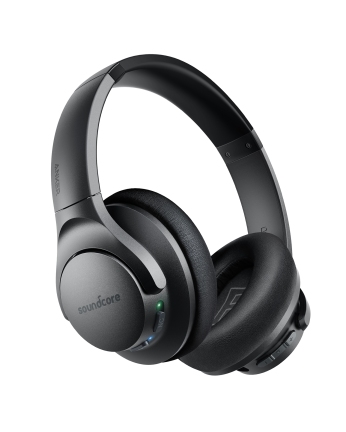
Soundcore Life Q20

Hear songs in the way they are meant to be heard with Anker Soundcore Life Q20 Bluetooth Headphones. The wireless Over Ear Headphones are perfect for travel and work as it features custom 40 mm dynamic drivers to reproduce sound with extraordinary clarity, Hybrid Active Noise Cancelling, Hi-Res Audio and Deep Bass for a heightened listening experience.

Compatible with smartphones, tablets, laptop computers and more, Life Q20 offers up to 40 hours of non-stop playtime in wireless active noise cancellation mode and a single charge can play over 600 songs.

For optimal noise cancellation, memory foam earcups gently mold around your ears, while the headband’s rotating joints automatically adjust the earcups to fit the shape of your head. Life Q20’s built-in microphone allows convenient hands-free calls, enhances voice pick-up to ensures you sound crystal clear.

Soundcore Life Q20 comes with a travel pouch to conveniently store the headphones, a 3.5 mm AUX cable to keep the music playing when you’re low on battery and a Micro USB cable plus a user Manual and 18-Month Warranty.

Eufy Security Indoor Cam 2K and Indoor Cam 2K Pan & Tilt

Anker’s eufy Indoor Cam 2K and Indoor Cam 2K Pan & Tilt helps keep an eye on your pets and children while you are at work, on your elderly relatives living remotely and your home even at night when intruders can be a threat to the safety and security of loved ones. The indoor Cam is also very useful for new parents as it doubles up as baby monitor and recognises & instantly gives baby crying alerts on your phone.

It helps detect unusual activity and records movements in picture perfect 2K clarity. The Indoor cameras are triggered by movement by unknown faces or pets/children’s movements in no go zone areas and users receive an alert instantly.

With eufy Cam Pan & Tilt, when a movement is detected, the camera will automatically pan and tilt 360o to follow the actions and record the entire movement while it gives you the instant alert and allows a two-way audio communication.

Both cameras work with voice control and are compatible with Apple Homekit, Google Home Assistant and Alexa. You can know more about this product through videos on Anker MEA Youtube Channel.

HomeVac S11 Go

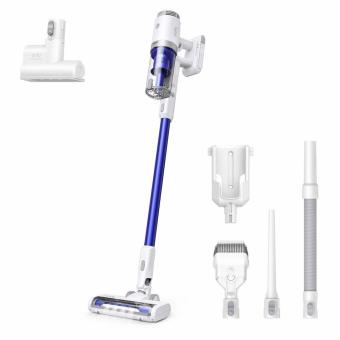
HomeVac S11 Go

Suitable for delicate surfaces, eufy HomeVac S11 Go comes equipped with a 120AW suction power, detachable battery and a 2-in-1 crevice tool to deep clean carpets to hard floors.

The innovative technological features in the eufy HomeVac S11 Go include a washable high-efficiency filter that ensures minimal maintenance and improved performance plus the device can be detached to empty the dustbin in seconds. Increased efficiency also includes dust-tight containment for reduced air pollution.

The eufy HomeVac S11 Go’s long crevice tool can be used to suck up crumbs and dirt in any corner or hard-to-reach areas and the advanced 5-tier filtration system safeguards and maximizes the motor performance.

The long-lasting detachable battery offers up to 40 minutes of cleaning time and the max-mode provides 8 minutes of fierce and focused cleaning when tackling the deepest dust and debris. With eufy HomeVac S11 Go, whether an impossibly tight space or a delicate surface, or the AC vent grill at a height there is an attachment suitable for any cleaning scenario. Available on Amazon.ae.

nebula-apollo-pocket-projector

Nebula Apollo Pocket Projector

Nebula Apollo Smart Pocket Projector is a new generation pocket cinema in a compact, mobile and soda-can size design. Hosting capabilities such as Google Assistant, remarkable clarity with Sharp 200 ANSI lumen image and improved audio, it is the perfect entertainment device to enjoy together with family.

Nebula Apollo is perfect for dads who want to enjoy their favorite match or TV shows through streaming apps on the go on a bigger screen powered by Android 7.1 which brings great content to you, so you spend less time browsing and more time watching movies with loved ones.

Nebula Apollo provides 4-hours of video playtime with single full charge and offers big 360o sound with a 6W speaker. Nebula Apollo offers an advanced entertainment experience, anytime, anywhere with your loved ones.

ANKER POWER BOX Pack-C2C

Anker Power Box

Make sure your loved ones never run out of charge on their phone with Anker Power Box. This Power Box contains three flagship products from Anke:

1) PowerCore 10400mAh Power Bank, a high capacity Power Bank that offers up to 3 times charging for Flagship Phones and comes with optimized output for Multiple Device Charging.

2) Powerport+1 Charger, equipped with PowerIQ Technology and Multiprotect Safety System, along with a micro USB cable, is travel ready with Quick Charge 3.0.

3) Powerline II 3-in-1 Charging Cable, the extremely durable and MFi Certified charging cable with 3-in-1 Connectors i.e. Lightning, Micro and C-Type and is Universally Compatible with every phone that uses these one of the three charging connectors. Available in Jumbo Electronics and EMAX.

Riverbed “Future of Work” Study Finds 95% UAE and Saudi Business Leaders Are Comfortable – But Not Fully Prepared – for Shift to Remote Work

As organizations address the pressing need to adapt workforce models for the ‘new normal’, almost all (95%) business leaders in the UAE and Saudi Arabia state that they are comfortable with the broad scale shift toward remote work. Whilst there’s been digital investment in the region during the last few years, according to the Riverbed Future of Work Global Survey 2020, over two-thirds (68%) of UAE and Saudi organizations were not completely prepared to support remote working when the COVID-19 pandemic began.

“Businesses had already been accommodating more remote workers the past several years, but COVID-19 is accelerating this, and the office of the future will clearly look very different with a more flexible and hybrid workplace,” said Rich McBee, President and CEO of Riverbed. “This new study shows that business leaders are now much more comfortable with their teams working remote, however organizations must have the right technology in place to ensure greater productivity and a better remote experience as employees increasingly work from anywhere.”

Performance Issues Have Impacted Employees and the Business

Nearly all (97%) of the business leaders surveyed in the UAE and Saudi Arabia reported that technology performance issues impact the experience of their remote workers. The most common issues – all resolvable – include: frequent disconnects from corporate networks (43%), slow file downloads (41%), apps not working properly (40%), and long response times when loading apps (39%). When asked about the impact these issues have on the remote work experience of employees, business leaders report: increased technical disruptions or difficulties (44%), weaker employee performance and lack of productivity (41%), lack of clarity on strategic priorities (37%), and reduced direct services to customers or clients (37%).

Barriers to Success of a High Performing Remote Workforce

UAE and Saudi business leaders say the biggest barriers to success for ensuring the performance of a remote workforce are: training or manager support (43%), the need for software or technology to optimize or improve performance (40%), and the need for better visibility into network and application performance (37%).

“The last several months have given organizations a better understanding of the barriers to success for creating a high-impact remote workforce,” said Subbu Iyer, CMO at Riverbed. “It’s encouraging to see from the Future of Work survey and in conversations with our customers, that businesses and governments are planning to invest more in technology to boost remote work performance. Riverbed is fully focused on helping our customers maximize the performance and visibility of networks and applications, regardless of the physical location of where employees work.”

Remote and Flexible Workforces Expected to Increase Significantly

Despite challenges, more than one in five (22%) UAE and Saudi business leaders expect half or more of their employees to work remotely (full time or at least half time) after COVID-19. Additionally, on average, these business leaders expect 28% of employees to work remote after COVID-19. Globally, industries projecting the largest average percentage of their teams to work remote after COVID-19 are those less dependent on physical presence, including financial services (39% vs. 28% before the outbreak) and professional services (35% vs. 28%).

Business Leaders Investing In Technology for Remote Workforce Performance

To drive greater remote working performance, the large majority (79%) of UAE and Saudi business leaders plan to make additional technology investments – and 41% plan to make significant investments – in the next 12 months. These business leaders have already begun to identify their priority strategies and technologies to enhance remote work for their employees and their company. The top initiatives regional business decision makers plan to undertake in the next two years include:

  • updating company-wide remote workplace strategies and policies (48%)
  • deploying technology to automate remote network operations (47%)
  • re-evaluating and/or re-architecting the IT environment (46%)
  • gaining better visibility of network and application performance (45%)

Middle East business leaders expect to gain long-term benefits for their employees and bottom line as a result of increasing their remote workforce, including: better work-life balance (56)%; increases in employee retention (48%), savings from office space and related costs (48%); better use of technology 48%.

Work From Anywhere with Riverbed

Now more than ever, business leaders and IT teams are tasked with quickly scaling remote work models to maintain business continuity and employee productivity. Riverbed delivers solutions that maximize performance and visibility for networks and applications — regardless of location. Riverbed’s remote work performance solutions include Riverbed Client Accelerator and Riverbed SaaS Accelerator, and help organizations:

  • Reduce bandwidth utilization by 99%
  • Extend optimization to laptops for 33x faster application performance
  • Accelerate enterprise SaaS applications, including Office 365, by up to 10x

Additionally, Riverbed’s market-leading Network Performance Monitoring (NPM) solutions diagnose and troubleshoot network performance and security issues, delivering: 100% visibility of every packet, every flow and all networked devices; 53% reduction in network and app blind spots; and a 67% reduction of lost user productivity. Together, Riverbed’s NPM and Client and SaaS Accelerator technologies offer the most complete network visibility  and performance solution for working remotely.