Barracuda Threat Report Reveals Evolving Ransomware Attack Patterns

New third-annual research report analyses Ransomware attacks that occurred between August 2020 and July 2021

Highlights:  

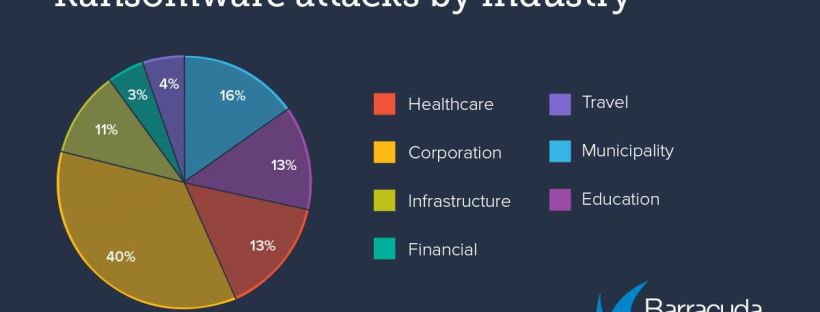
  • In the past 12 months, Barracuda researchers identified and analysed 121 Ransomware incidents and saw a 64% increase in attacks, year over year.
  • Attacks on corporations and businesses made up 57% of all ransomware attacks.
  • 8% of the incidents had a ransom ask less than $10 million, and 14% of the incidents had a ransom ask greater than $30 million.
  • Attacks in the past 12 months have expanded across the globe. 

Barracuda, a trusted partner and leading provider of cloud-enabled security solutions, today released its third-annual threat research report on Ransomware. The new report looks at Ransomware attack patterns that occurred between August 2020 and July 2021.  

A closer look at Ransomware trends  

Barracuda researchers identified and analysed 121 ransomware incidents that occurred between August 2020 and July 2021, and saw a 64% increase in attacks, year over year. Cybercriminals are still heavily targeting municipalities, health care, and education, but attacks on other businesses are surging: 

  • Attacks on corporations, such as infrastructure, travel, financial services, and other businesses, made up 57% of all ransomware attacks between August 2020 and July 2021, up from just 18% in our 2020 study.
  • Infrastructure-related businesses account for 10% of all the attacks we studied. In fact, ransomware attacks are quickly evolving to target software supply chains, which reach more businesses in a single attempt.
  • The ransom amount is increasing dramatically and now the average ransom ask per incident is over 10 million dollars. 8% of the incidents had a ransom ask less than $10 million, and 14% of the incidents had a ransom ask greater than $30 million.
  • Ransomware attacks are becoming pervasive across the globe. Just under half (44%) of the attacks in the past 12 months hit U.S organizations.

“As cybercriminals are working towards bigger paydays in the future, the security industry needs to continue to create solutions that are easily consumable for companies of all sizes,” said Fleming Shi, CTO at Barracuda. “Attackers often start with small organizations that are connected to the larger targets and then work their way up. All of us in the security industry have an obligation to turn sophisticated technology into products and services that can be easily consumed by customers.”

ALEC Energy secures DEWA HQ contract

ALEC Energy has won the contract to provide a solar photovoltaic solution for Dubai Electricity and Water Authority’s (DEWA’s) new headquarters, Al-Shera’a (Arabic for sail), in the Al Jaddaf area of Dubai.

In order to maximise the solution’s full potential, ALEC Energy provided a multi-tiered solution which includes the delivery of almost 21,150m2 of building attached photovoltaic (BAPV) panels on the roof, more than 1,000m2 of building integrated photovoltaic (BIPV) panels in the façade and almost 2,000m2 of podium fins as well as fibre optic collectors, shaded structure PV and solar trees, which collectively will generate 4.8 MWp upon completion, helping to ensure the new headquarters will reach its net zero targets.

Working alongside other stakeholders including main contractor, Ghantoot Transport & General Contracting LLC and consultant, ATKINS, ALEC Energy are designing customised, walkable solar panels with a high transparency feature that matches the striking architectural design of the building.

HE Saeed Mohammed Al Tayer, MD and CEO of DEWA, said, “We work in line with the vision and directives of His Highness Sheikh Mohammed bin Rashid Al Maktoum, Vice President and Prime Minister of the UAE and Ruler of Dubai, to make Dubai a global hub for clean energy and green economy. DEWA contributes to accelerating the shift towards Net Zero Energy Buildings and establishing a sustainable energy model that supports economic growth, without damaging the environment and its resources. By building Al-Shera’a, DEWA’s new headquarters, which will be the tallest, largest, and smartest government Zero Energy building in the world, we establish a global benchmark for buildings that achieve a balance between development and the environment, to protect the right of future generations to live in a clean, healthy and safe environment.”

Speaking on behalf of ALEC Energy, James Stewart, general manager said, “Winning this project has been a great endorsement of ALEC Energy’s ability to provide the most innovative, cost-effective solution that not only meets, but exceeds the ambitious targets set by DEWA for the building. In delivering a solution that illustrates DEWA’s commitment to utilising clean energy, we are also supporting the UAE Government’s high-level targets of clean energy supply within the next thirty years.”

“The most energy efficient solar cells currently available worldwide are used for this project. Accredited laboratories will conduct numerous sophisticated performance tests, quality controls and rigorous durability tests prior to the manufacturing of the the PV panels. This project and the integrated solar design truly pushes the boundaries of solar power further,” Stewart remarked.

Al-Sheraa’s built-up area is over 2 million square feet. The building will have 15 floors, a basement and 5 floors of car parking. The building can house 5,000 people. Total energy used in the building during a year will be equal to or less than the energy produced onsite in a year. DEWA’s new headquarters has been designed to receive a platinum rating by LEED (Leadership in Energy and Environmental Design) and a gold rating from the WELL Building Standard.

Hybrid Workforce Needs Cybersecurity Rollout from Day One

By: Ali Sleiman, Regional Technical Director, Middle East & Africa at Infoblox

The hybrid workforce is a permanent reality for most companies these days. The sudden onset of the pandemic and associated shutdowns gave organizations very little time to prepare for such large-scale remote work, let alone time to think about how to secure their ‘work from home’ users who still needed to access enterprise applications in the cloud, and work with and store corporate data on their devices.

Security teams now have to think about protecting corporate resources and data as employees are working outside the corporate perimeter. The pandemic, widespread remote work, and the adoption of new technologies have brought in changes that traditional network architectures cannot deal with.  The existing paradigm where the security stack is located within the corporate network is no longer sufficient to protect these teleworkers. Teleworking also exposes the company to a much broader attack surface, as workers add personal devices and home and public Wi-Fi networks to the corporate network. The internet, cloud technologies and the onslaught of wireless all contribute to a massive increase in the attack surface.  This requires a different security skill set and an increased awareness of the vulnerabilities of today’s IT environment.

Bad actors are taking advantage of the chaotic nature of these times, by launching coronavirus-themed cyber-attacks and impersonating well-known websites that try to provide useful, timely information for the general public. Indeed, COVID-19 has become the subject of choice for phishing and spear-phishing campaigns that seek to take advantage of the heightened level of fear and concern.

In this scenario, cybersecurity needs to be rolled out from day one, or else companies and their employees will be at serious risk from partially secured cloud deployments, data breaches, insecure applications, and remote locations where the security and management of the remote user and the local branch LAN is often ignored, leaving end-users vulnerable.

In many cases employees working remotely ignore basic cyber hygiene rules like updating the operating system, using an effective antivirus or strong passwords and backing up data regularly. However, companies also have a responsibility to have structured security policies which address all security gaps. These need to be implemented and adhered to by all employees.

Remote workers and end-users will likely be active on a variety of mobile devices, home networks, and public Wi-Fi networks, which make them more likely to face cyberattacks. Leveraging the position a core technology like DNS security has in the network, can play a critical role in preventing attacks like lookalike domains, DOH/DOT, data exfiltration, and content vulnerabilities. Without a security control like Custom Lookalike Domain, for example, that can monitor such risks, teleworkers will be more easily targeted and vulnerable to attacks, especially in an age where character substitution is increasingly employed by cybercriminals to manipulate users into exposing credit card numbers, passwords and other sensitive data.

End-users will always have the primary responsibility of being aware of increasingly sophisticated cyber threats, provided the organization provides proper education and training, and enforces security policies. It is important to consider the risks in consumer grade Wi-Fi connections, as home routers are usually not secure or patched. There are also risks in using shared documents on cloud folders. Additionally, home browsers configured with plug-ins and certain applications may introduce substantial risk. CISOs should consider implementing technologies like BloxOne​​ Threat Defense from Infoblox that includes a lightweight endpoint agent that helps end users with all of these vulnerabilities and more.

While there are a number of different solutions available to protect remote workers, one of the best and most cost-effective is DDI (DNS, DHCP, IPAM). DNS is the foundation of the Internet and so every connection to the Internet goes through it, making it an ideal service that can be used to secure the network. In the corporate environment, DNS is often provisioned by the internal security team, but when working from home, employees typically use public DNS or DNS provided by their service providers – both of which seldom do security enforcement on DNS.

Today’s security decision makers need to have a variety of skills, and an ability to understand the impact that new technologies like SDN, SD-WAN, Multi-cloud, and Network Functions Virtualization (NFV) have on their ability to assess the risk of such deployments and respond with the right security models like Zero-Trust and cybersecurity tools for the organization.

Red Hat and Nutanix Announce Strategic Partnership to Deliver Open Hybrid Multicloud Solutions

Red Hat, the world’s leading provider of enterprise open source solutions, and Nutanix (NASDAQ: NTNX), a leader in hybrid multicloud computing, today announced a strategic partnership to enable a powerful solution for building, scaling and managing cloud-native applications on-premises and in hybrid clouds. The collaboration brings together industry-leading technologies, enabling installation, interoperability and management of Red Hat OpenShift and Red Hat Enterprise Linux with Nutanix Cloud Platform, including Nutanix AOS and AHV.

Key elements of the partnership include:

  • Red Hat OpenShift as the preferred choice for enterprise full stack Kubernetes on Nutanix Cloud Platform. Customers looking to run Red Hat Enterprise Linux and Red Hat OpenShift on hyperconverged infrastructure (HCI) will be able to use an industry-leading cloud platform from Nutanix, which includes both Nutanix AOS and AHV.
  • Nutanix Cloud Platform is now a preferred choice for HCI for Red Hat Enterprise Linux and Red Hat OpenShift. This will enable customers to deploy virtualized and containerized workloads on a hyperconverged infrastructure, building on the combined benefits of Red Hat’s open hybrid cloud technologies and Nutanix’s hyperconverged offerings.
  • Nutanix AHV is now a Red Hat certified hypervisor enabling full support for Red Hat Enterprise Linux and OpenShift on Nutanix Cloud Platform. The certification of the Nutanix built-in hypervisor, AHV, for Red Hat Enterprise Linux and OpenShift offers enterprise customers a simplified full stack solution for their containerized and virtualized cloud-native applications. This certification delivers Red Hat customers additional choice in hypervisor deployments, especially as many organizations explore innovative, modern virtualization technologies.
  • Joint engineering roadmap providing robust interoperability. Red Hat and Nutanix will focus on delivering continuous testing of Red Hat Enterprise Linux and Red Hat OpenShift with Nutanix AHV to provide robust interoperability. The companies will also collaborate to deliver more timely support by aligning product roadmaps.
  • More seamless support experience providing faster resolution times for joint customers. Customers will be able to contact either company with support issues. The two companies are collaborating to deliver a best-in-class support experience for the interoperability of the certified products.

Because of its distributed architecture, Nutanix Cloud Platform delivers an IT environment that is highly scalable and resilient, and well-suited for enterprise deployments of Red Hat OpenShift at scale. The platform also includes fully integrated unified storage, addressing many tough challenges operators routinely face in configuring and managing storage for stateful containers.

More information on the partnership is available here.

Fortinet Unveils the Industry’s First High Performance Next-Generation Firewall with Integrated Zero Trust Network Access and Ransomware Protection to Secure Hybrid Data Centers

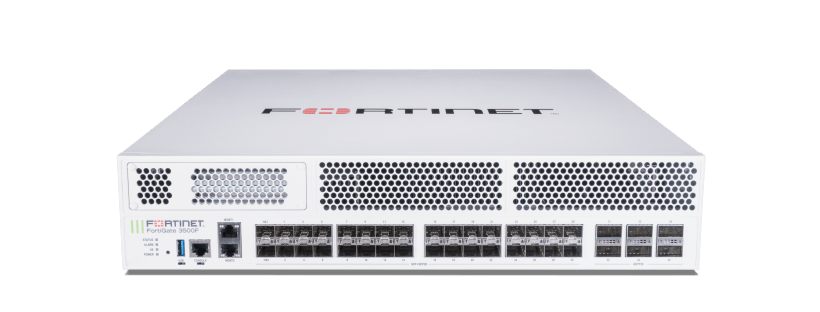
Fortinet® (NASDAQ: FTNT), a global leader in broad, integrated and automated cybersecurity solutions, today announced the FortiGate 3500F Next-Generation Firewall (NGFW) to protect organizations with hybrid data centers against the ever-growing threat landscape and ransomware attacks. FortiGate 3500F offers some of the industry’s highest performance numbers, including TLS1.3, with automated threat protection post decryption. Additionally, FortiGate 3500F is built with zero trust network access (ZTNA) capabilities, further delivering consistent security and seamless user experience to any user at any location with its security-driven networking approach.

John Maddison, EVP of Products and CMO at Fortinet

“Adding to our industry-leading NGFW portfolio, FortiGate 3500F offers high performance and integrated networking and security at hyperscale for hybrid data centers. With the FortiGate 3500F, Fortinet is the only vendor that natively integrates access proxy capabilities in its NGFWs to turn on zero trust network access. Additionally, FortiGate 3500F further enables organizations to protect against evolving threats and rising ransomware attacks, delivering the industry’s highest security compute rating of 6x for performance compared to competitors – including TLS1.3 – to deliver consistent end-to-end security.”

Evolving Threat Landscape Poses Security Risks Across Hybrid Data Centers

With the shift to work from anywhere, organizations are adopting hybrid data centers to increase operational agility by deploying some resources across multiple clouds while keeping other business critical applications and data in on-premises data centers for compliance and control. As the data center infrastructure becomes more distributed, however, the attack surface expands and more blind spots emerge, reducing visibility and increasing the potential for breaches and attacks. It’s critical for organizations to inspect encrypted flows to detect all type of attacks, especially malware that hides in secure channels, to prevent ransomware and the disruption of command and control attacks from stealing customer and corporate data.

Organizations also need a strategy to manage excessive implicit trust and provide inspection into the growing volume of encrypted traffic which is increasingly used by cyber adversaries to mask malicious traffic. Otherwise, organizations struggle to securely grow and accelerate digital transformation as their traditional security strategy and solutions can’t keep up with escalating business demands.

Securing Users, Data and Applications Everywhere

To address these challenges, FortiGate 3500F NGFW helps organizations ensure business continuity and advanced security for hybrid data centers. With the industry’s highest Security Compute Rating (SCR) of 6x IPsec, FortiGate 3500F NGFW secures the data center edge, core and interconnect by providing ultra-fast secure data center to data center paths to build disaster recovery sites. It also enables organizations to secure data center to cloud paths for cloud on-ramps with full compliance and controls. Other key highlights of the FortiGate 3500F include:

  • FortiGuard Security Services and Fortinet ASIC SPUs enable hyperscale protection for ransomware and advanced threats: FortiGate 3500F is powered by Fortinet’s purpose-built ASIC Security Processing Units (SPUs), like the NP7 and CP9. FortiGate 3500F offers the industry’s highest security compute rating of 6x for performance compared to competitors – including support of TLS1.3 – to detect attacks, like ZEUS, Trickbot, Dridex, and protect organizations from network, application and file-based attacks and many other sophisticated threats. FortiGate 3500F also natively integrates with FortiGuard Security Services. This further helps organizations protect themselves against network anti-virus, mail security, anti-DDoS, and similar functions, like IPS and anti-malware solutions.
  • Natively integrates access proxy capabilities, such as zero trust network access (ZTNA): FortiGate 3500F is the only NGFW in the industry that natively integrates access proxy capabilities to enable zero trust network access (ZTNA). This allows organizations to host applications anywhere with consistent policy controls to enable and secure hybrid workforce models with seamless and superior user experience.
  • Seamless user experience through consolidation: Fortinet further delivers a security-driven networking approach withFortiGate 3500F, which combines security and networking capabilities, including Secure SD-WAN and Zero Trust Network Access. An industry first, only Fortinet offers Secure SD-WAN, SD-Branch and ZTNA in one single offering.

Scaling Business with Superior Performance and Advanced Security

Powered by Fortinet’s ASIC SPUs, FortiGate 3500F offers some of the highest performance numbers for NGFW with 12x higher speeds than leading competitors. As a result, FortiGate 3500F delivers unparalleled performance levels and hyperscale to inspect, segment and secure locally hosted data and workloads at network speeds. Organizations are able to host business critical applications and provide secure access to corporate users, customers and partners.

Below is a comparison of the FortiGate 3500F compared against top firewalls on the market.

Specification Fortinet  FortiGate 3500F Industry   Average Security Compute Rating3 Palo Alto Networks  PA-5260 Checkpoint  SG-26000 Cisco Firepower  FPR-4125 Juniper   SRX540024 
        
Firewall 600Gbps  95Gbps 6x 60Gbps 106Gbps 80Gbps 135Gbps 
IPsec VPN 165Gbps 28Gbps 6x 28Gbps 40Gbps 14Gbps 30Gbps 
Threat Protection  57Gbps 29Gbps 2x 34Gbps 24Gbps N/A N/A 
SSL Inspection  64Gbps 8Gbps 8x 6.5 Gbps  8Gbps N/A 
Concurrent Sessions 330M1 28M 12x 32M 10M 25M 45M 
Connections Per Second 4.8M1 771.5k 6x 586k 550k 1.1M 850k 
  1. Performance with hyperscale license applied
  2. SRX5400E-B1-AC, IPsec non-power mode​ 

Veeam Reports 26% Growth in Q2’2021 as Modern Data Protection is at an All-Time High Priority for Organizations

The most advanced data protection solution for Cloud, Virtual, Physical, SaaS and Kubernetes workloads drives consistent double-digit growth across all Veeam regions

Veeam® Software, the leader in backup, recovery and data management solutions that deliver Modern Data Protection, today announced another quarter of double-digit growth with an annual recurring revenue (ARR) increase of 26% year-over-year (YoY) for Q2’21. Veeam delivered more than 20 new product releases including significant enterprise-grade feature updates over the last 18 months and several major releases in 1H’21 – Veeam Backup for Google Cloud Platform and Veeam Backup & Replication™ v11. With no plans of slowing down its momentum, Veeam is preparing to release key innovations of cloud-native solutions for AWS, Microsoft Azure, Google Cloud, Microsoft Office 365 and the first integration of Kasten K10 for Kubernetes into the Veeam Platform in the second half of 2021.

“Now, more than ever, especially as ransomware attacks increase, data is the lifeblood of organizations. The need for Modern Data Protection to achieve operational objectives and business continuity is fueling the demand for Veeam’s industry-leading solutions,” said William H. Largent, Chief Executive Officer (CEO) and Chairman of the Board at Veeam. “Q2’21 isn’t just another quarter of growth for Veeam; as our fourteenth consecutive quarter of double-digit growth, it represents unrivaled results, especially during such an unstable global environment. Veeam is continuing to thrive and grow, and our commitment to deliver simple, flexible, reliable and powerful data management and protection solutions to our 400,000+ customers is unwavering.”

“Achieving two quarters of consecutive double-digit growth in 2021 and 29% year-over-year increase in annual recurring revenue (ARR) in Q2’21 in EMEA is an achievement any company would be proud of. This is a testimony to the talent, personality and resilience of our team, as well as our industry-leading technology.” said Daniel Fried, General Manager & Senior Vice President, EMEA, and Worldwide Channels at Veeam. “We will continue to be guided by our culture of agility, discipline, and fighting spirit in Q3 and beyond, working with our unrivalled partner ecosystem to find new ways of helping customers push ahead with digital transformations that are based on the solid foundations of Modern Data Protection.”

Q2 2021 Highlights

  • he most advanced data protection solution for Cloud, Virtual, Physical, SaaS and Kubernetes workloads, Veeam Backup & Replication v11 and has been downloaded by more than 220,000 users since its launch in Q1. V11 provides robust ransomware protection with multiple immutable storage options, policy-driven data lifecycle management, as well as Continuous Data Protection (CDP), further reducing downtime and data loss for all workloads on premises and in the cloud with AWS, Azure and Google.
  • Veeam Backup for Microsoft Office 365 reported 58% growth YoY in Q2’21, with the product being downloaded 189,000 times with 6.6 million users under paid contract.
  • AWS, Microsoft Azure, Google Cloud) continues to accelerate.

[1] Gartner, Magic Quadrant for Enterprise Backup and Recovery Solutions, Santhosh Rao, Nik Simpson, Michael Hoeck, Jerry Rozeman 19 July 2021.

Education at the Edge of Change: Connected without Compromise

By: Jacob Chacko, Regional Director – Middle East, Saudi & South Africa at Aruba, a Hewlett Packard Enterprise company

As educational organisations across the Middle East adjust to new hybrid learning environments, there is a need to take a hard look at their IT network capabilities in anticipation of a return to a busy campus in the months to come.  

Such capabilities have been tested to their absolute limits since COVID-19 forced students of all ages into a home learning environment. But after the scramble to patch together short-term emergency remote instruction, how can education organizations maintain the increased pace of their digital transformation and ensure the enhanced digital capabilities become locked in for the longer-term? Particularly when digital transformation is growing ever more important for student satisfaction and for institutions needing to stay competitive.

Whether under pressure from the global pandemic or not, as schools and universities embrace digital instruction and learning, continuous collaboration, and develop more smart spaces, IT decision makers (ITDMs) in education are being tasked with providing increasingly complex network solutions to our respected centres of learning. As they plan for a new term, they must ensure they have robust capabilities in place to respond to three main challenges: managing expanding campus footprints and devices; supporting more sophisticated and frequently hybrid teaching methods and safeguarding users and data against cybercrime.

Network challenge 1: Managing expanding campus footprints

COVID-19 forced educational organizations into remote learning practically overnight – and whilst this has been a herculean challenge, it has also shown its viability. Once the coronavirus is largely under control, some schools and universities may want to keep elements of this virtual situation, even as more students return to campuses. But there is also a need to build in a degree of flexibility to go hybrid between the two – no one knows what the future holds.

Meanwhile, student device and organizational IoT usage is on the rise – with students bringing more devices with them and campuses adopting IoT technologies to improve facility management, lower operational costs and enhance student experiences.

Whatever post-COVID scenario we find ourselves in, campus networks will have to deal with an increased volume of connected devices and an ever expanding and contracting footprint. For education planners the challenge becomes how to provide anytime, anywhere access for students, staff, and guests alike, and deliver a consistent experience whenever and wherever a user logs in.  

To tackle these challenges education ITDMs need to start with complete network visibility – leveraging a single unified infrastructure across administrative offices, departmental buildings, lecture halls, classrooms, research facilities and outdoor spaces in order to deploy, manage, analyse, diagnose and remediate network operations centrally.

Not only does this move to a unified network approach make it easier to manage a scaling network but it will also help education centres boost student experiences and operational efficiency.

Network challenge 2: Supporting sophisticated teaching and learning modalities

As schools, colleges, and universities embrace digital learning, education ITDMs must deal with issuing more devices to students, as well as building out smart spaces to support not only greater interactivity and collaboration, but also campus safety initiatives.

Against this backdrop, advanced technologies like Machine Learning (ML) and Artificial Intelligence (AI) are becoming more commonplace and the use of learning analytics has also dramatically expanded, particularly in higher education. In fact, Aruba research from 2020 showed that 42% of ITDMs in education had production apps running with AI even before the pandemic.

As the network is tasked with supporting increasingly sophisticated technologies, cloud-based apps, and teaching methods, the competition for connectivity is growing, and so too is the resulting administration and troubleshooting required of those trying to manage it all.

Luckily, as well as contributing to the issue, AI offers the solution here in the form of Artificial intelligence for IT operations (AIOps), which automates many of the day-to-day tasks network managers have to run.

One of the many benefits AIOps offers ITDMs is the ability to prioritise apps and essential administrative and academic services and ensure they perform at their peak potential, without impacting educators’ or students’ thirst for new learning experiences.

The technology can also use advanced analytics to anticipate and offer solutions for network problems and ensure zero downtime for all academic, administrative, or building applications – essential for students working on pressing deadlines.

Network challenge 3: Safeguarding against cybercrime

Whenever the discussion around introducing new technologies in education arises, so does the thorny issue of cyber threats. Cybercrime has been increasing over the past years, with educational institutions often viewed as a soft target for stealing personal data or shutting down campuses entirely with ransomware.

Already made vulnerable by the increase in student devices and the trend towards an open, collaborative culture, security challenges are growing within the education sector as forward-thinking universities and departments embrace industrial IoT, which is leaving them susceptible to data breaches and cyber-disruptions. In fact, our research showed that 59% of education ITDMs felt connecting IoT devices to networks increases the attach surface and makes them more vulnerable.

But how do you lock down campuses without diminishing the user experience? Adopting a zero-trust approach to edge-to-cloud security is part of the answer here – assuming that neither the end point nor the network is secure unless the proper authentication and authorization is applied. But network visibility and device identification are also key – ensuring a single-pane-of-glass view and giving IT teams the ability to grant differentiated levels of data access according to device or user group. Thinking about the openness of university campuses, this includes automatically segmenting visitors from internal administrator and educator traffic.

Act today for seamless learning tomorrow

As they look ahead to the new term, educational organizations need a powerful, automated, and manageable network infrastructure that can enable always-on, secure, and everywhere connectivity for users and devices. This is essential if we are to continue providing safe, seamless education that inspires future leaders. And while such institutions are always under financial pressure, choosing the right network solution can enable them to do far more with less and retain a competitive edge.

Mining and Metals Companies Accelerate Focus on Sustainability

Schneider Electric’s EcoStruxure™ Platform Combined with AVEVA’s Digital Transformation Solutions Proven to Drive Industrial Sustainability Initiatives

Schneider Electric, the leader in the digital transformation of energy management and automation, and AVEVA, a global leader in industrial software, driving digital transformation and sustainability, announced today that their combined technology offerings are supporting the sustainability initiatives of mining companies in four key pillars: energy efficiency, yield improvement, low greenhouse emission technology adoption, and new green processes.   


Global decarbonization is heavily reliant on the sustainable production of minerals and commodities. A thriving and healthy mining and metals sector is crucial for the global economy and to support the innovation of new technologies and materials needed for climate change reduction, environment protection, and the circular economy. 

Schneider Electric and AVEVA are providing the tools required by organizations to make informed decisions that will empower people across the mining, minerals, and metals value chains to be more strategic in their choices based on sound advice with sustainability in mind. They are assisting operators and managers in these choices leaving these organizations well positioned to tackle some of the challenges associated with adopting sustainable practices, potentially resulting in reduced operating costs and thus providing the rare ability of appeasing all stakeholders.

According to an IDC Technology Spotlight, sponsored by AVEVA and Schneider Electric, Transitioning to Sustainable Mining, Minerals and Metals Practices, the top three market pressures driving the sustainability agendas of mining and metals organizations are:

  • Need to improve brand equity
  • Reduce the risk of an adverse event
  • Ensure compliance with current and future regulations

“Technology has a critical role to play in supporting mining companies,” said Ben Kirkwood, Senior Research Manager, IDC Energy Insights – WW Mining. “Efforts to hit sustainability targets and gain greater visibility and control over operations will enable corporate insight and action relating to energy, water usage, and management of the operational environment. IDC’s global analysis of the revenue growth and profitability of industrial companies shows that those with a committed and ongoing sustainability-based strategy combined with a long-term, funded, digital transformation agenda considerably outperform their competitors.” 

Digitalization underpins Mining and Metals Sustainability

The IDC Technology Spotlight also reinforces the fact that as the industry continues to experience backlash from its perceived stagnant position on sustainability, platforms with added analytics are enabling improved operational efficiencies while enhancing the visibility of the changes being made.

“Digitally integrated operations can address the key areas of an organization’s sustainability agenda by combining power and process intelligence and controls,” said David Willick, VP North America, Mining, Minerals and Metals Segment, Schneider Electric. “Digitalization is a critical evolution for the resources industry, and Schneider Electric and AVEVA are uniquely qualified to help. We are experts at marshalling the power of connected systems and human insight to bring operational performance to its highest level. Together, we have won the trust of the world’s leading companies with thousands of implementations onsite and in the cloud. Today our joint customers can benefit from our shared customer-centric innovation culture, unmatched R&D capabilities, and extensive sector-specific expertise.”

“Although the benefits of digital transformation are crystal clear, the mining industry has thus far been limited by legacy infrastructure, data inadequacies, and piecemeal optimization programs,” said Martin Provencher, Industry Principal, Mining, Metals and Materials, AVEVA. “Increasingly virulent cyberattacks and a growing mandate for decarbonized minerals have further emphasized the importance of having high data availability and embracing a secure, cloud-first approach to visualize and contextualize enterprise-wide processes across global operations. The combination of Schneider Electric’s energy management solutions, automation systems and services, and AVEVA’s Digital Mining Transformation solutions enable our customers to transform conventional mining operations into intelligent, resilient and sustainable undertakings.”

Corporate Knights recently named Schneider Electric the world’s most sustainable company. According to the IDC Technology Spotlight, Schneider Electric’s EcoStruxure platform combined with AVEVA’s Digital Mining and Metals Transformation solutions can provide the operational and organizational insight required to make sustainable operations and improved decisions through the collection and analysis of data. The partner companies aim to decarbonize the mining, minerals and metals value chains through the provision of an industrial IoT platform with technology and software elements supporting the capability for energy management and automation.

#SustainableMining #RenewableEnergy #IndustriesOfTheFuture #Mining #Metals

Financing the Workplace of Tomorrow – Hybrid or Otherwise

By: Lars Koelendorf, EMEA Vice President, Solutions & Enablement at Aruba, a Hewlett Packard Enterprise company

An unprecedented ability to connect, collaborate and work from anywhere. Enterprise-level connectivity and equipment at home. New work spaces, automated systems and cognizant buildings at the office. The hybrid workplace, with all its incredible features and possibilities, is undoubtedly something to look forward to.

But mixed with this excitement must also be apprehension. This new model cannot function without fast, reliable wireless connectivity and a unified, automated and secure network. And for most organizations, this will mean investing in their IT infrastructure.

Given the current economic circumstances and ongoing unpredictability of what comes next, it’s understandable that organizations may feel that they will struggle to finance these investments, or that they are simply not in a position to consider any upgrades beyond what’s immediately necessary for the return to the office.

The good news, however, is that with a few smart, strategic moves, I firmly believe it is possible for organizations to leverage their current budgets and resources to create a network that delivers both short- and long-term value. Here’s what you need to think about to put these moves into motion.

  1. Make data your top priority

The enterprise data that is available today has tremendous potential to deliver significant cost savings – but it must first be turned into actionable insights. That’s why organizations need to prioritize network investments that will improve their ability to analyze the data at their disposal.

This means investing in Edge technologies. Not only are organizations dealing with unprecedented amounts of data, that data is increasingly being generated outside of the traditional data centres. Instead, it is being created by user devices and IoT sensors at the Edge of the network – the place people, devices, and things connect to the digital world.

Processing data at the Edge is the only way to reduce latency, minimize transmission costs and unleash its full potential for optimization and innovation. The ability to unlock and leverage their data in real-time will enable organizations to take actions that deliver long-lasting benefits, such as improved operational efficiency and costs, opportunities for greater profitability, and new revenue streams.

  • Explore flexible consumption models and as-a-Service options

At a time when resources and budgets are tight and yet change is more pervasive than ever, organizations need to choose solutions that offer simple pay-as-you-go subscriptions, and financial and consumption flexibility across hardware, software, and management operations.

These solutions, which turn infrastructure expenses from CapEx investments into OpEx costs, represent benefits for both cost-efficiency and business agility. They ensure that payments can be aligned to budgets, revenue and cash flow – making them suitable for whatever the financial situation is at any given moment. They also provide the freedom to test, adapt, build and possibly rebuild without the fear of exhausting already strained budgets, as you’ll only ever pay for what you’re currently using.

Essentially, they are the foundations of a bespoke, flexible, and scalable network that can adapt rapidly to changing needs and circumstances.

  • Leverage the Circular Economy  

Adopting more environmentally friendly practices and leveraging existing equipment and systems has the double benefit of helping organizations maximize their budgets while also meeting their sustainability goals – something that we know is becoming more and more important across all industries.

Through the Circular Economy, which aims to extend the utility and value of resources and eliminate waste, organizations can optimize and repurpose IT assets like network equipment, PCs, laptops, servers and storage devices.

Or they can convert them into capital that funds innovation and transformation initiatives. By remarketing and reselling any unneeded equipment, organizations can return significant amounts of money to their IT budgets.

They should also avoid buying new hardware unless absolutely necessary. When it comes to expanding infrastructure and making new investments, adapting pre-owned equipment or choosing functionally equivalent used hardware can have dramatic cost savings.

Additionally, organizations can increase the likelihood of further savings down the road by strategically choosing technology that is designed for energy efficiency, and easy recycling and removal of heavy metals for reuse.

Similarly, organizations can also rent new equipment instead of buying it outright. With vendors like Aruba offering a technology refresh as part of the monthly contract, this ensures organizations stay on the latest technology for the same price. And when upgrades happen, the vendor takes the existing equipment and uses it elsewhere – maintaining the circular economy.

Embracing the future

The reality is that a network that can support the hybrid workplace and business agility is becoming an increasingly urgent need.

We have now seen that a hybrid workplace model is the answer to the changes in how we communicate, live and work – changes that have only been accelerated by COVID-19. The mission-critical role of IT within this model means that organizations cannot afford the consequences of a poor performing network.

Organizations must invest in their IT infrastructure or risk limiting productivity, creating security threats, frustrating employees and clients, and losing their competitive advantage. At scale and over time, these issues pose a severe threat to business continuity.

I hope that the strategies above will enable you to make these investments in a way that suits your organization’s budget and resources. I also hope that they will help you see beyond the challenges and stay enthusiastic about hybrid workplaces. We are entering a brand new era of work and I, for one, cannot wait to see what it will bring.

ZENIQ Launches Groundbreaking Blockchain Tokenization Platform In Dubai

The rise of awareness and demand for non-volatile cryptocurrencies, digital assets, reliable blockchain and decentralized finance applications (aka De-Fi Apps) in the UAE and across the world, has proportionally ignited concerns about risk, compliance, the environment and safety. Imagine a team on a mission to create a solution that makes it safe to create and transfer digital assets, takes advantage of all what makes blockchain useful, provides alternative secure access to liquidity via De-Fi applications whilst guaranteeing total transparency and addressing virtually all the fundamental challenges that blockchain technologies have manifested until now. Pioneering DIFC based company, ZENIQ, is just that.

The partnership with Sheikh Saeed Bin Hasher Al Maktoum, ZENIQ is committed to supporting the UAE Government towards achieving a digital economy and accelerating the UAE’s role in the 4th Industrial Revolution. ZENIQ is founded by a unique team of blockchain, fintech, sports, environmental and legal experts on a mission to enhance everyday living with blockchain technology.

In particular, the partnership seeks to capitalize on ZENIQ’s highly advanced blockchain research & development to launch within a few weeks in the DIFC a cutting-edge platform for the tokenization of physical assets. The user-friendly solution will allow its users access to liquidity in the Dubai International Financial Center (DIFC), and potentially globally, whilst being compliant with best international and local regulatory standards relating to know-your-customer (KYC) and anti-money-laundering (AML) and other laws, without the hassle of the conventional financial and banking services. ZENIQ is working with the best-in-class partners to launch a sustainable, secure, and hassle-free tokenization solution from the United Arab Emirates.

ZENIQ’s tokenization platform is intended to make the UAE a pioneering global market and a go-to destination for 100% secure and user-friendly digital asset management for users and innovators alike.

Sheikh Saeed Bin Hasher Al Maktoum comments on the significant partnership, “We are in line with the vision of HH Sheikh Mohammed Bin Rashid Al Maktoum, Vice President & Prime Minister of the UAE and Ruler of Dubai, to transform Dubai into a city that is fully-powered through the blockchain”.

ZENIQ CEO, Mag. Erwin Dokter, comments on the company’s potential for success, “ZENIQ isn’t just unleashing the true potential of blockchain technology, it will also provide a new wave of digital innovation and economic opportunities. We have developed an advanced infrastructure and regulatory system for the development and adoption of digital assets and tokenization”.