Omeir Travel extends Amadeus partnership to power UAE growth and broaden digital presence

Omeir Travel has strengthened its long-term relationship with Amadeus by extending their partnership. Since 2003, Amadeus has accompanied Omeir Travel in its digital transformation and the development of integrated travel services for consumers in the UAE and from around the world.

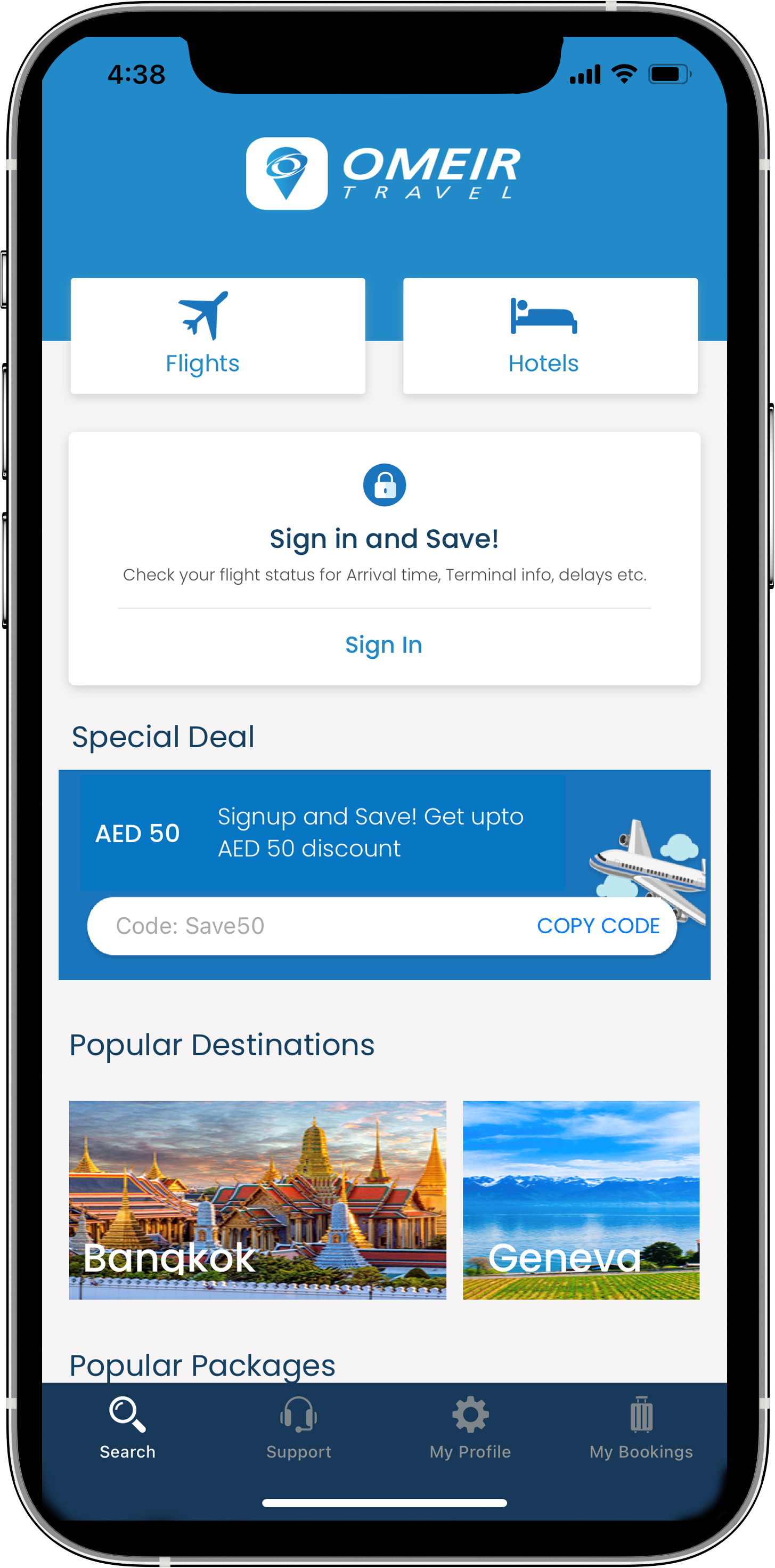
This continued collaboration comes as Omeir Travel plans expansion into more B2B and retail outlets in the UAE. The latest engagement also includes the development of an Omeir Travel one-stop-shop mobile app that meets customers’ hotel and flight needs and is expected to be introduced to the UAE market very soon.

In recognition of the ever-changing needs of the travel sector, Omeir Travel has deployed Amadeus’ cutting-edge travel technology solutions to maintain a competitive edge. Amadeus has driven automation throughout the agency’s operations and provided optimisation intelligence tools to find the best fares and ensure the highest quality of service.  This also improves product customisation, which enables the delivery of an enhanced customer experience, both online and in-store.

Abdulla Bin Omeir, CEO at Omeir Travel Agency, said: “With the travel sector constantly evolving, our business must stay agile to not only keep up, but to stay ahead. Our partnership with Amadeus has allowed us to do this with resounding success. It makes me very pleased to extend our relationship once more. Our ambition is to provide customers with tailored services and a superior experience, which Amadeus helps make possible.”

Ernesto Sanchez Beaumont, Managing Director of Amadeus Gulf, noted: “Amadeus is known for its long-lasting relationships, such as the one we have with Omeir Travel. We are pleased to see the role our technology has played in the growth, digitisation, and optimisation of Omeir Travel during our ongoing collaboration that spans nearly two decades. We will continue to support them with our worldwide experience and leading technology-based solutions as the business enters an exciting new stage of expansion.”  

SITA launches Health Protect, a secure way for airlines to share health information during the pandemic

SITA today announces the launch of Health Protect – an industry solution, to help airlines, airports, governments, and passengers safely and securely share information on health tests or vaccinations needed during travel.

Successful trials have already been undertaken with travelers to the United Arab Emirates, and soon to start at Milan Malpensa Airport.

For many countries, economic recovery from the COVID-19 pandemic relies heavily on travel and tourism. As governments globally seek a way to resume safe and secure travel in the wake of COVID-19, the ability for passengers to share vital health information such as PCR test results or vaccination history with authorities is increasingly important. SITA’s Health Protect allows airlines and passengers to submit these required documents safely and securely in line with specific government requirements.

A key benefit is a unique ability to seamlessly integrate with multiple travel pass or ‘health passport’ schemes, bridging the gap between these schemes and aviation and border processes. Critically, by incorporating Advance Passenger Processing (APP), it enables authorities to make an informed decision whether a passenger can travel at the point of check-in, improving the safety of all passengers and avoiding costly return flights.

Passengers without the required documentation, or considered high risk, will be unable to check in for their flight, ensuring they do not travel to the airport. By facilitating the inclusion of health pass schemes into existing, proven, and trusted passenger processing systems, Health Protect minimizes the operational and technical impact on carriers and ports.

Combining the functionality of passenger locator forms, health attestations, and travel declarations, as well as Electronic Travel Authorization (ETA), Health Protect will deliver confidence for all stakeholders to travel again, safely and securely, supporting a seamless and contactless passenger journey. It will also provide passenger certainty that they have the right documents before departure, vitally at a time when borders regulations change regularly.

At the airport, Health Protect also integrates with the existing airport passenger processing systems to verify the health status of the passenger at each point in the process using SITA Flex touchless passenger flow monitoring technology.

David Lavorel, CEO of AIRPORTS & BORDERS at SITA, said: “We’re excited for the potential of SITA Health Protect to bridge the gap between airlines resuming normal operations and governments’ strong focus on keeping control of COVID-19. Recovery from COVID-19 will take time and is complex but we believe that SITA can play a key role in enabling a safer, simpler travel experience for passengers.”

Proven success

This week for the first time, a small group of air travelers flying from Germany and Estonia to the United Arab Emirates has tested the health data platform and app SimplyGo in a live environment. As part of the trial project, SimplyGo partnered with SITA to make use of SITA Health Protect.

During the trial, travelers obtained a negative COVID-19 result via their SimplyGo app before traveling. The data was then securely stored on the SimplyGo platform to be accessed by airlines and border officials authorizing boarding of the plane and eventually arrival at the destination country, the United Arab Emirates. Integration with the UAE government systems was made possible through the Advance Passenger Processing platform delivered by SITA.

Integrating SimplyGo with APP forms part of SITA’s Health Protect ecosystem, simplifying and automating the inclusion of health data into existing airline, airport, and government processes. By adapting APP to meet the current health demands of COVID-19, passengers can be processed faster and experience a more enjoyable journey while the airport benefits from improved efficiency and security.

Similarly, SEA Milan Airports, Italy’s second busiest airport, is collaborating with SITA to pilot an innovative platform that digitalizes declarations on COVID-19 tested flights and manages the testing process at Milan Malpensa (MXP) airport.

SITA continues to work closely with governments globally to support them in the safe reopening of borders. SITA is working with the Australian Government, airlines, and airports to support the implementation of strong border controls that have helped minimize and manage the pandemic’s impacts nationally. This approach has positioned Australia well for the safe reopening of borders into the future.

Travel app SimplyGo and SITA complete successful trial of COVID-19-focused health data platform

For the first time, a small group of air travelers flying from Germany and Estonia to the United Arab Emirates has tested the health data platform and app SimplyGo in a live environment. As part of the trial project, SimplyGo is partnering with technology provider SITA. SITA’s advanced technology platforms and experience in border management, airport, and airline operations were crucial in distributing the SimplyGo platform across continents.

Ahead of the trial, some travelers obtained negative Covid-19 results via their SimplyGo app before boarding. Another group had a positive result or did not have a test done at all. They were ultimately denied check-in and boarding. The data was then securely stored on the SimplyGo platform to be accessed by airlines and border officials authorizing boarding of the plane and eventual arrival at the destination country, the United Arab Emirates. Integration to the UAE government systems was made possible through the Advance Passenger Processing (APP) platform delivered by SITA. Integrating SimplyGo with APP forms part of SITA’s Health Protect ecosystem, simplifying and automating the inclusion of health data into existing airline, airport, and government processes.

Enable traveling again with secure data infrastructure

Both direct and connecting flights were successfully tested. Travelers were able to fly roundtrip from Munich to the United Arab Emirates and from Tallinn to the United Arab Emirates via Frankfurt. In both examples, the SimplyGo platform stored their approved COVID-19 test results, and, at the point of check-in, the traveler was approved or denied traveling by the relevant border officials using SITA APP.

Peter Bauer, the founder of SimplyGo, said: “The trial demonstrated that SimplyGo technology supports travelers and airlines in adhering to health requirements and secure systems. The app is extremely simple for travelers to use. Just a few clicks and users securely store their COVID-19 test or vaccination information, making it accessible for airlines and border officials. There’s no paperwork or bar code at the check-in needed; all data is managed securely and highly protected from fraud. This trial is the first step in rolling out SimplyGo, to help restore confidence in air travel and to ensure safer and more efficient air travel for all.”

Jeremy Springall, Vice-President SITA AT BORDERS, said: “As the technology provider for the air transport industry, we are working closely with governments, industry bodies, and border organizations globally to mitigate health risks of travel during the pandemic.  

“SITA’s Health Protect ecosystem enables interoperability and acts as a bridge between health passport schemes, airlines, airports, and governments. It comprises a suite of solutions, including SITA Health ETA (Electronic Travel Authorization), SITA APP, and SITA Flex for in-airport passenger flow monitoring. Selecting the right combination of products and integrating with a health pass system like SimplyGo, ensures governments are aware of who is intending to travel and their health status. Governments can then make informed decisions on who to allow to travel. We’re excited for the potential of SITA‘s Health Protect ecosystem to support the industry recovery in 2021 and enable safer, simpler travel experiences for passengers.”

SimplyGo integrating with global platforms

One of the founders of SimplyGo, Nortal, is a member of the Estonian consortium of IT companies involved in the joint initiative of the Estonian government and the WHO, working to provide a trusted framework for vaccination data globally. SimplyGo and the consortium are working on the global interoperability standards to enable travelers control over secure access and the sharing of COVID-19 and other medical-related data for travel purposes.

Following the trial, the deployment will be further optimized and made available for broader distribution to customers. 

Creating the new norm of traveling

With SimplyGo, travelers and the transportation industry alike benefit from a highly secure and GDPR-compliant data platform with standardized gateways and state-of-the-art technology. Only officially accredited medical providers can transmit personal data. This brings the possibility of fraud to a minimum. Personal data is under full control of the user and can always be hosted in their country of residence under respective rules and regulations. A user has to actively give access to their data and can withdraw it anytime.

Increased per passenger ancillary revenue offers hope for Wizz Air, says GlobalData

Following that Wizz Air’s Q3 2021 financial results showed a year-on-year revenue fall of 76.5% but increased ancillary revenue; 

Gus Gardner, Travel and Tourism Analyst at GlobalData, a leading data and analytics company, offers his view:

“Wizz Air has, once again, proven its ability to drive ancillary revenues: the lifeblood of the airline. The company has proved it is resilient and reactive in its recovery approach, managing to achieve increases in ancillary revenue per passenger despite traffic levels being at an all-time low. 

“Pandemic-concerned passengers are more likely to purchase packages that include baggage and seat selection to ensure a safer journey. Further, flexibility is now expected, and Wizz Air has benefitted from providing ‘flexible tickets’ to mitigate ever-changing travel restrictions. 

“People who are eager to travel during the pandemic are often doing so to visit friends and relatives – a clear shift away from the idea of travelling for a ‘short break’. These pandemic travelers are more likely to purchase extras because they tend to travel with additional baggage such as gifts and food to take home. This could be a key market for the airline in the coming months. Even though Wizz Air’s reported total ancillary revenues decreased by 72.9% year-on year, there was a bright spot in these uncertain times as ancillary revenue per passenger increased by 19.5%.

“The airline’s ambitious expansion plan remains very much in motion and could pay dividends. Since March 2020, the airline has opened a further 14 bases – in stark contrast to its competitors Ryanair and easyJet, who have both pulled out of some markets. This move could put the airline in a stronger position to rapidly expand post-COVID-19, and will help it become a more recognizable brand. The agile approach it has deployed is likely to benefit Wizz Air going forward.”

Turkish Airlines launches 40 percent discount campaign for international flights

Turkish Airlines is launching a 40 percent discount campaign for its guests who wish to discover the world again in the coming good days. Passengers taking advantage of the exclusive prices will be able to discover the most beautiful cities around the globe with the flexible ticket options at advantageous prices of Turkish Airlines.

            Passengers who wish to take part of the campaign which is valid with all ticket types of the flag carrier’s international flights*, will be able to fly at a 40 percent discount for flights between April 1 – December 31, 2021 as long as they purchase their tickets between January 13 – 15.

            Turkish Airlines passengers will also be able to change the dates of their campaign tickets free of charge while refunds and cancellations will be subject to the rules of the fare classes.

You can find more detailed information at the www.turkishairlines.com website.

*Flights to/from Ercan Airport and Chinese Mainland (Beijing, Shanghai, Guangzhou and Xi’an) are not included in this campaign.

Russian Helicopters delivers first Ansat to a client in Europe

The Russian Helicopters holding company (part of Rostec State Corporation) has delivered a first Ansat helicopter to a client in Europe. The operator of the rotorcraft, which is equipped for medical operations, is the Ministry of Interior of the Republika Srpska (Bosnia and Herzegovina). This is the first of three helicopters under the delivery contract.


Ansat for Republika Srpska comes with a medical module equipped with a stretcher and a medical shelf. The helicopter cabin has place for transporting one patient and two chairs for accompanying doctors. Equipment configuration includes a system for artificial lung ventilation, tele-ECG allowing to monitor cardiac activity in real time, and various other equipment for the evacuation of patients of varying severity. The delivery set includes five seats, which can be installed instead of the medical module and carry 7 passengers in the helicopter cabin. The helicopter also comes with active vibration control system.


“This delivery testifies that Ansat is competitive on the European market, and we see potential for new orders. I am confident that European operators will appreciate the favorable cost of operating the helicopter, its versatility and reliability. Two more Ansats will be handed over to the law enforcement agencies of Republika Srpska in 2021 and 2022. They will be additionally equipped with searchlights, fast-rope deployment system, a winch and an external sling”, said the Director General of Russian Helicopters holding company Andrey Boginsky. 
The delivery contract of three helicopters to the Republic of Srpska also included the training of three technicians and two pilots of the customer in the Kazan Helicopters Aviation Training Center. The program included training in the design and maintenance of the airframe, power plant and systems of Ansat helicopter for aircraft technicians, as well as theoretical training, classes on the new Ansat simulator and practical flight training for pilots. The cadets successfully passed the exams and received documents that confirm their qualifications. The Aviation Training Center will provide further multi-stage training of flight and technical personnel as more helicopters are delivered. During the next 2 years, 4 more pilots and 6 technicians will go through training.


Ansat is a light multipurpose twin-engine helicopter. Its serial production is deployed at Kazan Helicopters. Its design allows converting it into a cargo version or into a passenger rotorcraft that can lift up to seven people. Ansat is certified for use in the temperatures ranging between -45°С and +50°С, and in high mountains. In 2019, the Federal Air Transport Agency certified an increase in the airworthiness of Ansat’s fuselage to 16,000 flying hours. In 2020, the Russian aviation authorities certified Ansat for installation of an emergency floatation system and isolation units for transporting patients with coronavirus disease, it also received a more advanced and ergonomic medical module. Several main components of the helicopter received approval for the increase of their airworthiness restrictions.


 JSC “Russian Helicopters”, a part of Rostec State Corporation, is a leading player in the global helicopter industry, the sole Russian designer and manufacturer of helicopters. The Holding Company was established in 2007 and is headquartered in Moscow. We operate five helicopter assembly plants, two design bureaus, component production and maintenance enterprises, aircraft repair plants and one helicopter service company providing after-sales support in Russia and abroad. The customers of the Holding Company are the Ministry of Defense, the Ministry of Home Affairs, EMERCOM of Russia, and other state customers, Gazpromavia, UTair Aviation company, large Russian and foreign companies.


State Corporation Rostec is one of the largest industrial companies in Russia. It unites more than 800 scientific and industrial organizations in 60 regions of the country. Its key areas of activity are transport engineering, electronics, medical technology, chemistry and innovative materials. Rostec holdings form three clusters: electronics, weapons and aviation. The corporation’s portfolio includes such well-known brands as AvtoVAZ, KAMAZ, Kalashnikov, Russian Helicopters, Uralvagonzavod and others. Rostec is active in the implementation of all 12 national projects. The company is a key provider of Smart City technology, it is engaged in the digitalization of public administration, industry and social sectors, and it is developing plans for the development of 5G wireless technologies, an Industrial Internet of Things, big data and blockchain systems. Rostec partners with leading world manufacturers such as Boeing, Airbus, Daimler, Pirelli and Renault. The corporation’s products are delivered to more than 100 countries worldwide. Almost a third of the company’s revenue comes from the export of high-tech products.

IATA Travel Pass Key to Reopening Borders Safely

The International Air Transport Association (IATA) announced that it is in the final development phase of the IATA Travel Pass, a digital health pass that will support the safe reopening of borders.

Governments are beginning to use testing as a means of limiting the risks of COVID-19 importation when re-opening their borders to travelers without quarantine measures. IATA Travel Pass will manage and verify the secure flow of necessary testing or vaccine information among governments, airlines, laboratories and travelers.

IATA is calling for systematic COVID-19 testing of all international travelers and the information flow infrastructure needed to enable this must support:

  • Governments with the means to verify the authenticity of tests and the identity of those presenting the test certificates.
  • Airlines with the ability to provide accurate information to their passengers on test requirements and verify that a passenger meets the requirements for travel.
  • Laboratories with the means to issue digital certificates to passengers that will be recognized by governments, and;
  • Travelers with accurate information on test requirements, where they can get tested or vaccinated, and the means to securely convey test information to airlines and border authorities.

“Today borders are double locked. Testing is the first key to enable international travel without quarantine measures. The second key is the global information infrastructure needed to securely manage, share and verify test data matched with traveler identities in compliance with border control requirements. That’s the job of IATA Travel Pass. We are bringing this to market in the coming months to also meet the needs of the various travel bubbles and public health corridors that are starting operation,” said Alexandre de Juniac, IATA’s Director General and CEO.

IATA Travel Pass incorporates four open sourced and interoperable modules which can be combined for an end-to-end solution:

  • Global registry of health requirements enables passengers to find accurate information on travel, testing and eventually vaccine requirements for their journey.
  • Global registry of testing / vaccination centers – enables passengers to find testing centers and labs at their departure location which meet the standards for testing and vaccination requirements of their destination.
  • Lab App – enables authorized labs and test centers to securely share test and vaccination certificates with passengers.
  • Contactless Travel App – enables passengers to (1) create a ‘digital passport’, (2) receive test and vaccination certificates and verify that they are sufficient for their itinerary, and (3) share testing or vaccination certificates with airlines and authorities to facilitate travel. This app can also be used by travelers to manage travel documentation digitally and seamlessly throughout their journey, improving travel experience.

IATA and International Airlines Group (IAG) have been working together in the development of this solution and will undertake a trial to demonstrate that this platform combined with COVID-19 testing can reopen international travel and replace quarantine.

The airline industry demands a cost effective, global, and modular solution to safely restart travel. IATA Travel Pass is based on industry standards and IATA’s proven experience in managing information flows around complex travel requirements.

  • IATA’s Timatic is used by most airlines to manage compliance with passport and visa regulations and will be the base for the global registry and verification of health requirements.
  • IATA’s One ID initiative was endorsed by a resolution at its 75th Annual General Meeting in 2019 to securely facilitate travel processes with a single identity token. It is the base for the IATA Contactless Travel App for identity verification that will also manage the test and vaccination certificates.

“Our main priority is to get people traveling again safely. In the immediate term that means giving governments confidence that systematic COVID-19 testing can work as a replacement for quarantine requirements. And that will eventually develop into a vaccine program. The IATA Travel Pass is a solution for both. And we have built it using a modular approach based on open source standards to facilitate interoperability. It can be used in combination with other providers or as a standalone end-to-end solution. The most important thing is that it is responsive to industry’s needs while enabling a competitive market,” said Nick Careen, IATA’s Senior Vice President, Airport, Passenger, Cargo and Security.

The first cross-border IATA Travel Pass pilot is scheduled for later this year and the launch slated for quarter one 2021.

Continuous demand for onboard connectivity

AMAC Aerospace is pleased to announce that a wide-body aircraft of an esteemed client has recently entered AMAC’s facility. The technicians of AMAC will install an onboard connectivity system on the aircraft. In addition, a Boeing BBJ737 will be equipped with a Ka-band antenna and will undergo a due maintenance. 

AMAC Aerospace recently opened its hangar doors for a wide-body aircraft of an esteemed client in Basel, Switzerland. AMAC’s Boeing team will install a Gogo 2Ku Inflight System on the aircraft. The connectivity solution from Gogo delivers more bandwidth with significantly more high-speed internet in the entire cabin and superior performance connectivity in the sky. The system comprises two antennas, one for the forward link, which transmits data to the aircraft, and another antenna for the return link, which receives the data. 

“We realize that a perfect onboard connectivity is very important for our customers. With our existing STC capabilities, we are happy to offer our customers an incomparable and high-speed internet experience on their aircraft”, said Eric Hoegen, Director Completion Sales & Key Account Management.

AMAC also welcomed a privately-owned Boeing BBJ737 for a 12-year inspection in mid-October. The so-called D-check is by far the most comprehensive and demanding check for an aircraft – more or less the entire aircraft is taken apart for inspection and overhaul. A second privately-owned Boeing BBJ737 is expected for a due maintenance. The aircraft will be equipped with a Ka-band antenna. Alexis Ott, Director Maintenance Sales & Key Account Management, confirms the continuous demand: “More and more customers want to enjoy the same connectivity on board as they are used to their homes. We are happy to make it happen.”

Two additional new awarded maintenance projects

AMAC was awarded a new maintenance project on an Airbus aircraft. An Airbus ACJ319 recently arrived in Basel to undergo a 4C-check including a detailed inspection of the aircraft structure and a thorough test of the systems. A privately-owned Gulfstream 550 arrived early November for a C-check. 

Air Arabia Group CEO wins Aviation Week’s 2020 Laureate Award

Air Arabia’s Group Chief Executive Officer Adel Al Ali received the 2020 Laureate Award from Aviation Week Network for Air Arabia’s ‘Airline Strategy.’ Aviation Week editors honoured winners of this year’s Grand Laureates – the best of the best in Business Aviation, Commercial Aviation, Defence and Space from around the globe – in a virtual event where winners were announced and interviewed during an online presentation.

The honour from the largest multimedia information and services provider for the global aviation, aerospace, and defence industries, is for Adel Al Ali’s and his team extraordinary achievement in introducing low-cost air travel to the Middle East and North Africa while building and pioneering a sustainably profitable business model.

Commenting on the recognition, Adel Al Ali said: “This honour is dedicated to everyone at team Air Arabia and showcase how far the company has come since we first introduced low-cost air travel to the region. The recognition further inspires us to bring even more innovative services to our customers while remaining committed to adding exceptional value to their travel needs”.

On Adel Al Ali’s recognition, Aviation Week Network noted that “under his leadership, Air Arabia has grown sustainably and profitably for many years and is now looking at adding new longer-haul markets and placing a large aircraft order to enlarge its footprint.”

Russian Helicopters launches Mi-8 test operation program in Indonesia

Ulan-Ude Aviation Plant (U-UAP) as part of Russian Helicopters holding company (State Corporation Rostec) launches Mi-8/171 type helicopter test operation program, which is aimed at the assessing of all the advantages of helicopters real operation in conjunction with all available corporate support tools and implemented aftersales services of Russian Helicopters holding company. The pilot project is being implemented in Indonesia, where two Mi-8AMT helicopters are already involved in firefighting operations.


Helicopters sent to the Republic of Indonesia with crew and technical staff of U-UAP were relocated to the island of Kalimantan almost immediately upon arrival to extinguish forest fires. In the future, the rotorcraft will be on operational duty on the islands of Sumatra and Kalimantan.
«A contract with PT. National Utility Helicopters (PT. NUH), a utility helicopter operator in Indonesia with 50 years of experience in providing services for Indonesian Government as well as private companies, has become the pilot project of this program. The main task under the contract is to carry out firefighting operations in the region, as well as provide consulting services regarding the formation of its own air fleet of Indonesian operators for annual firefighting operations” said Leonid Belykh, Managing Director of U-UAP.


In the process of temporary use of helicopters, the customer gets the opportunity to consult the company’s specialists in 24/7 mode, access to a replacement fund and a fund of additional equipment.

It is worth noting, that one of the first Mi-171A2 helicopters manufactured by the enterprise, since 2018 has been participating in a test operation program at UTair-VU airline, where it successfully fulfills the tasks facing the operator and demonstrates high flight performances. The experience of the joint work of the manufacturer and the customer was reflected in the U-UAP helicopter test operation program for Indonesia.


Mi-8/171 helicopters for a long time have been involved in the disaster relief operations not only in Russia, but also abroad. They have proved themselves as one of the most effective tools in the firefighting, medicine delivery and casualty evacuation operations, as well as in passenger and cargo transportation to hard-to-reach areas.


JSC Ulan-Ude Aviation Plant  is one of the manufacturing enterprises of Russian Helicopters holding company. Modern production and technological capacity of the plant allows to organize quickly production of new types of aircrafts, to combine creation of prototypes with aircraft serial production. During the 80 years of existence the plant have produced more than 8000 aircrafts. Today the plant specializes in production of the Mi-8AMT (Mi-171E), Mi-171 and Mi-8AMTSh (Mi-171Sh) helicopters.

JSC Russian Helicopters (a part of the state owned corporation Rostec) is one of the world leaders of the helicopter production industry, the only developer and manufacturer of helicopters in Russia. The holding is established in 2007. The head office is located in Moscow. The holding company includes five helicopter plants, two design offices, and also the enterprises on production and service of vendor items; the aircraft repair plants and the service company providing after-sale support in Russia and beyond. Buyers of holding production – the Ministry of Defence of the Russian Federation, the Ministry of Internal Affairs of Russia, EMERCOM of Russia, other state customers, “Gazpromavia” and UTair airlines, the large Russian and foreign companies.


Rostec State Corporation is the Russian corporation established in 2007 for assistance in development, production and export of hi-tech industrial production of civil and military purpose. It includes more than 700 organizations from which nowadays established 11 holding companies in military-industrial complex and 4 in civil industries, and more than 80 organizations of direct control. Such known brands as AVTOVAZ, KAMAZ, the Kalashnikov Concern, “Russian Helicopters”, VSMPO-AVISMA, Uralvagonzavod etc. enter a portfolio of Rostec. The organizations of Rostec are located in the territory of 60 territorial subjects of the Russian Federation and deliver production on the markets of more than 100 countries. The consolidated revenue of Rostec in 2017 has reached 1 trillion 589 billion rubles, consolidated net profit – 121 billion rubles, EBITDA – 305 billion rubles. The average salary in the corporation in 2017 was 46,800 rubles. According to the strategy of Rostec, the main objective of Corporation is ensuring technological advantage of Russia in the highly competitive world markets. One of the key objectives of Rostec is implementation of new technological mode and digitization of Russian economics.