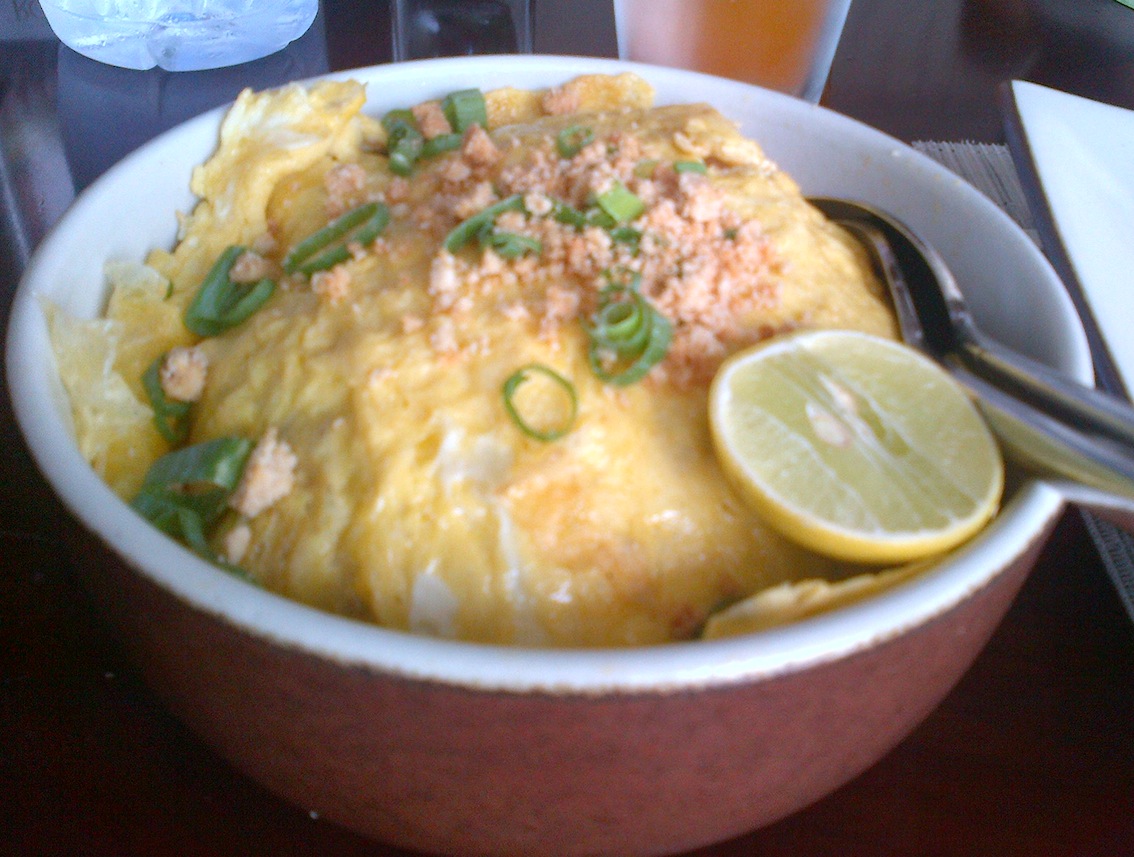
Celebrating cuisine that’s just as spicy as moi

My favourite Thai dish in KL was nasi Pattaya….which is fried rice wrapped in thin omelette. In Dubai its everything on the Sukothai menu šŸ™‚

Last Saturday, I made a supreme effort to get out of my pyjamas end of day to catch up with my cool friends from The Tourism Authority of Thailand at Dusit Dubai as they launched the “Amazing Taste of Thailand Festival 2012”. I don’t normally sacrifice my weekend for ordinary people or events but I love everything about Thailand and the people from Thailand have become some of my closest friends here so I was there in all my glory…. I love the country, got married there after a crazy weekend trip from KL (in Hatyai with a few weeks in Krabi), love the food, love the spas, love Muay Thai, love shopping in Bangkok, love the people of Pattaya and the list goes on.

Basically I was invited since everyone from the Thai Embassy, the Thai spas know how dedicated I am to my food and massage sessions and they are very right. In a nutshell, the month-long festival is until 7th July 2012,during which time diners at 13- participating restaurants will have the opportunity to win gift vouchers and a number of exciting prizes including a trip to Bangkok with Thai Airways.

“The Amazing Taste of Thailand” launch event was co-hosted by the Dusit Thani, Dubai and Thai Airways and began with a welcome speech from H.E. Mr. Somchai Charanasomboon, Ambassador of Royal Thai Embassy in Abu Dhabi and the ever so dynamic Wisoot Buachoom, Director of Tourism Authority of Thailand.

There were also two performances of traditional Thai dancing, fruit carving demonstrations and live cooking stalls where the 13 participating restaurants show cased their individual specialist Thai cuisine. The restaurantsĀ participating in the “Amazing Taste of Thailand Food Fest 2012” include Benjarong, Blue Elephant, Pai Thai, Sukhothai, Spice Emporium, Ban Khun Mae, The Kitchen of Thai, Shang Thai, Thai Chi, The Royal Buddha, Chimes, The Thai Kitchen in Dubai and the Taste Restaurant in Fujairah.

The ‘Thainess’, which is at the heart of Thai hospitality permeates across all of Thailand, from amazing beaches and natural environment to culinary expertise. Thai cuisine is a key element of ‘Amazing Thailand’ and theĀ ingredients used, the various herbs and spices together with cooking methods is all part of the essence of Thailand.

Looks like the next few weeks are going to be a culinary adventure for me and anyone who wants to be in my company for meals….can you stomach the spiciness levels of this diva?
Its time for Dim Sum

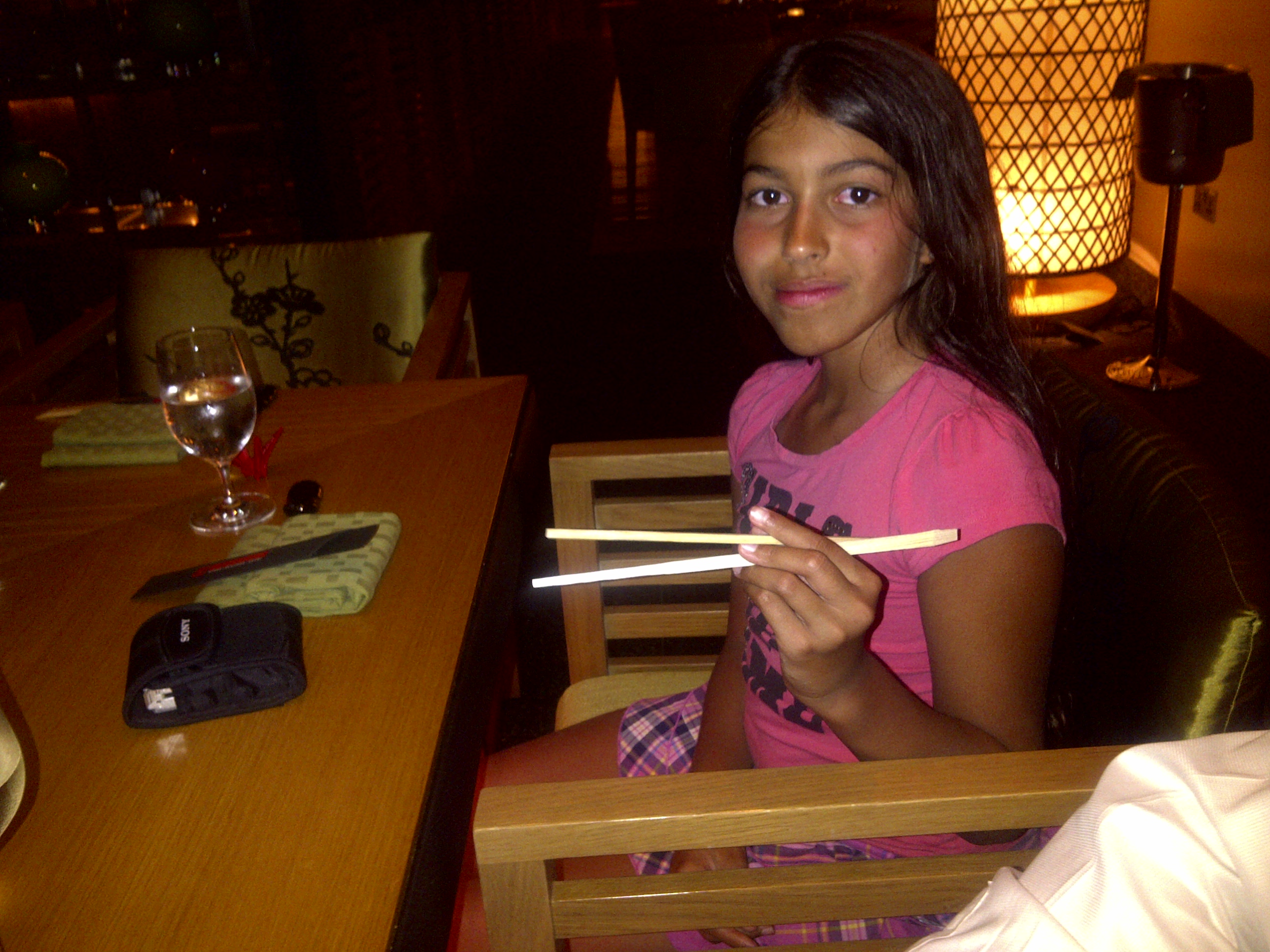
Little Diva NJD is ready for dim sum in Seoul Korea

Taking mandarin lessons is tough….the language is tough as it is but for some reason, most syllabus use food a lot in the lessons – I guess because everyone knows Chinese food so our dear teachers think it’s the easiest way to teach us the language.

Tonight my lesson was on Shaomai (shāo mài) which  is a traditional Chinese dumpling served in dianxin/dim sum. The first time I had this was on a roadside stall in Malaysia on my way from KL to Penang. My companion spoke mainly Cantonese and was a huge fan of dim sum. All I knew was that I loved the little bamboo steamers it came in and enjoyed each delicate piece with a dollop of spicy chilli sauce.

In my lesson today, I learnt that I should be able to recognise a Shaomai as it has a fluffy and flowery shape on the top. Although shaomai originates from steamed stuffed bun (I’ve seen a lot of these a lot on the streets of Malaysia, Hong Kong, Macau and Singapore), these two similar kinds of food have two main differences. First, the outer covering of shaomai is made of a thin sheet of lye water dough; Secondly, shaomai differ from steamed buns in that their outer covering is not sealed but instead has a pomegranate shape….i prefer the shaomai any day.

Once well steamed in the pot, shaomai are prized for the thin skin and abundant fillings. Shaomai is in the shape of a cup, not only delicious but also beautiful. There are two regional varieties of shaomai: a Cantonese version and a version from the Jiangnan region…frankly I couldn’t tell the difference but I certainly love a good shaomai in my Friday brunch.

In KL, I loved the dim sum varieties at the Pan Pacific Sunday brunch, In Singapore its best to try it at Paradise Point and in Dubai, Shangri-La does it best! I didn’t have much time in Korea and Macau to try good recommended Dim Sum but the best has to be in Hong Kong – I wanted to go to Maxim’s on the way to Fiji but the stopover was too short so I tried random restaurants and they were all awesome for dim sum.

Once again, I have diverted to food… I blame my Mandarin instructor. Each lesson this week was related to food and brought back heaps of memories from Asia.

Hidden health secrets from Kiwifruit

How gorgeous and tempting is this Kiwi Artwork

One of the beauties of coming from an exotic island tropical paradise is that you grow up eating wholesome organic fruits in abundance….and what we don’t have in sunny Fiji Islands, we get from our neighbours Australia & New Zealand. Without doubt, one of the most healthiest fruits from NZ is kiwifruit and the best ones to get is from ZESPRI which is now on the supermarket shelves of the UAE….delightful!

Since I am always on the lookout for the next best thing with health benefits, ZESPRI’s Ā ā€œsuperfruitā€ status caught my eye. Citing the high levels of Vitamins C and E, low glycemic index (GI) and high fibre content of kiwifruit, New Zealand growers stress that it is particularly well suited to the UAE due to the help it provides in the management of diabetes, which is so prevalent here.

Supporting ZESPRI’s campaign is Hala Barghout, a leading nutritionist and licensed clinical dietician in Dubai. She stresses that everyone knows that citrus fruit contains vitamin C, but a kiwifruit actually contains twice as much vitamin C as an orange of the same size – and three times as much as a lemon. ā€œVitamin C helps strengthen the body’s defences and promotes healthy bones, teeth and blood vessels. Kiwifruit is high in fibre and is also a good source of the antioxidant Vitamin E. It provides twice the level of Vitamin E as an apple and is five times more nutritious.ā€

I met Warren Young and Ben Hughes from ZESPRI International who were explaining the difference between traditional green kiwifruit now on sale in the UAE and the newer gold variety which will be here later – it provides faster Vitamin C absorption in the body than an artificial vitamin supplement. I am the only one at home who eats Kiwifruit so I was delighted to hear what Hala and Ben had to say and may use this to convince NJD to start eating kiwifruit.

The kiwifruit actually originated in China and was known initially as the Chinese gooseberry when seeds were first transported to New Zealand. However, New Zealand growers became the world’s largest source for the fruit, which became known globally as the kiwifruit after New Zealand’s national symbol…..in fact in Fiji, when we say ā€˜are you a Kiwi?’, we mean are you a New Zealander. Since 20% of my family members are now Kiwi’s, perhaps its about time to hang out with them in Kiwi Land and try ZESPRI straight off the fields.

Healing Juices….make it a habit

My first encyclopedia of healing juices that I've lent to many friends for inspiration and ideas

One of the healthiest things I started 2 years ago inspired by a book and my hydrotherapist was starting my mornings with juicing.

Armed with a juicer and an encyclopedia on juicing, I also encouraged my near and dear friends to follow suit and now its great to see them wake up every morning and juice the life out of various fruits and vegetables.

Its a legacy I’m leaving my closest friends and family so that even if they are far from me or travelling, I shall always be on their mind as the one who inspired them to take juicing seriously as an everyday habit.

My favourite combination for the morning juice is a mixture of carrots, cucumbers, celery, apples, ginger, orange and beetroot.

Couple of weeks ago I stayed at Shangri-La Qaryat Al Beri and to my delight, a mobile juice cart came to my table at Sofra restaurant on both mornings and the waiter had a long chat with me about different combinations he does for guests as well. His recipes were awesome.

On my birthday I went to the Dubai Shangri-La for a chilled out breakfast and was thrilled to see they also started a juice station which I looked forward to the next morning…they made some delicious smoothies as well as power juices.

There are so many benefits of juicing. I also bought my baby sister a juicer last year which I hope she’s using.

Here’s to a healthier and vibrant lifestyle with juicing and to friends and family who will always be bound by this tradition.

Artesian Water takes top position

Weekend indulgence - ice-cream with FIJI water

A bizarre phone call from a middle aged woman left me smiling today asking what makes FIJI water one of the purest form of water on the planet (I’m getting close to 40 soon so I guess that would make me middle aged too although I like to think 40 is the new 20 and I’m just about to start my life with gusto).

Anyway, it was to ask if FIJI water really did keep you looking young and what was the big deal about artesian waters and the obsession by Hollywood stars to bee seen with one. Now I am no authority on waters but I have a penchant for enjoying FIJI Water because it reminds me of home and it has silica in natural form as well as Acqua Panna which also tastes so awesome.

The high rate of silica in Fiji Water supports the biological processes of the body. Silica is presented as regulating body temperature, carrying nutrients and oxygen to cells, helps remove waste from the body, dissolves nutrients and minerals, cushions joints and protects organs and body tissues. So its more for health reasons although I find that my skin has over the last 3 years improved heaps from drinking more water that happens to be mainly FIJI.

While most people in Dubai like Perrier or San Pellegrino, I merely put up with it because it happens to be available in most restaurants. I also like local water but when I have a choice, I always go for FIJI or Acqua Panna instead of Evian, Perrier or San Pellegrino.

I drink Acqua Panna more for the fresh revitalising taste and FIJI for beauty/health purposes. I recall getting a frantic call from a hotel asking where they could get Fiji water supplied for a Hollywood celebrity coming to Dubai as they risked losing the booking if they couldn’t supply FIJI water in the room. I pointed them to NTDE and started investigating why water from my country was such a HOT stuff amongst celebrities and I’m glad I did as now I’m sold into drinking FIJI water whenever I can.

According to US Food and Drug Administration FDA studies, FIJI’s artesian water comes from deep within the earth and never comes in contact with the air. (In fact, according to the Environmental Protection Agency, water from artesian aquifers often is purer than other water sources because the multiple strata of rock and clay provide a critical protective shield against potential contamination.)

In the case of FIJI Water, natural artesian pressure forces the water up and into a completely sealed bottling system, which has been designed to eliminate any contact with the environment….i guess that makes it super pure but whatever the case….I’m sticking to FIJI water and Acqua Panna and if it keeps me looking upbeat, young and energetic, then that’s a bonus!

The Onam experience

Last week I went through memory lane as I saw signs of the Onam celebrations around me in Dubai Supermarkets, jewellery stores etc. Living in Fiji I never came across this festival and had no clue of its significance until I came to Malaysia to study. My parents, being anxious about me in a country where I didn’t know a single soul at the age of 19 arranged with family friends that I should spend some weekends at their sisters house in Subang Jaya.
The family, who I still love and adore happened to be Malayali or Keralite, a community known to be highly literate, cultural and very warm. I thought at first all Indians were the same, spoke the same language etc but instead was introduced to a whole new world of cuisine, dance, theatre and met specialists in English literature that would leave some of the Harvard Professors gaping in awe.
As a Fijian I am used to being hospitable and having an open house policy to guests but my family friends went way beyond that to the point of making my favourite dishes on weekends, taking me to visit the extended family on trips and dropping me off to University (30 minutes away) when I had early morning classes.
Going back to Onam which is a ten day festival…..one of the things I remember in the nine years I spent in Kuala Lumpur was that every September, we ate a dozen or so dishes off a banana leaf in various family gatherings also known as sadya. My favourite sadya dish was payasam of course which is a dessert cooked in milk.
The community organises dances, numerous theatrical productions during this period and famous singers are called on for performances etc. I can almost smell the string of jasmine flowers in my hair when we set off for a dinner performance or a sadya outstation. Women buy gold during this 10 day period and many wear the traditional cream sari with a gold border (known as the kasavu yarn) that looks so awesome on them. I’m told that historically kasavu sari’s appeared in ancient Jain and Buddhist literature and over the years the material may have changed to suit the fashion trends but the colour and look remains the same.
Onam is over but the memories of yesteryears and my time with the Venugopal family, their extended families and friends in Malaysia still linger. I learnt so much from them that I feel I gained knowledge of an entirely new community from their perspective. Another thing I have to thank my parents for – they certainly guided me into situations that helped me learn and understand what the world is all about outside my comfort circle.

The story of whitebait

On my way back from Fiji, my daughter was most amused when she saw me have a roti sandwich with fried whitebait in Sydney and asked why would I have that for dinner when there was an amazing buffet of delicacies laid out for us in the Business Class lounge.

I quickly launched into the story of whitebait or digana as it’s referred to in Fiji. Digana, or inanga (common galaxies) is a delicacy amongst food enthusiasts around the world and in Fijian families like mine, it is frozen for consumption when in season for visitors like myself who will never experience the amazing taste in any other part of the world.
The most common whitebait species is found in New Zealand and Fiji waters. They are caught using small open-mouthed hand-held nets similar to ones we used for catching baby prawns in our childhood as a weekend activity.

Whitebaiting in the Pacific is a seasonal activity with a fixed and limited period when they can be caught. Foodies in other parts of the world often find whitebait very different and superior in the Pacific than in other parts of the world. In human terms it’s the difference you would find between Europeans and East Europeans or how people find North Americans far superior than the South Americans who are often seen as low class. They are all humans but many people unfortunately view them differently in terms of superiority. Its the difference of a quality German product and a cheap replica done in some dodgy factory in China. In the same way foodies view the whitebait in the Pacific as far superior in taste and texture than what is found in other parts of the world.

As a delicacy, whitebait commands high prices to the extent that it is the most costly fish on the market, if available. It is normally sold fresh in small quantities, although some is frozen to extend the sale period. I’m just grateful my sister always keeps them in supply for my visits to Fiji.

I met a Kiwi who told me that whitebaiting in NZ was a sport because it takes a lot of patience, luck and the reward of a good catch. In places like Mokau District, there are even a few varieties of whitebait. I remember a menu in Portugal not long ago that had whitebait. I looked at the picture and immediately asked the waiter in Lisbon if it was really whitebait. He showed me a sample and it was a far cry from being delicate. I would even go as far as saying it was an insult to call it whitebait.

If you are a foodie and have a soft spot for high-end seafood that tickles your palate, I suggest trying this delicacy when you are next in the Pacific and lucky enough to be there during the whitebaiting season.