Big, Bold and Built for Everywhere

2026 Chevrolet Tahoe Z71

Shereen Shabnam

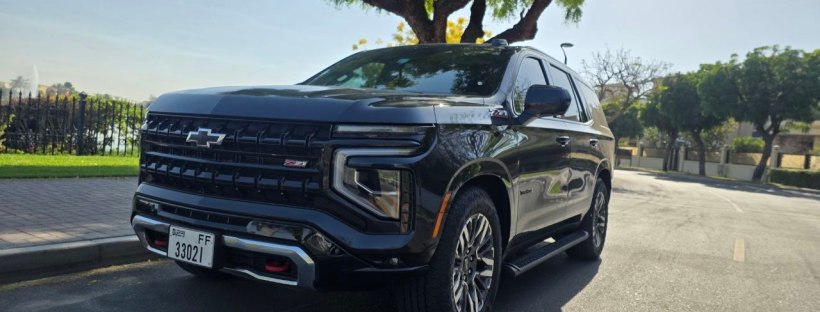
Some SUVs are designed for school runs, while others are designed to make every journey feel like an expedition. The 2026 Chevrolet Tahoe Z71 belongs firmly in the latter category. Massive in presence yet surprisingly refined behind the wheel, the latest Tahoe continues Chevrolet’s formula of blending full-size American muscle with modern technology and genuine off-road capability. Driving the Tahoe Z71 around Dubai immediately reminds you why large SUVs still command such loyalty in the region. From Sheikh Zayed Road to rougher desert-edge terrain outside the city, the Tahoe feels completely at home. It is commanding without feeling cumbersome, luxurious without losing its rugged edge, and powerful in a way that only a naturally aspirated V8 can deliver. The Z71 trim adds an extra layer of adventure-focused character to the Tahoe, giving it a tougher visual identity and enhanced off-road credentials.

Exterior

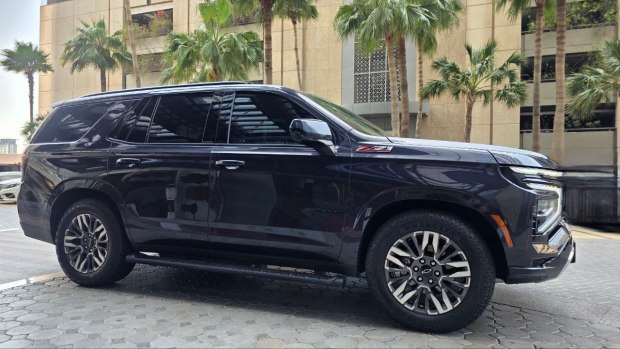
The Tahoe Z71 looks every bit the full-size American SUV. Its sheer scale alone gives it presence, but Chevrolet has added enough rugged detailing to ensure the Z71 stands apart from more urban-focused variants. The high-approach-angle front fascia, black tubular assist steps, red recovery hooks, and aluminium skid plate immediately signal its off-road intentions. Combined with the dark exterior detailing and large 20-inch machined wheels with technical grey accents, the Tahoe Z71 carries a muscular and purposeful stance that feels perfectly suited to the Middle East. The panoramic power sunroof adds a welcome sense of openness, as does the elevated driving position and extensive camera systems.

Interior

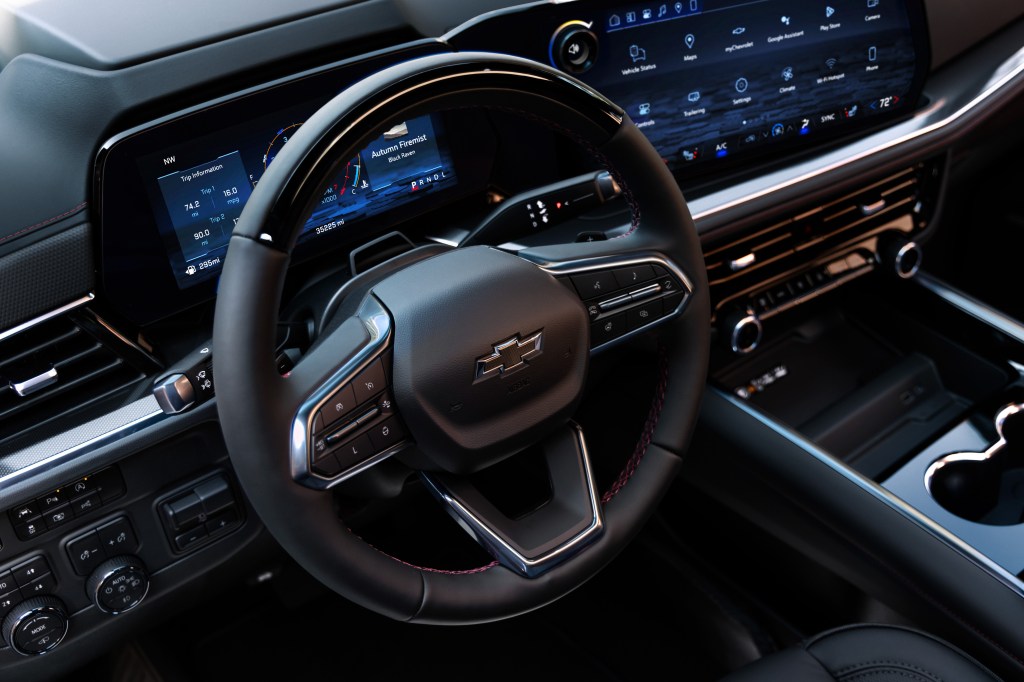
Inside, the Tahoe Z71 balances rugged practicality with genuine comfort remarkably well. The cabin feels spacious in every direction, with three rows capable of comfortably accommodating adults without compromise. The Gideon and Dark Atmosphere leather interior trim gives the cabin a premium feel, while heated front and second-row seats, tri-zone climate control, and extensive power seat adjustments make long-distance journeys effortlessly comfortable. We love that there are storage spaces everywhere and the large centre console with freezer mode feels especially useful in the UAE climate. The power-folding third-row seats also make cargo flexibility far easier when switching between passengers and luggage. Rear passengers are especially well catered for with the available Rear Seat Entertainment System, turning family road trips into genuinely relaxing experiences.

Technology

Chevrolet has significantly modernised the Tahoe’s technology experience, and the Z71 benefits from a comprehensive suite of connectivity and driver assistance systems. Wireless Apple CarPlay and Android Auto work seamlessly, while 5G connectivity capability keeps the Tahoe feeling constantly connected. The premium branded surround audio system delivers impressive sound quality, particularly when paired with the quiet cruising refinement of the SUV. The HD Surround Vision camera system is arguably essential, dramatically improving confidence while parking and manoeuvring in tighter spaces. Adaptive Cruise Control, Enhanced Automatic Emergency Braking, Lane Keep Assist, Rear Cross Traffic Alert with Braking, and Side Obstacle Detection all operate discreetly in the background to make daily driving feel less demanding.

Performance

The Tahoe Z71 is powered as standard by a 5.3-litre V8 paired with a 10-speed automatic transmission, but the available 6.2-litre EcoTec3 V8 transforms the experience entirely. It delivers effortless power with the kind of smooth, naturally aspirated response that has become increasingly rare in today’s turbocharged world. The dual exhaust system adds a subtle but satisfying V8 soundtrack without becoming overwhelming. What impresses most, however, is how the Air Ride Adaptive Suspension and Magnetic Ride Control dramatically improve ride comfort and body control. This allows it to glide over rough surfaces while still remaining stable at higher speeds. Off-road capability is equally strong. The two-speed Autotrac transfer case, electronic limited-slip differential, hill descent control, and off-road capability package give the Z71 genuine confidence away from paved roads.

Our Verdict

The 2026 Chevrolet Tahoe Z71 remains one of the most complete full-size SUVs on the market. It delivers exactly what buyers in this segment want: commanding presence, immense practicality, genuine V8 performance, serious off-road capability, and the ability to carry an entire family in complete comfort. The Z71 trim adds just the right amount of adventure-focused attitude to the formula. It looks tougher, feels more capable, and still manages to deliver the comfort expected from a premium family vehicle.

Icons only: Winners of the 2023 World Car Awards


Shereen Shabnam

Being an automotive Jury the last few years for global motoring awards has been a key highlight of my life. This year, car enthusiasts around the world eagerly awaited the announcement of the 2023 World Car of the Year awards winners, held at the New York Motor Show.

A jury of 100 distinguished international automotive journalists from 32 countries selected the winners by secret ballot based on their evaluation of each eligible vehicle as part of their on-going professional work. The vote results were tabulated by KPMG.

The award recognizes the best cars released in the past year, based on a number of factors including design, performance, safety, and innovation. As Jury, we drove numerous cars throughout the year and a large number of nominated cars in Los Angeles last year, the competition was fierce, with a number of impressive new cars from new and established automakers.

The World Car of the Year 2023 ceremony, powered by Brembo, was held in New York City with a crowd of journalists, car industry experts, and enthusiasts gathered witnessing the announcement of the winner.


The awards concluded with a triple win for the Hyundai Motor Company as the Hyundai Ioniq 6 won the overall 2023 World Car of the Year title, the 2023 World Electric Vehicle as well as the 2023 World Car Design of the Year awards. This is the second consecutive triple win for the Hyundai Motor Group.

Highlight for our team was having SangYup Lee, Executive Vice President, Head of Hyundai and Genesis Global Design Center, Hyundai Motor Company (HMC) on hand at the awards ceremony to participate in a Q&A with media and receive his 2023 World Car Person of the Year trophy. The short list of finalists for the 2023 Top Three in the World were the Hyundai Ioniq 6, the Range Rover and the Lucid Air. The 2023 World Luxury Car is the LUCID AIR. The LUCID AIR was chosen from an initial entry list of sixteen (16) vehicles from all over the world then a short list of three finalists.

In the 2023 World Performance Car category, KIA EV6 GT emerged as the winner while the CITROEN C3 is the 2023 World Urban Car. The Citroen PSA Group has won three World Car Awards to date.

All vehicles eligible for other World Car award categories are automatically eligible for World Car Design of the Year award. This year there were seventy-eight (78) eligible vehicles in total.

A panel consisting of six highly respected world design experts was asked to first review each of the 78 candidates, and then establish a short-list of recommendations for the jurors’ final vote.

The design experts are in alphabetical order:  Ian Callum (United Kingdom – Director of Design, CALLUM), Gert Hildebrand (Germany – Owner Hildebrand-Design), Patrick le Quément (France – Designer and President of the Strategy Committee – The Sustainable Design School), Tom Matano (USA – Academy of Art University, Former Head of Design – Mazda), Victor Nacif (USA – Chief Creative Officer, Brojure.com and Design instructor, NewSchool of Architecture and Design) and Shiro Nakamura (Japan – CEO, Shiro Nakamura Design Associates Inc.).


 All of the World Car Award trophies were created this year by legendary automotive designer, Ian Callum’s design and engineering consultancy CALLUM. All seven of the new CALLUM designed trophies were produced by REPLIQUE using the first fully encrypted 3D printing platform that offers OEMs a secure and sustainable means of providing parts on demand, anytime, anywhere.
The Road to the World Car Awards is an annual journey that follows 100 international jurors as they test-drive, and vote on, the eligible vehicles for the 2023 awards. The jurors’ road-test journey is captured virtually on World Car TV as the jurors provide viewers with reviews and commentary on the awards’ eligible vehicles in six categories.

Fuel Cell & Battery Electric Vehicles: The Inevitable Future of Clean Mobility

By Bang Sun Jeong, Vice President, Head of Middle East & Africa Operation, Hyundai Motor Group

With climate change continuing to be an important topic around the world, more questions are being asked of how automobile manufacturers can help reduce the emissions that are being produced by vehicles on a daily basis. 

According to statistics from the International Energy Agency, road transportation accounts for three-quarters of transport emissions while transportation alone makes up one-fifth of global carbon dioxide emissions. It is a significant problem and one that simply cannot be ignored. 

In recent years, several vehicle makers including Hyundai Motor Company, have committed to play their part in addressing this issue by providing clean mobility. We are already seeing the beginning of this with many clean and energy-efficient vehicles being driven on the roads today. 

Most of them are battery electric vehicles (BEVs) which are becoming an increasingly popular choice for consumers today. It is easy to see why. Many governments around the globe have rolled out financial incentives to encourage the adoption as part of its long-term strategy to go green. 

For instance, the United Kingdom is set to ban the sales of new cars and vans that are powered by diesel or petrol from 2030 while the American government has pledged to invest heavily in clean energy including electric vehicles with plans to install 500,000 new charging outlets by the end of 2030. This would be a huge jump given there are currently less than 29,000 public EV chargers across the U.S.

Although these plans would help accelerate the sales of BEVs, trying to change the majority of people’s behaviours to switch to ‘greener’ and sustainable vehicles will not be easy.

How long would it take to charge? Is it affordable? How far would consumers be able to travel and how long would the batteries last before it needs replacing? These are just some of the questions being raised by potential new buyers before making the final decision and doing their part in protecting the environment. 

Many of these answers are largely down to the use of advanced technologies and how practical they are. Today, more organisations within the industry are collaborating to leverage different forms of technologies to develop vehicles and infrastructure that will make BEVs a climate-friendly way to get around. 

While these are big steps forward, BEVs are not the only transport solution that will help make our cities and towns cleaner. 

Hydrogen power has been on the market for many years but in a very limited capacity. Yet, it has been identified as a key green transportation technology and in recent years, Hydrogen, the most abundant element on Earth, has become a vital resource in the automotive industry.

Hydrogen cars or fuel-cell electric vehicles (FCEV) as they are widely known today are unlike BEVs. 

Firstly, FCEVs are installed with a hydrogen tank that enters the fuel cell using a combination of hydrogen and oxygen which generates electricity to power the motors. This means that hydrogen cars have characteristics of both electric cars due to the use of electric energy and conventional petrol cars which have tanks.

As well as reducing carbon footprints and greenhouse gases, another difference is that FCEVs do not require consumers to plug in the vehicle to an outlet for refuelling which can be done between five and 10 minutes. 

For example, the Hyundai NEXO Fuel Cell only needs less than five minutes to refuel for a driving range of up to 380 miles. To put that into perspective, that is almost the distance of a full-round trip between Washington DC and New York compared to BEVs which can range between 100 and 200 miles. 

Furthermore, FCEVs can store more energy at a lower density while hydrogen is a more sustainable and long-term fuelling option that can be used for long periods without even harming the environment.

Despite these positives, one of the biggest challenges is costs. Although a variety of FCEVs have been rolled out in the last two decades including Hyundai’s Santa Fe FCEV –the Company’s first fuel cell EV and the world’s first mass-produced FCEV Hyundai ix35, the demand is relatively low. 

There are many reasons for this but one of the main problems is that they are expensive to buy. This is largely down to manufacturing and technology costs which will only drop when production numbers rise. 

Even if consumers can afford a new FCEV, there needs to be a substantial number of Hydrogen fueling stations across all countries and these facilities will only be built by fuel companies if there is enough business. 

However, the Kingdom of Saudi Arabia is among the countries that already have installed at least a fueling station which shows that some nations are more than ready to welcome hydrogen-powered vehicles to their roads.

It is clear that BEVs and FCEVs have the advantage of producing zero local emissions and at Hyundai Motor, we see a bright future for both types of vehicles. It is part of our vision to produce automobiles that are sustainable and eco-friendly.

Yet, we realise that a huge amount of work needs to be done to provide a clean mobility landscape. As part of our long-term strategy, Hyundai plans to roll out at least 12 BEV models with the objective to sell 560,000 EVs per year by 2025. During this same period, Hyundai Motor Group, plans to expand its BEV lineup to 23 models by 2025 with the goal to sell 1 million units annually in global markets.

At the same time, Hyundai Motor Group has set out its ‘FCEV Vision 2030’ roadmap, reaffirming its commitment to accelerate the development of a hydrogen society by leveraging its global leadership in fuel cell technologies. 

During the next nine years, Hyundai Motor Group aims to secure a 700,000-units-a-year production capacity of fuel cell systems for automobiles as well as for non-automotive sectors, such as vessels, rail cars, drones and power generators.

As for fuel cell vehicles, Hyundai Motor has already started exporting its XCIENT Fuel Cell, the world’s first mass-produced fuel cell heavy-duty truck with 2,000 units being developed per year by 2021 to support expansion in Europe, the U.S. and China as demand for clean transport solutions grows. 

Overall, it is inevitable that we will be seeing more BEVs and FCEVs being driven in the future as they are part of the solution that will make our cities cleaner. If members of society are to shift to these vehicles, it would require policy-makers, governments and industry experts to work together and overcome any challenges.

It is simply not enough to develop these vehicles for the roads in mass production unless there is sufficient infrastructure in place and are affordable to buy and operate. Therefore, resourcefulness will be key to clean and sustainable mobility. 

#GlobalTrendMonitor #Hyundai #Mobility #Technology #FuelCell #Vehicles  #magazineUAE #magazine #mediaUAE #UAEbusiness #myDubai